Marine glazing specialist Isoclima is highlighting its laminated structural glazing capabilities at METSTRADE 2026, describing an integrated approach that extends from three-dimensional scanning and co-design through manufacturing, installation and after-sales support. The supplier's official exhibitor listing refers to multilayered, ion-exchange chemically strengthened panels and high solar-protection systems for demanding yacht applications. Those are manufacturer descriptions, not a new product release with a dated November launch announcement, and the short listing does not provide independently verified optical or structural test figures. The development is nevertheless relevant to builders and owners of 12- to 24-metre motor yachts and sailing yachts, where large windows can shape the appearance and atmosphere of a yacht while also introducing demanding technical requirements. The important industry story is not that glass is becoming more prominent, but that its specification is increasingly tied to structural design, solar heat, installation tolerances and long-term serviceability. Isoclima is presenting these disciplines as part of a coordinated supply programme rather than merely selling sheets of transparent material.
Windows are central to modern yacht architecture
Large yacht windows are frequently used to connect guest accommodation with the surrounding landscape. A salon with broad glazing may feel considerably more open than one with smaller traditional windows, even where the usable floor area is similar. Designers also use dark glass surfaces to influence the exterior profile. Yet every opening can affect structure, climate control and privacy. A larger window is not automatically a better window, particularly if it creates glare, excessive heat or difficult access for cleaning. The owner should discuss the intended visual effect alongside the realities of the yacht's operating environment. Isoclima's work is interesting because it positions glazing as a coordinated technical and aesthetic element rather than a component selected only after the exterior lines have been finalised.
What the official Isoclima listing establishes
The METSTRADE product page describes laminated structural marine glazing using multilayered, ion-exchange chemically strengthened panels. The company says it can support projects through 3D scanning, co-design, installation and after-sales service, with attention to high solar protection. It does not publish a universal resistance rating, weight per square metre or specific percentage reduction in heat gain for every proposed panel. Buyers should obtain a product-specific technical datasheet rather than extrapolate those properties from the general description. A glass assembly may vary in thickness, curvature, interlayers and coatings according to its position on the yacht. The manufacturer's contribution should be judged through evidence for the actual proposed configuration, not a generic claim that all of its glazing is stronger or cooler than competing products.
The role of laminated construction
Laminated glazing combines layers to create a system with characteristics different from a single pane. The exact interlayer and glass arrangement can influence how a panel behaves under specified conditions. A marine application may have requirements relating to impact, retention, structural loads and environmental exposure. These should be addressed by the designer and manufacturer using the relevant standards and calculations. The term laminated alone does not determine suitability for a yacht's hullside window, superstructure or overhead panel. Owners should ask what the proposed assembly is designed to do and how its behaviour has been assessed. The right answer may involve different glazing constructions in different areas of the same boat.
Chemically strengthened glass in context
Isoclima refers to ion-exchange chemical strengthening in its description. The process can change characteristics at or near the surface of certain glass products, but the benefits and limitations depend on the actual treatment and finished assembly. It would be inaccurate to infer from the phrase that a panel cannot break or that it replaces every conventional marine-glazing approval requirement. The engineering team should request test documentation and consider how edges, holes and mounting details influence the installed system. Strength is not a single number detached from geometry and use. A large curved panel may face different loads from a small flat window. The choice must be based on the full structural and operational brief for the vessel.
Sunlight affects comfort and energy use
Large glazed surfaces admit daylight, an important contributor to interior quality, but they can also add solar heat to cabins. The result depends on the glass, its orientation and the conditions outside. Isoclima describes systems intended to provide solar protection, although its short public listing does not provide a consistent numeric specification across all products. Owners may be interested in reducing glare and the load placed on air-conditioning systems. However, any predicted energy benefit should be calculated for the actual yacht and glazing choice. Window coatings may also influence colour, visibility and reflection. Designers should therefore balance daylight, outward views and heat management rather than select a product solely because it carries a high solar-protection claim.
The visual character of a yacht depends on glazing
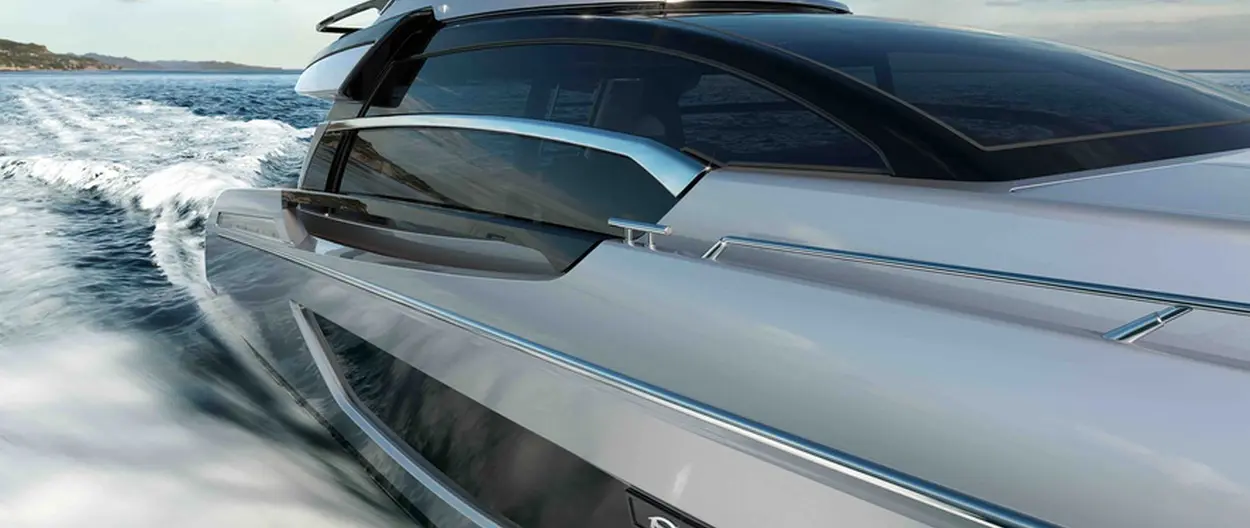
A row of windows can help create the silhouette of a yacht, and the appearance of dark glazing may be as important as the shape of surrounding composite or aluminium structures. The designer must consider the colour and reflectivity of the glass as well as the frame or bonding system. Two products with similar technical specifications may look noticeably different in direct sunlight. A sample viewed indoors may not represent the final effect on a curved superstructure. Owners should evaluate representative panels with the intended exterior paint and under realistic lighting. A beautiful rendering should be supported by samples and physical details before the project commits to expensive custom glass.
Why 3D scanning can help
Custom yachts rarely present perfectly simple, repeatable openings. Hull and superstructure geometry can vary, and the surrounding structure may involve complex curves. Isoclima identifies 3D scanning as part of its design and delivery process. Accurate surveying can help the manufacturer understand the actual opening and design a panel or assembly that fits correctly. It does not eliminate the need for engineering tolerances or careful installation. The shipyard should establish when the measurements are taken and how any later movement or modification of the surrounding structure will be managed. A precise digital model is useful only when it corresponds to the real vessel at the point of installation.
Co-design should begin early
Glazing is sometimes treated as a finishing item, but large windows can affect structural planning and systems installation. If a designer wants an extensive uninterrupted opening, the naval architect must determine how loads are carried around it. Glazing suppliers can contribute expertise on panel sizes, curvature and mounting methods before the design becomes fixed. Isoclima promotes co-design as part of its service, suggesting a collaborative approach with yards and design studios. The owner benefits when these decisions are made early because late changes to window dimensions can be costly. A well-coordinated project can preserve an ambitious visual concept without leaving the installer to solve fundamental problems at the final stage.
Bonding, framing and structural interfaces
The performance of a marine window depends not only on the glass but also on how it is installed into the yacht. Seals, adhesives, frames and mechanical supports may contribute to water resistance and structural behaviour. Their suitability depends on the materials surrounding the opening and the intended service conditions. The supplier and yard should agree responsibilities for surface preparation, quality control and inspection. A panel with excellent laboratory characteristics can still perform poorly if the installation details are inadequate. Owners should ask for documentation covering the complete assembly, particularly where glazing is described as structural. Technical compatibility cannot be assumed from the glass specification alone.
Curved panels and distinctive profiles
Curved glazing can support striking exterior lines and broad views, but it may introduce more manufacturing and installation complexity than flat panels. The exact allowable curvature, dimensions and optical characteristics should be established with the manufacturer. Owners may be attracted to a panoramic surface that flows around a superstructure corner, yet the designer needs to consider reflections and distortion as well as strength. A proposed curve may affect the way the glass sits against frames and surrounding trim. Isoclima's combination of scanning and co-design is relevant to such work, but the public listing does not confirm that every imagined curve is feasible. Physical samples and drawings remain essential.
Interior glare is more than an annoyance
Glare can make it uncomfortable to read, watch a screen or work at a helm. Window design should account for the locations of seating, navigation displays and the changing position of the sun. A reflective pane may reduce some heat gain while introducing its own visual effects. Owners should discuss how the glazing interacts with blinds, curtains and artificial lighting. Solar-protection products can form part of that strategy, but they do not remove the need for sensible interior design. The best result provides daylight without making the salon unusable during bright hours. A luxury yacht should allow guests to enjoy the view comfortably, rather than forcing them to retreat behind closed blinds whenever the sun reaches a particular side.
Privacy while moored close to other vessels
Large windows can expose a yacht's interior to neighbouring boats or people on a quay. This may be unimportant at an isolated anchorage but become significant in a busy marina. Glazing colour, reflective properties and window treatments can influence the experience, although no surface should be treated as providing guaranteed one-way privacy under all lighting conditions. Owners may want more privacy in cabins than in the salon. The designer should consider these differences when specifying the entire glazing package. Isoclima's material capabilities are relevant, but privacy performance must be verified for the exact product and the expected lighting. The correct arrangement supports comfortable living both at sea and alongside.
Cleaning and maintenance over many seasons
Salt spray, cleaning products and exposure to sunlight can affect the appearance of glazing and its surrounding seals. Owners need a maintenance plan suited to the specific glass and coatings. Aggressive chemicals or abrasive tools may damage surfaces, particularly where specialised treatments have been applied. The yard should provide cleaning instructions to the crew at handover. Inspection should also include the supporting frame or bonding system where accessible. The window's durability cannot be judged solely by the glass material. Long-term satisfaction depends on how the entire assembly is maintained and whether damaged components can be repaired or replaced without excessive disruption.
A refit requires particular caution
Replacing or enlarging windows during a yacht refit can be challenging because the existing structure was designed around particular openings. The owner may wish to create larger views, but removing material from a superstructure or hullside can affect load paths and water resistance. A professional survey is essential before committing to new glazing. Isoclima's described scanning and co-design services could be relevant to the process, yet their availability for a particular project requires confirmation. The refit budget should consider removal, supporting structure, installation and testing as well as the new glass. A successful change improves the environment without compromising the vessel's technical integrity.
Technical approvals should be specific
Marine glazing may be subject to different rules depending on the yacht's flag, size, operating category and location of the window. The owner should not assume that a product used successfully on a large superyacht is automatically suitable for a smaller vessel or vice versa. Applicable test standards and approvals may relate to a particular glass assembly or installation. The designer and class or flag advisers should define the requirements before choosing the product. Isoclima's general exhibition statements do not replace those documents. Careful certification checks protect owners from unexpected problems at inspection or when the vessel changes its operating status.
Supplier support after installation
A yacht can travel far from the yard where its windows were installed. Owners may need advice on repairs, replacement panels or inspection of seals while the vessel is elsewhere. Isoclima mentions after-sales service as part of its offering, but specific geographic coverage and response times should be agreed contractually. Glazing can be highly customised, making spare production information important. The management team should retain drawings, material specifications and records of any unique curvature or treatment. This documentation can save considerable time if a panel is damaged years after delivery. Good after-sales arrangements are as important as technical performance at the point of installation.
A current 2026 supplier showcase
The Isoclima laminated structural glazing entry is visible within the METSTRADE 2026 exhibitor catalogue. It does not identify a first-launch date in November or a single named newly delivered yacht installation. The story is therefore a current supplier capability showcase, not a claim of a new chemical-strengthening invention. Its relevance is that marine glazing remains a key design and engineering challenge as yachts use larger windows and more complex forms. Owners and builders can assess the company's stated full-service approach and request detailed product evidence. The exhibition provides a venue for such discussions, but technical choices should be settled through drawings, testing and appropriate approvals.
Better views require better coordination
Large windows can make a yacht feel light, inviting and connected to the sea. They can also introduce practical challenges that become apparent only after the vessel enters service. Isoclima's structural glazing presentation illustrates why glass suppliers, designers and shipyards need to work together from an early stage. The owner should ask about strength, solar control, optical quality, maintenance and serviceability as one connected set of requirements. A successful installation allows guests to enjoy panoramic views without being aware of the detailed engineering behind the glass. That quiet reliability is the real value of a properly designed marine glazing system.
Primary source: Isoclima S.p.A., official laminated structural marine glazing product and service listing in the METSTRADE 2026 exhibitor catalogue. Technical capabilities are manufacturer-reported; this is a current industry showcase, not a verified new November product launch.
Sources and image credits
Reporting based on Isoclima S.p.A., official laminated structural marine glazing supplier description at METSTRADE 2026.
Lead photograph: Isoclima laminated structural marine glazing original official supplier product visual. Isoclima supplier-submitted marine structural glazing promotional photograph, official METSTRADE 2026 catalogue. Original official image source.