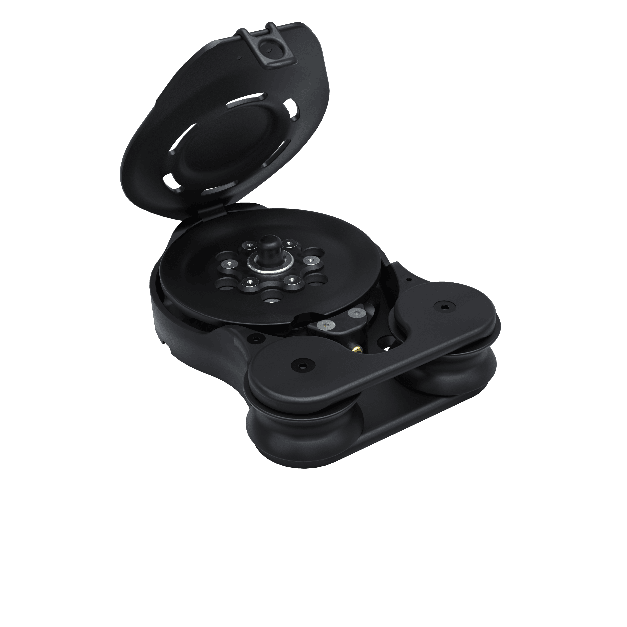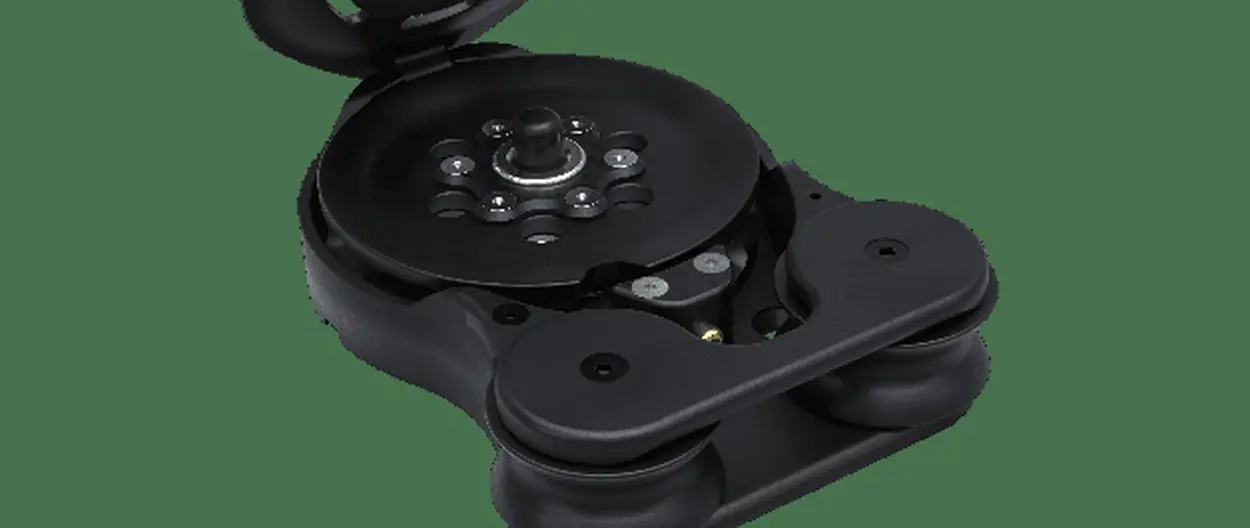
Italian sailing-hardware manufacturer Antal is presenting its LDA700 Openable Line Driver in the METSTRADE 2026 product catalogue, following an official product release dated 21 September 2026. The company describes a powered arrangement for closed-loop ropes used with mainsheet travellers, daggerboards, furlers, transom hatches and other mechanisms. The system combines a self-tailing pulley above deck with a geared motor below deck, with the distinguishing feature being a mechanism that can be opened and closed to engage or disengage the line circuit. Antal promotes this as a way to improve versatility and operational convenience. The public listing does not specify a universal safe working load, motor voltage or suitable rope diameter for every installation, so those figures must be obtained from the manufacturer rather than guessed. For owners and builders of luxury sailing yachts between 12 and 24 metres, the LDA700 offers a current example of how electric actuation is being brought into deck systems that require careful control, reliable release arrangements and practical maintenance access.
The challenge of controlling a closed-loop line
Some sailing functions use a rope running through a loop rather than a free-ended sheet. A continuous loop can transmit motion to a traveller or other mechanical device when the arrangement is properly designed. This can be convenient, but the way the line is gripped, driven and released becomes important when forces vary. A powered line driver provides one possible method of moving the loop under control. Its correct application depends on the equipment being operated and the loads involved. Antal's LDA700 is not a universal replacement for all manual deck gear. It is a specialised component intended for particular line circuits. The yacht's rigger should determine whether the proposed system and its control logic are suitable before selecting the motor or mechanism.
What the product announcement confirms
The METSTRADE listing describes an above-deck self-tailing pulley connected to a geared motor below deck. It also identifies a feature that allows the mechanism to be opened or closed with a relatively simple action, engaging or disengaging the line loop. Antal names possible applications including mainsheet travellers, daggerboards, furlers and transom hatches. These are manufacturer-reported uses and should not be treated as permission to apply one device indiscriminately to every configuration. The page does not publish complete test results, dimensional drawings or operating limits. Owners should obtain the current datasheet for the LDA700 and discuss the specific installation with an experienced rigger and the equipment supplier. The ability to disengage a line is useful only if it is predictable and safe.
Why the openable feature attracts attention
An ordinary closed-loop driver may be designed around a line that remains continuously in contact with its driving mechanism. An openable design offers a different operating option: the user can potentially connect or disconnect the drive from the line in the manner specified by the manufacturer. Antal presents this characteristic as improving convenience and safety. However, the correct use of the opening mechanism depends on the line load and the equipment being controlled. It would be unsafe to assume that it can always be disengaged under maximum tension. The yacht needs an approved operating procedure specifying the circumstances in which the feature may be used. Mechanical convenience becomes a genuine benefit when crews know its limitations.
Mainsheet travellers as a possible use
A mainsheet traveller can influence the position of the boom and therefore the shape and balance of a sail. On some luxury yachts, control loads may be substantial and frequent adjustments may be required. Antal lists the traveller among the LDA700's potential applications. Integrating a powered driver could change the way the control is operated, but it does not remove the need for appropriate tackle, structural foundations and safety procedures. The rigger should assess travel limits, the line's routing and the consequences of equipment failure. A powered system must not create a situation where a loaded component moves unexpectedly. Buyers should consider whether manual fallback and clear control identification are part of the proposed arrangement.
Daggerboards and movable appendages
Some modern sailing yachts use movable appendages such as daggerboards to adjust underwater performance. These systems may involve significant forces and require reliable position control. Antal mentions daggerboards among the possible applications of its line driver, but the actual suitability will depend on the mechanism and the vessel's engineering. A yacht designer should determine whether a rope-driven arrangement is appropriate for the appendage and what safety measures are needed. The crew must know how to monitor movement and stop the process when necessary. An electrical device that offers convenient actuation cannot replace structural limits or procedures to prevent damage. The LDA700 may provide one component of an approved system, not a complete daggerboard package by itself.
Furling equipment and line handling
A furling system can use rope or line mechanisms to manage sail deployment and recovery. The loads and operating characteristics vary widely between headsail, staysail and other installations. Antal includes furlers in its list of possible applications for the line driver. Owners should avoid assuming that the LDA700 is suitable for every existing furler without modification. The manufacturer or sailmaker needs to confirm the driving torque, line specification and required control sequence. A powered line should also be monitored for jams or unexpected movement. The best integration gives the crew clear command over the operation and an appropriate method of stopping it safely. A catalogued potential use becomes meaningful only after the entire system has been engineered.
Transom hatches and non-sailing functions
The manufacturer's product description also mentions transom hatches, illustrating that closed-loop actuation is not limited to sail controls. Yacht designers may use powered movement for selected access panels or other equipment, but these applications can have different risks from rigging. A hatch must remain secure, particularly underway, and the control system should address accidental activation and entrapment. The correct motor, sensors and interlocks require project-specific engineering. Antal's listing does not establish that the line driver alone provides all necessary safeguards. Owners should review how any proposed hatch can be released manually or secured after a failure. Power assistance should make a system easier to operate without reducing the safety of the people near it.
Above-deck and below-deck components
The LDA700's division between an above-deck self-tailing pulley and a geared motor beneath the deck creates an important installation interface. The deck structure must accommodate the drive and the relevant loads while protecting against water ingress. The machinery below needs space for access and servicing. Builders should establish whether the opening mechanism remains easily accessible to the crew. A compact appearance on the deck may conceal substantial requirements under the surface. Owners considering a refit should have the yard survey the available space and existing structure before ordering. A clean installation is one in which the visible control operates reliably without making hidden maintenance difficult.
Line diameter and construction matter
Ropes differ in diameter, fibre composition, surface friction and stretch. A self-tailing device depends on a predictable interaction with the selected line. The official Antal listing does not give a universal rope range in its short summary, so a yacht's rigger should obtain that information from the technical documentation. A line that is too small, too large or unsuitable for the pulley may slip, wear or behave unpredictably. The choice should also account for the loads expected during operation and any effects of wet conditions. A powered driver cannot compensate for poorly selected running rigging. Reliable performance begins with a system designed around the actual rope, not merely the name of the hardware.
The effect of an electric control
Electric assistance can make certain deck functions easier for a small crew, but it introduces a dependence on power, controls and mechanical protection. The LDA700's motor specification and electrical requirements should be confirmed before a yacht chooses an installation. Buyers should ask how the drive responds to commands, whether it provides feedback and what happens during an overload or loss of power. The operator needs an immediate, dependable way to stop movement when necessary. A well-designed electrical installation includes suitable protections and clearly defined control locations. The manufacturer's announcement suggests a flexible concept, but the final operational quality depends on the wider engineering rather than the drive alone.
Designing for a smaller crew
Many luxury sailing yachts are intended to be used with relatively small professional crews or by experienced owners. Equipment that reduces physical effort can make regular sailing more enjoyable. A powered line driver may support that ambition where correctly applied, but automation should not be confused with the removal of technical responsibility. Operators still need to understand the loads and movements involved. If a system becomes stuck or loses power, the crew should know the approved recovery procedure. The yacht's design must also remain accessible for inspection and maintenance. The benefit of a convenient drive is greatest when it makes ordinary operations more predictable without adding hidden complexity.
Control positions and sightlines
The location of the controls can be as important as the hardware itself. An operator should be able to see the relevant traveller, hatch or other mechanism while commanding movement, or have appropriate feedback where direct visibility is not possible. A control placed too far from the equipment can increase the chance that an obstruction goes unnoticed. The yacht's designer should consider where crew members stand during manoeuvres and how their hands are occupied. Clear labels and consistent operating logic reduce confusion. Antal's openable mechanism provides an additional function that may require explicit instruction. A successful installation ensures that all crew understand the difference between driving the line, stopping it and disengaging the mechanism.
Safety around moving lines
Power-assisted line systems can create hazardous pinch points and sudden movements if they are incorrectly used. The deck arrangement should avoid exposing hands or clothing to moving components wherever possible. Crew training should address the correct operating sequence and the conditions in which adjustments are made. The manufacturer should specify any restrictions on disengaging the drive while the line is loaded. Designers may need guards, clearances or emergency stops depending on the application. The LDA700's marketing description refers to safety and practicality but does not replace a risk assessment. An owner should expect equipment suppliers and the shipyard to document how those issues have been addressed.
A refit demands a survey
A yacht with an existing manual or powered line system may not have room beneath the deck for a new geared motor. The routing of the loop may also require changes to blocks, fairleads or control positions. The yard should examine the structural support and service access before deciding whether the LDA700 is a practical upgrade. It may be possible to integrate an alternative arrangement more economically, depending on the boat. Owners should avoid planning a refit solely around a product photograph. The complete system should be laid out using accurate drawings, with compatibility checks for ropes and loads. A carefully planned retrofit can add convenience; a rushed one can create new friction, water-ingress risks or maintenance problems.
Maintenance and long-term reliability
A powered line driver combines mechanical and electrical components that may need different types of inspection. The self-tailing pulley may be exposed to salt, moisture and rope debris, while the motor and gearing require the conditions specified by the manufacturer. The yacht should retain maintenance instructions and a supply route for replacement parts. Crew should inspect for unusual noise, unexpected movement and signs of line wear as appropriate to the system. The opening mechanism should be checked according to its approved procedure. A specialist device can remain useful over many seasons when its care requirements are understood. The owner should ask about service support before integrating it into a critical operation.
How to evaluate a closed-loop drive
The correct purchasing process begins with a clear description of the function to be controlled. The yacht's rigger can determine the expected loads, the required motion and the behaviour of the line when the system is stopped or disengaged. Antal can then provide product-specific information on the LDA700's suitability, dimensions and power requirements. Owners should request evidence from an appropriate application rather than assume that all closed-loop mechanisms behave similarly. A trial or demonstration may help explain the openable feature. The system should be assessed for reliability, fallback and ease of use over time, not only for the novelty of its controls.
The September release and METSTRADE showcase
Antal's official product catalogue gives 21 September 2026 as the release date for the LDA700 and includes the device among the equipment shown in the 2026 METSTRADE exhibition period. It is therefore accurate to describe it as a current 2026 product, although not as a new introduction on 22 November. The listing supplies a clear explanation of the openable drive arrangement and examples of its intended uses. It does not provide independent sea-trial results or identify a named luxury yacht installation. Those details should be established separately. The news value lies in the availability of another design approach to powered rope systems and the opportunities it creates for builders considering new layouts.
A small mechanism with wider design implications
The Antal LDA700 illustrates how a hardware change can affect more than one part of a yacht. Its openable line-driver concept may offer flexibility for selected sail-control and other closed-loop applications, provided the equipment is correctly specified. The implications reach from line routing and deck appearance to electrical design, access and crew training. Owners should resist the temptation to treat a single component as a complete automation solution. The real benefit depends on a coherent system that can be operated safely and maintained reliably. When those questions are answered, thoughtful equipment can help make sailing more enjoyable while preserving the direct control and awareness that skilled crew value.
Primary source: Antal Srl, official LDA700 Openable Line Driver product entry dated 21 September 2026 in the METSTRADE exhibitor catalogue. Intended applications and design features are manufacturer-reported, and technical sizing needs confirmation.
Sources and image credits
Reporting based on Antal Srl, official LDA700 Openable Line Driver supplier product entry released 21 September 2026.
Lead photograph: Antal LDA700 openable self-tailing line driver original official manufacturer product photo. Antal manufacturer-supplied LDA700 Openable Line Driver photograph from the verified METSTRADE 2026 catalogue. Original official image source.