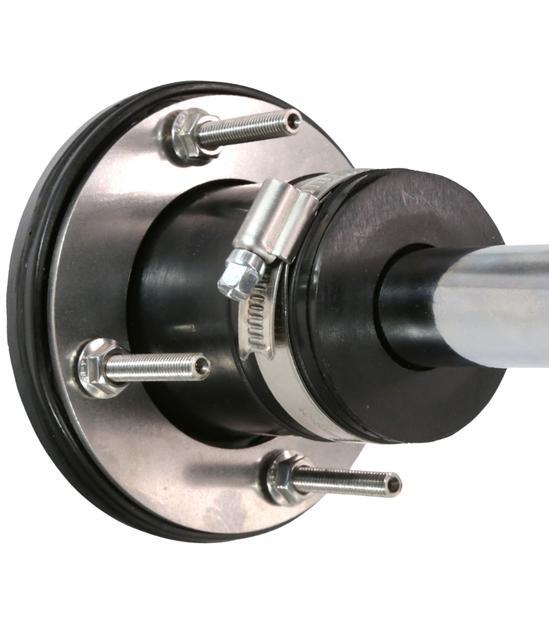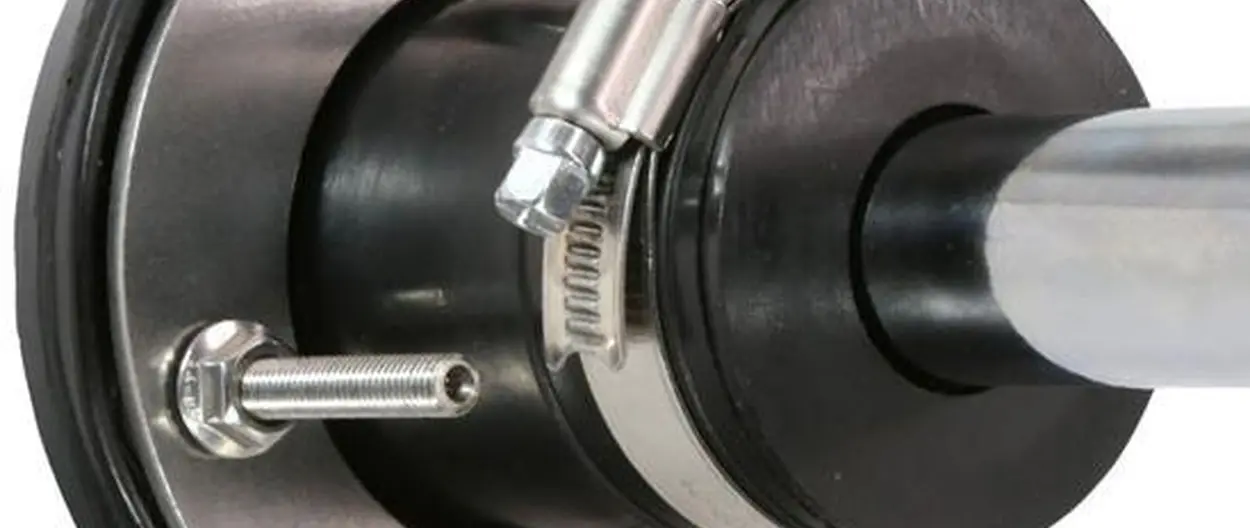
British marine hardware company Barton Marine is showcasing its bulkhead pipe gland fittings in the METSTRADE 2026 exhibitor catalogue, highlighting an approach to sealing pipe penetrations through vessel compartments. The supplier describes fittings that combine 316 stainless steel with nitrile rubber manufactured to BS2751 requirements, with bolted and clamped components intended to be adjustable and removable using basic tools. Barton positions the range as a means of helping preserve watertight and vapour-tight integrity where pipes pass through bulkheads. The public catalogue does not identify a new November 2026 release date or prove that every possible pipe and bulkhead configuration is approved, so the product should be described as a current supplier showcase rather than a sudden new invention. For builders, owners and refit managers of 12- to 24-metre yachts, however, the subject is significant. The quality of a hidden pipe penetration can influence whether an entire compartment retains its intended protective function. A small fitting deserves attention not because it looks impressive on deck but because it may have a crucial job out of sight.
The importance of a sealed bulkhead
A bulkhead can perform several functions aboard a yacht, including separation of interior spaces and, where designed for it, protection against the movement of water or fumes. A pipe that passes through a compartment boundary creates an opening that must be treated carefully. The installation needs to accommodate the pipe without compromising the properties required of the bulkhead. This is more demanding than simply drilling a hole and filling the gap with sealant. The appropriate solution depends on the vessel's construction, the service being routed and the applicable technical standards. Barton is promoting a mechanical fitting intended to provide a defined interface at such points. Its suitability must still be demonstrated for the actual application.
What the manufacturer claims
The official METSTRADE listing describes Barton's bulkhead pipe glands as bolted and clamped components that can be removed or adjusted with basic tools. It identifies 316 stainless steel and nitrile rubber to BS2751 among the materials used. The company refers to watertight and vapour-proof properties, but the short catalogue does not include complete test conditions, pressure limits or approved pipe diameter schedules. Buyers should obtain the relevant fact sheet and ascertain the exact product variant. The description is sufficient to explain the intended use and serviceability, not to claim that every installation is automatically compliant. The product should be viewed as a potential component of a correctly designed compartment boundary, rather than a general repair item that can be fitted anywhere.
Why a pipe penetration is difficult
Yacht systems carry fuel, water, cooling media and other services through complex machinery spaces. Pipes may need to pass from one compartment to another while allowing inspection, thermal movement and maintenance. An opening that was suitable during construction may become problematic if a pipe is replaced or its diameter changes. Sealants can also be difficult to remove cleanly. A mechanical gland may offer an alternative where the pipe and bulkhead arrangement are compatible. The idea of an adjustable fitting is attractive because service work is inevitable during a yacht's operating life. A proper installation should allow technicians to inspect the penetration without damaging the surrounding structure unnecessarily.
Nitrile rubber and material compatibility
Barton specifies nitrile rubber in its product description, alongside stainless-steel hardware. Nitrile is used in various sealing applications, but its suitability depends on the fluids, temperatures and operating conditions involved. Owners should not infer that a seal made from nitrile is automatically compatible with every fuel, oil or chemical encountered aboard. The product documentation should identify the approved media and any limits. Material compatibility is particularly important where a leak could affect safety or the performance of the compartment boundary. The yacht's engineering team should consider the pipe and seal together, rather than select a gland based solely on its external dimensions. A correct material choice supports reliability over time.
The role of 316 stainless steel
Marine hardware often uses stainless alloys because they can offer useful corrosion resistance, although no stainless-steel component is immune to all marine environments. Barton identifies grade 316 for its fitting components. The installer should still consider galvanic interactions, crevices and the presence of salt water in the surrounding area. Different adjacent materials may need compatible fasteners or isolation arrangements. An attractive polished fitting is not automatically serviceable if corrosion develops beneath it. Crew and engineers should understand the supplier's inspection and cleaning guidance. Choosing a familiar alloy is helpful, but the final condition depends on details of installation and use. The owner should seek a product designed for the actual environment in which it will remain.
Serviceability can reduce future disruption
One of Barton's advertised benefits is the ability to remove the clamped and bolted parts with basic tools. That could be useful when a pipe needs to be replaced or inspected. A fitting that can be opened deliberately may avoid some of the difficulty associated with removing a permanently bonded seal. The advantage depends on the product's installation and on maintaining access to the fasteners. A gland hidden behind an inaccessible tank or panel will still be troublesome to service. During design, builders should ensure that technicians can reach it safely. Owners may not consider this issue at delivery, but it can become important years later when routine repairs are required.
The challenge of retrofitting an older yacht
A yacht in service for many years may have received several modifications to its plumbing and cooling systems. Some pipes may pass through bulkheads using arrangements that differ from current best practice. A refit is an opportunity to review those penetrations, particularly where work has already exposed the surrounding structure. However, a new gland cannot simply be installed without assessing the original bulkhead and pipe. The yard should determine whether the opening is correctly sized and whether the compartment boundary has a specific certified function. The mechanical fitting must be appropriate for the actual structure. A product that is useful during a newbuild may require additional engineering or repairs to be suitable in an older vessel.
Watertight is a technical term
A supplier may describe a fitting as watertight, but that word needs interpretation in terms of test method, pressure, installation and duration. A yacht could encounter different water loads depending on location and the nature of a casualty. The official Barton listing does not supply a universal certified pressure rating for the range. Owners and builders should request supporting documents identifying the permitted application. A fitting should not be used as evidence that the entire bulkhead meets a given standard unless the complete assembly has been evaluated. Properly addressing those questions is not excessive caution. It ensures that a product chosen to protect a compartment does not create a false sense of security.
Vapour protection and machinery spaces
The catalogue also refers to vapour-proof integrity. Machinery and technical compartments can contain substances whose vapours must be managed according to the vessel's safety design. A pipe penetration can potentially provide a path between spaces if it is not correctly sealed. A suitable gland may help preserve separation, but its performance will depend on the exact installation. The yard should clarify which vapours and conditions the product has been evaluated against. Fuel systems require particular attention, and the relevant technical rules may be more specific than a general promotional phrase. Owners should involve qualified engineers rather than rely on a single catalogue statement. Safety depends on the complete arrangement of pipes, ventilation, detection and compartment boundaries.
Fittings must match pipe movement
Pipes can change length with temperature and respond to vibration or movement in the vessel. A penetration should be designed to accommodate the relevant conditions without damaging the pipe or compromising the seal. Barton's listing describes adjustable components but does not establish a universal allowable movement range. The piping designer should evaluate whether additional supports or flexible sections are needed. Over-tightening or misalignment could damage a seal. The team should follow the manufacturer's instructions for assembly rather than improvise. Good design considers the forces that pass through the system during normal operation, not simply whether the fitting appears tight when the yacht is stationary.
A practical concern for small builders
In the 12- to 24-metre market, shipyards often build technically sophisticated yachts while working within tighter spaces and budgets than the largest superyacht facilities. Standardised fittings can be attractive if they simplify sourcing and servicing. However, a builder should not select a gland purely because it promises easy installation. Appropriate dimensions, material compatibility and approval requirements still determine whether it belongs in a particular project. The construction team should incorporate the product into technical drawings and quality-control checks. A clear installation detail can reduce the likelihood that different workers use inconsistent methods for similar pipe penetrations. That consistency is valuable when the yacht is later inspected or maintained.
Refit access behind interior joinery
Some yacht plumbing passes through areas concealed by furniture, cabinetry or decorative panels. Installing or replacing a gland may require temporary access to these spaces. The refit contractor should plan how the surrounding finish can be removed without damage and how the penetration will remain inspectable. A serviceable mechanical fitting offers limited benefit if the crew must destroy finished joinery to reach it. The interior and engineering teams should coordinate before closing panels during a refit. A small access hatch can sometimes be more valuable than an elaborate but inaccessible installation. The owner may never see these details, yet they can influence the cost and disruption of future maintenance.
Inspection and maintenance responsibilities
A correctly specified gland needs an appropriate inspection programme. The relevant checks may include visible damage, corrosion, seal condition and evidence of leakage, as defined by the manufacturer and the yacht's technical procedures. Crew should not dismantle a fitting that forms part of a critical boundary without understanding the consequences. If a gland has been disturbed during repair work, the relevant installation checks should be repeated. Replacement seals must be of a suitable type and should not be substituted casually. Maintaining clear records of installed sizes and parts can save time later. Mechanical serviceability is useful when it is supported by proper documentation and disciplined maintenance.
What BS2751 does not settle
The reference to BS2751 relates to a material specification for nitrile rubber in the supplier's listing. It should not be treated as proof that the entire gland has passed every marine watertight or fire-resistance test. Different standards may govern the finished assembly and its location. Owners should request all relevant documents and distinguish material conformity from product and installation approval. This is especially important on yachts with commercial certification or class requirements. The shipyard should confirm whether a proposed penetration system is acceptable before beginning work. Accurate interpretation of standards protects the owner from problems that might otherwise emerge during inspection or after the vessel changes flag or operating status.
An honest environmental assessment
A serviceable fitting may support repair rather than wholesale replacement, potentially reducing certain maintenance demands. Yet the Barton catalogue does not provide a life-cycle analysis demonstrating an environmental benefit. Stainless steel and rubber have their own manufacturing and disposal implications, while longevity depends on the exact service conditions. Owners who value responsible purchasing can ask about spare parts, expected service intervals and how components are replaced. The most practical environmental improvement may be a reliable installation that can be maintained without unnecessary disruption. Those outcomes should be based on documented experience rather than inferred from a claim that a fitting is adjustable.
The current METSTRADE presentation
Barton Marine lists its bulkhead pipe gland fittings in the 2026 exhibition product catalogue, where the company also presents other deck and technical hardware. The page does not include a dated November 2026 product launch announcement, so its current relevance is an ongoing supplier presentation rather than breaking news about a first-ever invention. This distinction is important because the subject is less visible than new yachts or consumer electronics, yet it reflects a continuing engineering concern. Builders are seeking components that can be specified consistently and serviced sensibly during a yacht's life. The question for owners is whether these fittings meet the correct technical requirements and make future maintenance more manageable.
Why hidden engineering deserves attention
The comfort and reliability of a luxury yacht depend on details that guests rarely notice. Pipe penetrations through technical boundaries are a clear example. Barton's fittings offer a mechanical approach to sealing and service access, supported by specific material claims that buyers should verify. They are not a substitute for the shipyard's responsibility to design compliant systems or inspect completed work. Used appropriately, a serviceable fitting can help engineers manage changes and repairs without unnecessary disturbance. This is the kind of practical equipment that seldom becomes a headline outside the marine industry, but its correct selection can matter greatly during years of ownership.
Primary source: Barton Marine Equipment Ltd, official Bulkhead Pipe Gland Fittings product listing and downloadable fact sheet at METSTRADE 2026. Stainless-steel, nitrile and sealing characteristics are manufacturer claims; the catalogue does not establish a November 2026 first-launch date.
Sources and image credits
Reporting based on Barton Marine Equipment Ltd, official Bulkhead Pipe Gland Fittings product catalogue and manufacturer fact-sheet at METSTRADE 2026.
Lead photograph: Barton Marine serviceable bulkhead pipe gland genuine official second manufacturer product photograph. Barton Marine original bulkhead pipe gland fittings second catalogue photograph, from METSTRADE 2026 exhibitor page. Original official image source.