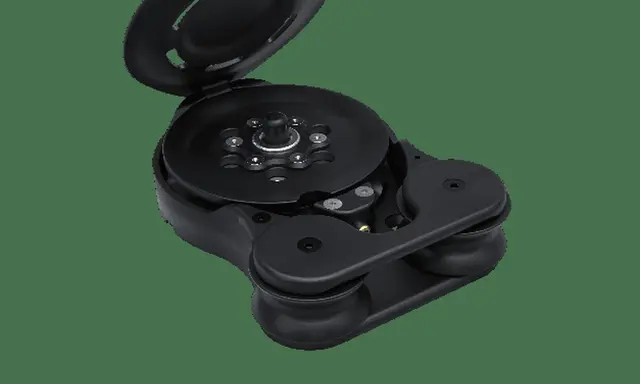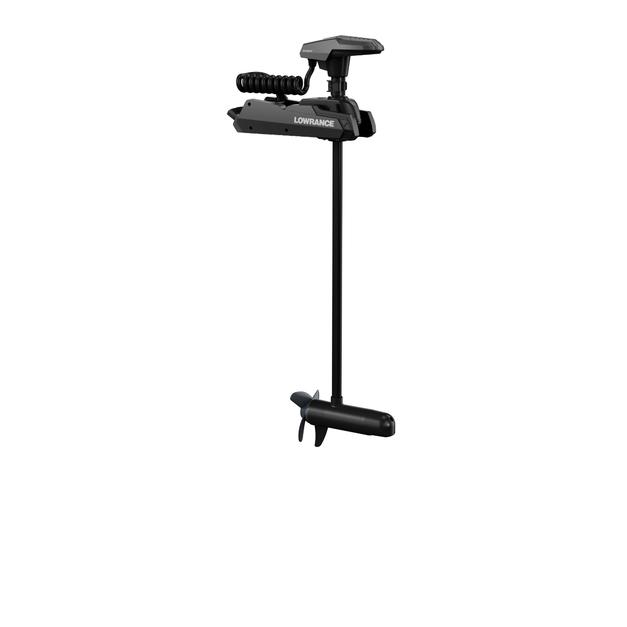
Navico Group has listed the Lowrance Scout trolling motor as a new product for METSTRADE 2026, with the official exhibitor catalogue recording a release date of 17 November. Scout combines GPS-based positioning, quiet electric operation and several ways to control the motor, including a foot pedal, wireless remote and Lowrance's FreeSteer joystick. The manufacturer says the system can integrate with compatible Lowrance displays and NMEA 2000 equipment, giving anglers another way to manage boat movement while fishing. These features are particularly relevant to dedicated sportfishing craft and fishing tenders carried by larger cruising yachts; the supplier does not claim that Scout is a replacement for the primary propulsion of a 12- to 24-metre motor yacht. For an owner seeking a more relaxed and precise fishing experience, the announcement raises practical questions about GPS holding performance, mounting, battery capacity, control integration and the suitability of the system for a given hull.
Why positioning matters to anglers
Fishing sometimes requires a boat to remain close to a particular feature rather than continue travelling. Currents, wind and small waves can make that difficult, particularly when the skipper wants to focus on lines or the movements of nearby fish. Conventional anchoring may not be practical or desirable in every location. An electric trolling motor with GPS-based station keeping is intended to provide another means of controlling the craft's position under appropriate conditions. The attraction is convenience, but it should not be confused with an unlimited holding capability. Available thrust, battery state and environmental conditions constrain what any motor can accomplish. Scout's real usefulness depends on the kind of fishing undertaken and the boat on which it is installed.
What the official Scout description confirms
Navico's METSTRADE catalogue describes Scout as combining precise GPS anchoring, near-silent operation and easy stow-and-deploy arrangements. It lists foot-pedal control, a wireless remote and FreeSteer joystick input, with integration into Lowrance displays and NMEA 2000. Those are manufacturer features, not independently measured performance results from a specific yacht. The public listing does not provide every model's thrust, voltage, shaft length or approved hull range. Buyers should request complete current specifications and determine which configurations are suitable for their boat. A trolling motor chosen only from a photograph may be inadequate for the vessel's weight or exposed conditions. Correct sizing and mounting are fundamental to the decision.
GPS anchoring is not a conventional anchor
A system that uses electronic position information and electric thrust to hold a boat near a selected point behaves differently from a traditional anchor attached to the seabed. It may allow the skipper to remain over a fishing location without deploying ground tackle, which can be convenient where use is appropriate. However, positioning depends on sensors, electrical supply and available thrust. It is not a substitute for safe anchoring arrangements during overnight stays, emergency situations or conditions beyond the motor's capability. The owner should understand how Scout behaves when GPS quality changes or the battery becomes low. The manufacturer's operating guidance and the skipper's seamanship remain essential. Electronic station keeping is a fishing tool, not a universal guarantee that a boat will remain stationary.
The relevance to luxury fishing craft
Some 12- to 24-metre owners have sportfishing yachts, while others carry a smaller fishing tender alongside a cruising motor yacht. In both cases, fishing equipment may form part of the luxury experience without being the vessel's main propulsion system. Scout appears most directly relevant to boats that can accept a purpose-designed trolling motor installation rather than to large deep-draft yachts. The owner should assess the physical and operational suitability before planning an upgrade. A well-equipped fishing tender can improve the enjoyment of a larger yacht's itinerary, but its systems must be managed as carefully as those of the mother vessel. The product's appeal lies in specialised control of a fishing craft, not in offering a new drive for a large yacht.
Quiet operation changes the atmosphere
Electric trolling motors are often valued for reduced noise compared with combustion engines during low-speed positioning. Navico describes Scout as near-silent, but this is a qualitative manufacturer claim rather than a published decibel result under all loads. Noise can depend on mounting, propeller condition and the surrounding structure. The practical benefit may be a calmer fishing experience and less intrusion into conversation or wildlife observation. Owners should not assume that quiet operation guarantees improved catch rates, which are influenced by many factors. Nor should they disregard local wildlife rules or restrictions on where motorised craft may operate. The product offers a potential improvement in comfort and control, subject to the boat's actual installation.
Choosing between the control methods
Scout offers several ways to operate the motor, according to the official listing. A foot pedal may be useful when an angler wants to keep hands available for fishing equipment. A wireless remote can allow control from another suitable position aboard, while a joystick may appeal to users who prefer more direct directional input. These interfaces serve different habits and need not be equally appropriate for every crew. The owner should confirm how commands are prioritised and what happens if a controller is dropped, disconnected or loses power. Controls should remain clearly identifiable and protected from accidental operation. The best arrangement supports the fishing routine without confusing the skipper or undermining safe command of the boat.
Integration with Lowrance electronics
The company promotes integration between Scout and compatible Lowrance displays, as well as NMEA 2000 connections. That could reduce the number of separate interfaces a skipper needs to manage when navigating and fishing. Nevertheless, a brand-wide statement does not establish compatibility with every existing chartplotter, software version or network configuration. Owners should consult the current supported-device list and involve a competent marine electronics installer. A boat may already carry several generations of equipment, making software and interface checks particularly important. The installation should also preserve the primary navigation functions if the trolling motor becomes unavailable. Convenience is valuable when it is supported by dependable system design rather than fragile custom integration.
Understanding the FreeSteer concept
The official catalogue identifies FreeSteer as a joystick-based control option, but it does not supply a complete technical explanation of every operating mode in its short description. Buyers should request a demonstration that shows how the motor responds to changes in direction and speed. A joystick may make handling feel intuitive, yet the boat's actual movement is influenced by wind, current and inertia. The user still needs to anticipate how the hull responds. A familiar interface does not eliminate the need for safe training or an understanding of local conditions. The most effective controls are predictable and provide clear feedback, allowing the skipper to focus on fishing without losing awareness of the surrounding water.
Stowing and deploying a bow motor
A trolling motor may need to be lowered into the water when in use and secured out of the water when travelling at higher speeds. Navico describes Scout as easy to stow and deploy, but the installation still requires appropriate deck space and an unobstructed path for movement. Owners should consider the bow's geometry, railings, mooring equipment and the practical reach of the operator. A motor that interferes with anchor handling or boarding arrangements may be unsuitable even if it performs well in open water. The mounting must be engineered for the expected loads and approved operating conditions. Crew also need to know how to secure the unit before navigation. A good stowage system makes the motor convenient without compromising other essential equipment.
Battery capacity determines useful endurance
An electric trolling motor draws power from a suitable electrical system, and the available operating time depends on battery capacity, power demand and conditions. The official catalogue excerpt does not identify a universal runtime for Scout. A manufacturer or installer should provide consumption information for the selected model and help calculate realistic usage. Owners may need to consider charging arrangements and the effect of repeated station keeping during a long fishing day. A tender may have limited space for additional batteries, while a larger fishing boat could have more flexibility. Electrical protection and battery management should follow applicable marine standards. A quiet motor becomes less useful if the installation cannot supply adequate power during the intended activity.
Why thrust needs careful selection
The power required to hold a boat in position depends on hull size, windage, displacement and environmental conditions. A trolling motor that works well on a small fishing craft may not provide meaningful control on a larger yacht. Scout's catalogue description does not establish suitability for every 12- to 24-metre boat, so installation on a yacht in that range must be assessed individually and should not be assumed. The same product may be more practical on a purpose-built tender. A buyer should ask the supplier to recommend a specific model based on vessel details rather than choose by brand recognition. Matching thrust and shaft geometry to the boat is more important than the presence of a sophisticated joystick or attractive display.
Operational limits and safety
GPS-based holding can reduce the need for constant manual corrections in some fishing situations, but it cannot replace an attentive skipper. The vessel may drift if the motor loses power or cannot overcome current or wind. The operator should understand fallback procedures and maintain awareness of nearby boats, swimmers and navigational hazards. A motor control station should not be treated as permission to leave the helm unattended in difficult conditions. The owner also needs to consider local restrictions on fishing, anchoring or powered movement. Navico's manufacturer description provides a product overview rather than an operational safety manual. The crew should use the full documentation and practise procedures before relying on the system during a trip.
Installation and compatibility questions
A successful installation needs suitable mounting structure, wiring, overcurrent protection and an appropriate charging system. The motor may require a specific shaft length so its propeller stays immersed in expected conditions without contacting the hull. The boat's existing Lowrance electronics should be checked for compatibility, and any software updates should be undertaken carefully. A professional installer can also help route controls and ensure that the motor's movement does not obstruct other deck equipment. On a tender, the crew must consider how the unit is transported or secured when the boat is lifted aboard the yacht. Good planning is essential because the physical installation can be more demanding than the catalogue image suggests.
Owners should distinguish marketing from measured results
The terms precise, quiet and effortless can describe intended user experience without providing quantified performance. Scout's official listing does not establish a holding radius in every current, a measured operating noise or battery endurance on a particular vessel. Owners should request any available technical tests and conduct a realistic demonstration where possible. The product may offer genuine convenience, but that should be assessed against the weight, hull type and fishing methods of the intended boat. A system that performs well during a calm marina demonstration may encounter different challenges offshore. Honest evaluation protects the owner from disappointment and helps identify the conditions under which the motor is most useful.
The METSTRADE launch and the sector it addresses
Navico Group's Lowrance Scout product is listed in the METSTRADE catalogue with a 17 November 2026 release date. The announcement connects precision electronic control, electric propulsion and the established needs of recreational fishing. It is a current marine equipment story, although its relevance is greatest to sportfishing boats and tenders rather than to large cruising yachts as a primary drive. The available evidence does not confirm a newly completed luxury yacht installation or independent field-test results. For owners of suitable craft, the next step is to obtain the full model specifications and understand how the product works with their existing electronics and electrical systems.
A specialised tool for a more relaxed day
The purpose of a fishing trip may be to enjoy time on the water rather than spend every minute adjusting the boat's position. Scout's GPS station keeping and several control options could help with that objective on a correctly matched vessel. The design is most compelling when it reduces workload without encouraging complacency. Owners should still respect the limitations of battery power, environmental conditions and the motor's thrust. A useful piece of leisure technology is one that quietly supports the activity and gives the skipper clear control. Navico's 2026 announcement provides another option for evaluating that balance in the growing market for connected recreational marine equipment.
Primary source: Navico Group, official Lowrance Scout trolling motor product entry released 17 November 2026 in the METSTRADE exhibitor catalogue. Integration and performance descriptions are manufacturer statements, not independently established results.
Sources and image credits
Reporting based on Navico Group, official Lowrance Scout product release dated 17 November 2026.
Lead photograph: Lowrance Scout GPS electric trolling motor original product photograph from Navico official 2026 exhibitor listing. Original Navico Group Lowrance Scout manufacturer product image, official METSTRADE 2026 entry. Original official image source.