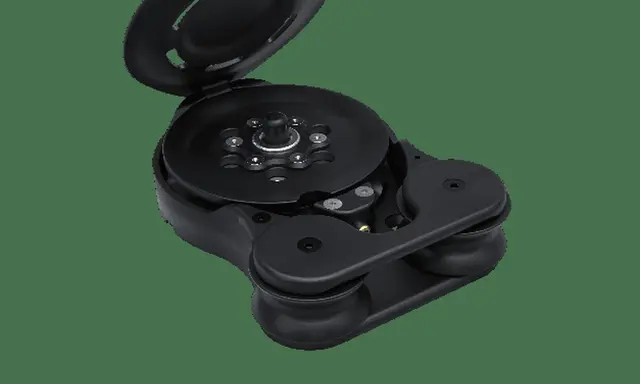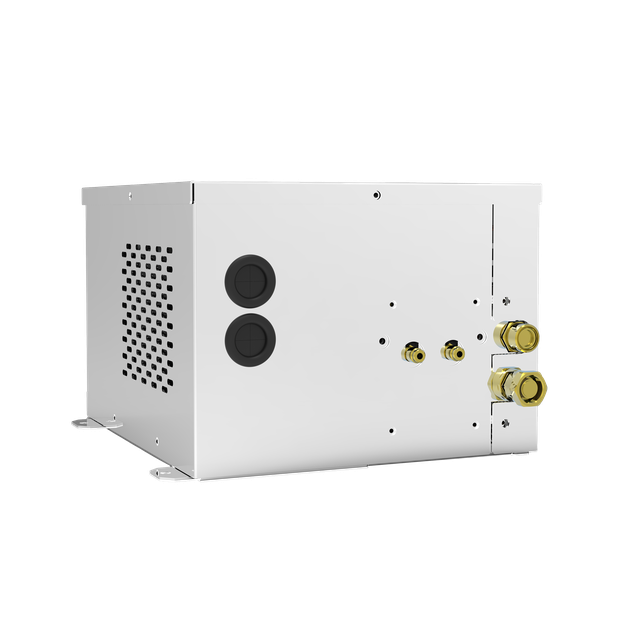
Dometic has used METSTRADE 2026 to present its CX600 condensing unit, describing it as a new 12/24-volt direct-current refrigeration solution for custom fishboxes with internal volumes as large as 0.6 cubic metres, or approximately 20 cubic feet. The manufacturer's official product entry is dated 18 November 2026 and positions the CX600 above the older 0.3- to 0.35-cubic-metre installations associated with its Cold Machine platform. Dometic says the unit uses R1234yf refrigerant, arrives with pre-charged quick-connect fittings and is designed for servicing and component replacement in the field. It also lists ignition-protection standards ISO 8846 and ABYC C-1500. The announcement is particularly relevant to owners of 12- to 24-metre sportfishing and cruising yachts that need reliable cold storage while operating away from a marina. Performance depends on far more than a headline box size, however, and any prospective installation requires engineering review of insulation, electrical supply, ventilation and the intended contents.
A cold fishbox can shape a day on the water
For owners who enjoy fishing, refrigeration is an important part of preserving the quality of a catch while the yacht returns to harbour or continues cruising. The required storage can be substantial on vessels designed for offshore trips. A simple box filled with ice may be appropriate in some cases, while others benefit from mechanical cooling as part of a larger onboard refrigeration system. Dometic's CX600 addresses that latter approach by providing a condensing unit for a custom insulated compartment. It is not itself a complete fishbox with a standard fixed shape. The owner and builder must design the surrounding storage space to suit the intended activity. The refrigerator's job is to support the selected arrangement, not determine it alone.
What Dometic says is new
The METSTRADE listing describes the CX600 as the largest air-cooled, DC-driven condensing unit in the company's Cold Machine 2.0 range. The quoted cooling volume extends to 0.6 cubic metres, compared with earlier figures of approximately 0.3 to 0.35 cubic metres. This provides a useful indication of the intended application, but the public listing does not supply a complete cooling-capacity chart for every ambient temperature and insulation level. A vessel's engineer should request those figures before designing a compartment. Larger volume can require more cooling depending on the contents, their starting temperature and the frequency with which the box is opened. The new model therefore provides an engineering option for larger custom storage rather than a guarantee that any box of the stated volume will maintain a particular temperature.
Understanding the 12/24-volt architecture
The CX600 is intended for direct-current electrical systems operating at 12 or 24 volts, according to Dometic. Such supplies are common on leisure and working boats, although individual yachts may have more complex electrical arrangements. A direct-current condensing unit can be attractive where the owner wants refrigeration without relying exclusively on shore power or a generator-fed alternating-current circuit. That does not mean the appliance is energy-free or that it will run indefinitely from a battery bank. Its actual electrical consumption depends on cooling demand and operating conditions. Owners should review the system with an electrical engineer and consider how the load fits alongside navigation equipment, pumps, lighting and other onboard services.
Why box design is essential
A condensing unit is only one component in a refrigeration installation. The insulated enclosure, lid seals, internal layout and any evaporator or associated equipment determine how efficiently the system can perform. A large compartment with inadequate insulation may impose an excessive load even if its nominal volume is within the manufacturer's quoted range. Location matters too: a box on an exposed deck may experience different heat gains from one inside a shaded cockpit or protected work area. The yacht's designer should consider how frequently the lid will be opened during fishing and whether drainage and cleaning can be managed easily. An appropriate installation may reduce unnecessary cooling work, whereas poor construction can undermine the benefits of sophisticated machinery.
R1234yf and the refrigerant question
Dometic identifies R1234yf as a low-global-warming-potential refrigerant relative to many older alternatives. That characteristic can be relevant to owners considering environmental impact, but it does not by itself establish the complete product's life-cycle performance. Refrigerant systems also need suitable components, safe installation and proper service practices. The exact safety classification and handling procedures should be taken from the current manufacturer documentation and applicable regulations. Owners should not attempt to open or modify a refrigerant circuit without the necessary expertise. A pre-charged system can simplify installation, but technicians still need to confirm that the components and connections are correct and that the chosen arrangement meets all relevant technical requirements.
Quick-connect fittings and installation time
The product listing refers to factory pre-charged quick-connect fittings and describes installation in under one hour without conventional refrigerant handling tools. This is a manufacturer claim associated with the intended product configuration, not a guarantee for a complete refit aboard every yacht. Access to the installation point, routing of pipes, preparation of the fishbox and electrical connections may take considerably longer. The quoted convenience should be understood in the context of the refrigeration assembly. Builders may appreciate connections designed to reduce the need for specialised refrigeration work at certain stages of installation, but they still need to follow detailed instructions. Owners should ask for a complete work plan before budgeting the project around a short promotional installation figure.
What ignition protection means
Dometic lists ISO 8846 and ABYC C-1500 ignition protection in relation to the CX600. Such standards address particular technical characteristics, and a purchasing decision should be supported by current compliance documents identifying the exact equipment. Ignition protection is not a declaration that an installation is safe under every imaginable condition. The yacht may have compartments containing fuel systems or other hazards, requiring careful assessment of electrical equipment and ventilation. The designer must determine the appropriate location and ensure that the completed installation meets relevant requirements. Buyers should distinguish between a product-specific test claim and approval of the entire refrigeration system aboard their vessel. Installation quality remains a major safety consideration.
Field service can matter far from home
A sportfishing yacht may operate in areas where the manufacturer's preferred service centre is not immediately accessible. Dometic describes the CX600 as field-replaceable and serviceable, suggesting that maintenance has been considered during product development. The owner should confirm which components can actually be replaced and what tools or qualifications are required. Spare-parts availability can vary across regions, and a serviceable component is useful only when an appropriate replacement can be obtained. A good installation should allow access to the unit without removing extensive cabinetry or disrupting unrelated systems. Engineers may also want clear diagnostic procedures and a documented model number. Routine maintenance and sensible contingency planning support reliability over several cruising seasons.
The relationship with fish storage practices
Cooling equipment supports good handling, but it does not replace appropriate fish hygiene or the relevant food-safety procedures. A catch may need to be handled promptly and kept at suitable temperatures according to the circumstances. The mechanical system can help maintain a controlled environment when correctly specified, but the actual temperature must be monitored rather than inferred from the unit's presence. The yacht should also consider how the compartment is cleaned, drained and kept separate from other food or equipment where necessary. Owners expecting to store fish for extended periods should consult appropriate guidance rather than assume that a mechanically cooled fishbox preserves any species indefinitely. The CX600 is an equipment announcement, not a new method of food preservation.
The galley and the cockpit need coordination
On some yachts the fishing cockpit is well separated from the galley, but crew may still need to move a catch through the vessel for cleaning or preparation. A custom fishbox should be located with those workflows in mind. Large volumes can be attractive, yet the compartment's shape and access can be more important than nominal capacity. An awkwardly placed lid may interfere with seating, deck movement or fishing equipment. A well-designed installation allows efficient access while respecting safety and cleaning needs. The yacht's refrigeration engineer, interior designer and deck team should work from the same layout. Mechanical cooling becomes most useful when it supports the owner's daily routine without creating new handling problems.
Power management at anchor
A cruising yacht may remain at anchor for long periods while relying on batteries, solar generation and occasional charging from propulsion engines or generators. Refrigeration is a continuing load that can influence the energy budget. The CX600's DC architecture may be relevant, but the listing does not provide enough detail to calculate daily energy use for an arbitrary fishbox. The owner must consider ambient temperatures, insulation and the required internal temperature alongside other loads. A well-managed installation may be easier to operate if battery state and cooling performance are monitored. However, the presence of a DC unit does not guarantee reduced generator running or a measurable fuel saving. Those outcomes require installation-specific analysis.
Who could use a larger fishbox
A dedicated 12- to 24-metre sportfishing yacht is an obvious candidate for substantial refrigerated catch storage. A family cruising yacht that occasionally fishes may have different needs and find a smaller, simpler compartment sufficient. Some yachts may prefer multi-purpose cold storage, though suitability for different contents should be established before using a fishbox as a general refrigerator. The new CX600 broadens Dometic's stated capacity range for custom installations, but it is not a recommendation that every owner should install the largest possible box. Space aboard a yacht is valuable, and the extra volume must justify its equipment and energy requirements. Owners should begin by defining expected usage.
Comparison with ice and other cooling methods
Ice can be simple, inexpensive in some ports and independent of the yacht's electrical system, but it occupies space and must be replenished. Mechanical cooling provides a different set of conveniences and obligations. It can be useful for repeated offshore fishing trips, especially when ice supply is uncertain. A hybrid approach may also be possible depending on the compartment, but the yacht should avoid assumptions about compatibility or safety. The CX600 should be compared with other available solutions on the basis of actual capacity, insulation, power draw and maintenance. The most economical choice depends on the operating schedule. A vessel that fishes every week may reach a different conclusion from one that uses its fishbox a few times a season.
Newbuild and refit considerations
A newbuild can incorporate the compressor, air path, wiring and fishbox into a coordinated layout from the beginning. Retrofitting a larger cooling system can be more complicated because the existing compartment may lack adequate insulation, ventilation or space for service access. Dometic's quick-connect feature may simplify part of the work, but it does not remove the need to survey the boat. The yard should establish whether the electrical circuit and protective devices are appropriate and whether new routing conflicts with other equipment. A carefully planned refit can improve daily convenience, whereas a rushed installation may create overheating, noise or maintenance problems. The owner's budget should reflect the complete project rather than the appliance alone.
The significance of the November announcement
Dometic's CX600 was listed as a product release on 18 November 2026 during METSTRADE, a major gathering for the marine equipment industry. The manufacturer positions it as an extension of the Cold Machine 2.0 platform with greater custom-box capacity, low-GWP refrigerant and installer-oriented connections. Those details make the announcement relevant to the sportsfishing and cruising sectors of the luxury yacht market. The source does not confirm a completed yacht installation or independently measured long-term energy savings. The practical next step for builders and owners is a detailed specification review, including performance curves and safe mounting arrangements. Headline figures are helpful, but the engineering behind them determines success.
An equipment choice shaped by the owner's use
The CX600 represents an option for owners who need more substantial refrigerated space without adopting a completely different onboard electrical architecture. Its 12/24-volt operation, stated 20-cubic-foot application limit and service-oriented design offer a basis for comparison with existing systems. Whether it is a worthwhile upgrade depends on the actual fishbox, the yacht's operating environment and the owner's fishing habits. Buyers should request full technical data and quotations for the complete installation. A luxury yacht benefits when refrigeration is reliable, quiet and appropriate to the activities aboard. That outcome is achieved through thoughtful integration rather than through the capacity claim alone.
Primary source: Dometic Group AB, official METSTRADE 2026 CX600 condensing-unit product description dated 18 November 2026. All technical performance and installation claims are manufacturer-supplied.
Sources and image credits
Reporting based on Dometic Group AB, official CX600 product release dated 18 November 2026.
Lead photograph: Dometic CX600 Cold Machine 2.0 original manufacturer fishbox condensing unit official 2026 image. Dometic Group official CX600 product photograph from its METSTRADE 2026 catalogue listing. Original official image source.