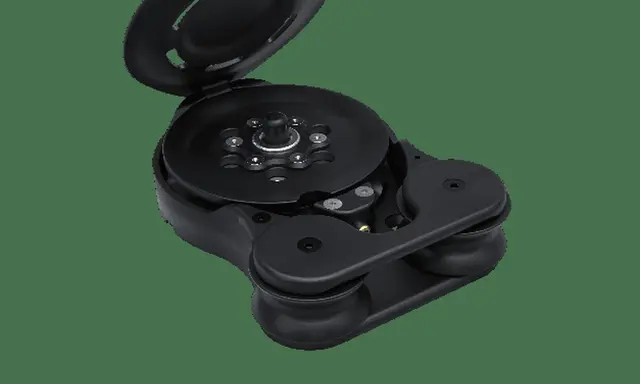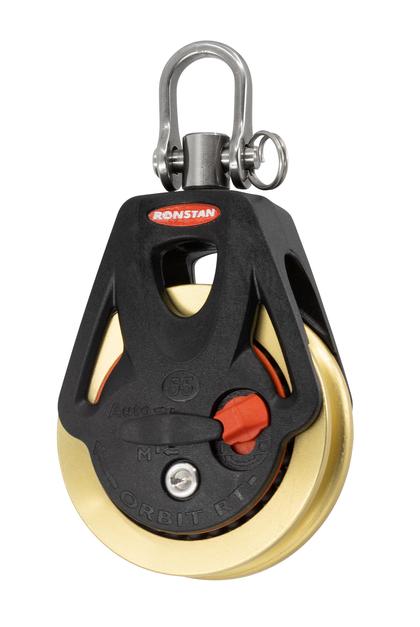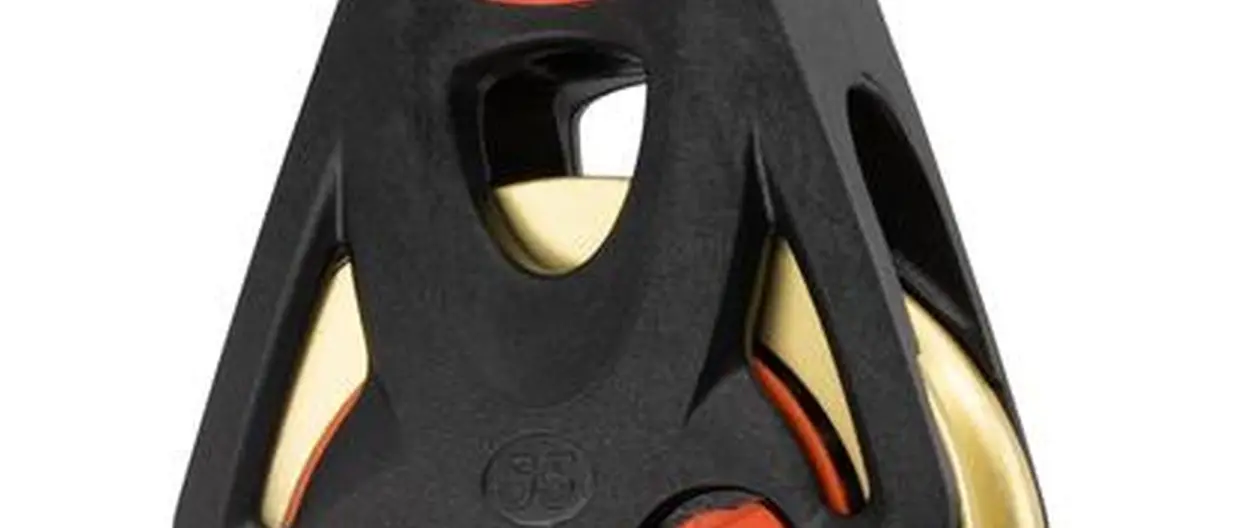
Australian sail-handling manufacturer Ronstan has presented a new Series 55 Ratchet Orbit Block featuring a patent-pending compression sheave, with its official METSTRADE catalogue entry released on 17 November 2026. Rather than relying solely on an abrasive sheave surface to create grip, Ronstan says the design works by compressing the rope within the sheave profile. The manufacturer claims the approach helps reduce line vibration and abrasion while permitting smoother easing and more responsive adjustments. Its product description identifies a ball-bearing ratchet block with a 55-millimetre sheave and highlights the use of existing components and tooling as a way to limit additional production work. These are supplier statements, not independent test results across every rope and sail configuration. For sailors operating luxury yachts in the 12- to 24-metre sector, the development offers another option for sail control and raises specific questions about load capacity, line diameter and suitability for different running-rigging jobs.
The meaning of a ratchet block to a sailor
A ratchet block allows a sailor to manage a loaded line with greater control than a completely free-running pulley in some situations. Its mechanism can help resist reverse movement, while the sheave supports changes in direction and adjustment. The details matter because sail forces fluctuate as the wind shifts and the yacht moves through waves. An inappropriate block can become difficult to use, introduce wear or fail to provide the needed holding characteristics. Ronstan's Series 55 is intended to improve the interaction between the rope and the sheave, rather than replace all conventional blocks aboard a vessel. Buyers need to identify where the design is suited to their specific rigging layout. A product intended for one line-control task should never be assumed safe for another purely because it looks robust.
What the manufacturer says is different
The central claim concerns the compression sheave. Ronstan describes a patent-pending profile that gains grip by compressing the rope, rather than depending on abrasive surface texture alone. The company says this changes how the line behaves when adjusted and may help produce smoother easing with reduced vibration. The description is useful, but it does not specify that the block works identically with every rope construction, cover material or diameter. A yacht's rigger should ask for the approved line size and working load and consult any relevant test data. The geometry of the sheave may influence both holding performance and the rope's longer-term condition. Those outcomes need to be established through documented specifications rather than general claims of innovation.
Rope control is an everyday issue
Luxury sailing yachts may carry sophisticated winches and sail-handling systems, yet crew still need to adjust control lines accurately during ordinary manoeuvres. A small block can influence how smoothly a trim change is completed or how much effort is required. On a 12- to 24-metre yacht, the combination of sail plan, line routing and mechanical assistance varies substantially. Some boats are intended for owner operation with a small crew, while others have more complex professional systems. A 55-millimetre ratchet block may suit selected control lines but not the heaviest primary loads. Ronstan's product should therefore be evaluated in relation to the line and the available winch or mechanical equipment. The right block can make a system more pleasant to use without changing the fundamental limits imposed by sail loads.
Understanding grip without exaggeration
The phrase improved grip may suggest that a line becomes easier to hold, but the actual effect depends on rope properties and the load applied. A compression sheave might reduce certain kinds of slippage while creating different interactions with the rope cover. Sailors should not infer that it removes the need for a winch, cleat or appropriate personal protection. The manufacturer needs to define how the ratchet behaves in different modes and what limits apply. A sailor's control of a loaded line remains subject to the yacht's operational procedures and the forces generated by the sails. Safety comes from the complete system and well-trained crew rather than a single component. The new design may offer useful refinements, but it cannot make every manoeuvre effortless.
Why vibration matters
A line running across a sheave can produce noise or vibration depending on its load, speed and surface interaction. This may be noticeable when a sailor eases a sheet under tension. Ronstan identifies reduced line vibration as a potential benefit of its new compression profile. A quieter feel may contribute to more controlled trimming, particularly during repeated adjustments. However, the public catalogue provides no universal decibel measurement or controlled comparison across typical yacht ropes. Owners should view the claimed improvement as a product feature requiring appropriate demonstration. Rigging geometry, hardware mounting and the condition of surrounding components can all contribute to vibration. A good assessment examines the installed system as a whole instead of attributing every difference to one block.
Abrasion and the cost of rope wear
High-quality running rigging can be expensive to replace, especially when a yacht uses specialised low-stretch ropes and covers. Friction or rough surfaces at frequently used turning points can contribute to wear over time. Ronstan claims that compression-based gripping can reduce abrasive interaction in the ratchet block. The real benefit depends on the rope's construction, environmental exposure, operating loads and how the line is handled. Owners should retain their normal inspection routine rather than assume that a new block eliminates wear. Crew should check for changes in the rope cover, local flattening or other signs of damage in accordance with the rigger's recommendations. Any reduction in wear could be valuable over the course of several seasons, but it needs substantiation in the intended application.
What 55 millimetres does and does not tell us
The Series 55 name refers to the sheave's nominal size, giving a useful indication of the product family. It does not by itself establish the block's safe working load, breaking load, line diameter range or compatibility with every attachment. These figures are essential when specifying deck equipment. Sail forces can be substantial on yachts in the luxury segment, and even auxiliary controls may be highly loaded. A rigger should obtain the official datasheet and confirm the correct model for the task. Installation orientation, the mounting point and the use of shackles or soft attachments may also affect suitability. An owner choosing new equipment should never substitute a familiar size designation for technical verification.
Easing a line can be more important than holding it
Sail handling involves releasing and adjusting tension as well as generating it. A block that grips well but makes easing unpredictable can be inconvenient or potentially hazardous. Ronstan emphasises smoother easing in its announcement, suggesting that the sheave's geometry is designed to manage that transition. A sailor may appreciate a more progressive feel when trimming sails in variable conditions. Still, an improved response on a demonstration rig does not automatically predict identical behaviour on every yacht. The team should consider the rope path, load and the operator's position. A trial in suitable conditions may reveal whether the new block offers a worthwhile improvement. The most useful hardware gives sailors confidence in both directions of line movement.
Integration with an existing rig
Retrofitting a block may seem simpler than replacing a major sail-control system, but compatibility needs close attention. A new block may have different attachment geometry, clearance requirements or a preferred orientation. The owner should ask whether the existing line diameter and rope type are approved. A block mounted in a cramped position could contact nearby equipment or move incorrectly under load. Crew should also consider whether the new ratchet behaviour changes the sequence of a familiar manoeuvre. Installation by a qualified rigger can help identify such issues before sailing. A carefully chosen replacement can improve handling, but an improvised substitution may create problems that were not present with the original equipment.
Racing and cruising priorities are not identical
Performance-oriented sailors may value fine control during frequent sail changes, while cruising owners may place greater emphasis on simplicity and predictability. The same piece of hardware can be attractive for different reasons if it is specified correctly. A ratchet block that helps a trimmer adjust a control line may also reduce effort during routine cruising. But the most demanding race setup is not necessarily the best choice for a family yacht. Sail plans, crew numbers and operating preferences should guide selection. Ronstan's announcement provides a new option for technical discussion rather than a recommendation that every sailor should upgrade. The correct solution emerges from understanding the vessel and its actual use.
The environmental element of existing tooling
Ronstan says it has combined a new sheave design with proven components and existing tooling, claiming that this reduces the manufacturing impact associated with developing the product. That is a narrower statement than a verified life-cycle comparison. The public listing does not give an independent environmental assessment covering raw materials, production energy, transport and disposal. Reusing tooling may avoid the need for some new production resources, but the effect on the overall environmental footprint should not be assumed. Owners who are interested in responsible procurement can ask for further information about material composition, repairability and replacement parts. A durable block that can remain in service for years may provide practical value, but claims about environmental savings should be based on supporting evidence.
Maintenance of a ball-bearing ratchet system
The product includes ball bearings and a ratchet mechanism, both of which may need appropriate inspection and care. Salt, dirt and regular load cycling can affect deck equipment even when it is designed for marine use. Ronstan's service instructions should determine permitted cleaning products, lubrication and any disassembly procedure. Crew should not treat every block in the rig as having identical maintenance requirements. The equipment's operating sound, rotation and attachment condition may provide useful warning signs, but the manufacturer's inspection recommendations remain important. A new component should be entered into the yacht's maintenance records with its model and specification. Good care protects both operational reliability and the owner’s investment.
Working with a sailmaker
Sail control involves the sail, lines and hardware together. A sailmaker or professional rigger may be able to advise whether a compression-sheave ratchet block is useful for a particular arrangement. The diameter and cover of the selected rope can influence performance, while the sailing style may determine whether ratcheting is desirable. Owners should avoid buying a new block purely because its technology sounds advanced. A planned discussion with the sailmaker could identify a suitable location, confirm expected loads and establish any necessary changes to line routing. This is especially important on custom yachts where standard assumptions may not apply. Equipment innovation is most effective when it is incorporated into a coordinated sail-handling design.
The 17 November launch context
The official METSTRADE exhibitor listing dates Ronstan's Series 55 Ratchet Orbit Block announcement to 17 November 2026, the opening day of the Amsterdam marine equipment show. The description identifies the patent-pending compression sheave as the specific development and lists its intended benefits. That makes this a current product introduction, although the source does not establish independent sea-trial results or a named luxury yacht installation. The article concerns a practical refinement to line handling rather than a claim of revolutionising every sailing rig. Owners and crews can examine the product's specifications and decide whether it suits their particular systems. The value of the announcement lies in giving sailors another engineering option to discuss.
A small component with an important job
Large sailing yachts attract attention through their rigs, sail plans and deck layouts, but many everyday handling improvements begin with smaller components. Ronstan's Series 55 demonstrates how a manufacturer can revisit a familiar ratchet block and change the way rope grip is generated. The eventual benefit will depend on how the design performs with suitable lines and loads on real boats. Owners should request technical documentation, test the handling where practical and retain proper inspection routines. A worthwhile equipment change should make the yacht easier to sail without creating new compromises. This is the standard against which the new compression-sheave block deserves to be judged.
Primary source: Ronstan International, official Series 55 Ratchet Orbit Block product entry dated 17 November 2026 in the METSTRADE catalogue. Performance and manufacturing-impact claims are attributed to the manufacturer.
Sources and image credits
Reporting based on Ronstan International, official Series 55 Ratchet Orbit Block release of 17 November 2026.
Lead photograph: Ronstan Series 55 Ratchet Orbit Block original manufacturer product photograph METSTRADE 2026. Ronstan International official Series 55 Ratchet Orbit Block product photograph, supplied to METSTRADE exhibitor catalogue. Original official image source.