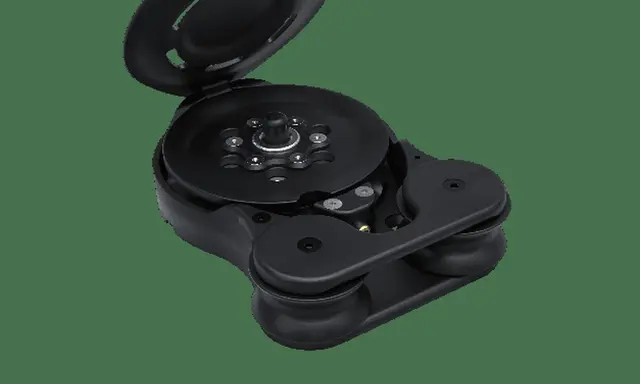
Swedish marine hardware manufacturer Rutgerson Marin is presenting its AIR Flush Portlight in the METSTRADE 2026 catalogue, highlighting an opening portlight designed to sit directly within fixed yacht glazing. The official product listing describes a flush exterior appearance, friction hinges that hold the lid without separate support struts and construction using an anodised aluminium frame with acrylic glazing. It lists the product for integration into fixed acrylic, polycarbonate or glass panels, subject to suitable design and installation, and refers to CE certification for Category A vessels. This is an established product whose exhibitor listing dates its original release to January 2023, not a newly launched November 2026 device. Its current exhibition relevance is the continuing effort to bring useful ventilation into sleek deckhouses and hullside glazing without reverting to visibly bulky fittings. For owners of 12- to 24-metre sailing and motor yachts, the questions are practical: can the portlight be fitted safely, how is it operated and what can it contribute to the boat's airflow and comfort?
Why a small opening matters on a yacht
A modern yacht can have extensive fixed glazing that fills the interior with daylight and offers broad views. Those windows may look impressive, but they do not necessarily allow fresh air to enter. Owners may appreciate the option of opening selected panels in suitable weather, especially when the yacht is at anchor or in a sheltered berth. An opening portlight can contribute to natural ventilation, though it cannot replace a complete air-conditioning or ventilation strategy in every climate. The best location depends on cabin layout, airflow, safety and the way the vessel is used. Rutgerson's AIR Flush design addresses the particular problem of including a practical opening within an otherwise continuous glazed surface. It is a hardware option for designers, not a complete solution to every ventilation challenge.
The manufacturer's stated design approach
The METSTRADE product page says the AIR Flush Portlight can be installed directly into fixed acrylic, polycarbonate or glass panels, giving a flush exterior appearance. Its friction hinges are intended to hold the opening lid without external support brackets, and the supplier identifies anodised aluminium and acrylic among the materials used. These descriptions give the installer an indication of the concept, but they do not establish that every sheet of existing glazing is suitable for modification. The panel thickness, strength and structural role require verification against the complete installation. An owner should ask for an approved drawing and detailed cut-out requirements before arranging work. An attractive fitting cannot be specified safely from its catalogue photograph alone.
The attraction of a flush exterior
Many performance sailing yachts and modern motor yachts are designed with clean exterior lines and glazing that appears integrated into the structure. A prominent opening frame can disrupt that look, particularly where the designer wants the deckhouse to appear low and sculptural. Rutgerson promotes the AIR Flush as a way to reduce that visual interruption. Owners may value the detail because it offers fresh air without making the exterior appear noticeably more complicated. However, visual restraint should not be achieved at the expense of reliable seals, hinges or access. A correctly designed flush opening needs careful treatment of water paths and structural interfaces. The best result balances architectural intent with practical marine engineering.
Friction hinges and everyday operation
The product listing describes friction hinges that hold the lid open without separate supports. This could make operation more convenient where space is limited, but hinge performance depends on the exact design, the size of the opening and its exposure to wind or vessel movement. The owner should test how the lid is opened, held and closed, particularly from a seated or awkward position. The crew may need specific instructions for securing the portlight before navigation. The absence of a visible strut does not eliminate mechanical inspection. Hinges remain moving components, and their ability to retain a particular position should be verified within the maker's operating conditions. Ease of use is a valuable attribute when it is matched by predictable behaviour.
Fresh air in a compact cabin
Some 12- to 24-metre yachts have cabins where space for opening windows is restricted. A small portlight may improve comfort at anchor, depending on the layout and weather. The direction of the opening, proximity to berths and the presence of curtains or blinds can affect how useful it feels in daily life. Designers should look at the intended airflow path rather than assume that one opening makes a cabin adequately ventilated. The owner may want a combination of portlights, hatches and mechanical systems to provide flexible choices. A flush fitting can support that design if its location is appropriate. The objective is a comfortable cabin that remains safe and practical when the vessel is moving.
Not every glazing panel can be modified
A vessel may have curved, laminated or otherwise specialised glazing that serves a structural or safety function. Cutting an opening into an existing window can alter its performance and may not be permitted. Rutgerson's product description refers to fixed panels made from several materials, but that does not mean a retrofit is automatically feasible. The shipyard should obtain guidance from the glazing manufacturer, designer and relevant technical authorities before modifying a panel. A newbuild may offer more flexibility because the aperture can be planned during the original design. For a refit, inspection is essential. The owner must understand that a portlight is part of a larger glazing system, not merely a small accessory that can be attached anywhere.
CE and offshore capability require context
The exhibitor description refers to CE certification for Category A vessels, which is a useful technical statement but requires care in interpretation. The purchaser should request the product-specific documentation and determine which configuration, dimensions and installation conditions are covered. A certificate associated with a component is not proof that every glazing installation or entire yacht automatically meets a particular design category. Flag and classification requirements may also differ, particularly for larger or commercial vessels. The yacht's project team should establish the correct approval route and preserve supporting documentation. Proper due diligence protects both the owner and the builder from assuming that a high-level catalogue claim covers every technical detail.
How water tightness should be assessed
An opening in a boat's exterior must resist water under the conditions for which it has been designed. A flush portlight may have seals, locking arrangements and drainage features whose performance depends on correct installation. The official AIR Flush page describes the intended marine application but does not supply complete test results for every possible size or orientation. Owners should ask whether the proposed location experiences green water, spray or other loads beyond the product's permitted scope. The crew must also know when the portlight should be closed and secured. A fitting that is suitable at anchor may not be appropriate to leave open while underway. Safe operation is as important as component certification.
Interior design and the framing of the view
A portlight can be a small detail, yet its location affects how a cabin is experienced. A carefully placed opening may admit a breeze while preserving a view through adjacent fixed glazing. The interior designer should consider the visible frame, any trim and how the unit meets surrounding wall panels. It should be easy to operate without interfering with blinds or furniture. The outside profile should also be reviewed from different angles, since the purpose of a flush design is partly aesthetic. A physical sample may help the owner understand how the hinge feels and how much of the glazing area becomes obstructed. Good design treats ventilation and appearance as connected decisions.
The impact of noise
Natural ventilation can be pleasant in mild weather, but an open portlight may allow sound from wind, marinas or neighbouring boats into the accommodation. Owners should think about when they intend to use the opening. A cabin beside a busy quay may still depend on mechanical ventilation or air conditioning at night. The AIR Flush hardware does not guarantee an acoustically quiet environment when open. When closed, the complete glazing and sealing arrangement will influence sound transmission. Those properties require documentation for the selected installation. A flexible design provides several comfort options rather than promising that an opening portlight will be preferable in every situation.
Condensation and moisture
Boat interiors can experience condensation and humidity, particularly when warm moist air meets cooler surfaces. Ventilation may help manage some conditions, but the effect depends on airflow and the wider interior climate. A portlight should not be promoted as eliminating all condensation problems. The owner should consider insulation, mechanical ventilation, heating and the activities that generate moisture aboard. The installation itself should be designed to minimise water ingress and avoid hidden areas where moisture could accumulate. Cleaning and inspection of seals are part of long-term care. A small opening can be useful within a planned ventilation strategy, but it is not an alternative to resolving underlying moisture issues.
Deckhouse ventilation on a sailing yacht
A sailing yacht's deckhouse may experience changing wind directions and spray as the boat heels or changes course. An opening within the glazing could contribute to airflow at anchor, but the crew must understand its permitted operating conditions. The position should not create a hazard for anyone moving across the deck or working with lines. A portlight fitted near sails, rigging or other equipment requires special consideration. Design approval should account for the yacht's motion and the location of the surrounding structure. Owners may be attracted to flush hardware because it keeps the exterior uncluttered; the technical team must still establish that the opening can be operated and secured safely.
A refit requires careful sequencing
If an existing yacht is to receive opening portlights, the project should begin with a survey and a review of the original glazing specification. The contractor needs to establish whether replacement panels or new surrounds are necessary. The available space for hinges and seals may be limited by interior furniture or structural reinforcements. Testing after installation is important, particularly for water tightness and operation. The owner should also plan for the possibility that glazing work takes longer than anticipated because materials or approvals are specialised. A well-managed refit can provide a meaningful comfort improvement, but an improvised installation risks expensive problems later. Careful planning is more important than selecting a convenient-looking fitting.
Maintenance of hinges and seals
A portlight may be opened and closed many times during a cruising season. Seals can accumulate dirt, and moving components may require inspection according to the manufacturer's instructions. The owner should ensure that the yacht's crew have the correct cleaning and maintenance information. Inappropriate solvents may damage acrylic surfaces or the finish of anodised aluminium. The hinges should be checked for movement or wear, and any locking arrangement should operate predictably. Replacement seal availability is worth investigating when ordering. A well-maintained opening can remain useful for years, while a neglected component may become difficult to close properly. Long-term serviceability is part of the purchasing decision.
A current showcase with an earlier release date
The AIR Flush Portlight appears in Rutgerson's METSTRADE 2026 catalogue, but the official listing gives 1 January 2023 as its release date. It would be inaccurate to describe the product as newly launched during this November exhibition. The current news value is its continuing presence in the supplier's offering at a trade show where builders and refit specialists evaluate hardware for future projects. It also provides a documented example of the industry's preference for integrated exterior lines and flexible ventilation. Owners should assess the product's current specifications rather than assume that the original 2023 details remain unchanged in every configuration. Any new product developments should be confirmed separately.
The design decision behind a small opening
For an owner, an opening portlight may not seem as exciting as a new sail plan or propulsion system. Yet small design decisions often determine whether a boat feels comfortable during ordinary cruising. Rutgerson's AIR Flush approach seeks to integrate ventilation into glazing with minimal exterior interruption, giving designers another way to balance appearance and practical use. The right installation depends on structural compatibility, reliable sealing, ease of operation and the yacht's operating conditions. When those questions are resolved properly, a discreet opening can support the pleasure of fresh air and open views without adding unnecessary visual clutter. It illustrates how marine hardware can contribute to the quality of life aboard even when it is not a brand-new invention.
Primary source: Rutgerson Marin AB, AIR Flush Portlight product entry exhibited at METSTRADE 2026, with an original release date of 1 January 2023. Material, design and CE claims are attributed to the supplier and require installation-specific verification.
Sources and image credits
Reporting based on Rutgerson Marin AB original product catalogue, dated 1 January 2023, continuing to be shown at METSTRADE 2026.
Lead photograph: Rutgerson Marin AIR Flush marine portlight official supplier product photograph. Rutgerson Marin AB original AIR Flush Portlight manufacturer photograph from its official METSTRADE exhibitor product page. Original official image source.