A compact protection profile in the 2026 marine catalogue
Italian manufacturer Tessilmare lists its FLEXY anti-scratch fender among the marine accessories in the METSTRADE 2026 catalogue. The product is described as a soft-PVC protective profile 150 millimetres wide, intended to follow curved or irregular hull and dockside surfaces. The exhibitor entry dates its release to 9 January 2026, so its presence in the current catalogue is not a fresh November launch. For luxury-yacht owners, the useful point is the availability of a flexible protective system for places where conventional separate hanging fenders may not provide a neat or reliable contact surface. Suitability depends on geometry, material performance and installation, rather than advertising language alone.
The difference between a conventional fender and a profile
Traditional cylindrical or spherical inflatable fenders hang from rails or cleats and form a cushion between the yacht and a quay or another vessel. A protective profile is often intended to cover a defined edge or surface and remain positioned through repeated movements. It can be especially useful in an area with corners, curved sections or a narrow contact strip. The two approaches are not interchangeable in every setting. A small profile might protect against scuffing during controlled contact but cannot automatically absorb the energy of a moving 20-metre yacht approaching a berth. Owners need to understand the expected contact load before substituting any fixed protector for a conventional fender.
Flexibility for curves and awkward corners
Tessilmare promotes FLEXY's ability to adapt to bends, corners and irregular shapes. That is particularly relevant when a protective strip needs to follow a transom, bathing-platform edge or custom marina contact surface that is not perfectly straight. A rigid extrusion may stand proud at tight curves or require unsightly joints. A more compliant profile can potentially produce a continuous visual result. But the radius of curvature, the backing surface and the method of attachment all influence whether the product stays in place under load. The manufacturer's detailed fitting guidance should be checked rather than treating the word flexible as proof of universal compatibility.
Soft PVC and contact with painted surfaces
The supplier identifies soft PVC as the material used for FLEXY. Its flexibility is valuable for producing a compliant contact layer, but compatibility with the yacht's finish is a separate question. Painted hulls, polished gelcoat, vinyl wrapping and coated timber can react differently to prolonged pressure, trapped dirt or contact with some plastics. Owners should avoid assuming any soft material is guaranteed never to mark a finish. Where the profile touches a high-value painted surface, a controlled compatibility trial or written guidance from both the protection-system supplier and paint manufacturer may be prudent. The condition of the contact area also matters as much as the profile itself.
Why the width is only one specification
The catalogue refers to a 150-millimetre size, which is useful when assessing visual scale and the width of an exposed edge. It is not, by itself, a validated measure of impact energy absorption or the length required to protect a berth. A yacht that rolls in a swell creates dynamic loads that are much higher than a static touch test might suggest. A dockside installation needs to account for water level, tidal range and the yacht's fendering points. Owners should request the full section drawing, mounting information and any tested performance data before ordering a length based only on the published width.
Where a flexible protector may be particularly useful
The most compelling applications tend to be locations where conventional fenders are awkward to position. A curved marina pontoon corner, a dedicated tender landing or the edge of a boarding area may benefit from a fitted contact strip that protects against routine small movements. On a yacht, a carefully designed profile could form part of a tender-loading arrangement or protect a frequently used access point, if approved for that duty. It should not be mounted where it blocks drainage, access panels or essential safety fittings. The exact placement and fixing system need to be designed around the loads and surfaces encountered in the intended use.
Installation quality determines durability
Tessilmare describes FLEXY as straightforward to install, but any promise of reduced fitting time should be understood as a manufacturer claim, not a guarantee for every yacht. Preparing the mounting surface, following the correct curve and dealing with end connections can take considerable care. A poorly supported section may lift at the ends or trap dirt and water behind it. Before work begins, an installer should establish which fixing method the manufacturer approves and whether the substrate needs additional preparation. If adhesive or mechanical fasteners are specified, their compatibility with the surrounding structure must also be checked. A tidy initial appearance is not sufficient evidence of a durable fit.
Fender systems must be designed for the entire berth
An owner might be tempted to install a continuous profile along a favourite marina berth and remove most of the hanging fenders. That is sensible only after examining how the yacht actually moves. Wind, wash and tide can change the contact position, causing loads to shift to exposed railings, hull corners or anchor equipment. The protective system must allow for the vessel's varying freeboard and the geometry of the dock. In some settings, a fixed profile is best used together with conventional fenders, rather than as a replacement. The correct arrangement may also need a second layer of protection if the yacht is left unattended in an exposed location.
Maintenance of a fixed protection surface
A fitted protective strip can collect salt, marine growth, grit and cleaning-product residue. If these are ignored, a material intended to prevent scuffing may itself hold abrasive particles against paint or gelcoat. Regular cleaning and inspection are therefore part of the operating plan. Crew should check for loosening, deformation, exposed fasteners and deterioration at joints or corners. If a section becomes damaged, it is helpful to know whether it can be replaced locally without dismantling the entire run. Owners should obtain the recommended cleaning method and any limitations on solvents, pressure washing or polishing products before including it in a maintenance schedule.
Appearance is important but not the first criterion
Contemporary yacht design often favours smooth lines and minimal visible hardware, particularly around bathing platforms and tender access. A flexible protective profile may help achieve that aesthetic while serving an operational purpose. Yet a discreet installation that provides inadequate cushioning is a poor engineering result. Designers should agree the required protective function first, then select a product and colour or finish that suits the vessel. It may be appropriate to keep a visible protective strip in a place where it signals a frequent contact point, rather than conceal it at the expense of safe use. The best visual solution is one that remains functional after years of normal handling.
Refits versus new-build applications
A new-build designer can incorporate fendering and reinforcement into the structure from the beginning. A refit yard has to work around existing rails, hull surfaces and support members. A flexible profile may be easier to fit to an older curved edge, but the substrate must still be checked for strength and condition. Owners should ask whether additional backing, sealing or drainage is required, and whether the product can be removed without damaging expensive coatings. The total cost includes preparation, installation, maintenance and eventual replacement, not just the price per metre. Early inspection of the yacht's actual geometry can reduce unnecessary cutting or rework.
Material evidence and responsible performance claims
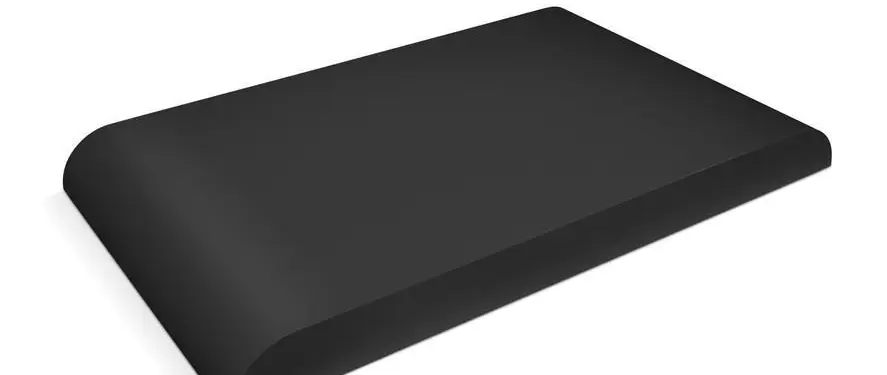
The manufacturer's catalogue describes FLEXY in terms of protection, flexibility and resistance to impacts and abrasion. It does not publish a comprehensive independent energy-absorption chart within that short listing. Such data should not be fabricated or inferred from the soft appearance of a sample. Nor does a manufacturer product image demonstrate its suitability for a particular 20-metre yacht or pontoon. Prospective buyers should request tested physical properties, application guidance, expected service conditions and any warranty terms relevant to the installation. If the berth is exposed to significant swell or commercial traffic, a qualified harbour or marine engineer may need to review the complete fendering arrangement.
A practical specification before ordering
An effective purchase brief would state the intended contact area, full dimensions, shape of the substrate, expected vessel movement and finish to be protected. The supplier can then confirm whether FLEXY is suitable and provide the proper mounting and end-treatment method. The installer should record the product version and material used, taking photographs of hidden fixings before they are covered. Crew should receive clear instructions for cleaning and checking the finished work. Where the profile is installed on marina property rather than the yacht, the operator's consent and responsibilities for maintenance need to be settled before the work starts.
The significance of the 2026 catalogue listing
FLEXY is a relatively focused product, but it illustrates how marine suppliers are applying flexible materials to common practical problems rather than relying only on larger conventional fenders. The confirmed claims are those made by Tessilmare in its official METSTRADE entry: a 150-millimetre soft-PVC anti-scratch profile intended for curved or irregular installations, with a January 2026 product date. The lead visual is the manufacturer-submitted product image, not a picture of a completed installation aboard a named yacht. For owners in the 12–23.99-metre market, the important question is whether a fitted protector helps in a specific docking or access arrangement without giving false confidence about the forces it can absorb.
Source and image: Primary product data: https://www.metstrade.com/products-and-services/tessilmare-s-r-l/products/flexy-anti-scratch-fender. Photo: Tessilmare first-party product rendering supplied to METSTRADE for its FLEXY listing. Original media URL: https://stpsprodwe.blob.core.windows.net/media-blobs/27c2ea21e29f8880101f25caf67d98bd_1200x627.jpg.