A coordinated marine upholstery collection in the 2026 catalogue
Griffine Industries is presenting STORY PLAISANCE as a group of coated furnishing materials conceived for yachts, in the METSTRADE 2026 exhibitor catalogue. The manufacturer describes three families, SIESTE BAKERO, PLAISANCE and GLOBE, united by an approach intended to link interior and exterior styling. Its declared palette spans eight shades grouped into two colour concepts called PLEIN SOLEIL and HAUTE MER. The product entry dates to September 2026, so this is an assessment of a current range rather than a claim that it first appeared on 24 November. For yacht owners, coordinated materials are useful only if appearance is supported by the right technical properties and maintenance requirements.
Why upholstery is an engineering decision
Furniture upholstery can appear to be a decorative choice, but on a moving, humid and salt-exposed vessel it is also part of the engineering specification. A berth bolster, a cockpit cushion and an interior wall lining experience very different stresses. Sunlight, abrasion, spilled drinks, cleaning products and constant flexing can shorten the useful life of an attractive surface. Griffine's listing highlights design and durability, but it does not provide a complete common test sheet for every variant. A yard or owner should request product-specific properties and confirm suitability for the intended location rather than treat a collection name as evidence of universal marine performance.
The three material families deserve separate assessment
The manufacturer groups SIESTE BAKERO, PLAISANCE and GLOBE within its wider STORY presentation, describing leather-like grains, textile effects and other subtle surface patterns. This allows a designer to create visual links between different seating and lining areas without using an identical finish everywhere. A yacht with a sunbed, sheltered cockpit sofa and interior saloon may benefit from a coherent colour direction combined with materials selected for different exposure. The key question is whether each nominated family has the right backing, elasticity, abrasion resistance and cleaning instructions. A coordinated palette alone is not proof that the same product is suitable for every surface.
Interior and exterior continuity has limits
Modern luxury yachts often use sliding glass doors, open aft salons and shaded terraces to dissolve the apparent boundary between indoor and outdoor living. A continuous furnishing scheme can reinforce that impression, especially on vessels in the 12-to-24-metre market where spaces are compact. But the exterior still faces direct ultraviolet light, standing water, sun-heated surfaces and salt spray. If a designer attempts to carry an interior-only material outside solely for visual continuity, premature failure may result. Griffine's marine-focused presentation offers a means of discussing complementary materials, while the selection for any particular cushion or lining should remain evidence-based.
Colour families and long-term appearance
The two palette concepts, PLEIN SOLEIL and HAUTE MER, are a useful language for discussing a yacht's look with an interior designer. Light colours can make a compact cabin feel brighter, while deeper tones may create contrast and help define social areas. Yet colour choice affects more than mood. Pale materials can make staining conspicuous and dark surfaces may become hot when exposed to strong sunlight. Different pigments can weather differently. Owners should ask for real physical swatches and compare them in both natural light and the yacht's artificial lighting. Catalogue photographs can be affected by screen settings and cannot reliably predict the final appearance of a large upholstered area.
Saltwater and cleaning routines shape ownership
A surface used outside must survive not only occasional seawater exposure but the cleaning that follows. Salt deposits, sunscreen, body oils and food residues can be difficult to remove without damaging sensitive finishes. A coated material's durability depends on both its top layer and supporting construction. Before choosing a replacement for exterior cushions, the owner's maintenance team should obtain clear instructions on rinsing, approved cleaning solutions, stain removal and drying. Materials that require delicate care may be poorly suited to a busy charter or family yacht, however attractive their texture. Good maintenance documentation often has more long-term value than a broad marketing claim of robustness.
Upholstery should be matched to the underlying cushion
Changing the visible covering does not necessarily address problems with the foam, drainage or structural support beneath it. An outdoor cushion may retain moisture because of unsuitable foam, blocked drainage paths or a cover arrangement that encourages pooling. Replacing only the outer material can leave the same problem hidden beneath a more expensive finish. Designers should examine the entire assembly, including stitching, seams, zips, ventilation and the suitability of the substrate. If a Griffine coated fabric is selected, the construction should be compatible with the manufacturer’s recommended preparation and joining methods. The result should remain comfortable and serviceable after repeated use.
Fire and regulatory characteristics cannot be assumed
Marine interiors may be subject to specific fire, smoke or other material requirements depending on the vessel's use, flag, certification and size. The METSTRADE collection description does not establish that every STORY PLAISANCE variant carries every possible approval. A product intended for private recreational seating may need different evidence from one proposed for a commercial charter vessel with particular survey requirements. Builders should request the applicable certificates, including their scope, expiry and relationship to the exact product supplied. Owners should avoid the common mistake of treating general marketing phrases such as marine grade as a substitute for documentation acceptable to a surveyor or insurer.
Wear testing requires context
Some upholstery suppliers refer to abrasion tests, lightfastness measures or resistance to particular substances. Such data are most meaningful when the method and test conditions are available. A strong performance result in one standard does not imply complete resistance to sharp objects, repeated flexing, suntan lotion or tropical ultraviolet exposure. Griffine's catalogue stresses durability and technical performance, but buyers should ask for the tested values of each chosen family. Samples can then be compared against the real duties of a yacht's saloon bench, exterior lounger or crew seat. This avoids selecting a material based on a single impressive number that measures the wrong type of stress.
What a refit specification should contain
A professional refurbishment schedule should identify the fabric name, colour, finish, backing, approved use, seam method, cleaning requirements and any relevant certification for each seating or lining location. If several families share a palette, they should still be scheduled separately so the upholsterer does not substitute one for another without approval. Material consumption, grain direction and wastage should be calculated before work begins. Owners may want a second set of cushions or spare material for future repairs, particularly if the yacht cruises far from the original yard. A modest stock of confirmed matching material can avoid visible repairs using a discontinued shade.
The role of the specialist upholsterer
Yacht upholstery is a craft as much as a product selection process. Seam placement affects comfort and appearance, while poorly aligned grain, excessive tension or unsupported corners can undermine a premium material. On exterior seating, a well-designed pattern can reduce water traps and improve the ease of removing cushions for storage. Experienced marine upholsterers can advise where a coated fabric is appropriate and where a breathable textile or different solution might serve better. The manufacturer supplies the material options, but the contractor determines many of the details that owners actually experience. Samples should be fitted or mock-ups prepared before the full production run.
Assessing environmental claims responsibly
Longer service life can potentially reduce the frequency of replacing materials, but a product’s overall environmental effect cannot be inferred from its appearance or claimed durability alone. An assessment would need reliable information on raw materials, manufacturing, transportation, cleaning, repair and end-of-life treatment. A coated material may provide practical advantages while still involving substances or processes that require careful management. STORY PLAISANCE is presented principally around design, performance and marine suitability. Without independent lifecycle data for the exact formulation, it would be inappropriate to assign an emissions benefit or portray it as fully recyclable. Owners can instead prioritise measured durability, maintainability and an honest replacement plan.
How to evaluate the samples aboard a yacht
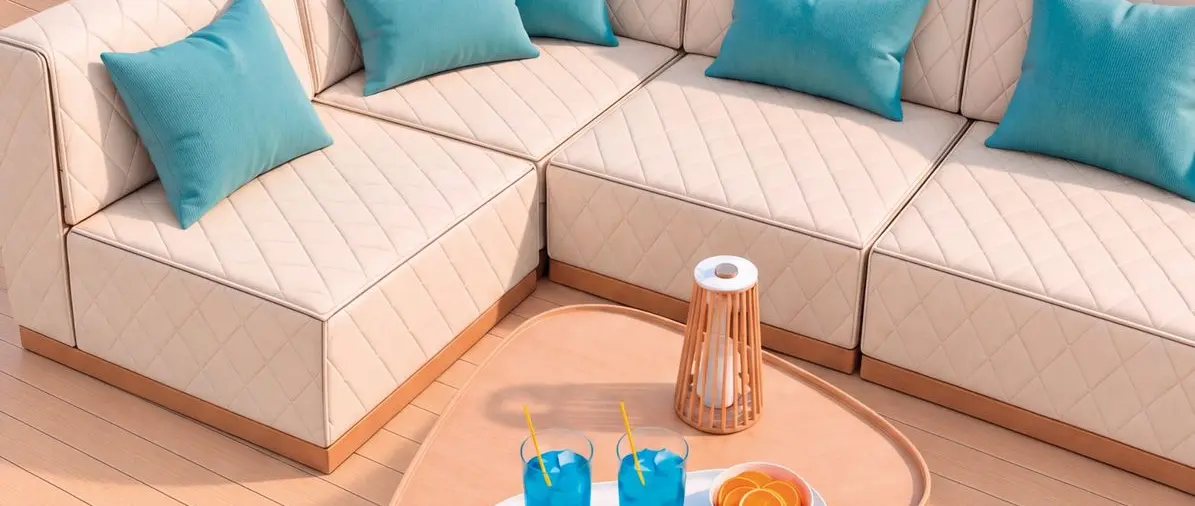
A useful selection meeting should take place on the vessel or with accurate panels of its materials and finishes. Designers can place swatches near the existing teak, painted surfaces, glass and cabin lighting, then review them at different times of day. Crew can contribute observations about cleaning, slipping on seating, storage and previous failure points. If a trial cushion is practical, it can reveal whether the selected covering feels comfortable and how seams behave under load. These checks are more reliable than relying on a lifestyle image supplied with an exhibition listing. The catalogue images should be credited as manufacturer-submitted illustrations of the material concept, not independent durability tests.
What the catalogue actually establishes
The METSTRADE entry establishes the STORY PLAISANCE collection name, its three associated material families, the eight-colour palette and the manufacturer's positioning for interiors and exteriors. Griffine's official marine material information supports its broader focus on coated fabrics for yacht applications. The listing alone does not document specific performance certification for every finish, a list of completed installations or an independent comparison with rival fabrics. For 12–23.99-metre yacht owners the significance is the availability of a coordinated design approach that still invites careful material-by-material technical review. The final decision should rest on samples, certificates, service needs and the intended experience aboard the actual yacht.
Source and image: Primary product data: https://www.metstrade.com/products-and-services/griffine-industries/products/story-plaisance. Photo: Griffine Industries official portrait-format manufacturer photograph of its STORY PLAISANCE marine upholstery material, supplied to METSTRADE Original media URL: https://stpsprodwe.blob.core.windows.net/media-blobs/9eda6c2b7f83d901d968b701bce3f1db.jpg.