Tecma tackles the space behind a marine toilet
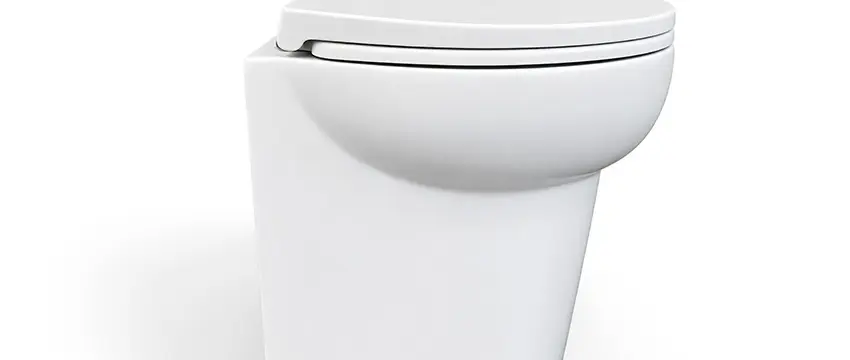
Tecma introduced EasyFlow on 17 November at METSTRADE in Amsterdam, describing the sanitation unit as a development of its Compact Line intended to make installation easier. The most significant change is a flat rear profile that allows the ceramic fixture to be positioned flush against a bulkhead. The Italian marine sanitation specialist has retained its MAC 4 macerating system while introducing a dedicated hydraulic arrangement and a control panel specific to the new product.
The published target is vessels between 25 and 50 feet, or approximately 7.6 to 15.2 metres. For Luxury Yacht Guide readers, the relevant part of that range is the smaller end of the luxury cruising-yacht market, from twelve metres to the stated upper limit. This is not a unit that should be assumed to suit every larger yacht. Compatibility depends on the individual installation and the manufacturer's technical requirements. The release nevertheless illustrates why the layout of even a relatively familiar onboard appliance remains an important issue for yacht builders.
Making the most of a compact bathroom
A toilet in a marine bathroom occupies more space than its visible footprint alone suggests. The installation requires water and discharge connections, wiring and appropriate clearance for access to the system. A protruding rear section can dictate how the surrounding furniture is arranged, particularly in a compartment that follows the curve of a hull or shares a partition with a cabin.
EasyFlow's flat back is intended to reduce the unused gap between the ceramic fixture and the bulkhead. That can offer designers greater freedom to organise the space in front of the appliance, but the release does not specify how much usable area is gained compared with a particular previous model. A boatbuilder should compare the actual dimension drawings for the intended installation, rather than assuming a uniform saving across different layouts.
The benefit may also extend to cleaning: a more closely integrated fixture can reduce the prominence of awkward gaps in the finished room. That does not eliminate the requirement for access to connections or fastenings behind the unit. Flush mounting should be distinguished from an installation that makes the plumbing impossible to inspect without removing adjacent furniture.
A smaller boat has different design priorities
In a twelve-to-fifteen-metre yacht, a bathroom may be positioned beside a berth, a companionway or a storage compartment. Its geometry is often determined by other structural and accommodation decisions. A few centimetres of additional clearance can improve how readily a person uses the room, but only if the door, shower fittings and other fixtures have been planned together.
The manufacturer describes EasyFlow as available exclusively in a high-profile configuration. That is a useful distinction when examining a replacement project because the new product cannot simply be treated as a direct substitute for every low-profile Compact Line installation. Seat height, the height of a mounting platform and the usable volume available beneath or behind the fixture should all be established from the applicable drawings. On a yacht where the bathroom sole rises above the rest of the cabin, the balance between a convenient seat height and mechanical clearance may be particularly important.
Retaining the MAC 4 macerating architecture
Tecma identifies MAC 4 as the established macerating system used in EasyFlow. A marine macerator reduces solids and moves wastewater into the appropriate part of a vessel's sanitation system. The exact pump capability, permissible routing and installation constraints must be obtained from the supplier's documentation for the new unit. The press announcement offers no quantitative flow or power-consumption comparison with other models.
Maceration is one element of a wider installation. The vessel's holding tank, discharge plumbing, electrical supply and control arrangement also need to be compatible with the equipment. Replacing only the visible fixture without examining the rest of that system can create complications that a different ceramic design cannot solve.
A builder or installer specifying EasyFlow should determine the actual routing and service requirements, and compare those details with the conditions of the intended yacht. Owners should follow the marine sanitation system's prescribed operating and maintenance instructions. The product announcement is a starting point for a specification discussion, not a substitute for installation and operating manuals.
What changes in the hydraulic layout
The company says its dedicated hydraulic arrangement is intended to simplify installation and servicing. This is relevant to a production builder because repeatable assembly is an important consideration when a fixture is installed in numerous boats of the same model. Smaller variations in connection placement and accessible clearance can have consequences for assembly time, subsequent maintenance and the complexity of work behind the bathroom panels.
It is also relevant to refit projects. A replacement unit may be installed into a compartment originally laid out around different connections, so the installer must determine whether the new arrangement can be accommodated without unreasonable work. The term installation flexibility should not be read as a claim of universal interchangeability.
A survey of the existing system and a comparison of the two sets of dimension drawings can help establish whether a project is straightforward. Any work affecting the installation's mechanical, electrical or sanitation systems should be undertaken with the relevant professional guidance. The public launch material does not establish which existing models can be replaced without modification.
User controls and the accommodation finish
EasyFlow has a dedicated control panel, which Tecma describes as straightforward to use. The fixture itself uses gloss-white ceramic and a white soft-close seat and cover. These are familiar choices for contemporary accommodation design, rather than the headline engineering departure of the product.
A dedicated interface nevertheless deserves consideration from a charter operator or an owner who frequently welcomes guests aboard. Controls that are clearly understood can reduce the need for lengthy explanations about routine operation. The actual functions and their instructions should be reviewed before deciding how the panel will be located. The release does not give a complete description of the available operating modes or settings, so those cannot be assumed from the name of the control system.
The finished bathroom should be assessed as part of the accommodation as a whole. Reach to the controls, the location of cleaning materials and the accessibility of service panels all matter to people using and maintaining a yacht over a full cruising season. A clean exterior appearance is beneficial only when the equipment behind it remains practical to maintain.
Considering ownership costs
Marine sanitation equipment is a substantial ownership consideration even though it is not normally the centrepiece of a yacht's sales presentation. A failure can interrupt comfortable use of the accommodation, and an inaccessible installation can substantially increase the labour involved in a repair. Owners comparing products should consider parts availability, local service provision, anticipated installation work and the conditions of the manufacturer's warranty.
The price of the new unit and its availability across individual markets were not stated in the reviewed exhibition announcement. There is therefore no basis for claiming that EasyFlow is cheaper to buy or maintain than its predecessor. Its principal stated advantage is the revised physical integration and service-oriented layout, rather than a quantified reduction in ownership cost.
Implications for new builds and refits
For a new yacht, the specification decision can be made during the development of the bathroom and its surrounding furniture. Bringing plumbing and electrical requirements into the design early may allow the builder to avoid the compromises that arise when a fixture is added after interior layouts have been finalised.
A refit owner faces a different calculation. The existing compartment and equipment arrangement restrict the options, and the value of the replacement needs to be weighed against the additional work required to achieve a satisfactory result. The flat-backed design may be attractive where the previous fixture has an awkward installation footprint. The actual advantage remains dependent on whether the new unit fits the existing service arrangement or justifies changes to it.
Tecma's new model illustrates the continuing effort to improve everyday usability within limited accommodation volume. For smaller luxury yachts, this is a more relevant innovation than a larger or more elaborate appliance conceived for a different vessel category. The November launch gives boatbuilders and equipment suppliers a specific new product to evaluate, with detailed fit, operating and servicing requirements to be confirmed before installation.
Source and product visual
Reporting based on Tecma’s official exhibitor press release of 17 November 2026. The manufacturer-supplied EasyFlow product visual is reproduced in the editorial context of the METSTRADE virtual press room. Credit: Thetford Marine / Tecma. Native resolution retained; copyright remains with the rights holder.