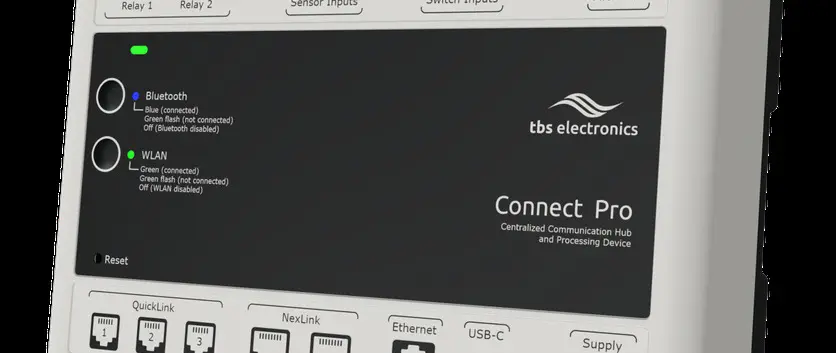
A control point for increasingly complicated electrical systems
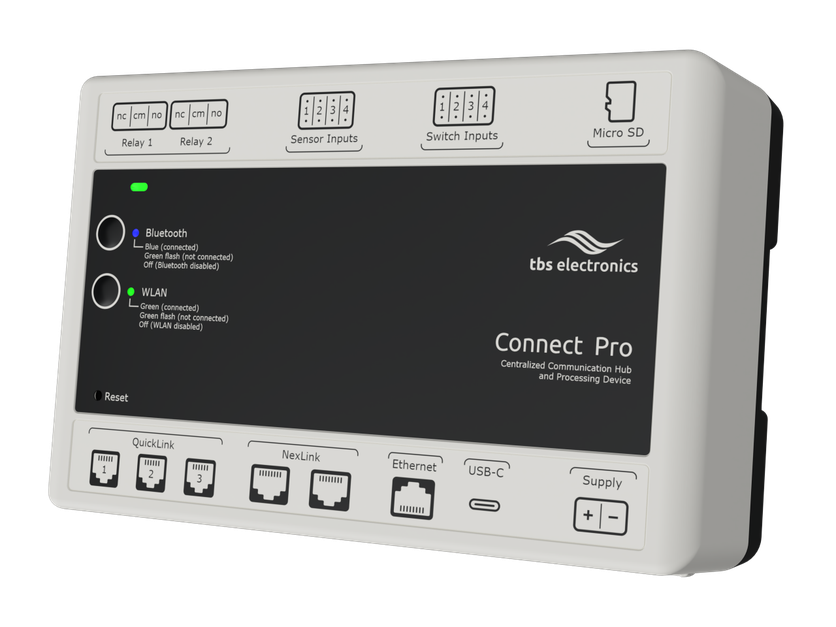
TBS Electronics has presented Connect, a communications and processing hub designed to bring information from its onboard electrical equipment and selected external sensors into a more accessible format. The Dutch manufacturer's METSTRADE product entry, released on 6 July 2026, describes a unit that gathers data from connected TBS products and makes it available to the company's Control display, a computer through USB or a local SD card for logging. For owners of 12-to-23.99-metre luxury yachts, this development is part of a larger change in how electrical installations are specified. Batteries, chargers, inverters and monitoring devices can each perform well on their own while giving the crew a fragmented picture of the system. A dedicated information hub may make routine observation and fault investigation more coherent, provided all the relevant components are compatible and the installation is properly commissioned. The announcement should not be confused with a promise that every yacht can be controlled remotely or that a new device replaces the judgment of a qualified electrical technician.
What the official description actually establishes
According to TBS Electronics, Connect is intended to collect and process information from compatible TBS energy equipment and external sensor inputs. The product can route data to a Control touch display, make it available through a local USB connection to a computer and store it on an SD card. The company also discusses future mobile-app integration and cloud connectivity, depending on the model. That future-looking language is important. A feature described as a prospective software update must not be represented as a completed service already available to every owner. The official product listing gives a functional overview rather than a complete published list of every supported battery monitor, inverter, charger and protocol. Before using Connect on a yacht, an installer should confirm the precise hardware revision, software version, supported devices and the method for updating and backing up the configuration. Compatibility is an engineering question, not simply a marketing claim.
Why data from several devices is useful
A yacht electrical system can behave differently depending on the demands made by the crew. Charging from shore power, running domestic loads from an inverter and replenishing batteries underway place different demands on equipment. Individual display panels may show local information accurately but make it difficult to see relationships between several devices. Centralised records can help an operator compare events, identify unusual patterns and provide meaningful evidence when requesting service. A hub is especially useful where equipment is hidden in machinery spaces that are difficult to inspect during a passage. The practical benefit is not that the electronics become self-repairing, but that a technician can receive better information about what has happened. A measured trend in charging voltage, for example, needs to be interpreted alongside operating conditions and the equipment specification. A single alarm should not be treated as proof of a specific failure without further investigation.
Local logging has value even without internet
The manufacturer's mention of SD-card data logging is significant for cruising yachts that spend time away from a dependable communications connection. Cloud services can add convenience when available, but a vessel cannot safely depend on an external data centre for every essential onboard function. A local record can preserve the sequence of events during a battery or charging problem and may still be accessible after a remote service connection is lost. The actual logging interval, storage format, retention and overwrite behaviour should be checked before commissioning. Owners should also understand whether recorded information contains personal or operational details that require protection. Proper management includes secure access to the device, sensible backups and clear responsibilities for reviewing alarm histories. A local SD card is not automatically a complete maintenance system, but it can provide a durable source of evidence if the equipment and its storage are maintained.
Bringing the information to a display
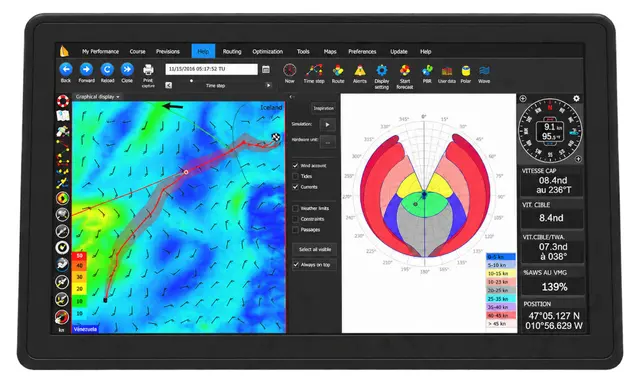
Connect is described as working with TBS's Control display, part of the company's developing onboard energy interface. A single display can make it easier for crew members to find battery and charging information without visiting several panels. Yet a central screen should be designed around the questions the operator actually needs answered. Is enough energy available for the planned overnight anchorage? Is the shore-power charger behaving as expected? Are there unexplained loads that should be checked before departure? The physical location of the display also matters. A screen in a private cabin may be convenient to the owner but less useful to the person responding to an electrical alarm. Yacht designers should consider who is responsible for monitoring each system, how alarm priorities are communicated and what happens if the central display loses power. A monitoring interface is valuable when it makes existing equipment more understandable, not when it adds another layer of confusion.
Data collection is not automatic energy optimisation
Marketing for connected systems can sometimes make it sound as if gathering measurements will instantly improve energy efficiency. The more accurate relationship is that better information creates opportunities for informed decisions. A crew might discover an unexpected overnight load or identify charging cycles that do not match the operating schedule. Whether it can safely change those settings depends on the equipment, manufacturer guidance and the vessel's electrical design. A communications hub does not produce additional battery capacity or alter the limits of an inverter. Nor does it reduce the energy consumption of a refrigeration unit merely by recording its operation. Owners should therefore ask what decisions the new information will support and whether a qualified installer has configured the system to provide reliable, interpretable data. A meaningful commissioning test includes normal and abnormal operating situations, not just a demonstration of changing numbers on a screen.
External sensors require careful integration
TBS says Connect can handle information from external sensors alongside its own equipment. That creates possibilities for broader onboard awareness, but the details should be specified rather than assumed. A sensor that provides tank level, temperature or another measurement must be compatible with the available inputs and any required signal processing. Its output should be calibrated so that the number shown on the display reflects the underlying physical condition. A poorly calibrated sensor can create false confidence, particularly when used to inform maintenance or voyage planning. Installation teams should document sensor type, location, measurement range and any alarm thresholds. They should also establish how the system behaves when a sensor is disconnected or reports an impossible value. Accurate monitoring is not simply a question of connecting wires: the data has to be dependable enough for people to use responsibly.
What happens when the network is unavailable
Centralised systems introduce a new reliability question: what functions remain usable if the hub, a cable or the display becomes unavailable? Ideally, critical battery protection and equipment operation should continue according to their own approved design, independently of a nonessential interface. The exact behaviour must be verified against the TBS documentation for the chosen equipment. An installer should identify whether Connect merely monitors particular functions or participates in control decisions and what safeguards apply in each case. On a yacht, an unexpected loss of information can be inconvenient and may affect troubleshooting, but it should not become a single avoidable point of failure. The owner should know which information can still be read locally at each device and what procedures the crew should follow if the central interface is offline during a passage.
Commissioning is as important as the hardware
The time spent on setup can determine whether the owner ultimately finds a connected system useful. A competent installer should check firmware, wiring, device detection and display readings against the original instruments. The crew should be shown how to navigate the interface, recognise abnormal readings and export any logs that may be requested by a service company. A simple record of the final configuration allows later technicians to understand what has been installed without starting from the beginning. Documentation should include component serial numbers, software versions, wiring schematics and authorised support contacts. It can also be helpful to define who may change alarm settings or other parameters. On a professionally managed yacht, uncontrolled adjustments can create uncertainty when several crew members work on the vessel at different times. The value of a central hub comes from disciplined information management as much as from electronics.
Future cloud access and security boundaries
The manufacturer's July description states that mobile and cloud functionality may be enabled through future updates, depending on model. Those features are potentially convenient for an owner or technical manager who wants information when away from the yacht. They also introduce questions about security, consent and continuity of service. A remote connection should use appropriate authentication and encryption and should be designed so that a loss of internet access does not undermine essential onboard operation. Owners should find out where operational records would be stored, which service providers could access them and how subscriptions or support arrangements might change. None of these questions can be answered simply by seeing the phrase 'cloud ready'. The present confirmed capability is the manufacturer's stated local collection, display, USB and SD-card pathway. Any subsequent mobile functions should be evaluated separately when their precise specifications and availability are published.
Why the product belongs in an owner’s specification review
In a 12-to-23.99-metre yacht, electrical-system complexity can grow rapidly as owners add modern galley equipment, air conditioning, watermakers, navigation technology and larger battery banks. The practical challenge is maintaining control without burdening the crew with an assortment of unrelated interfaces. Connect offers a manufacturer-led route toward combining data from part of that equipment ecosystem. It may be particularly relevant when TBS chargers, inverters and monitors are already being installed in a new build or refit. For a yacht using products from several suppliers, the integration question becomes more complicated and should be assessed early. A purchase decision needs a compatibility matrix, installation quotation and clarity about which functions are live and which are only planned. That is a more reliable basis than selecting the hub solely because it appears at a current trade exhibition.
A measured step toward transparent yacht power
TBS Electronics' Connect entry adds another option to the increasingly connected marine-electrical market. Its strongest verified features are straightforward: collection of compatible system data, routing to the manufacturer's Control display or a computer, and local SD-card logging. The announcement is not evidence of completed autonomous energy management or unrestricted cloud access, and it should not be treated as proof of reduced operating costs without supporting measurements. Those limitations do not diminish the usefulness of an accessible, properly documented system record. In the luxury yacht market, good information can help the owner and crew understand how equipment behaves and communicate more effectively with the people who maintain it. The next test will be how consistently Connect integrates with real installations, whether logs remain understandable over time and how easily technicians can support the resulting system.
Sources and image credits
Reporting based on TBS Electronics official Connect communications hub product release dated 6 July 2026.
Lead photograph: TBS Electronics Connect Hub Brings Yacht Power Data into One Local Interface — original manufacturer photograph. © TBS Electronics Original official image source.