A motorsport engineering company enters marine energy storage
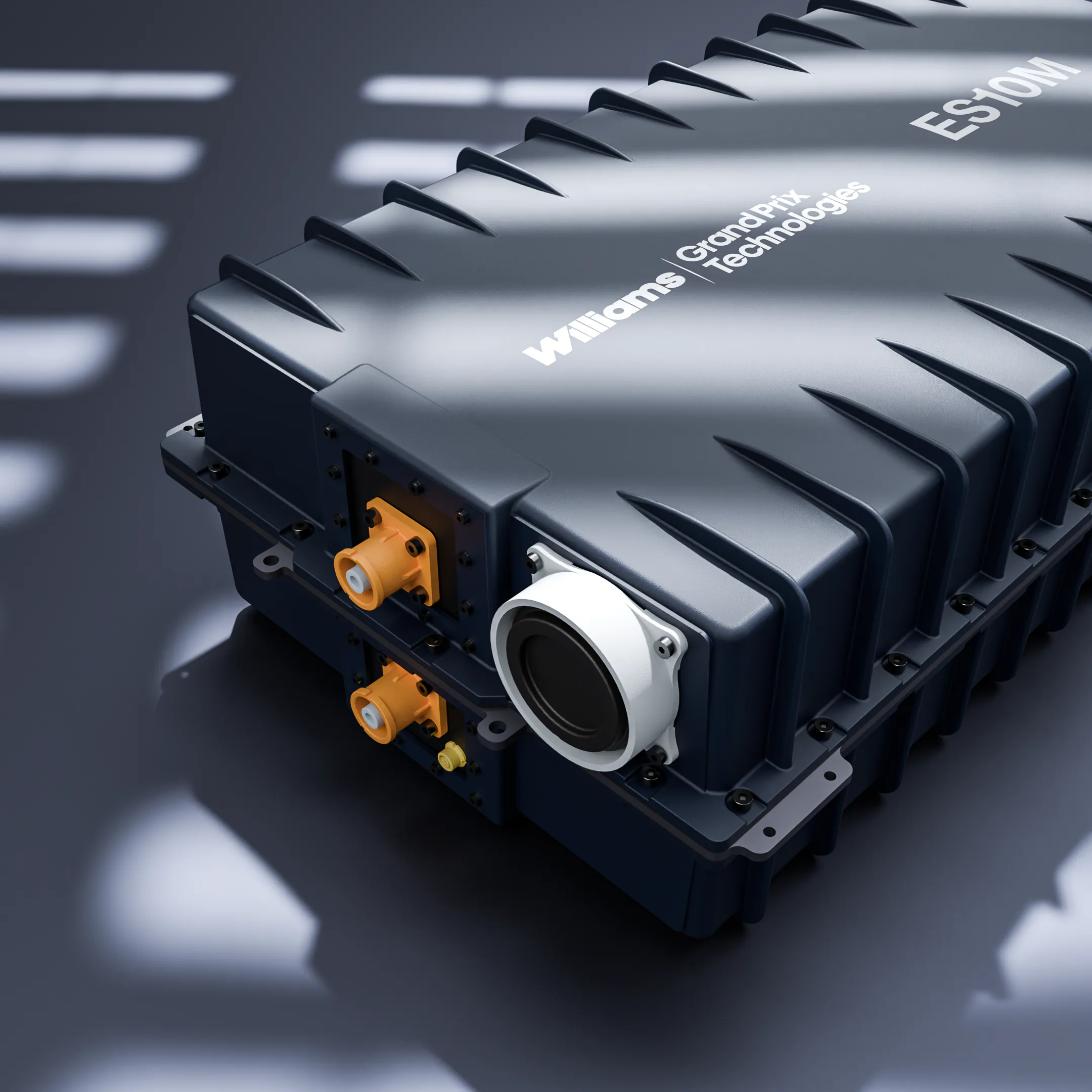
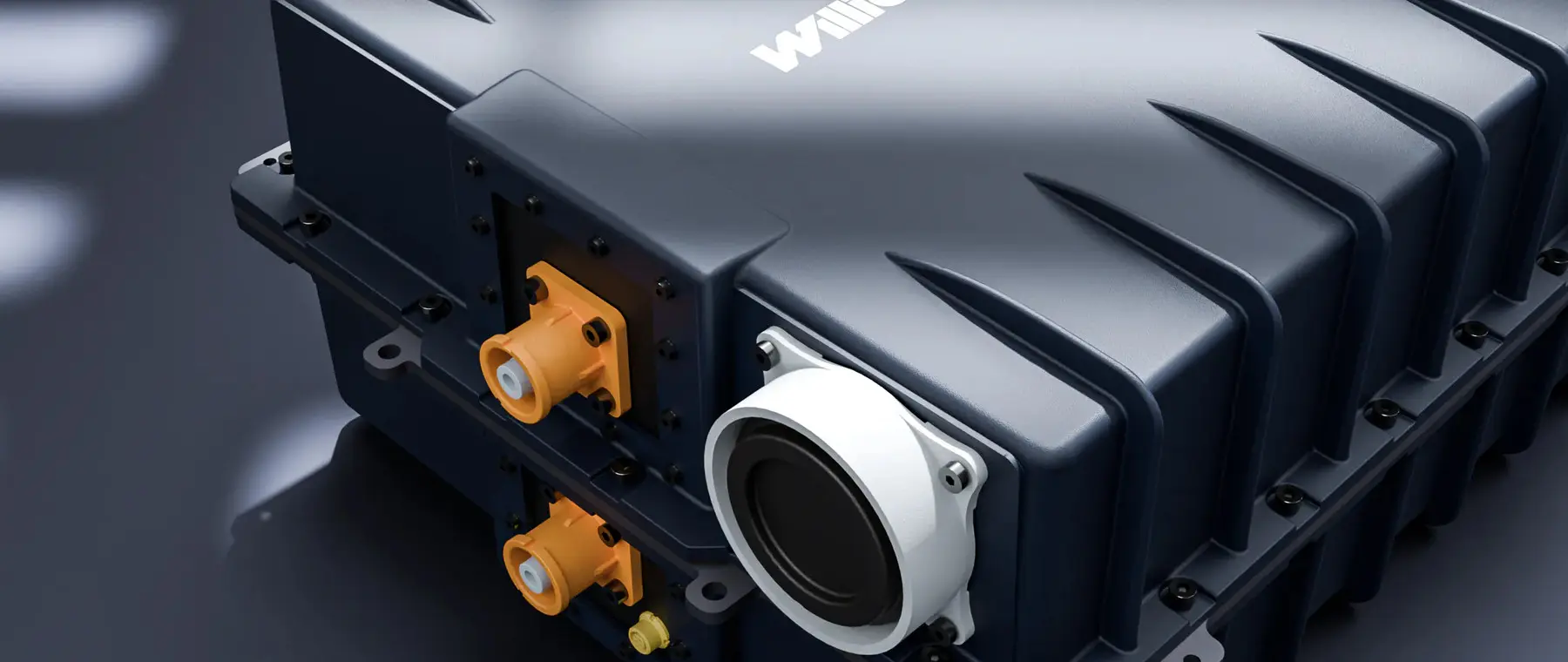
Williams Grand Prix Technologies has extended its battery engineering into the marine sector with the ES10M, a modular system developed for demanding applications ranging from electric support craft to large hybrid yachts. The British company describes the product in its 2026 manufacturer releases and current technical pages, positioning it as a response to the combined demands of compact installation space, high energy density and fault management. Its background is the engineering discipline associated with motorsport rather than an established yachtbuilder's conventional marine-equipment catalogue. For buyers and designers reading Luxury Yacht Guide, the significance lies in how this technology may influence future energy systems, particularly in chase boats, tenders and larger professional vessels. The manufacturer primarily cites superyachts and explorer craft as its target market, and it does not claim that every 12-to-23.99-metre yacht can accept the system without extensive integration. The correct subject for assessment is a scalable technical architecture, not a universally available retrofit kit.
The figures provided by Williams
The company's official launch release sets out unusually detailed module specifications. Williams reports a module energy density of approximately 200 watt-hours per kilogram and 325 watt-hours per litre. Each ES10M module stores 9.8 kilowatt-hours at 50.4 volts and weighs 48.8 kilograms, according to the manufacturer's data. The system architecture is presented as scalable from about 39 kilowatt-hours to 4.2 megawatt-hours, with available voltage configurations spanning 201.6 to 907.2 volts. These figures provide a useful framework for engineers, but they do not describe the weight or energy density of a complete installed system, which may include enclosures, cooling, controls, cables and safety provisions. Nor do they specify the endurance of a particular yacht, because vessel demand varies enormously. The first comparison should be between like-for-like installed system parameters, not between one maker's individual module and another manufacturer's complete ready-to-operate package.
What modularity means for a boatbuilder
A modular battery architecture gives naval architects and electrical engineers a means of building energy capacity from smaller repeating elements. That may be helpful where a yacht has a constrained technical space or where distributed banks are required by the vessel's safety design. Williams describes applications from compact single-rack systems to complex multi-bank installations on much larger vessels. Yet modularity should not be interpreted as permission to add cells or racks without redesigning other parts of the installation. Protective equipment, system voltage, cooling, electrical distribution, access and stability calculations must all be considered. On a smaller luxury yacht, the decision may be driven more by available volume and service space than by the largest capacity in the range. A system intended primarily for larger yachts may also carry engineering and regulatory complexity disproportionate to the needs of a modest private vessel. Responsible designers should establish scale and compatibility before treating modularity as an automatic advantage.
Why support boats are an important application
The manufacturer explicitly mentions fully electric tenders, chase boats and support craft among the possible uses of ES10M. These vessels may need high short-duration power for acceleration or manoeuvring while operating within tight weight and storage constraints. Some also have demanding cycles of repeated departures and returns to a parent vessel. The battery's suitability depends on the propulsion system, cooling arrangements, charging programme and approved reserve. A tender must remain safely recoverable and able to perform its intended role even if the day's operations depart from the original schedule. It would therefore be misleading to infer a specific running time from the module's published energy figure alone. Designers should create realistic duty-cycle simulations and reserve policies. In the 12-to-23.99-metre market, electrically powered chase and support craft represent a more clearly stated area of potential relevance than assuming the technology is immediately practical for every conventional cruiser.
Hotel loads and the appeal of quiet anchorages
A second application discussed by Williams is onboard hotel power. Batteries can supply domestic electrical loads without running an engine or generator continuously, if the system has been designed with sufficient capacity and a suitable charging source. Owners may value the reduction in local noise and exhaust during selected periods at anchor. The product's manufacturer describes longer battery-only operation as a potential benefit, but this should not be converted into a guarantee of silent nights for every yacht. Air conditioning, refrigeration, galley equipment, communications and other services all draw electricity. Demand can vary by climate, guest occupancy and operating habits. A complete energy plan should show how much capacity is available after reserves, how the battery will be recharged and what happens if the expected charging source is unavailable. ES10M adds another option for that engineering discussion; it does not remove the need to calculate actual loads.
Thermal containment is central to the proposition
Large marine lithium systems require an informed approach to the possibility of battery faults. Williams says ES10M uses selected cell formats and thermal-grade materials intended to limit propagation, together with gas-management provisions designed for controlled venting under abnormal conditions. The company also describes layered monitoring and the ability to isolate affected parts of the system. These claims address important design concerns for enclosed machinery spaces, where a fault may be difficult to access or manage. However, a manufacturer's description of fault-management architecture is not the same as proof that all hazards are eliminated. Installers need to review detailed safety documentation, enclosure arrangements, thermal tests, vent routing and emergency procedures for the complete configuration. The yacht's relevant class, flag and insurer may also have specific requirements. Battery safety is achieved through several independent design and operational measures, not one headline feature.
A layered approach to supervision
The company's product information identifies cell-level, module-level and system-level protection as separate layers. This arrangement can help engineers manage faults locally while maintaining awareness of the condition of the wider battery bank. The ES10M architecture also features a battery-management system and supervisory controls that the manufacturer says can isolate individual strings. For a yacht owner, these details matter most when they translate into predictable behaviour and clear instructions during an abnormal event. The captain should know what alarms mean, which loads may be disconnected and what conditions require professional investigation before restarting equipment. A vessel must be designed so that failures in an optional energy store do not disable unrelated critical functions unnecessarily. The equipment description should therefore be followed by a complete electrical schematic and a documented safety case for the particular installation.
Physics-informed machine learning and its limitations
Williams places considerable emphasis on a physics-informed machine-learning layer within the battery-management system. It says the software uses models of battery behaviour to anticipate loads, assess remaining capacity and support fault prediction. This is a more precise description than a generic claim of artificial intelligence, but it should still be judged against actual engineering evidence. Predictive estimates are useful only if their inputs are accurate and their limitations are understood. A yacht may experience operating conditions different from those used in development and validation. Owners should ask how the system records its predictions, handles sensor faults and indicates uncertainty. Software should assist diagnosis and planning without encouraging an operator to override established safety procedures. Future performance reports could usefully compare manufacturer estimates with measured operating histories across varied vessels. Until that evidence is available, the described architecture remains a feature to investigate rather than an independently proven guarantee of longer battery life.
Certification is not a finished checkbox
The manufacturer's technical information says Lloyd's Register class compliance is in progress, and the company discusses designing for other class and maritime approval frameworks. That wording is consequential. A statement that a product is engineered for future certification is not the same as confirmation that approval has been completed for every installation. Owners and builders should request the current status of relevant certificates, the configurations they cover and any conditions attached to installation. An insurer or surveyor may also require additional documentation concerning battery-room protection, electrical isolation and emergency response. The correct approval route depends on the size and use of the vessel and its applicable rules. For a 12-to-23.99-metre boat, regulatory treatment may differ from that of a large classed superyacht. A design team should clarify the requirements early, before committing to machinery spaces or a high-voltage architecture that could be difficult to change later.
Ingress resistance and the marine operating environment
Williams lists an IP67 ingress-protection rating at module level and describes engineering for thermal, vibration and other marine environmental challenges. These are relevant claims, but a rated module is not automatically equivalent to a waterproof installed battery bank. The complete system contains connections, cabling, control equipment, cooling arrangements and service interfaces that must also be protected. Boats present a particularly difficult combination of humidity, salt and movement, sometimes together with large temperature variations. Installation teams need to consider access after an incident and the practical ability to inspect a system without creating additional hazards. Equipment that is compact in a technical drawing may still need substantial clearance for servicing and emergency measures. The owner should therefore examine the full installed arrangement and not judge suitability from the physical size of a single module.
A refit must begin with the vessel, not the catalogue
Retrofitting high-density battery storage can appeal to owners who want more usable electricity or a hybrid propulsion option without replacing the boat. Yet the project may require substantial electrical redesign, structural work and new operating procedures. The naval architect must consider the effect of added battery mass on stability and trim; the electrical engineer must establish suitable protection, distribution and charging. Ventilation, access and fire-safety arrangements need to be reviewed. Williams describes refit compatibility as a design consideration and suggests that compact installation options are possible, but it does not provide a universal yacht conversion plan. The most responsible first step is to survey the vessel and develop an operational brief. A competent integrator can then evaluate whether ES10M or another product is appropriate and provide evidence supporting the proposed installation.
What this technology means for the luxury-yacht sector
Williams Grand Prix Technologies has brought a detailed new battery platform into marine energy discussions, with specified module properties, broad system scalability and an emphasis on predictive control and fault management. Those are substantive manufacturer claims that can be tested as systems enter real service. They do not establish universal vessel compatibility, independent certification of every configuration or guaranteed savings in fuel and operating cost. The most immediate questions concern how the batteries will be engineered into specific new builds, tenders and refits, and whether long-term operating data supports the promised benefits. For LYG readers, the value of the ES10M story is less about borrowing the glamour of Formula 1 than about examining a serious attempt to bring mature systems engineering to marine energy storage. The result should be judged by installed safety, serviceability, transparent performance figures and the quality of support available to the people who actually operate the vessel.
Sources and image credits
Reporting based on Williams Grand Prix Technologies original ES10M technical overview and official July 2026 launch release, Williams Grand Prix Technologies official original marine-battery launch news release dated 15 July 2026.
Lead photograph: Williams ES10M Marine Battery Details a Scalable Route from Tenders to Explorer Yachts — manufacturer original source image. © Williams Grand Prix Technologies Original official image source.