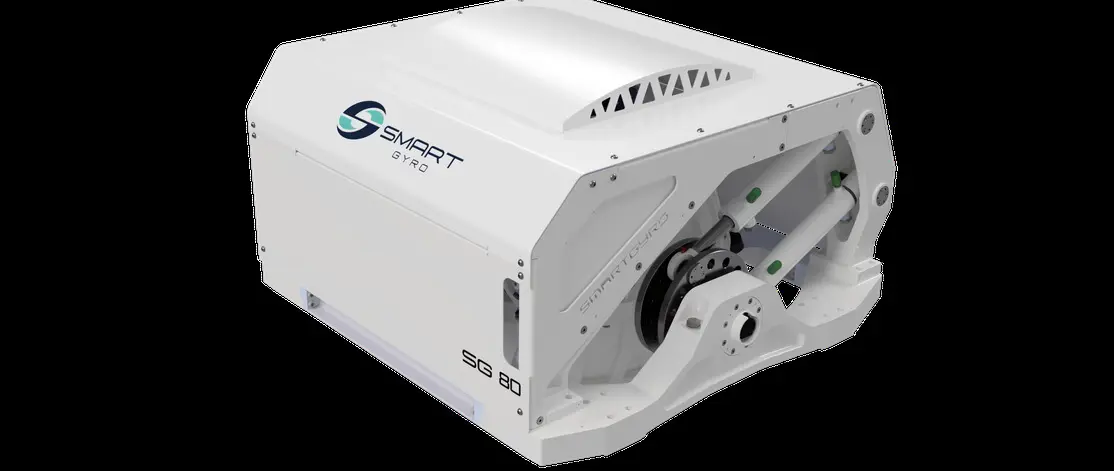
A gyro option for the upper end of the luxury cruiser range
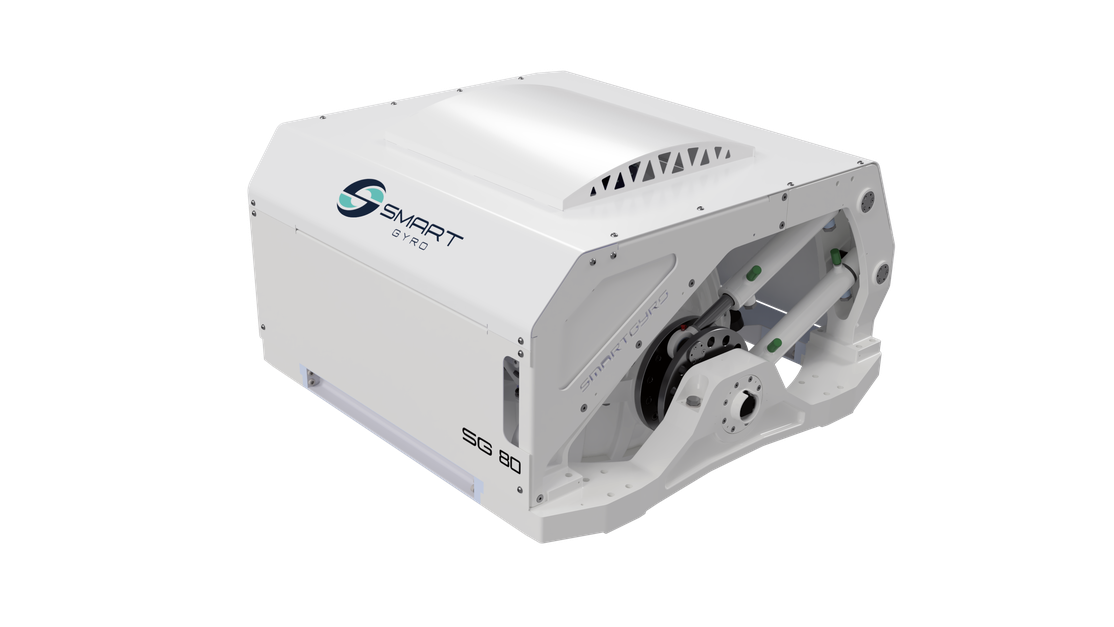
Smartgyro has placed its SG80 gyroscopic stabiliser in the current METSTRADE catalogue, describing a model intended for motor yachts in the approximately 60-to-75-foot size class. That range overlaps directly with the 12-to-23.99-metre sector served by Luxury Yacht Guide, particularly motor cruisers with substantial accommodation and outdoor living areas. The manufacturer highlights an ability to service the stabiliser onboard without lifting the vessel out of the water, an attribute that could affect long-term maintenance planning. The official product page is a current exhibition listing rather than proof of a fresh November launch or a completed installation on a named yacht. Its significance is that owners evaluating a new build or refit have a defined stabilisation option to consider. Gyro technology can contribute to comfort, especially while a boat is at rest, but performance depends on displacement, hull geometry, installation and conditions. A product model name alone cannot prove how much roll reduction any particular yacht will experience.
What the manufacturer documents
The SG80 listing identifies an intended 60–75ft application and describes suitability for new builds and refits. Smartgyro specifically states that the unit can be serviced aboard the vessel, without requiring a haul-out for relevant maintenance procedures. These are useful facts, but the short catalogue does not provide the complete performance curves, mass, electrical demand or installation envelope needed for a final engineering decision. Buyers should request the exact SG80 datasheet and confirm how the manufacturer's vessel-length guidance relates to displacement and the expected roll conditions. Two boats of similar overall length can have very different stability characteristics and demands on a gyro. The correct selection is based on the actual naval architecture and cruising programme. A supplier should not simply recommend a model because the yacht falls inside a range printed on an exhibition page.
What a gyro is intended to do
A gyroscopic stabiliser uses a spinning mass and controlled precession to generate a resisting moment that can reduce the vessel's rolling motion. It is a different approach from fin stabilisers, which interact with the water surrounding the hull. Gyros may be especially attractive to owners who want improved comfort at anchor or in low-speed conditions, although the suitability of either technology depends on the yacht and its operating conditions. Stabilisation is not the elimination of all movement. Pitching, heave and wave impacts can still affect passengers, and a gyro cannot make an unsafe sea state safe. A sensible sales presentation should explain the operating envelope and provide realistic expectations for the type of rolling experienced by the proposed vessel. Owners should view sea trials and installation examples as important evidence, but should also understand the limitations of transferring results between different hulls.
Why 60–75 feet is a demanding category
The boats falling into the SG80's stated range may vary from lightweight performance cruisers to heavier semi-displacement yachts with flybridges and extensive equipment. Some carry large fuel and water loads, substantial tenders and additional stabilising machinery. These differences influence the forces required to reduce rolling. A yacht with greater displacement or a different natural roll period may need a different stabilisation specification even if it is physically shorter than another candidate. The installation may also change the yacht's mass distribution and centre of gravity. A professional assessment should include the yacht's actual displacement in representative loading conditions and the available space for the stabiliser and its supporting structure. Owners should not regard model selection as a simple conversion from feet to a product code. Technical matching is central to achieving the level of comfort expected.
At-anchor comfort and everyday use
Many owners value a quiet anchorage where guests can swim, dine or rest without excessive rolling. A stabiliser can potentially improve the experience when the yacht is exposed to swell or wakes that would otherwise move the hull uncomfortably. However, the amount of improvement depends on the sea state, the yacht and the system's available stabilising moment. A manufacturer's broad description of performance should not be converted into a guaranteed percentage reduction without suitable test conditions. Owners should ask for a representative demonstration and understand whether the gyro is normally run continuously while anchored or activated in response to expected conditions. Electrical demand and acoustic effects may also matter, particularly when the yacht relies on battery storage or limits generator operation at night. Comfort is a whole-vessel outcome involving motion, noise and the equipment needed to support the system.
Installation requires structural planning
A gyro transfers significant forces to its supporting structure, so the mounting arrangement needs to be approved for the particular hull. The installer should review the loads transmitted through the foundation and how they are distributed into surrounding structure. Simply finding a compartment large enough for the machinery is not sufficient. Equipment must also remain accessible for inspection and potential removal or replacement. A yachtbuilder can often plan these features during the new-build design phase. A refit is more complicated because suitable structural members and machinery access may already be constrained. The owner should request engineering drawings and a clear account of any reinforcement needed. It may be necessary to reconsider the location of tanks, electrical equipment or storage to achieve a reliable installation. The full project cost includes those changes, not just the stabiliser.
Electrical and cooling requirements
A gyro must spin up and operate using an appropriate power supply. Its energy demand can vary by operating mode, and the cooling arrangement is part of the system's long-term reliability. The SG80's public exhibition entry does not publish every electrical characteristic, so no exact power requirement or spin-up time should be assumed. Before specifying the unit, the yacht's electrical engineer should examine starting and operating loads, protection, available generation and any battery-storage strategy. Cooling circuits and ventilation need to be compatible with the equipment and the compartment selected. An apparently compact unit may still require substantial room for pipes, cables and airflow. Engineers also need to understand how performance changes if the available electrical power is reduced. The stabiliser should be integrated into the vessel's overall systems management and not treated as an isolated domestic appliance.
Maintenance without haul-out
Smartgyro highlights onboard servicing as a distinguishing characteristic of the SG80 range. For owners who use their yachts throughout much of the year, avoiding an unnecessary haul-out for routine stabiliser work could be attractive. Yet the exact scope of the work that can be performed onboard should be confirmed in the manufacturer's maintenance documentation. Some procedures may require specialist training, tools or safe access that is difficult in a cramped compartment. The claim also does not mean every fault can be resolved without removing equipment or taking the vessel out of service. A realistic maintenance plan should identify scheduled inspections, consumables, authorised technicians and what remains accessible once the yacht's interior has been completed. Good serviceability can reduce disruption, but only when the installation actually preserves the access designed into the product.
Comparing gyros with fin systems
Some motor yachts use external fin stabilisers and others are fitted with gyroscopic equipment. The correct choice depends on the vessel, its typical cruising and anchoring programme and how much space is available. External fins may have their own hydrodynamic characteristics and maintenance implications, while gyros introduce internal machinery, structural loads and energy demand. Owners should not assume that one category always produces superior comfort. Where the vessel already has a stabilisation system, a refit engineer should consider whether replacement, enhancement or a different operating strategy is appropriate. An owner may want motion reduction primarily at anchor, during passage or both. That distinction influences the evaluation. Comparative trials should use consistent loading and environmental conditions so that performance claims can be meaningfully assessed. Each installation has to be judged on its own engineering merits.
The effect on engine-room layout
Space aboard a luxury yacht is limited and valuable. A gyro placed in a technical compartment must coexist with generators, air-conditioning equipment, pumps and other systems that require access. Its location should not make routine maintenance of unrelated machinery more difficult. Noise and vibration transmission must also be considered, especially when accommodation is nearby. The foundation, mounts and structural connections need to be designed so that operating forces are managed appropriately. A builder may have several potential locations, but their effect on trim and the vessel's centre of gravity can differ. Owners should request the full installed arrangement and ensure that access routes remain practical. The promise of servicing aboard is undermined if technicians have to dismantle extensive joinery to reach routine service points. Thoughtful packaging can matter as much as the choice of stabiliser model.
Operation and crew training
The captain and crew need to understand when the stabiliser should be operating, what normal alarms mean and how the system behaves during manoeuvring or in challenging conditions. The manufacturer's instructions should determine any operating restrictions. A gyro may continue spinning for a period after controls have been changed, so crew should not assume it becomes inert immediately when switched off. Maintenance procedures should require the correct safe state before work begins. Owners should also know how the stabiliser interacts with other equipment and what happens during an electrical outage. A system that is rarely used may still require periodic checks. Crew training is especially important when a yacht is privately operated with different people taking responsibility during successive cruises. Predictable controls and documented procedures help prevent uncertainty.
Measuring the result after installation
A well-managed stabiliser project should have a commissioning plan. This may include checking operating parameters, verifying alarms and inspecting structural connections, followed by demonstrations under suitable conditions. Owners may wish to compare motion with the system on and off, but such comparisons need consistency in loading and sea state to be meaningful. A single impressive demonstration should not be treated as proof of performance in every anchorage. The installation team should document what the system achieved, the conditions in which it was tested and any remaining limitations. Such records can help future technicians and prospective buyers understand the vessel's configuration. The experience of guests is important, but quantitative evidence and sound engineering provide a more reliable basis for judging whether the project met its objectives.
Cost, support and resale considerations
Stabilisation equipment can represent a substantial investment in purchase and integration. The owner should obtain a full quotation that includes structural work, electrical and cooling connections, commissioning and anticipated maintenance. A system may add market appeal to a yacht, yet it is not possible to attach a guaranteed resale premium simply because a gyro has been fitted. Buyers and surveyors will want evidence of correct installation and service history. International cruising makes the availability of technical support important, particularly if a fault arises during the season. The manufacturer or installer should explain which parts can be serviced locally and what specialist assistance is required. A documented installation with accessible components may be easier to maintain and evaluate than one whose engineering details have been lost over successive ownership changes.
The place of SG80 in the current market
Smartgyro's current SG80 listing provides a concrete size-class option for motor yachts of approximately 60 to 75 feet and foregrounds onboard maintainability. These facts make it relevant to yachtbuilders, refit yards and owners considering improvements to comfort. The entry does not provide enough detail to claim a particular roll-reduction percentage, electrical cost or universal suitability for every yacht in the published length range. Its significance lies in giving buyers a specific equipment model to examine through proper engineering and demonstrations. For the upper end of Luxury Yacht Guide's market, reducing uncomfortable movement at anchor can have considerable practical value, but the result must be assessed alongside the yacht's structure, systems and intended programme. A useful stabiliser is one that delivers dependable comfort and remains serviceable for years, rather than one chosen solely because its catalogue description sounds persuasive.
Sources and image credits
Reporting based on Smartgyro manufacturer-authored SG80 product listing in the METSTRADE 2026 exhibitor catalogue; existing range, not falsely claimed as a November launch.
Lead photograph: Smartgyro SG80 Stabiliser Targets Comfort in the 60–75ft Cruising Yacht Class — original manufacturer photograph. © Smartgyro S.r.l. Original official image source.