Fire safety moves beyond a single engine-room extinguisher
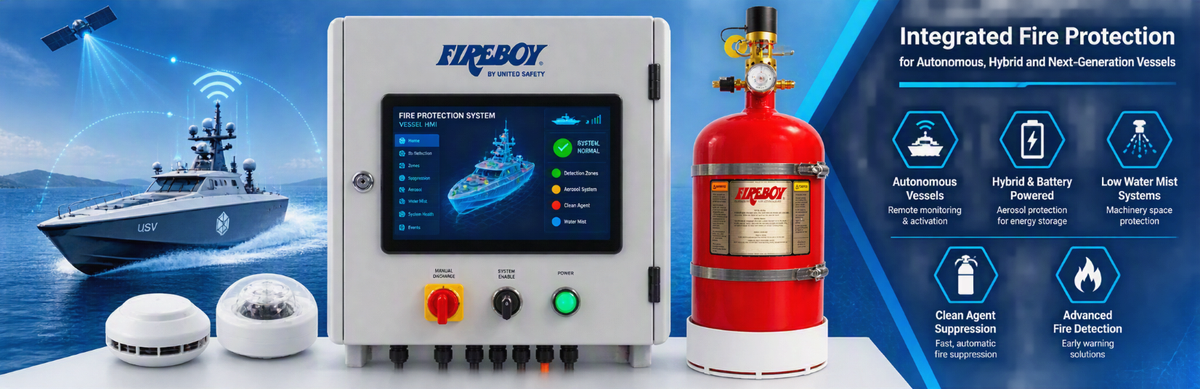
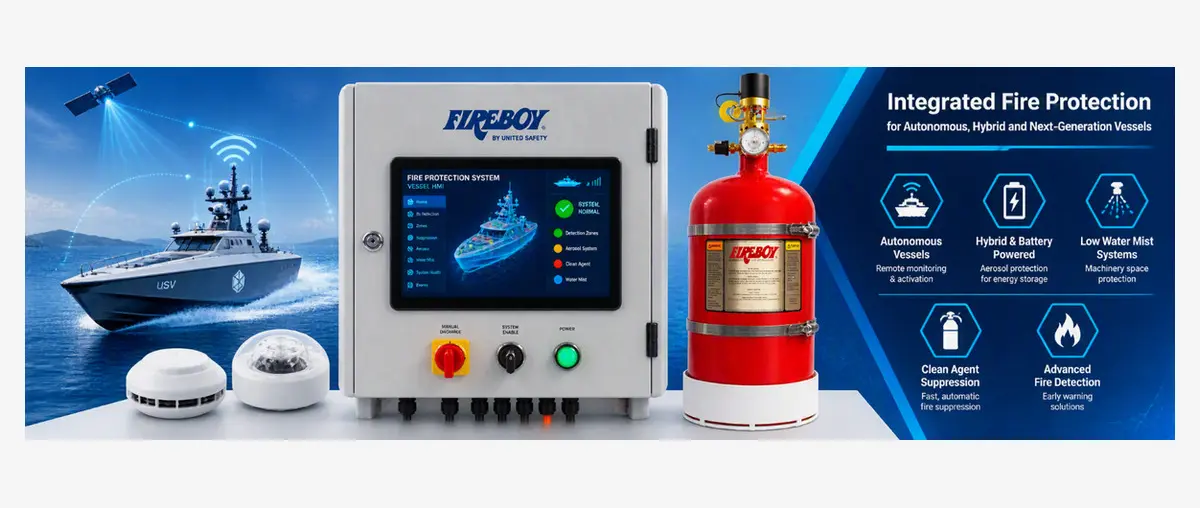
Fireboy Xintex UK Operations is presenting a range of remotely monitored fire-detection and suppression technologies in the METSTRADE 2026 catalogue, with particular emphasis on autonomous, unmanned and hybrid vessels. The official product entry, first dated 20 March 2026, describes a combination of advanced detection, clean-agent suppression, aerosol protection for energy-storage systems and low-water-mist technology. For owners of luxury yachts between 12 and 23.99 metres, these subjects increasingly matter as onboard electrical systems become more complex and operators seek greater visibility into machinery conditions. The catalogue should not be interpreted as the launch of a fully specified universal package that automatically protects every vessel. Rather, it indicates that a marine safety supplier is promoting a coordinated approach to different fire risks, including equipment that may be monitored or supervised remotely. Successful protection still depends on the vessel's layout, materials, relevant approval requirements and an appropriate response plan understood by the crew.
What the manufacturer confirms
The manufacturer-authored listing identifies the subject as fire-safety systems for autonomous vessels and describes multiple types of detection and suppression technology. It mentions integration with vessel automation, continuous monitoring and rapid response functions. These are a statement of capabilities in the supplier's portfolio, not proof that every advertised function is included in a single appliance. The short catalogue entry does not provide detailed technical specifications for each detector, agent, aerosol generator or water-mist nozzle. It also does not establish the limits of any remote supervision service or the certifications covering particular equipment configurations. Owners should therefore request the exact technical datasheets and a proposed system diagram. A competent fire-safety contractor will use those documents alongside the yacht's general arrangement and machinery specifications to determine the appropriate protection for each space. The source describes a direction in marine safety design, not an excuse to assume the equipment can be installed without individual engineering.
Why hybrid systems create several distinct hazards
A conventional machinery space can contain diesel fuel, hot surfaces, electrical distribution and other fire hazards. A hybrid yacht may add battery banks, chargers, inverters and high-current propulsion electronics, each with different operating and failure characteristics. A suppression agent suitable for one fire scenario may not be appropriate for another. It is therefore important to consider what materials can ignite, how heat might propagate and what consequences could result from a fault in an enclosed compartment. Fireboy's reference to clean agents, aerosols and low-water-mist systems suggests that a single suppression method is not being presented as the answer to every risk. The yacht's surveyor and fire engineer should assess these different hazards and select protection accordingly. Installing an extinguisher without a clear understanding of the protected equipment could leave a vessel with a system that appears comprehensive but cannot address the most relevant scenario.
Detection must precede an effective response
A fire-protection system can only respond effectively if abnormal conditions are identified in time. Depending on the compartment, detection might involve smoke, heat, flame or specialist monitoring suitable for the equipment involved. The catalogue does not establish which sensors are provided in each Fireboy configuration, so owners should avoid assuming that a conventional smoke detector can identify every possible battery fault. The chief engineer should ask which hazards the proposed detectors are designed to identify and how alarm thresholds are selected. False alarms can lead to unnecessary disruption, while a delayed warning may reduce the options available to the crew. A sensible design balances sensitivity with appropriate verification and protective actions. The location of the detectors also matters; an excellent sensor in the wrong place may fail to provide timely information. Installation and commissioning should demonstrate detection performance for the relevant compartment.
Clean-agent suppression in machinery spaces
Clean-agent fire suppression may be attractive in spaces where water could damage equipment or create additional complications. However, the choice of agent, concentration and discharge arrangement is a technical decision subject to the applicable rules. Owners should know which hazards the agent is approved to address and whether the protected compartment can retain an effective concentration for the required period. Ventilation shutdown and enclosure integrity may influence performance. The manufacturer refers broadly to clean-agent solutions without specifying a single agent in the short catalogue text, so an article should not assign one chemistry to the entire product range. A marine fire-safety specialist must identify the exact approved system and its limitations. The crew should also understand any access restrictions during or after discharge. Successful suppression is not simply the release of a cylinder; it is a coordinated event involving alarms, machinery controls and an appropriate response from trained people.
Aerosol protection and battery spaces
The first-party listing also refers to aerosol protection for energy-storage systems. Batteries introduce concerns about overheating, internal faults and potential propagation, and the appropriate protective measures depend on the chemistry and enclosure design. An aerosol system should not be treated as a universal means of stopping every lithium battery incident. Owners should ask for test evidence showing what the selected product can achieve under conditions comparable to the intended battery installation. Thermal management, isolation, monitoring and structural separation remain important. The relevant class or insurer may have requirements concerning off-gas management, detection and emergency procedures. A proposed aerosol installation should therefore be considered alongside the battery supplier's safety case and the yacht's fire strategy. The manufacturer’s portfolio description provides a reason to investigate available technologies, but does not replace detailed evidence of their performance or compatibility with the vessel's exact energy-storage equipment.
Low-water-mist systems offer another design approach
Low-water-mist fire suppression relies on a different physical mechanism from a clean-agent or aerosol system. Depending on the application, fine water droplets may help control heat and fire development, but the engineering requirements can include pumps, water storage, pipework and suitable discharge nozzles. The Fireboy catalogue mentions low-water-mist technology as one part of its offering without publishing a complete system design for a particular luxury yacht. Buyers should confirm the approved hazards, water and power requirements, maintenance intervals and response under a loss of electrical supply. The arrangement may be suitable for certain spaces but inappropriate for others. It is also important to consider the consequences of water being discharged near sensitive electrical systems. A professionally designed system addresses these trade-offs rather than assuming that using less water automatically makes the approach safe for all yacht compartments.
Remote readiness is not permission to sail unattended
The catalogue describes systems intended for remotely supervised or unmanned operations. On a luxury yacht, this could be relevant when the vessel is secured in a marina or when machinery spaces are monitored from several onboard stations. Yet a remote alarm is not the same as a person assessing the situation and taking effective action. A crew member may be needed to notify emergency services, isolate equipment or follow evacuation procedures. The owner must know what happens if connectivity to shore is lost, if an alert cannot reach a phone or if the monitoring server becomes unavailable. Essential local alarms and protective actions should operate independently wherever required by the system design. Remote supervision can support awareness; it should never be used to justify abandoning the duties imposed by the vessel's safety management plan. The human and regulatory context remains central even when the equipment is sophisticated.
Connecting fire equipment to yacht automation
Fireboy describes integration with vessel automation systems. This could allow alarms to be displayed at more than one location or enable coordinated actions involving machinery and ventilation, provided the interfaces are correctly engineered. The exact signals and permissions need to be documented. An integration that silently suppresses alarms, creates false status indications or allows an unrelated software fault to influence critical safety equipment would be unacceptable. Owners should ask who is responsible for the communication interface and how its failure has been tested. Safety systems need clear boundaries between monitoring and control. On a yacht with multiple technical suppliers, the fire engineer, electrical integrator and shipyard should jointly approve the complete arrangement. A connected dashboard is useful only if it accurately reflects the state of the underlying protection system. The installation should also retain usable controls when a screen or data network is unavailable.
Compartment design determines suppression effectiveness
A correctly specified suppression system may still be compromised if the protected space has unsealed openings, unsuitable ventilation or later modifications that were not assessed. A yacht's engine room may include air intakes, exhaust routes, access panels and cable penetrations that affect how a fire develops and how an agent disperses. The fire-safety contractor should review those details while selecting the equipment. A refit may be particularly challenging because the engine room was designed around older machinery and may now contain new batteries or electrical cabinets. The owner should request a documented survey and commissioning procedure, including any necessary ventilation shutdown logic. Protecting the space as it actually exists is more important than matching a cylinder size to a simple volume estimate. The manufacturer's generic catalogue is not a substitute for that engineering assessment.
Certification and project-specific approvals
Marine fire-protection equipment may be subject to flag, classification, insurance or other approval requirements, depending on the yacht's operation and size. A particular detector or suppression unit may hold a certification relevant to one application without automatically being approved for every proposed installation. The Fireboy product listing does not supply a complete certificate schedule, so a buyer should request the current approval documents and check their scope. A system designed for unmanned commercial craft might not be accepted without modification on a private motor yacht, and vice versa. The yacht's approving authority should be involved early, before costly equipment is installed. Proper documentation also helps when the boat is sold or undergoes an insurance survey. Certificates are evidence within a broader safety case; their existence alone cannot prove that a complete installation is appropriate.
The practical meaning of a response sequence
A crew needs to know what will happen when a detector reaches an alarm condition. Depending on the approved design, the sequence might include local audible and visual warnings, signals to the bridge, ventilation control or suppression discharge. Some operations may need deliberate confirmation; others may be automatic for safety reasons. The specific Fireboy configuration determines those details. An owner should request an easy-to-read cause-and-effect schedule that identifies sensors, alarms, interlocks and outputs. This should be tested during commissioning and revisited after major machinery changes. A complicated response that only one technician understands is a weakness. Captain and crew training should address both normal status checks and unusual situations, including a fault that produces an alarm without an immediately visible fire. Clarity in the response plan can be as valuable as the equipment itself.
Maintenance and service responsibilities
Fire-detection and suppression systems require regular inspection and, in some cases, scheduled replacement or servicing by authorised personnel. The correct interval depends on the actual hardware and applicable rules. A manufacturer may provide reliable equipment, but neglect can leave it unavailable when needed. Owners should identify who will service the system in their normal cruising region and whether spare components and certified agents can be supplied. The equipment inventory should include model numbers, location plans, approval documents and maintenance records. If the system is linked to automation, software and communication interfaces also need management. The crew should know how to recognise a fault or isolated detector without overriding protective functions casually. Maintenance must preserve the intended safety performance and should be documented so future engineers can verify the system's condition.
Why the 2026 portfolio matters
Fireboy Xintex's current product entry highlights an important direction in marine safety: different suppression technologies integrated with monitoring and automation for vessels that may use complex batteries or operate with limited onboard supervision. The verified source identifies clean-agent, aerosol and low-water-mist approaches and emphasises remote readiness, but it does not establish one universally approved package or guarantee successful suppression of every hazard. For 12-to-23.99-metre luxury yachts, the practical lesson is to review fire protection whenever the energy system or machinery layout changes. An effective specification begins with a hazard assessment, selects the correct technology for each space and documents how crew and equipment respond together. Remote information can make faults more visible; the vessel still requires sound engineering, clear procedures and a maintained means of protecting people aboard.
Sources and image credits
Reporting based on Fireboy Xintex manufacturer-authored fire safety systems for autonomous and hybrid vessels, originally released 20 March 2026, in current METSTRADE exhibitor catalogue.
Lead photograph: Fireboy Xintex Details Remote-Ready Fire Protection for Connected Luxury Yachts — original first-party manufacturer photo. © Fireboy Xintex UK Operations Ltd. Original official image source.