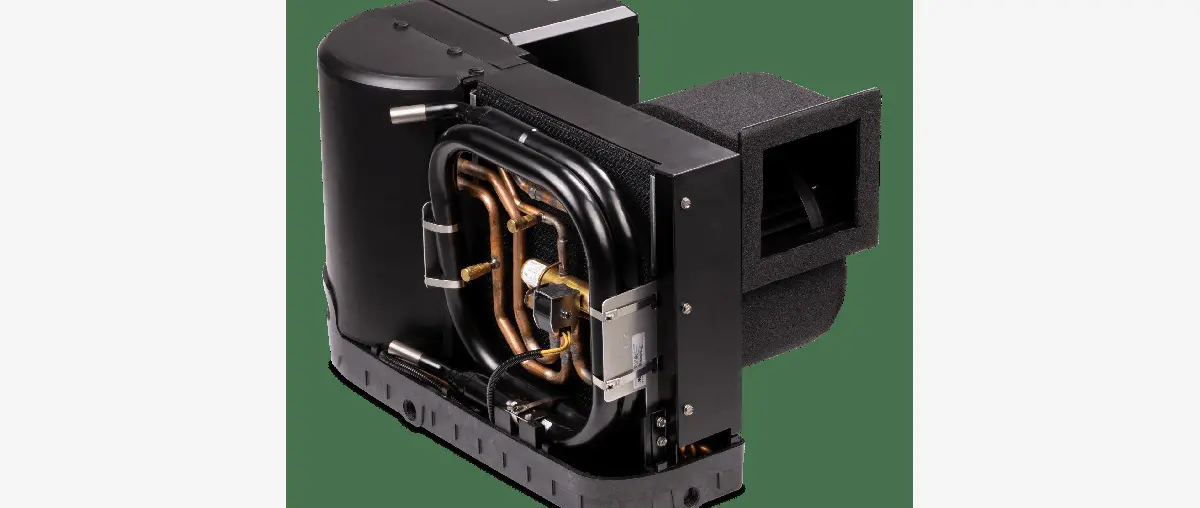
A climate system built around direct-current power
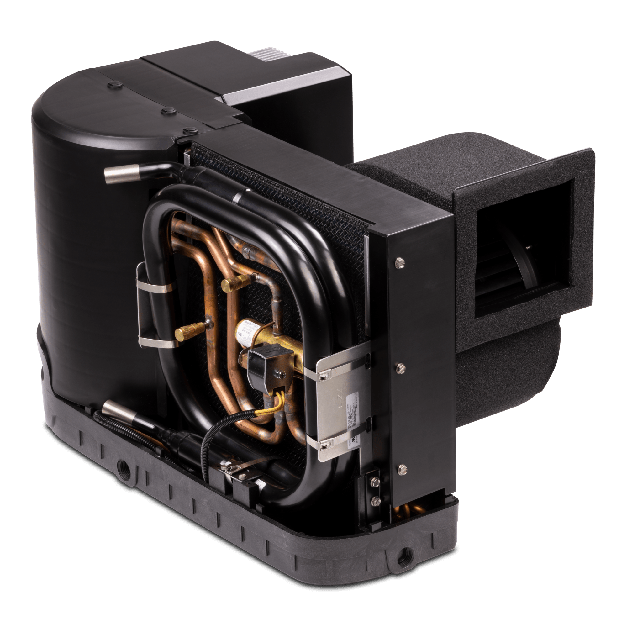
Dometic is presenting its GVTX 48VDC variable-capacity marine air-conditioning system in the current METSTRADE catalogue, highlighting an approach intended for electrically powered and hybrid boats. The manufacturer describes direct operation from a 48-volt DC supply, with variable cooling output and integrated battery monitoring. These features are relevant to luxury yachts between 12 and 23.99 metres, where air conditioning can be one of the largest consumers of onboard electricity. Reducing conversion steps and matching output more closely to actual demand may offer engineering advantages, provided the installation is designed correctly. The original catalogue entry dates to 18 November 2025, so this is a 2026 review of an existing product rather than a claim of a fresh November launch. The official description does not establish an identical reduction in electricity consumption on every yacht or guarantee that an air-conditioning system can run indefinitely from batteries. Owners should evaluate the complete equipment package against the vessel's climate and energy requirements.
The manufacturer's core claims
The first-party GVTX product listing describes variable-capacity operation using a 48VDC architecture. Dometic says that the design avoids the need for external conversion from battery direct current to conventional alternating-current supply for the appliance, and includes battery monitoring intended to prevent excessive discharge. It also refers to high-static electronically commutated blowers, quieter operation and a compact, simplified installation. These are manufacturer-reported characteristics rather than independent performance data for a particular yacht. The short listing does not specify every available cooling capacity, full operating current, refrigerant details or the exact installation envelope. Buyers need the current technical manual and the specification of the selected system before committing to an electrical or air-conditioning refit. A direct-current label is useful information, but it does not explain whether the entire installed system, including pumps and controls, matches the yacht's existing equipment.
Why air conditioning matters to the energy budget
A luxury yacht's air-conditioning plant can operate for extended periods, particularly in warm Mediterranean or tropical conditions. Cooling guest cabins, the saloon and crew spaces may require electricity even when most other equipment is idle. On a boat using a generator, this affects noise, fuel consumption and maintenance hours. On a hybrid or battery-focused yacht, it can determine how long the vessel can remain quiet at anchor. A variable-capacity system may adjust output as the cooling demand changes, potentially reducing unnecessary operation at high output. Yet performance depends on ambient temperature, insulation, glazing, cabin use and the condition of filters and seawater circuits. An owner should request a thermal load calculation for the actual yacht rather than infer cooling endurance from the manufacturer's efficiency claims. The relevant comparison is between complete systems meeting the same cabin-temperature requirements in similar conditions.
The significance of a 48VDC supply
Many marine electrical installations use low-voltage DC circuits for batteries and controls, while larger appliances may rely on alternating current from shore power, a generator or an inverter. Dometic's direct 48VDC approach is intended to reduce the conversion stages required to operate the climate equipment. Avoiding a conversion stage can remove some losses, but the extent of the benefit depends on system design and how much auxiliary equipment is required. The electrical engineer must check the actual battery-voltage range, current draw, cabling, protection and compatibility with the vessel's power-management architecture. At significant cooling loads, a 48-volt circuit may carry substantial current, creating requirements for well-sized conductors and reliable connections. A nominally low voltage should not encourage casual electrical work. Safe installation requires proper isolation, appropriate protective equipment and compliance with the manufacturer's instructions.
Variable output and the difference from simple cycling
A conventional system may meet varying cooling demand by switching a fixed-output compressor on and off, while a variable-capacity design can adjust its output within a permitted operating range. This may reduce abrupt starts and allow closer matching between demand and supply in suitable circumstances. However, no variable system can eliminate the energy required to remove heat from the yacht. The compressor still needs to work harder when the accommodation has absorbed substantial solar heat or when cabin doors are open frequently. Dometic's published description presents variable operation as a benefit, but the actual energy savings should be measured against a defined comparison system. Owners should ask how minimum output, high-load performance and startup behaviour are documented. Comfort is also affected by airflow and humidity control, not merely by the compressor's nominal efficiency.
Battery protection needs to be understood
The manufacturer's source describes integrated battery monitoring intended to prevent excessive discharge. This is a meaningful feature if the climate system is operating from stored energy while the yacht is at anchor. Nevertheless, the owner should establish exactly what data the equipment measures and which actions occur when the battery approaches its permitted limit. The air-conditioning controller may reduce output, stop cooling or issue an alarm depending on the design and configuration. It should not be assumed that the appliance can monitor every battery chemistry or automatically integrate with all manufacturers' battery-management systems. The yacht's engineer needs a coordinated energy strategy that protects batteries while preserving essential onboard services. A guest comfort appliance should not inadvertently deprive navigation, communications or safety equipment of energy. Clear priorities and tested protective functions are essential.
The role of air movement
The GVTX description highlights high-static EC blowers. The blower moves cooled air through the yacht's ducts or other distribution arrangements, so its performance influences cabin comfort as well as electrical demand. A system with insufficient airflow may cool poorly even if the refrigeration equipment is capable of producing the necessary capacity. Duct length, bends, filters and outlet placement all create resistance. High-static capability may help overcome some of these constraints when properly designed, but it is not a substitute for adequate duct sizing. The designer should calculate the airflow required for each cabin and assess noise at the intended operating settings. Guests may be sensitive to both fan noise and uncomfortable draughts. A successful installation balances temperature, humidity, air distribution and acoustic comfort. The manufacturer’s product description does not establish the result on every yacht without a tailored ducting and load design.
Cooling seawater is a separate part of the system
Many marine air-conditioning systems reject heat to seawater through a suitable circulation arrangement. If the chosen GVTX configuration uses seawater cooling, its pumps, strainers, hoses and discharge points require engineering attention. The source text does not provide every connection and permitted water-temperature condition, so those details need confirmation from the official manual. In warm water, the ability to reject heat can be different from performance in cooler conditions. Restricted flow through a clogged strainer may cause the equipment to protect itself or stop operating. Owners should know what alarm indicates a cooling problem and what inspection is safe for the crew to perform. The design must also consider access for cleaning and winterisation where applicable. A compact electrical climate system can still depend on a larger network of water and air components that require regular care.
Comparing 48VDC with conventional AC equipment
An owner deciding between a GVTX-type direct-current system and a conventional AC unit should compare total installed energy use, not just compressor input ratings. The AC option may require an inverter, but the yacht could already have a highly efficient inverter operating for many other loads. In that case, the incremental savings from avoiding conversion may differ from a boat designed around 48VDC from the beginning. Conversely, a new-build electric yacht may have a strong reason to keep a major cooling load on a compatible DC bus. Capital cost, component availability and ease of repair also matter. A conventional AC system may be familiar to more service technicians in some cruising regions, while a specialist DC design could offer other advantages. The choice should be supported by calculations and a realistic service plan rather than a single claim of maximum efficiency.
Cabin cooling and glazing
Modern luxury yachts frequently have large windows and panoramic saloon glazing, improving views but also increasing the potential for solar heat entering the accommodation. The size, shading and insulating properties of those surfaces influence the cooling requirement. A yacht that is comfortable at anchor during the evening may need much more cooling at midday when direct sunlight enters the cabin. Designers should evaluate the full daily operating pattern and consider external shades, ventilation and the control of heat gain alongside the air-conditioning hardware. Selecting a more sophisticated compressor without addressing excessive solar gain may not deliver the comfort or battery endurance the owner expects. The GVTX's variable-capacity concept can be one part of a broader climate strategy, but the surrounding architecture and interior design remain important. A well-insulated yacht may obtain a different benefit from the same equipment than one with extensive unshaded glazing.
Retrofitting the system
A refit can offer an opportunity to review the yacht's climate control and electrical efficiency, especially where an older unit is noisy or difficult to service. However, replacing a conventional AC appliance with a direct-current system may require changes to battery arrangements, charging equipment and distribution. The owner should first commission an inspection of the existing cooling system and a load calculation. Space for the new equipment, blower connections and service access must be established. Existing ducting may not suit the airflow requirements of a different model. The engineer also needs to consider whether the yacht's present battery bank can sustain the intended air-conditioning duty and whether other DC loads share the supply. The full cost of an upgrade therefore includes more than the appliance itself. Owners should expect a proposal showing all electrical and mechanical interfaces before installation begins.
Quiet operation and guest expectations
Dometic promotes quiet running as one of the benefits of the GVTX platform. That may be attractive aboard a luxury yacht where compressor noise and fan hum are noticeable at night. But the acoustic result depends on mounting, the technical compartment, ducting, airflow and other equipment. A quieter refrigeration machine can still be heard if transmitted vibration reaches cabin joinery or if airflow through a grille is excessive. Owners should request the supplier's noise data and discuss the expected sound levels in the particular accommodation layout. A commissioning programme may include measurements under representative operating conditions. The aim is dependable comfort rather than simply a low number on a product specification. Guests can notice inconsistent temperature, draughts and vibration as much as overall noise. Good climate design addresses all of these together.
Service life and maintenance responsibilities
Marine climate systems require regular attention to filters, electrical connections and cooling circuits, even when their compressors and controls are advanced. The manufacturer should provide a clear maintenance schedule and instructions for recognising abnormal operation. Owners should ask whether parts and diagnostic tools are available through service dealers in their usual cruising area. A variable-capacity controller may require specialised support, so the service network matters over the yacht's operating life. The installation documentation should record the precise model, voltage requirements, refrigerant arrangements where applicable and the approved operating configuration. Crew members should not attempt repairs involving refrigerants or electrical controls beyond their competence. A good service plan can preserve efficiency and reduce unexpected loss of cooling during hot weather, when the guest experience and machinery reliability are most dependent on the system.
A measured interpretation of the energy claim
The GVTX's manufacturer-reported architecture provides a plausible path to reducing conversion losses and matching cooling output to demand. Those attributes are technically meaningful, but a universal runtime improvement cannot be calculated from the short catalogue entry. The yacht's baseline energy consumption, battery capacity, existing inverter arrangement and climate conditions determine the practical effect. Owners considering the system should ask for performance curves, operating current across cooling modes and comparisons conducted under relevant conditions. It is also useful to calculate the total energy required for a day or night aboard rather than focus only on the maximum momentary cooling capacity. A competent system integrator can translate those figures into expected generator hours and charging needs. The most persuasive evidence will be a properly documented installation whose measured performance agrees with its original design assumptions.
A relevant option for battery-focused yacht design
Dometic's GVTX 48VDC remains a notable example of the marine equipment industry's move toward climate systems designed around modern electrical architectures. Its official listing supports direct 48-volt operation, variable cooling capacity and monitoring intended to protect the battery supply. It does not establish an entirely converter-free yacht or a guaranteed reduction in running costs for every installation. For 12-to-23.99-metre luxury yachts, the design may be especially interesting when batteries and DC power distribution are being planned from the start. A well-executed refit may also benefit, but only after careful assessment of the existing equipment and cooling demands. The owner should judge the system on reliable comfort, clear energy accounting and practical support rather than a general promise that a new voltage standard will solve every onboard cooling problem.
Sources and image credits
Reporting based on Dometic Group AB first-party GVTX 48VDC variable marine HVAC product release, originally dated 18 November 2025, in current 2026 METSTRADE catalogue.
Lead photograph: Dometic GVTX 48VDC Brings Variable-Capacity Cooling to Battery-Powered Yachts — original first-party manufacturer photo. © Dometic Group AB Original official image source.