A dockside assistant rather than another onboard winch
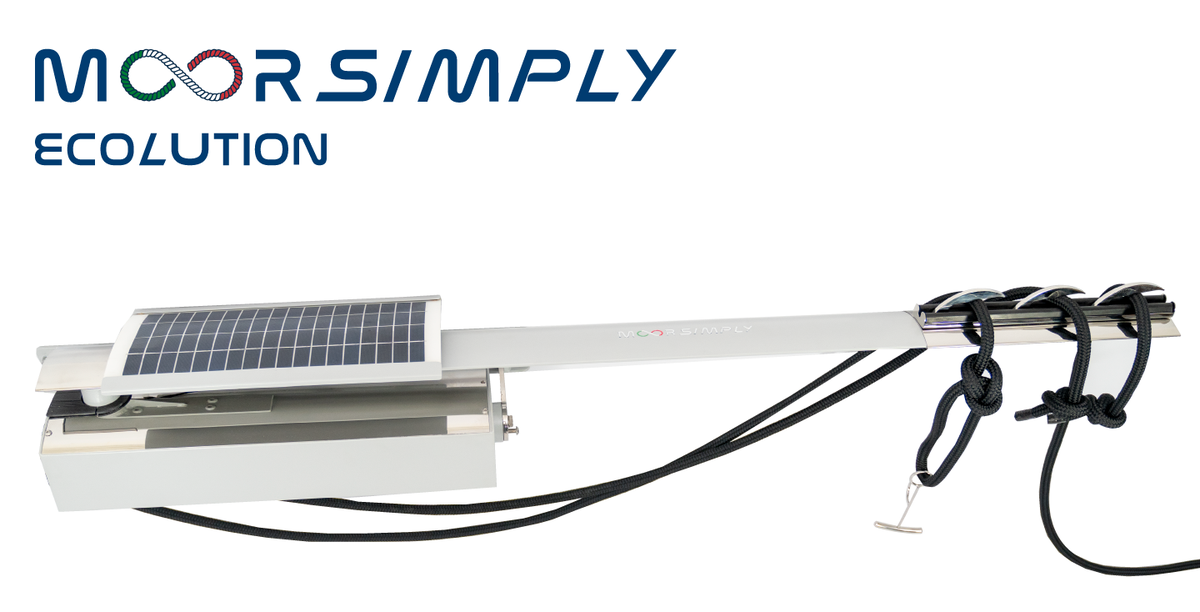
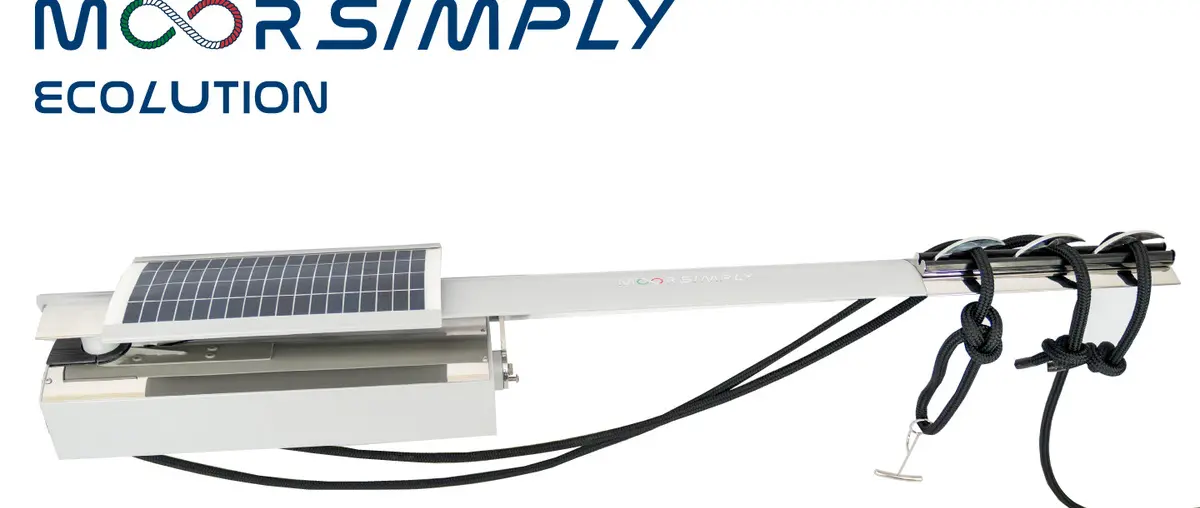
Italian marine equipment developer Moorsimply is showing Ecolution, a dock-mounted mooring assistant designed to present a line to an arriving boat when help from shore is unavailable. The manufacturer's original catalogue describes a remote-controlled mechanical arm, a photovoltaic panel and LED illumination, with quick-release line holders intended to simplify some stern-to and alongside mooring operations. Its METSTRADE product entry was first dated 1 January 2025 and remains available in the 2026 exhibition catalogue. This is therefore a review of a current equipment option, not a claim that the device was launched on 23 November. For owners of luxury motor and sailing yachts between 12 and 23.99 metres, the idea addresses a specific difficulty: a crew approaching a berth may need to receive or secure lines while the yacht is still moving, especially when nobody is waiting on the quay. The system could assist that process, but it does not replace a competent helm, suitable fenders, correct line handling or a safe plan for aborting a manoeuvre.
What the manufacturer says Ecolution does
The first-party listing identifies Ecolution as a remote-controlled mooring assistant made by Moorsimply S.r.l. It describes a mechanical arm that presents mooring ropes using quick-release holders, powered or supported by a photovoltaic arrangement and fitted with LED lighting. The catalogue suggests that the arm can help stop a boat approximately two metres away from the dock, but this is a manufacturer claim whose validity will depend on line arrangement, vessel mass, speed and environmental conditions. It should not be stated as a universal safety guarantee. The source does not specify every permissible vessel size, maximum working load, installation standard or remote-control range. Owners and marina operators should request the complete mechanical drawings, operating limits and test evidence. The product is best understood as part of a mooring system whose effectiveness is determined by the yacht, berth, ropes and people using it.
Why receiving a line can be difficult
In a quiet marina, a well-crewed yacht may be able to complete a familiar berthing manoeuvre with little difficulty. In an unfamiliar harbour, the same vessel may encounter crosswind, strong propeller wash, an awkward quay or a lack of assistance ashore. A crew member carrying a line may be unable to reach a distant bollard safely, while jumping from a moving boat creates a serious risk of injury. A dock-mounted arm that presents the line within reach could change the sequence of operations, allowing crew to collect a prepared rope without leaving the vessel. But the exact benefit depends on where the arm is installed and how the yacht approaches. A line handed over at the wrong angle could become a hazard or interfere with the propeller. Any new equipment should be evaluated within a complete manoeuvring plan, not treated as an automatic way to secure every boat.
A mechanical arm changes the choreography
The Ecolution concept depends on a physical arm extending or positioning a line so a person aboard can take it. This differs from conventional quay fittings that remain stationary and require the yacht to bring a crew member close enough to make contact. The operator must know when the arm should move, what area it sweeps through and how it responds if an obstruction is encountered. The manufacturer refers to remote operation but does not provide a full public description of every control and interlock. A berth owner should request those details and consider the effect of the arm on pedestrians and neighbouring vessels. A remotely moved fitting should not create a pinch point or strike a person walking along the quay. Safe use requires awareness on both sides of the berth, with the helm and line handlers agreeing on the intended sequence before the yacht approaches.
The significance of quick-release line holders
Moorsimply's catalogue mentions quick-release holders intended to present the ropes to the crew. The design may make retrieval more convenient, but the exact release force and compatibility with different rope sizes need confirmation. A yacht may use soft docklines, braided mooring ropes or heavier lines according to its size and the berth conditions. The holder should not damage the rope or allow it to fall unexpectedly into the water. A loose line near a running propeller is a serious hazard, so the crew must know how the system behaves if a grab is missed. The installation should include a documented method for resetting the line and inspecting the holder. Owners should also ask how replacement components are obtained and whether an ordinary marina worker can service the mechanism. A simple action during a manoeuvre depends on reliable engineering behind the scenes.
The two-metre stopping claim needs limits
The manufacturer's description refers to a boat being stopped about two metres from the dock. That may describe a particular demonstrated sequence involving correctly led and tensioned lines, but it should not be interpreted as a universal performance rating. A 20-metre yacht moving in a crosswind can carry much more momentum than a small boat approaching slowly in calm conditions. The loads transmitted through ropes and quay fittings vary accordingly. A sensible installation study should account for displacement, approach speed, line stretch, bollard strength and the geometry of the berth. The captain must retain control and should not rely on one line or device to stop a vessel that is approaching too quickly. The equipment could be useful in a well-planned manoeuvre, but it is no substitute for reducing speed early and maintaining a safe escape option if the approach becomes unsuitable.
A photovoltaic panel supports independent operation
Ecolution is described as having a photovoltaic panel, which may help the device operate without a permanent connection to a building's electrical infrastructure. That could be useful in smaller marinas or berths where new wiring would be expensive or difficult. However, solar generation depends on local conditions and the electrical demand of the mechanism and control electronics. The manufacturer's short listing does not provide a universal number of operations available after several sunless days. An operator should ask about battery storage, backup charging and the warnings given when energy is low. The installation may face shading from buildings, tall masts or other yachts, so panel location matters. A device that cannot move when the yacht arrives creates operational uncertainty, and the crew needs a way of recognising that condition before starting the approach. Energy independence should be verified through the complete installed design.
LED lighting in a marina environment
The listed LED light may help users identify the equipment or prepared lines in reduced light, but the exact brightness and purpose are not specified in the short catalogue. A marina should evaluate whether the light is visible from the approaching yacht without causing glare or confusion with navigation and harbour signals. Other people on the quay may also need to see the arm and understand that it can move. The installation should be planned within the marina's broader lighting and pedestrian-safety arrangement. Owners should not assume that a small LED can replace adequate berth lighting or a safe lookout at night. Crew may still need portable lights and clear communications during a difficult arrival. The most useful lighting is the kind that supports the task without distracting the helmsman or creating misleading visual cues.
A marina installation is different from onboard equipment
Ecolution is designed around equipment mounted on the dock, so the yacht owner may not be able to install it without permission from the marina or berth holder. The structural capacity of the quay, ownership of the fittings and maintenance responsibilities must be established. A marina may also have restrictions concerning protruding mechanisms or equipment that could obstruct access. If several vessels use the same berth, the arm must be compatible with their differing freeboards, line arrangements and manoeuvring methods. The manufacturer should explain how adjustment is made between vessels and whether the unit can be secured when not in service. This is not a portable accessory that an owner can simply transfer to every marina visited. Its strongest application may be a permanent or regularly used berth with a known vessel and a predictable approach pattern.
The role of the captain and deck crew
A remote-controlled mooring arm may reduce the need for someone to stand on the quay during some operations, but it does not eliminate the value of trained line handlers aboard. The crew still has to receive the rope safely, lead it to the correct cleat or winch and communicate with the helm. Loose clothing, fingers and feet must remain clear of moving lines under tension. A device that helps deliver a line cannot decide whether the vessel is moving too fast or whether the wind has made the approach unsafe. The captain should have a plan for approaching, accepting the line and aborting if the mechanism fails to operate correctly. A practical familiarisation exercise could be conducted in calm conditions before guests are aboard or the crew attempts a challenging night entry. Technology should simplify the sequence without encouraging haste.
Suitability for stern-to Mediterranean berthing
Many yachts around the Mediterranean berth stern-to using shore lines and an anchor or ground tackle arrangement, although the precise method differs between marinas. A mechanical arm could potentially help present stern lines when no shore assistant is available. Yet the yacht's freeboard, stern platform and distance from the quay influence whether the crew can reach the offered line safely. A broad bathing platform can make access easier in some cases but can also be vulnerable to contact. The mooring arrangement may require the crew to coordinate bow and stern forces and keep tension within suitable limits. The marina and installer should assess whether Ecolution improves the manoeuvre at that particular berth. The system should not interfere with neighbouring yachts, fenders or the path of shore-power cables. Compatibility must be demonstrated rather than assumed from the berth's general dimensions.
Weather and equipment durability
A dockside mechanism is continually exposed to salt air, rain, sunlight and accidental contact. Its moving parts and controls therefore need suitable corrosion protection and a maintenance programme. The public Ecolution description does not establish every environmental rating or service interval, so these details should be requested from Moorsimply. A marina should know how to inspect the arm, clean its working surfaces and identify damage after severe weather. If the berth experiences flooding or unusually high water levels, the location of electrical components becomes important. The installation should also be protected from inappropriate use by people who do not understand its purpose. A well-designed mechanism may reduce the workload during berthing, but only if it remains reliable after months of outdoor exposure and the occasional knock from a line or fender.
The safety implications of remote control
Remote operation can be convenient because a crew member may be able to command the arm without leaving the yacht. However, the controller needs a dependable communication path and a design that prevents accidental or conflicting commands. The operator should be able to identify the correct unit when several berths contain similar equipment. The manufacturer must specify the permitted range and the behaviour after a communications failure. It would be unsafe to assume the arm remains in a helpful position when its power supply or controller becomes unavailable. A marina may also need a means to isolate or reset the mechanism for maintenance. The owner should ask whether a local manual override exists and how it is used. Safe remote operation depends on clear authority, visible movement and predictable failure behaviour, not simply the presence of a wireless button.
Costs, approval and ownership
A permanent dock-mounted system may have a different business case from portable equipment bought for a yacht. A marina might purchase it to improve service at selected berths, while a private berth holder may value it for convenience when arriving with a small crew. The total project cost includes structural mounting, commissioning, any power or communication work and long-term maintenance. An owner should confirm who will repair the unit and who is responsible if it causes damage or fails during use. Insurance conditions and marina regulations may need to be reviewed. A useful procurement process identifies the expected number of arrivals, the difficulty of the current mooring procedure and the alternatives already available. A remote arm may be valuable at a difficult berth, but unnecessary at one with dependable staff assistance and excellent access.
What should be demonstrated before acceptance
A practical trial should include operating the arm from the intended control location, presenting a suitable line to a crew member and confirming that it can be secured without hazardous movement. The installer should explain how the device behaves when the line is missed, power is low or a command is interrupted. The yacht's captain needs to see the mechanism at the approach angles likely to be used. Any claimed stopping function should be assessed under controlled conditions and with a competent plan to prevent excessive loads. The marina should also confirm that other traffic and pedestrians are not placed at risk. A clear acceptance record will help both owner and supplier understand what the equipment is intended to do. Demonstrations should be repeated after any major adjustment or repair.
An equipment option for a specific berth problem
Moorsimply Ecolution addresses a practical difficulty that can be especially noticeable on a small-crewed luxury yacht: collecting a mooring line from the dock at the moment it is needed. The manufacturer describes a remote-controlled mechanical arm, quick-release rope holders, a photovoltaic panel and LED illumination. These are useful features to evaluate, while claims about stopping distance and universal ease of mooring require vessel- and berth-specific evidence. Because the product is dock-mounted, success depends on cooperation with the marina and a suitable structural installation. Its 2025 source date should remain clear, even though it appears in the current METSTRADE 2026 catalogue. For 12-to-23.99-metre owners who repeatedly use a particular berth, the system may offer an additional method of handling lines without sending someone ashore. It should support careful manoeuvring and trained crew, not create the impression that berthing can be automated without judgement.
Sources and image credits
Reporting based on Moorsimply S.r.l. original manufacturer-authored Ecolution dockside mooring assistant product listing, first released 1 January 2025, included in current METSTRADE 2026 catalogue.
Lead photograph: Moorsimply Ecolution Adds Remote-Controlled Line Handling to Yacht Berths — original first-party manufacturer photo. © Moorsimply S.r.l. Original official image source.