A portable lighting idea in the current marine catalogue
German marine-accessories specialist silwy, part of maglassX GmbH, is showing its PORTOFINO BLACK magnetic lamp and associated placement accessories within the current METSTRADE equipment catalogue. The product is designed to serve as a movable table or wall light, with a magnetic fixing concept intended to make placement simpler in spaces where conventional lamps could be knocked over. The manufacturer's original product entry is dated February 2025, so this is a 2026 catalogue review of established equipment, not a claim of a new launch this November. For luxury-yacht owners between 12 and 23.99 metres, the concept deserves attention because lighting must often combine attractive interior design with the practical challenges of a moving vessel. A portable lamp might be useful for occasional dining, reading or outdoor ambience, but its suitability depends on how securely it is mounted, the environmental conditions and the manufacturer's actual installation instructions. A magnetic accessory is not automatically a substitute for properly installed marine lighting.
What the first-party product description confirms
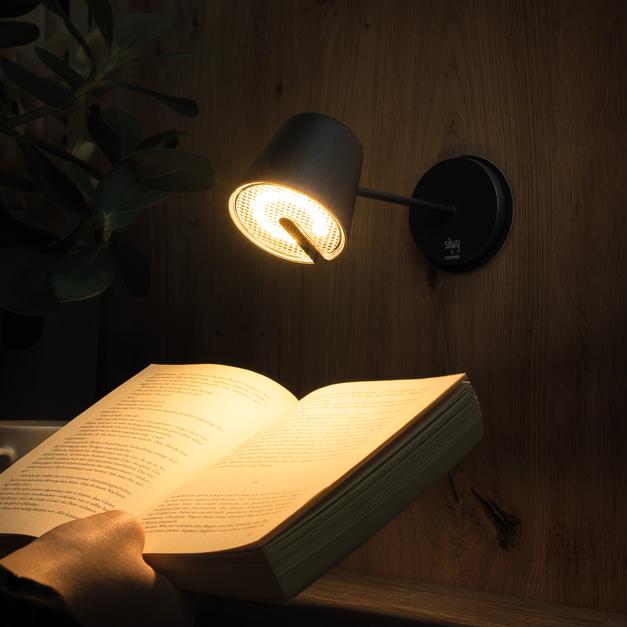
The silwy catalogue describes a black PORTOFINO lamp with a rotating head, adjustable illumination and accessories including a placemat and a pad for different locations. The manufacturer says the head can rotate through 180 degrees, that brightness and colour temperature can be adjusted, and that battery operating time varies widely with the setting. The published range is approximately seven to ninety-nine hours, which should be understood as a manufacturer statement covering different modes rather than a guaranteed endurance at maximum brightness. The product page does not provide every detail needed for marine installation, including a universal environmental rating or an approved holding force for every surface and sea condition. Owners should request the full datasheet, charging instructions and the stated restrictions on mounting. The difference between a decorative lamp and a securely mounted onboard fitting matters whenever the yacht is moving.
Magnetic placement and the problem of vessel motion
A conventional table lamp is vulnerable to sliding or tipping when the yacht heels or rolls. silwy's concept is to provide a magnetic connection between the lamp and a compatible accessory so it can be positioned without permanent wiring. That could offer useful flexibility when a table changes between dining, working and social use. Nevertheless, magnetic holding strength depends on the approved materials and the geometry of the installation. A lamp that remains upright during a modest movement may still detach when subjected to a larger shock or when placed on an unsuitable surface. The manufacturer’s supporting placemat and wall pad are therefore part of the system, not optional details that can be replaced with arbitrary household magnets. The owner should test the complete setup in a safe environment and follow the instructions on where it may be used. A portable object should be secured or stowed whenever the conditions exceed its intended operating limits.
The advantages of not having fixed wiring
Installing a permanent decorative light on a yacht can involve new electrical runs, a switch or control interface, and work to the surrounding furniture. A rechargeable portable lamp may avoid some of that complexity for a limited lighting function. It can also make it possible to experiment with different table arrangements before committing to a built-in solution. But a cordless product introduces other responsibilities. The crew needs a charging routine, an appropriate location for the charger and a way to monitor battery condition. If the lamp is frequently moved between guest spaces, it must not obstruct escape routes or create a trailing charging cable across a passageway. The absence of permanent wiring does not mean the product is free from electrical safety considerations. It should be treated as portable equipment with specific charging and use instructions rather than as an entirely passive furnishing.
Warm light and adjustable colour temperature
The manufacturer refers to warm-white lighting with adjustable colour temperature and brightness. These characteristics may be attractive to yacht interior designers because a dining table and a reading corner can benefit from different lighting moods. However, the perception of colour depends on the lamp’s actual output, surrounding surfaces and the existing lighting plan. A product photograph cannot reveal whether the light will flatter timber, fabrics or food in a particular saloon. Owners should examine a physical unit aboard where practical, including in daylight and in the evening. A dimmer range can provide flexibility, but the lowest and highest settings should be assessed for comfort and usability. Decorative lighting works best when it supports the overall interior rather than competing with fixed ceiling and wall lights. The goal is an appropriate atmosphere, not simply the maximum possible number of adjustable features.
Rotating the head adds a different use case
The published 180-degree head movement may let the operator direct illumination toward a book, dining surface or nearby wall. That can be useful where fixed lighting does not reach a particular part of the cabin. Yet the ability to rotate a head is not proof that the lamp provides enough useful light for every task. A chef or navigator may need more focused illumination than a portable decorative unit offers. The owner should evaluate glare, shadows and whether the lamp remains stable when the head is repositioned. A moving head may also change the balance of the assembly, so the correct accessory and placement remain important. The manufacturer's promotional description highlights flexibility; a practical demonstration should determine whether the settings are intuitive for crew and guests. Good lighting makes the space easier to use without drawing unnecessary attention to the control process.
Table and wall configurations are not identical
silwy lists a placemat that allows the lamp to be positioned on a suitable table and a pad intended for a wall arrangement. Those are different installation circumstances and need their own evaluation. A tabletop unit can be moved easily, but it should be positioned away from the edge and from places where guests may push it accidentally. A wall-mounted lamp is more exposed to movement from people passing through a cabin and may require careful selection of the fixing surface. Owners should check whether the supporting pads can be removed cleanly without damaging delicate timber, lacquer or upholstery. Adhesives and surface treatments may behave differently on a yacht than on a domestic plaster wall. A refit contractor should approve any attachment to valuable interior finishes. The appeal of a flexible accessory can be lost if it leaves marks or damages an expensive panel.
Battery endurance varies with the setting
A quoted operating range of seven to ninety-nine hours covers a very wide span. This is a useful warning that lamp endurance changes with brightness and other operating factors. Owners should avoid interpreting the upper figure as the expected performance in all conditions. The crew may want to establish a routine for charging after evening use rather than waiting for the lamp to fail midway through a guest event. If several portable units are installed, their charging requirements should be included in the yacht’s equipment inventory. Battery performance can also change with age and storage conditions. The manufacturer should specify appropriate charging methods and any restrictions on leaving a unit connected when unattended. A rechargeable decorative lamp is convenient when its practical endurance is understood; unpredictable operation can make it less useful than a fixed light.
Outdoor use requires an explicit approval
A yacht’s cockpit or aft deck may seem an obvious place for a portable magnetic lamp, especially during evening meals. But exposure to spray, rain and salt changes the risk. The catalogue summary does not establish a blanket outdoor waterproof rating for the PORTOFINO BLACK. Owners should request the product’s actual ingress-protection specification and follow the manufacturer’s use restrictions. A lamp that works indoors should not be left on an exposed deck in a passing shower merely because the supplier markets it for boating. The supporting placemat and pad also need to be suitable for the chosen surface and environment. Wind, vessel movement and accidental contact can affect a portable fitting. Good practice is to keep an accessible stowage location and a clear procedure for removing it when the weather changes.
Dining-space flexibility aboard a luxury yacht
On many mid-size motor and sailing yachts, one table may serve breakfast, lunch, evening drinks and occasional work. A flexible lamp could help the crew adapt the space without installing several dedicated decorative fittings. The ability to change location and orientation may be especially useful where an aft deck and saloon have different lighting needs. However, practical dining requires enough surface area for plates and glasses, and accessories should not create clutter. A stable light is only one part of a comfortable arrangement. Chairs, table edges, handholds and the movement of guests also matter. Owners should test how the lamp fits into real service, including when food is being carried and when the table is cleared. A useful product should make dining easier, not add another item requiring constant repositioning by the crew.
Magnetic tableware is a separate product category
silwy also markets magnetic glasses, trays and other systems for securing objects while travelling. The PORTOFINO lamp belongs to a wider family of accessories, but it should not be assumed that every accessory shares the same holding characteristics or intended use. A magnetic drinking glass and a rechargeable lamp have different mass distributions and consequences if they fall. Buyers should ask which pads and surfaces are approved for the particular lamp. The company’s broader catalogue may suggest ways to coordinate interior accessories, but each item needs its own specification and care instructions. A unified aesthetic can be attractive, especially in a small saloon, yet the engineering should remain specific to the object being secured. The fact that several products use magnets does not prove they are interchangeable.
Cleaning and care of an interior accessory
Decorative equipment can be exposed to food residue, sunscreen, cleaning products and frequent handling. The owner should know how to clean the lamp and placement accessories without affecting their surface finishes or magnetic function. Harsh chemical cleaners may be unsuitable, especially around electrical contacts and charging points. A yacht’s service inventory should include the model, approved charging equipment and any spare pads or placemats needed. If an accessory stops gripping reliably, the crew should not improvise a replacement with unknown materials. The manufacturer or supplier should explain whether the attachment surfaces can be renewed and what service support is available. Simple products can become frustrating when small components are lost. Thoughtful inventory management can keep the lamp practical throughout the cruising season.
Procurement, replacement and owner expectations
The purchasing decision should consider not only the appearance of the lamp but also the accessories required for each intended location. A portable system may be more flexible than a built-in fitting, but it can also be easier to misplace or damage. Owners should check whether replacements and matching accessories can be obtained from authorised suppliers if the unit is lost during a cruise. It is also sensible to confirm the applicable warranty and the service arrangements for the rechargeable battery. A design scheme should not depend on an accessory with uncertain long-term availability unless the owner accepts that limitation. The decision can be informed by testing the lamp in several locations aboard and evaluating how it fits with existing light levels and furniture finishes. The best choice is the one that is attractive and straightforward to live with.
A current catalogue spotlight, not a new launch
The PORTOFINO BLACK lamp shows how small design accessories can address practical aspects of yacht living. The official listing confirms a magnetic placement concept, adjustable warm-white illumination, a rotating head and a broad manufacturer-reported battery endurance range. It was originally listed in February 2025 and remains in the international marine equipment catalogue for 2026; it should not be presented as a newly launched November product. For luxury yachts between 12 and 23.99 metres, a carefully used portable lamp may add flexibility to a saloon or dining table without permanent electrical alterations. Its safe use depends on the correct mounting accessories, suitable conditions and reliable charging practices. The value of this kind of innovation is not that it replaces the yacht’s fixed lighting system, but that it can make an existing space more adaptable while respecting the movement and maintenance realities of life aboard.
Sources and image credits
Reporting based on silwy / maglassX GmbH first-party PORTOFINO BLACK magnetic lamp product listing, originally published 3 February 2025, currently included in METSTRADE 2026 catalogue.
Lead photograph: silwy PORTOFINO Magnetic Lamp Adds Portable Lighting to Yacht Tables and Cabins — manufacturer official product photograph. © silwy / maglassX GmbH Original official image source.