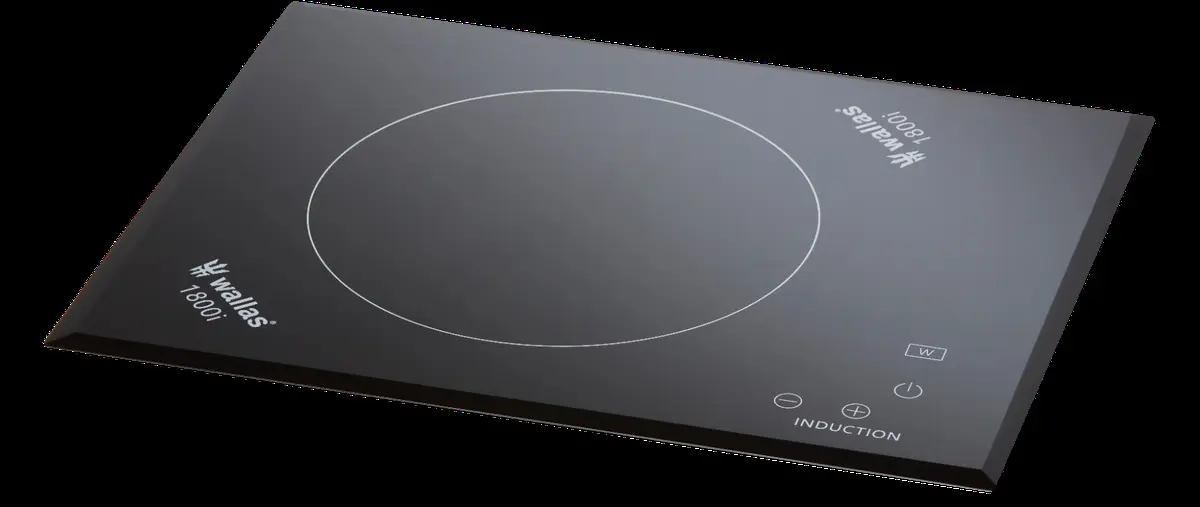
A smaller member of the marine induction range
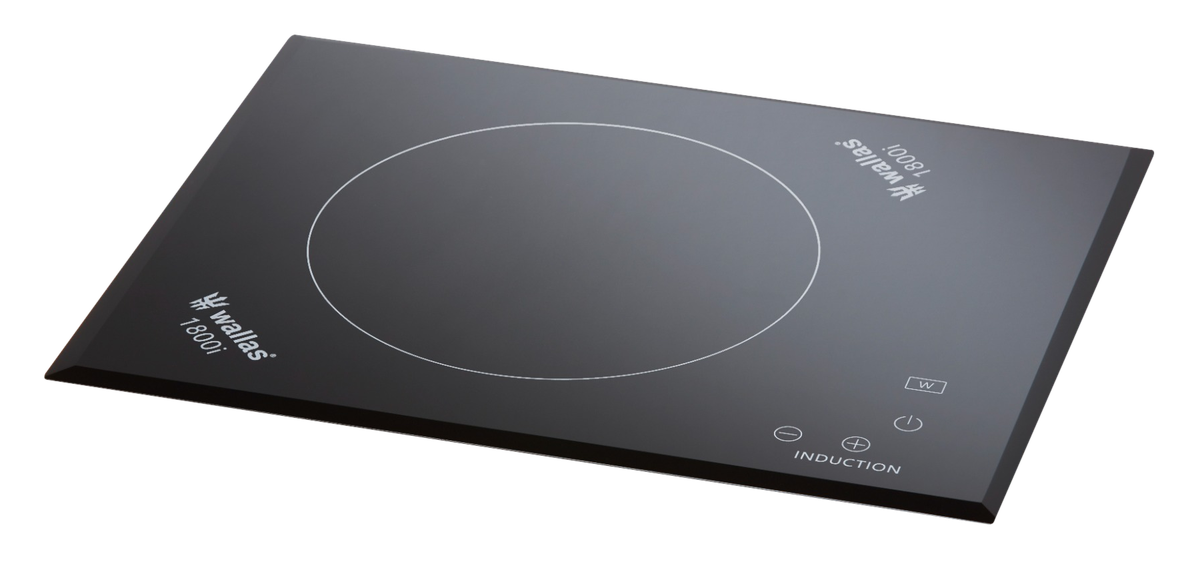
Finnish marine equipment company Wallas has listed the 1800i induction cooktop in the METSTRADE 2026 catalogue, describing a compact solution intended for boats with limited galley space and varying electrical supplies. The manufacturer states that the appliance delivers 1,800 watts on a 230-volt supply and 1,200 watts on 110 volts, with automatic adaptation between the two. It also refers to an adjustable power limit designed to protect smaller shore-power connections and inverter systems. The official product listing was released on 17 November 2026. For owners of luxury yachts between 12 and 23.99 metres, the development is relevant because galley appliances must often work with an electrical system that is far more constrained than a household installation. The 1800i should be understood as a single-zone unit, despite an inconsistent catalogue subheading that calls it two-zone. The descriptive text is clear on the actual configuration, and buyers should confirm the current specification before ordering.
What the source confirms and what remains open
The Wallas product entry names the 1800i and gives outputs of 1,800 watts at 230 volts and 1,200 watts at 110 volts. It describes a shallow installation needing only 76 millimetres below the ceramic cooking surface, together with a fitment approach designed to work in a prepared counter opening. These are specific manufacturer-reported details. The short description does not establish the exact overall width and depth, cooking-zone diameter, pan compatibility or the complete electrical installation requirements. Nor does it provide a verified energy-consumption figure for every cooking task. The owner should therefore obtain current dimensions and the official installation manual. The value of a compact appliance depends on more than fitting below the counter: adequate clearances, safe ventilation and the ability to service or replace components also matter in the confined accommodation of a cruising yacht.
Why the two supply voltages matter
Yachts operating internationally may encounter different shore-power arrangements, and onboard inverter systems can also provide supplies with different characteristics. A cooktop that recognises 110 and 230 volts may simplify the owner’s equipment choices, provided the installation and supply are appropriate. However, electrical compatibility must never be inferred from voltage alone. Frequency, earthing, protective devices, available current and installation standards all affect safe operation. The manufacturer's stated lower output at 110 volts should be explained to the user so that differences in heating time do not come as a surprise. A yacht's electrical engineer should verify whether the available shore connection, generator and inverter can support the appliance alongside other domestic loads. The presence of automatic adaptation is useful, but it does not remove the need for correct circuit design or protect against every possible wiring fault.
Adjustable power as a practical feature
The manufacturer highlights an adjustable power limit intended to suit smaller shore-power fuses and inverter capacities. This addresses a familiar boating problem: a marina connection may have enough power for essential services but not for several high-demand appliances simultaneously. A cooktop drawing too much current can cause a circuit protector to trip, disrupting refrigeration, lighting or other equipment. A suitable control may allow the chef or crew to reduce the cooking load during periods of constrained power supply. The practical effect must be understood and set appropriately for the yacht. A lower limit can increase the time needed to heat a pan or bring water to a boil, so the crew should be familiar with the compromises. The manufacturer's description does not establish that the appliance measures the total demand from the rest of the yacht or automatically coordinates with every energy-management system. Those functions should not be assumed.
The appeal of a single-zone cooking surface
A single cooking zone may be appropriate for a compact pantry, secondary galley or smaller yacht where much of the cooking is done through other equipment. It is not necessarily intended to replace the full multi-burner galley expected on a yacht entertaining a large guest party. Owners should assess how many dishes need to be prepared simultaneously and how the appliance fits into the normal routine. A cooktop with fewer zones can save counter space, but may create inconvenience if it is made the only cooking source on a heavily used vessel. The decision depends on guest numbers, crew arrangements and how often the yacht spends time away from marina services. A 12-metre owner-operated motor yacht could have a different requirement from a 23-metre charter yacht with professional catering. Choosing the right equipment begins with the kitchen's actual workflow rather than headline electrical ratings.
Induction and the choice of cookware
Induction cooking depends on a suitable pan that can interact with the magnetic field generated by the appliance. Owners cannot assume that every existing saucepan or frying pan will work. The crew should check the manufacturer's cookware recommendations and consider storage and securing arrangements for the chosen equipment. A yacht may move while cooking, so pan stability and safe working practices remain important. The ceramic surface can become hot due to the cookware, even though the technology differs from a conventional heating element. Induction is not a substitute for galley safety, and the operator should follow the instructions on unattended cooking, cleaning and appropriate pan sizes. If the yacht has a sea-going galley, the builder should review whether the chosen arrangement provides enough restraint for the intended operating conditions. A sleek flush appearance alone cannot establish safe offshore operation.
Electrical energy is not automatically low just because output is adjustable
A cooktop rated at 1.8 kilowatts may appear modest beside a yacht's air-conditioning plant, but repeated cooking cycles can consume a meaningful amount of stored energy. The energy used depends on the actual power setting and the duration of cooking. A battery-powered yacht should therefore model how frequently the appliance will be used, whether it operates during generator hours and which other loads are active at the same time. Lowering power reduces immediate demand but may extend cooking time. The total energy required for a meal can depend on cookware, insulation, starting food temperature and technique. The Wallas listing provides rated output, not an independently measured daily galley energy budget. An owner hoping to cook from batteries at anchor should test representative tasks under real conditions and include sensible energy reserves for more critical equipment.
Shallow installation and the space below the counter
The manufacturer's 76-millimetre installation depth is one of the more distinctive claims in the 1800i listing. On a yacht, under-counter space may also be needed for drawers, cutlery storage, refrigeration or structural components. A shallower appliance can give a designer more freedom, but it is essential to account for the full required installation envelope. The owner should ask whether the stated dimension includes all electrical connections and whether additional ventilation or clearance is required. The route for the power cable and accessibility of protective devices should be shown on the builder's drawings. An appliance that fits in a brochure illustration may still conflict with a supporting beam or the movement of a drawer. Good galley design leaves the equipment serviceable rather than packing every available millimetre around it. The final countertop should also satisfy the maker's temperature and support requirements.
Comparing the 1800i with larger Wallas appliances
Wallas has also presented other induction and combined-fuel cooking products in its 2026 catalogue. The 1800i is distinct from the higher-output 3600i and from the dual-power unit that combines induction with diesel cooking. Owners should not transfer one product's specifications to another just because they share a brand. The 1800i is described as a compact single-zone induction model with the stated voltage-adaptive outputs and 76-millimetre depth. A different appliance may offer more simultaneous cooking capacity or another source of heat, but could require more space or electrical infrastructure. A useful comparison should include the yacht's intended meals, the power available at anchor, ventilation, cost and service access. The selection must be based on an accurate product datasheet and the preferences of the people who will actually use the galley.
Working with shore power and battery inverters
Induction can be practical aboard when the electrical system has sufficient capacity, but the inverter and shore-power arrangement need to be matched carefully. A nominal inverter wattage may not describe how it behaves under transient load or while other appliances operate. The electrician should confirm the current waveform, protection, cable rating and the approved connections for the cooktop. A power-management arrangement might restrict other nonessential loads while cooking, but such behaviour requires a designed and tested control strategy. The Wallas listing does not claim native integration with every yacht automation platform. Owners considering a refit should ask whether their existing inverter can support the appliance at its required voltage and what modifications are necessary. The project cost should cover wiring and any distribution changes, not only the appliance itself. Electrical convenience is valuable only when the complete installation remains safe.
Galley safety and equipment access
Cooking equipment aboard a yacht should be installed to reduce the risk of hot cookware moving unexpectedly or crew being forced into awkward positions. The worktop height, available handholds, edges and proximity of other equipment affect safety. A compact cooktop can still pose a burn risk and needs suitable clearance from flammable materials. Crew should understand the safe cleaning method for the ceramic surface and any restrictions on using damaged cookware. An owner should also check how the appliance responds after a power interruption: whether it remains off, restores settings or requires a deliberate restart. Those behaviours must come from the manufacturer's documentation rather than assumption. Good design should make controls accessible but protect against accidental activation by guests or objects placed on the work surface. These seemingly small details matter throughout a yacht's operating life.
Servicing and replacement during a refit
An electric cooktop may be simpler to integrate than a fuel-burning appliance in some circumstances, but its service plan still deserves attention. Electronic controls and the ceramic surface can be damaged, and replacement components may not be stocked in every cruising region. The owner should ask what warranty applies, whether repairs can be made aboard and what is required to remove the unit safely. If the cooktop is installed flush into an expensive countertop, access for future replacement should be considered before the opening is cut. A standardised cutout can be helpful but should not be assumed without the exact dimensions. Refit yards should record the model, electrical supply and installation details in the yacht's documentation. A careful installation can reduce disruption years later when the appliance is repaired or replaced.
The relevance to modern yacht use
The Wallas 1800i offers a defined compact cooking option with dual-voltage adaptation, adjustable power and a shallow fitment depth. These features address issues that yacht owners encounter routinely when trying to combine comfort with limited onboard resources. The source does not establish that the appliance is appropriate as the sole cooker for every 12-to-23.99-metre yacht, nor that it can operate without a properly sized electrical system. It also contains an inconsistent zone-count subheading, making the manufacturer's detailed technical sheet important for confirming the single-zone configuration. For a modest cruising galley or a carefully designed supplementary cooking station, the product may deserve evaluation. The strongest measure of success will be whether the appliance supports the crew's actual cooking tasks without causing avoidable power interruptions or maintenance difficulties. An informed specification turns a compact hardware feature into genuine everyday convenience.
Sources and image credits
Reporting based on Wallas first-party 1800i single-zone induction cooking appliance listing, dated 17 November 2026 at METSTRADE.
Lead photograph: Wallas 1800i Adds Voltage-Adaptive Single-Zone Induction to Compact Yacht Galleys — manufacturer official product photograph. © Wallas Original official image source.