A different architecture for combining two propulsion sources
Danish marine engineering company EPTechnologies presents an In-Line Hybrid System among its current marine equipment offerings, an approach designed to combine conventional engine power with an electric machine on a common shaft line. Its official METSTRADE product entry describes a parallel hybrid for power vessels measuring approximately 7 to 50 metres, a size range that includes much of the 12-to-23.99-metre luxury-yacht market. The manufacturer identifies electrical power configurations from 20 to 600 kilowatts and compatibility with combustion engines rated at up to 1,700 horsepower, subject to the engineering of the complete arrangement. The original product entry dates to June 2024, so this article reviews a currently catalogued technology rather than claiming a new November 2026 launch. Its practical significance lies in how owners and yards can compare hybrid drivetrains while planning new builds or major machinery refits. A hybrid system may offer more operating modes, but its benefits are determined by the yacht's actual design, not by an impressive theoretical range of compatible power ratings.
What the supplier says about its system
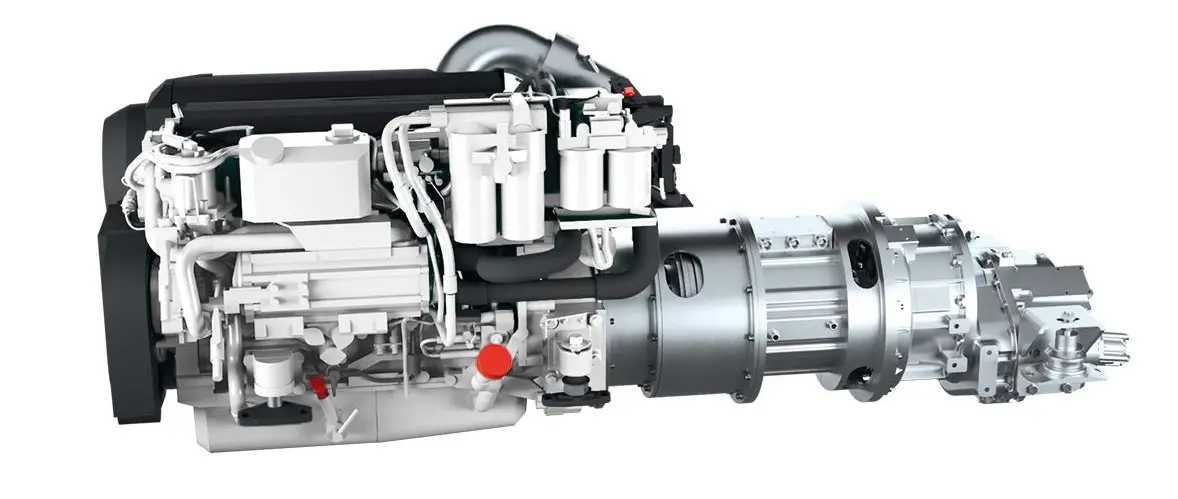
The official product listing describes a permanent-magnet electric machine mounted so its shaft aligns with the output of the combustion engine and marine gear. EPTechnologies says the arrangement can provide direct propulsion from the diesel engine, from the electric machine or from both together in a diesel-electric boost mode. It also identifies a generator mode while the combustion engine remains engaged. These are substantive design claims that a buyer can use as a framework for evaluating the equipment. The short catalogue does not publish all of the technical drawings, control limits or performance measurements needed to approve a particular installation. It does not establish how much battery energy would be required for a specified passage or what fuel savings every yacht can expect. Those figures depend on the chosen power rating, gearbox, propeller and the vessel's electrical configuration. The equipment should therefore be evaluated as a complete drivetrain rather than a self-contained promise of cleaner cruising.
Understanding an in-line configuration
The term in-line refers to the positioning of the electric propulsion component along the mechanical power path associated with the conventional engine and shaft. This can offer an alternative to arrangements that place separate electric and diesel motors on different drives or use a dedicated electric pod. The practical attraction is the possibility of retaining a familiar propeller shaft while gaining additional electrical operating modes. However, integrating machinery along one shaft line introduces questions about couplings, alignment, bearing loads and the space available between the engine and gearbox or other components. A boatbuilder cannot assume the same package will fit two vessels of similar length. The arrangement needs detailed drawings and a review of the existing machinery foundations. When a yacht is retrofitted, the costs of altering shaft alignment or moving equipment may be substantial. Those costs should be established before the owner approves the concept.
Diesel propulsion remains a core function
The manufacturer describes direct propulsion by the combustion engine as one of the available modes. For an owner who expects long passages, retaining a conventional engine may be an important reason to investigate a parallel hybrid rather than a fully electric conversion. Yet the diesel equipment still needs its own cooling, fuel supply, exhaust and maintenance arrangements. A hybrid installation does not automatically eliminate the cost of supporting a combustion engine. Nor does the presence of a second power source guarantee redundancy if both paths rely on a vulnerable common component. Engineers should map which mechanical and electrical elements are shared and what happens if one fails. The vessel's operating procedures need to explain how the captain selects the appropriate mode and what limitations apply. An effective hybrid system is one whose multiple functions remain predictable and maintainable, not simply one that contains two different types of motor.
Electrical propulsion and the energy budget
The ability to drive the shaft electrically may be attractive for short harbour manoeuvres or selected quiet cruising periods when the batteries and drivetrain are suited to the task. But a yacht's electricity use depends on the thrust required to overcome hull resistance, current and weather, as well as any domestic equipment operating at the same time. EPTechnologies' published power range cannot be converted into a guaranteed electric cruising distance. Batteries must be specified in kilowatt-hours, while the electric drive is rated in kilowatts; the distinction matters because the motor can demand energy much faster than a modest battery bank can supply it over a long voyage. Owners should request simulations for realistic passages, manoeuvres and expected reserves. An installation designed mainly for brief propulsion assistance may not be capable of replacing hours of conventional cruising. Clear operating limits are more useful than an isolated claim about the maximum output of the electric machine.
Combining power in boost mode
The manufacturer's listing refers to a diesel-electric boost function in which the two sources of power contribute to propulsion. This could be useful when a vessel needs a temporary increase in available power, provided the gearbox, shaft and propeller are approved for the combined torque. It should not be assumed that all advertised ratings can simply be added together without considering mechanical limits. The electric machine's behaviour at different shaft speeds and temperatures, the condition of the batteries and the control logic all affect available assistance. A naval architect should establish whether the yacht has a real requirement for boost operation and how it influences acceleration, handling or other performance goals. An owner who rarely operates near the vessel's maximum power demand may obtain more value from energy management or quieter modes. The importance of boost depends on the actual cruising programme, not a theoretical capability printed in the catalogue.
Generator mode adds another operating question
EPTechnologies describes a mode in which the electric machine can generate electricity while the diesel engine is engaged. This may create an option for replenishing onboard batteries or meeting electrical loads during engine operation, although the details of power management need to be confirmed. Generating electricity creates an additional mechanical load, so it should not be described as energy obtained without fuel or other consequences. The system designer needs to understand how charging output is regulated, what electrical protections are required and how generation affects engine operation. A yacht may already use engine-driven alternators or dedicated generators, and the hybrid system must be compared with those existing arrangements. The benefit may lie in greater integration or flexibility, but it needs measured data. An owner should ask for an energy-balance study rather than assume that adding generator capability automatically reduces the vessel's total fuel use.
The importance of the gearbox and propeller
The propeller and transmission convert engine torque into thrust, making them central to hybrid performance. A propeller selected for a conventional diesel engine may not be optimally matched to electric-only operation at different shaft speeds. The yachtbuilder should review the full propulsion curve and consider whether existing reduction ratios remain suitable. Shaft seals, bearings and couplings also need to be assessed for the proposed modes. Owners may be tempted to focus on the battery or electric motor because these are the most visible parts of an electrification project, but poor mechanical matching can undermine the result. An efficient and reliable drivetrain is one whose components work together across the expected range of operation. The EPTechnologies catalogue establishes a concept for doing so; it does not specify the optimum propeller for each of the many vessel types within the manufacturer's stated size range.
A wide power range does not mean one universal unit
An advertised range from 20 to 600 kilowatts suggests that the system may be offered in multiple configurations rather than as a single appliance with one output. Similarly, compatibility with combustion engines of up to 1,700 horsepower describes the manufacturer's range of intended applications, not the needs of every luxury yacht. A smaller displacement cruiser may require substantially less electrical power than a large high-performance vessel. The correct engineering choice begins with hull resistance, displacement, intended speed and reserve requirements. Owners should request the exact configuration being proposed rather than rely on the full range advertised for the product family. Dimensions, mass, cooling, electrical connection and controller capability may vary between versions. A comparison should use complete installed system parameters. This is especially important for yachts near the upper end of the 12-to-23.99-metre sector, where machinery arrangements may already be tightly packed.
Battery storage introduces additional safety responsibilities
A hybrid drive using stored electrical energy requires batteries, protective switching, appropriate cabling and a battery-management arrangement. The correct system depends on the chosen chemistry, voltage and operating profile. High-current or high-voltage equipment introduces safety requirements that may be unfamiliar to owners accustomed to conventional diesel propulsion. The installation must provide clear isolation and a documented method for safe inspection and service. The electrical engineer should explain what happens if a battery bank becomes unavailable or if a fault interrupts the electric drive. Essential vessel functions should not become unnecessarily dependent on a single shared control system. The applicable flag, class and insurer may also have requirements concerning battery placement, ventilation, fire protection and emergency procedures. An attractive drivetrain drawing does not prove that those requirements have been met. They need to be addressed by the complete yacht project.
Cooling and sustained performance
Both the electric machine and its power electronics generate heat when operating. Cooling requirements depend on the actual load and installation arrangement, and sustained output may be limited by thermal conditions. The short EPTechnologies catalogue entry does not provide the complete cooling specification, so purchasers should request data covering the intended power configuration and duty cycle. On a yacht, cooling equipment may connect to seawater heat exchangers or other circuits that require cleaning and monitoring. Space for hoses, pumps and service access should be included in the machinery layout. A system that performs adequately during a short harbour test may face different demands during extended operation. Acceptance trials should therefore cover representative use, including high-load periods and transitions between operating modes. Reliable performance is a property of the assembled and cooled system, not just of the electric machine itself.
How a refit differs from a new build
A new yacht can be designed around an in-line hybrid drivetrain from an early stage. The builder can reserve machinery space, plan the electrical distribution and place batteries where they are structurally and operationally appropriate. A refit has more constraints. The existing shaft, engine position, gearbox, controls and surrounding structure may leave little room for an additional machine. Removing or moving equipment can also affect weight distribution and access to unrelated systems. Owners should commission a detailed survey before assuming a conversion is straightforward. The proposal should state which existing components will be retained, what must be replaced and who is responsible for the performance of the complete drivetrain. A technically successful retrofit is often determined by the quality of that early planning. Selecting the hardware first and attempting to make it fit later can lead to unnecessary cost and compromise.
Control modes must be intuitive at the helm
With several possible propulsion and generation modes, crew members need an interface that shows exactly what the yacht is doing. The captain should know whether the shaft is driven by the diesel engine, electric machine or both and whether batteries are charging or discharging. The control system should also prevent unsafe combinations of commands and make alarm conditions understandable. The product listing identifies the possible modes, but does not provide a universal control layout or describe every transition. Owners should request a demonstration and a clear operating manual before delivery. Different crews may operate the vessel over its lifetime, so the system should not depend on undocumented knowledge held by one engineer. A complex arrangement becomes an advantage only when its behaviour remains predictable during routine manoeuvring and when a component fails.
What measurements would establish real value
Claims about hybrid benefits should be supported by measurements of energy use, fuel consumption and operating behaviour under comparable conditions. Owners should ask how electrical propulsion power was recorded, how charging losses were treated and whether the vessel's loading and sea conditions were documented. A demonstration showing quiet electric motion is useful, but it does not automatically establish a reduction in total energy consumption over a cruising season. The system's effect on maintenance and service intervals also matters. Additional components may provide flexibility while increasing the number of items requiring attention. A realistic ownership model should include installed cost, regular servicing, replacement planning and the availability of qualified technicians in likely cruising regions. The strongest case for a hybrid drivetrain will be one that performs well within the owner's actual routine, not one based on optimistic assumptions.
A current option with an established development history
The EPTechnologies In-Line Hybrid System is a manufacturer-described parallel hybrid arrangement with diesel, electric and combined propulsion modes, together with generator operation while the combustion engine runs. Its 2024 product entry remains relevant to the 2026 marine equipment catalogue, but the original publication date should be stated clearly rather than presented as a new November unveiling. For 12-to-23.99-metre luxury-yacht owners, the technology offers a different engineering path from a gearbox-integrated hybrid or an entirely electric drivetrain. That distinction can matter when planning a new build or a comprehensive propulsion refit. Successful adoption will depend on mechanical compatibility, a realistic electrical energy budget, clear safety procedures and dependable service support. The promise of hybrid propulsion is not that every vessel gains identical benefits, but that owners may have more ways to match machinery operation to the voyages they actually undertake.
Sources and image credits
Reporting based on EPTechnologies first-party In-Line Hybrid System marine propulsion catalogue entry, originally released 17 June 2024 and still listed in current 2026 METSTRADE catalogue.
Lead photograph: EPTechnologies In-Line Hybrid Drive — original manufacturer technical photograph. © EPTechnologies Original official image source.