A low-voltage approach to meaningful propulsion power
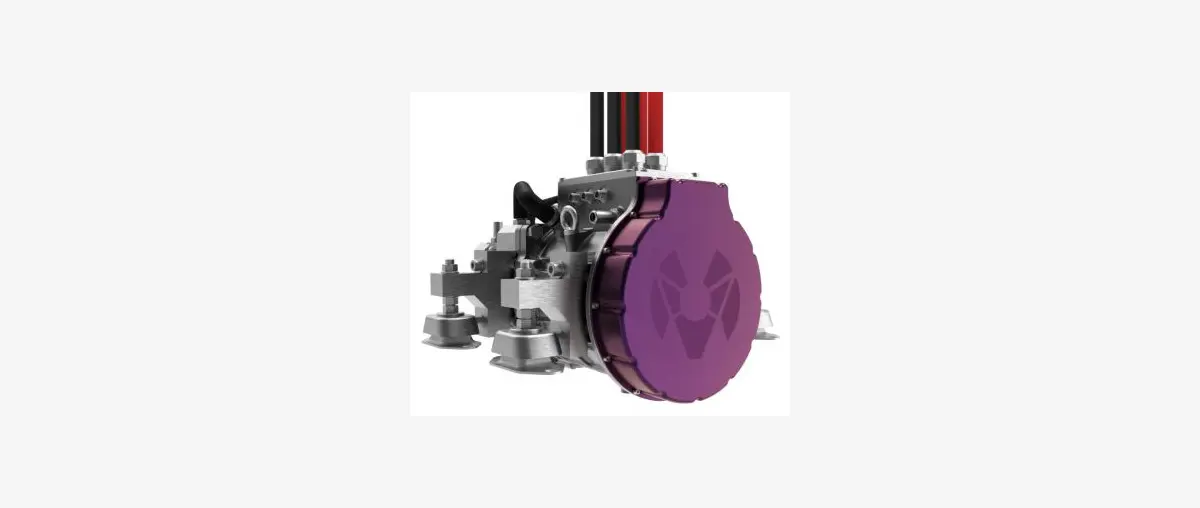
German electric-drive company MOLABO is displaying its ARIES i50 inboard propulsion system in the 2026 marine equipment market, highlighting an unusual combination: a nominal 50-kilowatt motor operating in a 48-volt electrical architecture. Conventional electric drives of this power level often rely on much higher voltages to reduce current, making MOLABO's patented stator-cage approach a distinct engineering alternative. The manufacturer offers the ARIES i50 as part of a marine system with controls and compatible components, rather than simply a motor for an owner to connect to any battery bank. For luxury yachts in the 12-to-23.99-metre range, the relevance is primarily to compact electric launches, support craft and selected propulsion projects whose power requirements and hull form are appropriate. A 50-kilowatt rating does not prove that the motor can replace every main diesel engine on a larger cruiser. The system's suitability depends on the vessel's resistance, duty cycle, battery capacity, propeller and installation.
What MOLABO states in its original materials
The company's first-party ARIES i50 product information identifies a 48-volt nominal electrical system and approximately 50 kilowatts of continuous motor output. The manufacturer's 2026 METSTRADE listing also describes a compact machine and quotes a motor mass of 44 kilograms, a figure that should not be confused with the weight of the batteries, controller, cables and other equipment required for a working propulsion package. MOLABO explains that its stator-cage architecture enables substantial power delivery while avoiding the much higher system voltages common in other electric drives. These are specific supplier claims. They do not establish the cruising range of a particular yacht or the exact installed system weight. The correct engineering comparison is between complete propulsion solutions performing a defined task. Owners should request current performance curves, component dimensions, cooling requirements and the electrical configuration approved for the selected vessel.
The electrical meaning of 48 volts
A lower nominal voltage can reduce some high-voltage handling considerations, but the power being delivered is still substantial. At 50 kilowatts, the current in a 48-volt system is high even before allowing for losses and operating conditions. This creates demanding requirements for conductors, connectors, fuses, switching and thermal management. The manufacturer's use of the expression safe-to-touch refers to its design philosophy around voltage; it should not be interpreted as permission to handle energised components casually or to ignore electrical shock, arc or fire hazards. A trained marine electrician must design and commission the circuit. Poor connections can become hot under high current, and appropriate protection is essential. The overall installation should be assessed against applicable marine standards, not judged safe solely because the operating voltage is lower than the level used by some competing propulsion systems.
A stator-cage motor is not an ordinary automotive conversion
MOLABO attributes the ARIES system's characteristics to its patented stator-cage technology. This suggests a different motor architecture and control approach from familiar conventional windings, although the detailed electrical design is proprietary. The manufacturer links this architecture to 48-volt high-power operation and integrated system engineering. For a yachtbuilder, the important question is how the complete machine performs at different speeds, loads and temperatures. A proprietary technology may offer advantages but can also require dedicated controls, components and specialist support. The motor should not be regarded as interchangeable with any industrial electric drive of similar nominal power. Procurement should include the matching inverter or controller, approved protection, software interfaces and installation instructions. A credible supplier package should explain what the yard can configure and what must remain within the manufacturer's tested operating envelope.
Continuous rating needs to be matched to the hull
A nominal 50-kilowatt continuous power rating provides a useful reference for designers, but it does not determine a boat's speed by itself. Hull shape, length, displacement and propeller efficiency all influence how much shaft power is needed. A long displacement hull may operate efficiently at moderate speed, while a heavily loaded planing boat may require considerably more power to achieve its intended performance. MOLABO references a demonstration in a smaller boat, but the result from that craft should not be carried over to a 12-to-23.99-metre luxury yacht without a new powering analysis. The naval architect needs the actual torque and speed curves, along with the gearbox or direct-drive arrangement. The owner should define how the boat will be used and what performance is necessary. Component selection belongs after that calculation, not before it.
Battery energy determines how far the boat can travel
A motor's kilowatt output is a measure of power, while battery kilowatt-hours describe the stored energy that can sustain it. The two figures are often confused in discussions of electric boats. A battery package suitable for brief marina manoeuvres may provide far less endurance at a sustained cruising load than owners initially expect. The energy budget should account for propulsion demand, hotel loads, reserve margins, temperature, battery ageing and conversion losses. If the yacht uses a conventional engine or generator as a charging source, the design must consider how and when electricity is replenished. MOLABO's manufacturer pages establish the drive's rated characteristics but do not justify a single range prediction for every hull. A sensible proposal should include realistic simulations and, where possible, measured data from comparable installations. Owners need to know how the system behaves near the minimum permitted battery state and whether useful propulsion remains available.
Applications on tenders and support craft
A motor in this power class may be of particular interest for a yacht's larger tender or support craft, where the owner values electric manoeuvring and wants to avoid combustion exhaust at the point of operation. Yet the tender's intended work must be considered. A boat regularly transporting guests and stores between a yacht and shore has different requirements from a recreational launch used for short exploration trips. The combined weight of the battery, motor and associated equipment influences carrying capacity, trim and recovery aboard the parent yacht. Electric components also require suitable protection against splash and salt. The tender builder should specify the full arrangement, including access to service points and the charging method. A technically attractive drive is not enough if the tender cannot be recharged safely during the yacht's normal cruising routine.
Possible new-build integration
A builder planning an electric yacht from the outset has an opportunity to place batteries, power electronics and wiring in locations that support good stability and maintenance access. The ARIES i50 package could be considered in that process where the naval architect's powering study shows a suitable match. The relatively low system voltage may influence distribution architecture, but high currents make cable routes particularly important. Designers should minimise unnecessary conductor length without compromising the ability to isolate or service components. The equipment should have adequate cooling and protection from the marine environment. Any connection to a higher-level yacht energy-management system requires compatibility checks. A finished installation should be easy for the captain to understand and should include clear indications of available energy, motor condition and faults. Good integration is measured by predictable operation, not only by the physical compactness of the motor.
Retrofitting a diesel yacht is a larger project
An existing motor yacht may have been designed around the shape, mass and services of a conventional diesel engine. Changing to electric propulsion can affect engine foundations, shaft alignment, cooling, fuel storage, exhaust systems and the distribution of weight through the hull. Even if the ARIES motor is compact, its energy storage may occupy space that did not previously contain heavy equipment. A refit should begin with a full technical survey and an agreement on the vessel's expected performance after conversion. Owners should also consider whether removing the diesel engine reduces long-range flexibility in ways they are willing to accept. The most practical result might be a hybrid or partial conversion, but that is a separate engineering decision. MOLABO's availability as an equipment supplier does not establish that every existing cruiser can adopt the drive economically or without structural changes.
Cooling under continuous load
An electric motor and its control equipment produce heat that must be managed, especially during sustained operation. The required arrangement depends on the manufacturer's cooling specification and the compartment selected for installation. A marine drive may operate near water but still need a dedicated cooling circuit, appropriate pumps and monitoring. The ARIES i50's continuous rating should be assessed against the thermal conditions the yacht will experience in warm weather. A short demonstration at moderate load cannot substitute for a trial that includes representative operating periods. The owner should request information about protective power reduction and alarm behaviour if temperature limits are reached. The system should also be accessible for routine inspection. Salt deposits and restricted cooling can affect reliability over time, so maintenance instructions need to be followed rather than assumed unnecessary because the propulsion source is electric.
Controls and the helm experience
Electric propulsion can offer precise response to throttle commands, but the quality of the handling depends on controller calibration, propeller characteristics and the yacht's own momentum. A good helm interface should show remaining battery state and any restrictions on available power. It should also make clear whether the motor is ready, disabled or operating in a reduced-power mode. Owners should ask how the system behaves after power loss, emergency isolation or an unexpected alarm. On a tender, the driver may be inexperienced with electric equipment and should receive appropriate familiarisation. For a yacht with several helm stations, any transfer of control needs a properly designed interlock. MOLABO's system should be assessed with the actual selected controls and vessel hardware, rather than on the assumption that all electric motors behave identically once installed.
Charging is part of the propulsion design
An electric drive system is only practical if the owner has a suitable way to replenish the battery. Shore power may be available at a marina, but a yacht spending many nights at anchor may require another charging strategy. A tender stored aboard a parent yacht must use charging equipment approved for its battery package and protected from inappropriate exposure. Owners should confirm charging rates, connectors and any operational restrictions before delivery. A fast charger may create a substantial additional load on the yacht's electrical system. The expected time between uses and the amount of energy consumed should inform the battery and charger specification. A system that performs well for a short demonstration but cannot be recharged between normal trips may not fit the owner's programme. Energy planning matters as much as motor selection.
Maintenance, approvals and service network
Electric drives avoid some service tasks associated with conventional combustion engines, but they are not maintenance-free. Electrical connectors, cooling systems, mounting hardware and power electronics need appropriate inspection. A proprietary motor system may also depend on specialist diagnostic tools and approved software. An owner should ask which components can be replaced by a qualified local marine engineer and which require the manufacturer's authorised service partners. The yacht's flag, insurer or surveyor may have requirements for propulsion and battery equipment that need to be considered early. Documentation should include installation drawings, component ratings, emergency procedures and commissioning records. These items support long-term operation and resale. A compact system is most valuable when it remains understandable and repairable throughout the boat's working life.
Comparing low voltage with high voltage fairly
A 48-volt architecture can reduce some risks associated with higher-voltage equipment, yet it imposes high-current engineering challenges at significant power levels. A high-voltage alternative may allow smaller conductors for a comparable power level but require additional electrical precautions. Neither approach is automatically superior for every vessel. The correct comparison considers installed weight, losses, cable routing, protective equipment, battery arrangement, cooling and operational demands. An owner should also compare total system cost and the availability of qualified service in likely cruising regions. MOLABO's innovation provides a distinct option rather than settling the broader debate about the best electrical architecture for marine propulsion. Responsible engineering should identify which trade-offs matter for the specific boat.
What ARIES i50 adds to the current market
MOLABO's ARIES i50 illustrates that substantial marine electric propulsion power can be developed around a 48-volt system using a specialised motor architecture. The manufacturer's stated 50-kilowatt continuous rating and compact motor are meaningful attributes for designers to investigate, but they do not determine the range, speed or practicality of any particular luxury yacht. For the 12-to-23.99-metre sector, applications should be chosen through realistic power and energy modelling, with particular attention to tender use and vessels whose operating profiles suit electric drive. Owners need a complete installation design with safe high-current distribution, compatible batteries and dependable maintenance support. The strongest reason to consider this product is not that it makes electrification effortless, but that it gives engineers another credible architecture to evaluate alongside conventional high-voltage options.
Sources and image credits
Reporting based on MOLABO GmbH first-party ARIES i50 50kW electric inboard product and technical information, as presented in its current official marine catalogue.
Lead photograph: MOLABO ARIES i50 Shows 50kW Electric Inboard Propulsion at 48V — original first-party manufacturer photo. © MOLABO GmbH Original official image source.