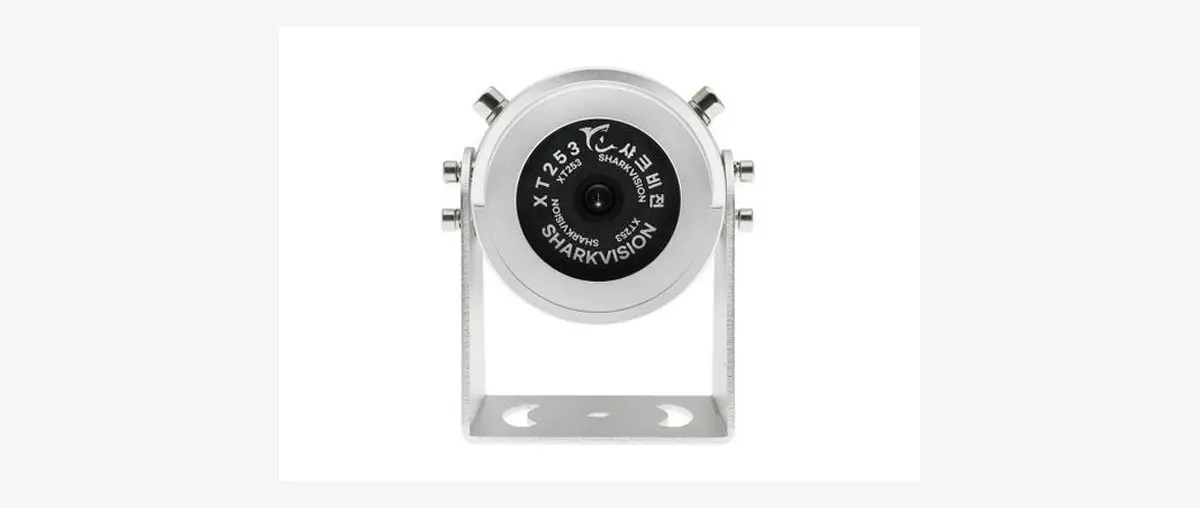
A dedicated camera for a familiar manoeuvring problem
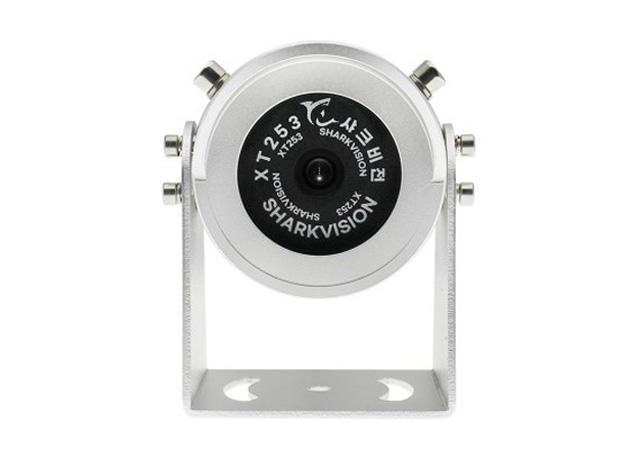
South Korean marine-electronics supplier DM Tech has placed its XT253 rear-view camera in the 2026 METSTRADE product catalogue. The manufacturer identifies the device specifically as a marine rear-view camera, distinguishing its intended role from specialist night-vision products and from the monitors that may be used to display video at the helm. The official entry is dated 1 January 2026 and provides a first-party product image, though it does not publish a full specification covering sensor performance, viewing angle, resolution or exact electrical interfaces. For owners of motor yachts between 12 and 23.99 metres, the subject is practical: the view directly behind a yacht may be obstructed from the main steering station, particularly where a flybridge, enclosed saloon or raised aft deck limits sightlines. A well-positioned camera can provide additional information during suitable manoeuvres, but it does not remove the requirement for direct observation, crew communication or careful control of the vessel.
What the product listing establishes
The manufacturer-authored catalogue names the XT253 as a marine rear-view camera. It is reasonable to report that intended function and the presence of the model within DM Tech's current exhibition portfolio. The short entry does not establish the exact camera technology, waterproofing classification, operating temperature, video-output type or maximum viewing distance. These details should not be invented from the appearance of a product photograph. A buyer must request the technical datasheet and compatible system information before deciding how it can be installed. The absence of specifications from a brief listing is not proof that the product lacks them; it means the editorial record is incomplete for final engineering approval. Owners should also check whether the unit is supplied as a camera alone or in a package including displays, mounting hardware, cables and control equipment. The complete quotation may differ substantially from a simple camera purchase price.
Why the stern can be difficult to see
Many modern motor yachts have spacious aft decks, tender platforms and enclosed saloons that affect the view astern. A captain manoeuvring from an elevated flybridge may have a different sightline from someone operating at the lower helm. During close-quarters movements, the areas around the bathing platform, stern corners and fenders can become critical. A camera may show part of that space from a viewpoint the helmsman cannot otherwise use. Yet it cannot guarantee that every object is visible. Railings, tenders, deck furniture and shadows may block the image, and the video display itself can create misleading impressions of distance. The captain should know exactly which area is covered and what remains outside the frame. Deck crew should communicate clearly, and direct observation should remain central to any manoeuvre near a dock, another yacht or a person in the water.
Placement should follow the manoeuvring task
The ideal position for a rear-facing camera is determined by the yacht's geometry and the job the owner wants it to perform. A unit mounted too high may give a useful overview but make nearby objects appear small. A lower position may help with a bathing platform while becoming more exposed to spray and obstruction. A camera installed on a transom can also be hidden by a tender or by equipment carried during a cruise. The installer should inspect the yacht in its normal loaded condition and establish where the camera can see without interfering with navigation lights or other fittings. Cable routing, service access and physical protection should be considered before drilling. It may be helpful to test a temporary viewpoint before choosing the permanent position. The product itself cannot correct a poor line of sight created by an unsuitable mounting arrangement.
Display integration is a separate decision
A rear-view camera becomes useful to the captain only when its video can be displayed at the right place and with sufficient clarity. A yacht may already have a multifunction navigation display, a dedicated monitor or a complex bridge-management system. The XT253 listing does not specify output compatibility with every display manufacturer, so integrators must confirm the actual interface. Additional converters, switching or cabling may be necessary. The image should be visible without covering essential navigation information, and the operator should not have to navigate several menus while approaching a berth. If the yacht has more than one helm, a decision is needed about which stations can access the camera and how the feed is selected. A reliable solution should remain understandable to different captains and crew members rather than depending on an elaborate setup only the original installer knows how to use.
Camera orientation and the risk of reversed images
Rear-facing cameras can sometimes present an image that resembles a mirror view, while other systems may show an unreversed perspective. These arrangements can influence how the helmsman interprets left and right. The actual orientation offered by the XT253 should be confirmed from its documentation; the catalogue does not establish which display modes are available. During commissioning, the captain should check that a movement or object on one side of the stern appears exactly where expected on the screen. Any reversal should be deliberate, documented and consistent across the bridge. A confusing image can be worse than no image if an operator reacts in the wrong direction under pressure. Clear orientation marks or a well-understood view can help, but the crew still needs practice before relying on the camera as a supplementary manoeuvring aid.
The importance of low-light performance
A yacht may berth in the evening or after sunset, when direct sightlines are affected by shore lighting, glare and reflections. The XT253 is described as a rear-view camera, not specifically as a night-vision product in the public listing. It would therefore be inappropriate to promise a particular low-light sensitivity, infrared range or thermal-imaging capability. Owners should request real video samples in conditions similar to their intended use and ask how the image behaves near bright dock lights. A camera can help reveal a platform edge in some situations yet lose detail when the lens faces strong backlighting. The display's brightness also matters because an excessively bright screen may reduce the helm's night vision. A well-designed installation should support the watchkeeper rather than draw attention away from the surrounding water.
Exposure to salt and spray
Equipment mounted outside a yacht faces an environment very different from a sheltered indoor electronics rack. Salt deposits, rain, washdown water and sunlight may affect its housing and viewing surface. The manufacturer's short XT253 page does not specify a verified ingress-protection rating, so that information must be obtained before installation. It is also important to know the approved cleaning method and whether there are restrictions on pressure washing near the unit. A camera can continue producing a picture even when the lens is sufficiently dirty to distort details. Crew should therefore include the viewing surface and cable connections in routine inspections. The installation needs a protected cable entry and suitable strain relief, especially where the camera is exposed to vibration or deck movement. A small maintenance task can make a substantial difference to the usefulness of the image.
Distance cannot be judged from a screen alone
Video displays compress a three-dimensional environment into a two-dimensional image. Wide-angle lenses, if used, can make nearby objects appear farther away or alter their apparent size. Because the XT253's exact field of view is not established by the catalogue, owners should not assume a particular perspective or measurement capability. A camera intended for observation should not be treated as a calibrated distance sensor unless the manufacturer explicitly supports that function. Crew can develop familiarity through controlled manoeuvring exercises in known spaces, but judgement should still be cross-checked with direct observation and other suitable means. At close quarters, a reliable lookout and clear communication may be more important than the apparent quality of a video feed. Cameras are valuable when they provide another piece of evidence, not when they encourage the helmsman to ignore uncertainty.
Recording and privacy are separate functions
Some yacht owners may be interested in recording camera footage for security or incident review. The public XT253 description does not establish an integrated recording capability, cloud connection or remote access. These functions, if desired, would need separate confirmation from the manufacturer and the installer. A live display that helps a captain see astern does not automatically create a video archive. Any recording system should also be designed with privacy and access policies appropriate to the yacht and its guests. Owners should understand where footage is stored, who can retrieve it and how long it is retained. Cybersecurity is relevant if the video system connects to a wider onboard network. A simple local camera feed may carry different technical risks from an internet-connected installation. Those choices belong in the system specification rather than being inferred from a product label.
Installation on existing yachts
A camera retrofit can appear straightforward, but the actual work may involve running cables through expensive finished spaces and finding a suitable route to the helm. The contractor should check whether existing wiring conduits are available and whether the selected display can accept the camera output. Structural or waterproofing work at the mounting point may be necessary. Owners should ask for a clear drawing of the proposed location and confirmation that the camera will not interfere with stern equipment or normal tender operations. The full quotation should include connectors, protective devices, labour and commissioning. A professional acceptance test should cover video quality, correct orientation, operation at each intended helm and the behaviour after power interruption. The value of the retrofit comes from a reliable complete system rather than the low price of a camera module by itself.
A camera is not an automated collision-avoidance system
The presence of an image at the bridge does not mean the equipment identifies hazards, calculates distances or takes any action to prevent contact. The XT253 is described as a rear-view camera, and its public catalogue entry does not claim autonomous manoeuvring, artificial intelligence or radar integration. The captain retains responsibility for the vessel's movement and must use appropriate lookout procedures. No screen can guarantee the absence of people or floating objects in a blind spot. A useful briefing should explain where the camera points, what its image includes and which visual clues may be unreliable. If the feed fails during a manoeuvre, the crew should have a straightforward method of continuing safely without it. Optional visibility equipment should improve awareness, not become the sole basis of a safety-critical decision.
Comparison with other bridge cameras
DM Tech's wider catalogue includes monitors and other camera products with different intended uses. A rear-view model is not necessarily interchangeable with a night-vision camera or a general surveillance unit. Buyers should compare the products by actual sensor, environmental rating, supported interfaces and the visual task to be accomplished. A yacht that wants a wider picture around the stern might need more than one camera or an integrated system capable of displaying several angles. Another owner may need only a single straightforward view of the bathing platform. The XT253's availability in the 2026 catalogue gives integrators one more candidate to assess, but the short entry does not establish superiority over competing products. A responsible evaluation should use real sample images and comprehensive technical documents under comparable conditions.
Operational value will depend on the installation
The DM Tech XT253 illustrates a modest but important category of marine electronics: a dedicated camera intended to improve observation astern. The manufacturer's current listing establishes its identity and purpose but not the detailed specifications required for installation. For 12-to-23.99-metre motor yachts, the practical reason to consider it is the possibility of making stern activity and manoeuvring hazards more visible from the helm. The benefits will depend on mounting, display quality, crew understanding and maintenance. Owners should require a system that can be demonstrated in the actual situations where it will be used, with the limits explained clearly. A good camera installation can provide helpful information; it cannot replace seamanship, clear crew communication or the careful operation of the yacht in close quarters.
Sources and image credits
Reporting based on DM Tech Co., Ltd. first-party XT253 marine rear-view camera product entry, dated 1 January 2026 and listed in the current METSTRADE catalogue.
Lead photograph: DM Tech XT253 Rear-View Camera Focuses on Stern Visibility for Luxury Yachts — manufacturer official product photograph. © DM Tech Co. Ltd. Original official image source.