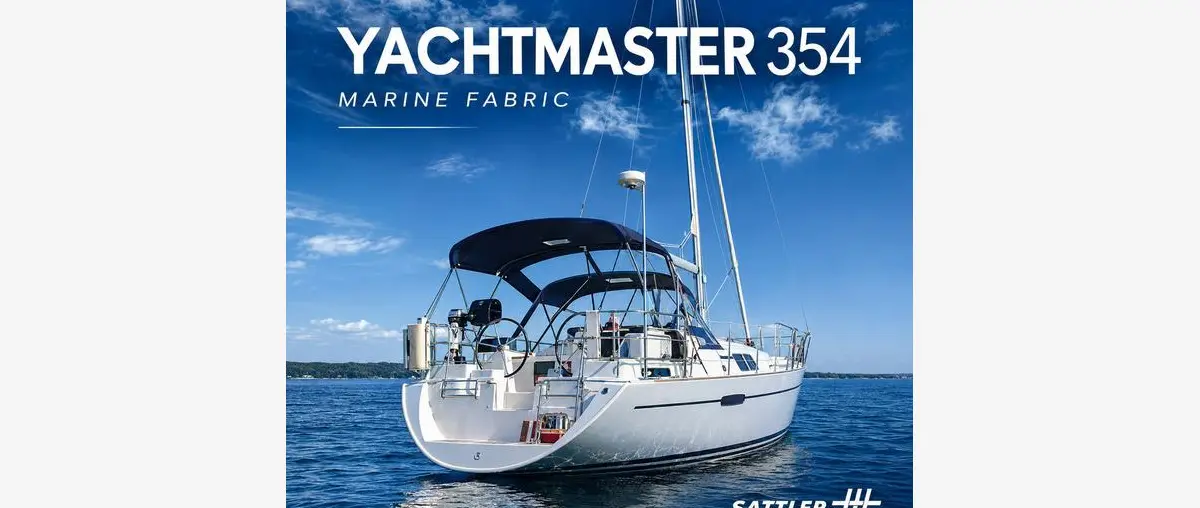
A specialist acrylic for yacht covers
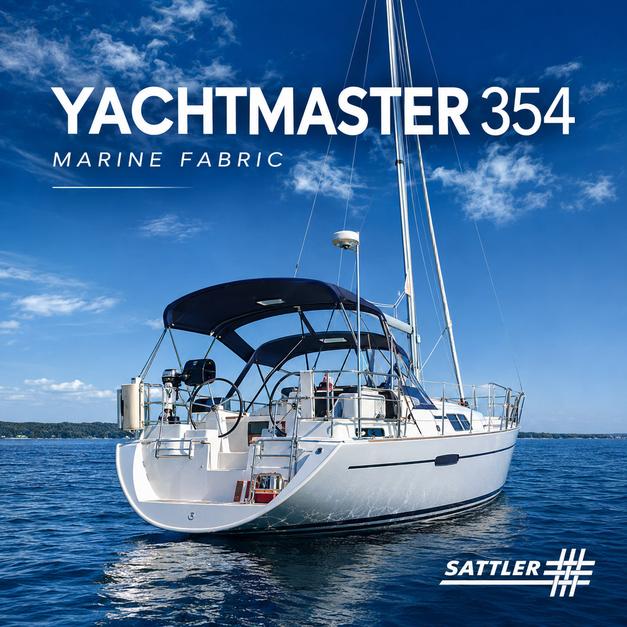
Poliplast Dangelo has presented SATTLER NAUTEX YACHTMASTER 354 in the 2026 METSTRADE product catalogue, drawing attention to the fabric used for yacht biminis, awnings, sprayhoods and outdoor covers. The manufacturer's product listing, dated 15 November 2026, describes a premium acrylic designed for demanding marine conditions, with emphasis on ultraviolet resistance, colour stability and protection from the weather. It specifies 19 colours and two available widths, 152 and 220 centimetres. This may sound like an ordinary furnishing announcement, but fabric selection affects the usability of outdoor space, deck maintenance and the appearance of a luxury yacht over several seasons. On vessels between 12 and 23.99 metres, a successful cover may give owners welcome shade, reduce sunlight exposure for fittings and support comfortable cruising without excessive permanent structures. The announcement establishes a material choice, not a guarantee that every completed cover will be waterproof, wind-resistant or suitable for any unsupported span.
What the catalogue states
The product is described as YACHTMASTER 354 by SATTLER NAUTEX, distributed in the referenced marine-supplier catalogue by Poliplast Dangelo. The entry identifies acrylic composition, 19 colours, the two widths and intended applications including covers, sprayhoods, biminis and awnings. It refers to durability and performance under UV and weather exposure but does not publish every test certificate or numerical performance result in the short description. Buyers should therefore request the current technical sheet, including fabric weight, coating or finishing characteristics, colourfastness method, tensile strength and any restrictions on cleaning or use. Such documentation is particularly important when a cover manufacturer is asked to produce a large unsupported panel or work around a yacht's unusual deck geometry. The fabric may perform well in an appropriate application while the finished structure fails because of poor supporting hardware or inadequate drainage. Material and installation have to be evaluated together.
Why colour choice is an engineering issue
Nineteen available colours provide designers and owners with a useful palette, but colour selection is not only an aesthetic decision. Darker or lighter shades can create different impressions of heat and light under an awning. The actual thermal comfort depends on the fabric's optical properties, its height above the deck, ventilation and whether sunlight strikes adjacent glazing or other structures. A colour that looks elegant in a sample book may appear significantly different when stretched over a large cockpit and viewed against reflected seawater. Owners should examine a full-sized sample in natural daylight, ideally alongside the yacht's existing upholstery, paint and deck surfaces. It is also sensible to agree how replacement panels will be matched if part of the canopy is damaged after several seasons. Colour stability is a performance claim, but changes in appearance can vary with location and care. A careful specification records the exact shade and production details.
Fabric width affects the finished canopy
Acrylic supplied in 152- or 220-centimetre widths gives a cover maker choices when planning seams and panel layout. Wider material may reduce the number of joints in some applications, but the result depends on the geometry and shape of the canopy. A fabric panel over a cockpit or flybridge is seldom a perfectly flat rectangle. It must be tensioned, shaped, supported and fitted around deck hardware. The most attractive layout may require seams in particular places to achieve the intended shape and manage water runoff. Owners should ask the canvas contractor to show where seams, reinforcement and fastenings will be located before cutting begins. A wide roll does not automatically mean a large awning can be made without any structural joins. Nor does it eliminate the need for suitable supporting frames and attachment points. The quality of the installation depends on the workmanship applied to the material.
The difference between shade and storm protection
A bimini provides shade, while a weather cover may be expected to protect equipment from rain and salt. Those functions overlap, but the operating conditions and loads can be quite different. A canopy intended to remain up in light summer breezes might not be designed for strong winds or use while the yacht is moving at speed. The supplier's catalogue states that YACHTMASTER 354 is intended for marine weather exposure, but it does not specify universal maximum wind speeds for every possible installation. Such limits must be established for the finished system by the cover maker and, where appropriate, the yachtbuilder. The supporting poles, deck fittings, stitching and fastening arrangements may fail before the face fabric reaches its own material limit. Owners should be given clear instructions on when the covering must be stowed and how to do so safely. A protective fabric is not a substitute for seamanship.
Sun protection for the yacht's outdoor spaces
Outdoor living is a central attraction of many 12-to-23.99-metre cruising yachts. A well-positioned awning can make a cockpit, foredeck lounge or flybridge more comfortable during hot conditions. It may also reduce the amount of direct sunlight reaching cushions, electronics and varnished details. However, the benefit of any particular fabric depends on its measured UV transmission and the design of the complete shade arrangement. A general description of excellent UV resistance should not be interpreted as a medical sun-protection rating unless the relevant test data is provided. Owners should also allow for the movement of the sun and the possibility of reflections from the water. A shade panel that works well at midday may offer less coverage in the morning or late afternoon. Designers can improve practical comfort by combining appropriate material with adjustable positioning and good ventilation.
Salt, dirt and maintenance
Marine covers experience repeated cycles of moisture, salt deposits and drying. They may also be exposed to bird droppings, airborne dust and contact with sunscreen or other contaminants. Even a high-performance acrylic needs an appropriate cleaning routine. The contractor should supply written care instructions from the manufacturer, identifying acceptable cleaning products and any treatments that might damage the fabric's finish. Excessively aggressive brushing or unsuitable solvents can shorten the appearance and service life of a cover. Owners should also know how to dry and store it when removed. Packing damp material into a confined locker can create problems regardless of the advertised fabric quality. Fastenings and seams require inspection because damage often begins at stressed attachment points rather than the centre of the panel. A reliable maintenance programme should address the whole assembly, not only its visible surface.
How sprayhoods place different demands on material
A sailing-yacht sprayhood needs to protect the companionway and occupants while accommodating rigging, sails and the movement of people on deck. Its shape often includes windows, zips, curved seams and sections that must fold or be removed. The properties of the face fabric influence the result, but the visibility and strength of the clear panels matter just as much. When selecting YACHTMASTER 354 for this purpose, the builder should consider how it will be joined to transparent materials and whether the finished system has adequate clearance around mainsheet travel and other moving gear. A stiff or poorly fitted hood can interfere with sail handling. On a luxury sailing yacht, a balance is needed between weather protection, visibility and convenient access. The supplier's product listing gives a material option, not a completed design suited to every deck layout.
Retractable biminis and hardware integration
Some modern yachts use powered or manually retractable shade systems. These can be attractive when owners want a clear open deck under certain conditions and more protection at anchor. Fabric selection influences folding behaviour and the stresses imposed on the framework. The best result requires coordination between the canvas maker, the structure supplier and the yacht's electrical or hydraulic systems where applicable. A fabric intended for a conventional removable bimini is not automatically suitable for every motorised arrangement. The installer must know how material tension is controlled, how the panel is stowed and how wear at moving points will be monitored. Owners should request a demonstration of the complete system, including operation after exposure to salt and rain. The value of a refined retractable canopy lies in reliable daily use rather than the complexity of its mechanism.
Refit opportunities and hidden costs
Replacing faded or damaged canvas can be one of the more visible improvements in a yacht refit. A new fabric may restore the appearance of a cockpit and help protect valuable deck furniture. Yet a quotation should include inspection of the existing frame, fittings and attachment points. Corrosion, loose screws and stretched webbing can undermine even an expensive replacement cover. If the yacht's deck furniture has changed since the original canopy was made, the new panel may need a revised pattern to maintain tension and drainage. The owner should agree whether existing windows, zips and trim can be reused or require replacement. Additional cost may arise from taking precise measurements while the yacht is afloat and from making adjustments after the first installation. Good planning avoids treating fabric purchase as the entire project.
Sustainability and product longevity
A material that lasts longer may reduce the need for frequent replacements, but any environmental assessment should consider the actual product composition, manufacturing process, transportation and end-of-life arrangements. The official YACHTMASTER 354 entry refers to outdoor durability but does not provide a complete lifecycle analysis. Owners interested in environmental performance should request the manufacturer's available documentation and ask whether repair, patching or reuse is practical. A cover that is routinely removed at the correct time and cleaned according to instructions may outlast one exposed to severe conditions unnecessarily. Serviceability also matters: replacing a damaged panel or seam can be more sensible than discarding a whole canopy. The best sustainability argument is grounded in documented durability and a realistic maintenance programme rather than a general claim that a premium acrylic is automatically environmentally benign.
What owners should verify before selecting it
The choice should begin with an actual fabric sample and a clear description of how the cover will be used. The specification ought to record colour, width, seam layout, supporting framework, waterproofing or water-repellency requirements and any operational restrictions. The contractor should provide current test information where the performance claim matters and identify the warranty boundary between material and installation. Owners need to know who will carry out repairs during the cruising season and whether replacement fabric can be sourced internationally. If a yacht is commercially operated, the relevant fire or other material requirements may also need attention, and compliance should not be inferred from a generic product description. A carefully specified canopy can increase comfort and protect equipment, but only when fabric properties, structure and operation have been considered together.
A material choice that influences daily life aboard
SATTLER NAUTEX YACHTMASTER 354 adds a specific acrylic option to the current marine-cover catalogue, with a published choice of 19 colours and two widths and stated suitability for several types of yacht canvas. Those are useful facts for designers, builders and refit specialists. They do not establish performance for every canopy design or remove the need for proper fabrication, inspection and stowage procedures. For luxury yachts between 12 and 23.99 metres, the practical appeal lies in creating better outdoor living areas while managing the effects of sun and weather. The strongest result will come from the combined work of a competent canvas contractor and a knowledgeable owner, guided by the exact technical documentation of the selected material. Good canvas is not the most glamorous item in a yacht specification, but its quality is experienced repeatedly over the course of a cruising season.
Sources and image credits
Reporting based on Poliplast Dangelo first-party SATTLER NAUTEX YACHTMASTER 354 acrylic marine-fabric announcement, 15 November 2026.
Lead photograph: SATTLER NAUTEX YACHTMASTER 354 Highlights Weather Protection for Luxury Yacht Covers — original manufacturer photograph. © SATTLER NAUTEX / Poliplast Dangelo Original official image source.