Prebit brings a dual-light bridge fixture into the marine catalogue
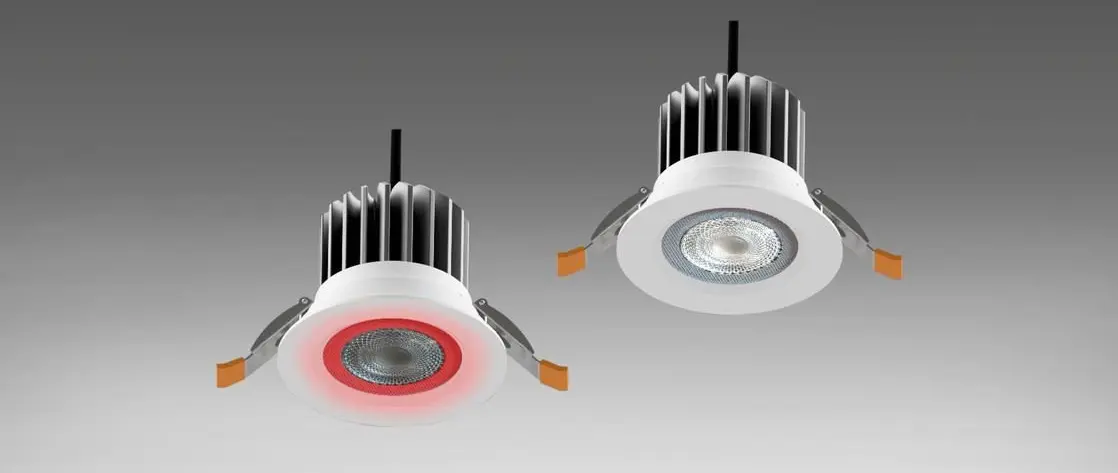
German specialist prebit lists its EB108 RW recessed luminaire in the METSTRADE 2026 product catalogue, presenting it for yacht bridges and crew areas. The fixture combines a central high-colour-rendering white source with a surrounding red light ring. Prebit dates the product entry to 31 August 2026, before the November Amsterdam exhibition; the distinction matters because the catalogue's current visibility is not evidence of a brand-new launch on 24 November. For an owner evaluating a wheelhouse or refit, the news is the availability of a specialist lighting configuration designed around two different working conditions, supported by selectable white-light characteristics.
Why the wheelhouse has unusual lighting needs
A bridge is both a workroom and an observation position. Its occupants need to read paper information, locate switches, inspect equipment and sometimes prepare a passage plan, yet they must also keep a clear view through glass after dark. Ordinary bright ceiling downlights can create reflected images in windscreens and obscure distant navigation lights. A fixture intended for this setting should be judged by placement, beam, dimming and the surfaces it illuminates, not brightness alone. A yacht with a compact helm and large windows may require a different solution from an enclosed bridge on a larger cruising vessel.
The manufacturer's high colour rendering specification
The EB108 RW entry quotes white-light colour rendering up to CRI 98 and mentions alternatives in colour temperature and beam angle. Colour rendering describes how faithfully a light source represents the colours of objects compared with an appropriate reference; it does not specify illumination level or eliminate glare. On a working yacht, good rendering can assist when crew examine colour-coded labels, chart information, components or maintenance records. But even excellent white light can be poorly directed. Designers should obtain the actual photometric and electrical specification for the chosen version, and test the result from the seated and standing helm positions rather than infer performance from the catalogue photograph.
What the red ring adds and what it cannot guarantee
The manufacturer describes the fixture's red perimeter lighting as suited to night-sensitive environments. Low-level red light is frequently used in bridges because it can be more comfortable than abruptly switching on powerful white lamps during dark passages. Nevertheless, the colour by itself is no guarantee that night vision will be preserved. High intensity, reflections and the duration of exposure all matter. Red illumination may also make certain coloured markings harder to read, so vital operating information should remain visible and an immediately available white-light mode is important for emergencies. The correct lighting scheme works with crew practices rather than replacing them.
Recessed fittings and a clean ceiling appearance
Recessing the EB108 RW into the headlining can support an uncluttered, high-quality appearance in a modern yacht wheelhouse. It may also reduce projections in a space where occupants move around equipment during manoeuvres. That tidy result has engineering consequences. Before cutting a panel, a yard needs to identify ventilation ducts, structural elements, insulation, existing wiring and the space required for the fitting and its connections. A luminaire may require particular heat clearances or a specific installation method, neither of which should be guessed from promotional images. The ability to remove a fitting for service is as relevant as its appearance when new.
Bridge controls should remain understandable
The benefits of separate red and white lighting depend on the crew being able to select the correct mode quickly. A touchscreen scene can be convenient, but an essential operating function should not depend on a complicated sequence or a network connection that might become unavailable. The catalogue refers to configurable lighting, but it does not give a universal wiring diagram for all possible installations. A qualified electrician should confirm the supply characteristics, switching arrangement, dimmer compatibility and any interfaces with the yacht's existing control system. Both normal use and predictable fallback operation belong in the technical specification.
Crew accommodation and workspaces are different environments
Prebit also positions the EB108 RW for crew areas. Such spaces may need good-quality white light for cleaning, maintenance or preparing equipment, with a quieter night mode when occupants are resting or moving around. Yet a crew corridor, pantry and bunk cabin are not equivalent to a bridge. Their lighting levels, emergency requirements and controls can differ substantially. Using one model throughout a yacht might simplify appearance and spares, but only if it satisfies the relevant task in each location. Owners should resist selecting a ceiling fitting solely because its dimensions or visual style match adjacent furnishings.
The limitations of catalogue-level technical information
The product description identifies the colour-rendering capability, general purpose and variable white-light options, but does not supply a complete verified load calculation for every possible version. It would be misleading to invent a universal wattage, battery endurance or installation depth from the exhibit listing. A 12-to-24-metre yacht refit may involve only a handful of fittings, yet small additions still matter to a carefully designed DC distribution system. Installers need the manufacturer's current sheet for voltage, current, circuit protection, ingress rating and environmental limits, plus the applicable installation guidance for the precise part number.
Avoiding unwanted light on the windscreen
The interaction between lighting and glazing is especially important in a glazed wheelhouse. The brightest source need not be directly reflected to cause a problem: a polished worktop or light-coloured instrument surround may scatter enough light to affect outside visibility. At night, the effect varies with window angles, cockpit covers and the observer's position. A lighting designer can mitigate this through careful placement, shields, appropriate beam angles and controlled levels. For an EB108 RW installation, the red ring and white centre should be tested in all intended scenes. A beautiful fixture that produces distracting reflections at cruising speed is not a successful bridge upgrade.
Installation and long-term maintenance costs
The purchase price of a light is only one part of a refit. Opening and making good the headlining, routing conductors, adapting control hardware and checking compatibility can account for much of the work. When a yacht is used seasonally, repair access and parts availability become especially important. The chosen product should have a documented supply route and a clear warranty and service position in the owner's cruising region. A yard may recommend retaining functioning fixtures in less critical spaces while improving bridge lighting first. Such phased work can be a more measured investment than replacing an entire interior lighting system in one operation.
Evaluating appearance in a real vessel
The EB108 RW has a round recessed body and a distinct red-ring appearance, useful visual elements in a contemporary wheelhouse. But a product photograph cannot show how that form will look beside existing switchgear, timber, soft trim and overhead panels. White-light colour temperature influences whether materials look warm or clinical; beam angles influence shadow and contrast. Owners can ask for a physical sample and test it with the actual ceiling finish before ordering a complete set. Colour matching, access to fixings and a consistent position relative to work surfaces can make a greater difference to daily satisfaction than an advertised novelty.
Commissioning checks for yacht operators
A sound handover should demonstrate that both modes work correctly, that lights can be controlled during an electrical fault scenario as designed, and that the crew understands any scenes or local switches. The lighting should be examined with navigation displays turned on, the surrounding wheelhouse dark and observers positioned where they normally stand or sit. Crew should confirm that emergency instructions, warning labels and instrument controls remain legible. If the installation produces glare, the correct response is to adjust the arrangement rather than ask operators to tolerate it. The final drawings and part numbers should form part of the vessel's maintained equipment record.
Reporting basis and practical significance
The factual basis is prebit's own METSTRADE 2026 exhibitor submission, which describes the EB108 RW as a recessed luminaire with high-rendering white illumination and an optional configuration involving the red ring. The manufacturer's photograph illustrates that actual product, not an unrelated interior or a claim of a particular yacht installation. No independent comparative test, vessel order or November first-launch claim is inferred. For owners and crews on 12-to-23.99-metre luxury yachts, the useful issue is how high-quality white work lighting and restrained red night lighting can be integrated into a well-controlled and serviceable bridge design. The equipment is a candidate for evaluation, not a universal ready-made solution.
Source and image: Primary product data: https://www.metstrade.com/zones/superyacht-zone/prebit-gmbh/products/eb108-rw-00. Photo: prebit GmbH, first-party manufacturer product photograph submitted to METSTRADE Original media URL: https://stpsprodwe.blob.core.windows.net/media-blobs/1cf392fdf6499446ed23b2483eee8ff1_1200x627.jpg.