A material story, not simply another colour card
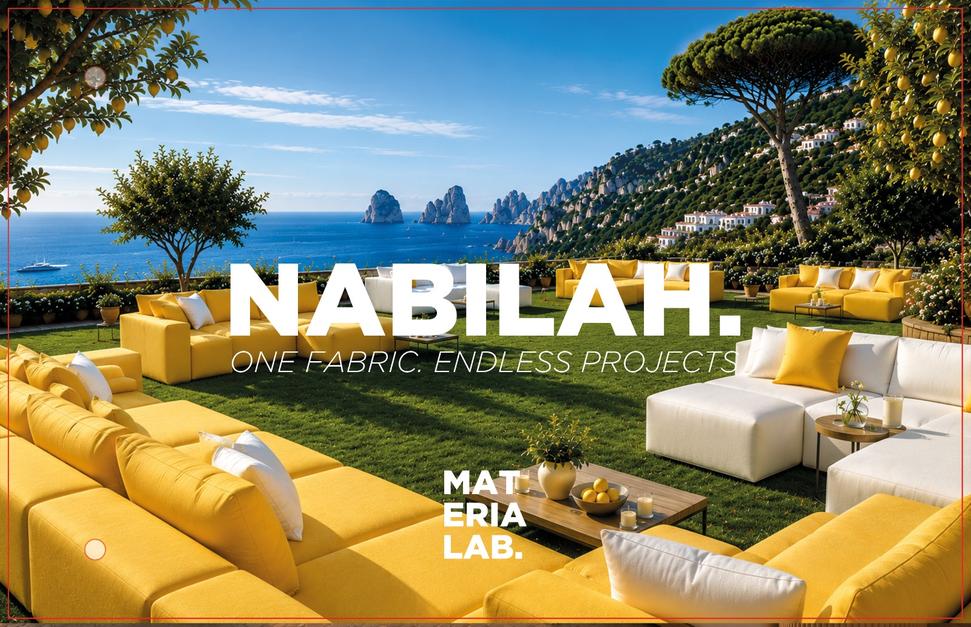
Italian marine-interior supplier Poliplast Dangelo has used its METSTRADE 2026 catalogue to present NABILAH, a 100-percent polyester textile intended for yacht upholstery and both indoor and outdoor applications. The manufacturer lists a broad 47-colour palette, water- and stain-repellent treatment, UV resistance and specific abrasion and light-fastness test results. For owners commissioning an interior on a 12-to-23.99-metre luxury yacht, these details may seem smaller than a new hull or propulsion system. In everyday use, however, the material on a sofa or cockpit cushion is among the parts of a boat that passengers interact with most frequently. Fabric choices influence comfort, maintenance workload, visual consistency and the owner's ability to replace a worn panel several seasons later. The NABILAH announcement is therefore best examined as a practical design and specification decision, rather than a decorative novelty.
What the manufacturer has confirmed
The official product announcement, dated 15 November 2026, calls NABILAH a versatile performance fabric for seating, cushions, upholstery and decorative applications aboard yachts. Poliplast Dangelo describes a 280-centimetre roll height, a mass of 360 grams per square metre, and performance of 50,000 Martindale abrasion cycles. Its light-fastness result is listed as seven out of eight, while a water- and stain-repellent finish addresses common marine-use concerns. These are useful starting points for a materials schedule, but no single number establishes suitability for every part of a vessel. A fabric selected for occasional salon seating may face very different exposure from one used on a sunny stern lounge that is repeatedly wet with spray and sunscreen. Designers should request the full technical data and test method references before committing to a particular installation or promising a defined service life.
Why the 280-centimetre roll dimension matters
Roll dimensions seldom attract the attention given to colour and texture, yet they have a direct influence on what an upholsterer can make. A wide roll can allow larger sections of cushions or wall covering to be cut with fewer seams, depending on the shape of the finished panel and the direction of the weave. It may help reduce visible joins on a broad bench or simplify matching between adjoining upholstered surfaces. That does not mean every piece can be manufactured without a seam; furniture geometry, patterns, reinforcement and the placement of zips will still determine construction. The yard should check whether the stated 280-centimetre dimension is the usable finished width, how the fabric behaves at the selvedges and whether the supplier allows for any directional cutting restriction. Those practical questions can affect material yield and ultimately the cost of a custom yacht interior.
Making sense of 50,000 Martindale cycles
The Martindale method is widely used to compare abrasion behaviour under specified laboratory conditions. A result of 50,000 cycles signals that NABILAH has been tested against repeated rubbing, but it should not be translated into an exact number of seasons aboard a yacht. Real seating is exposed to different types of abrasion: zips, bags, sand, clothing and cleaning cloths can all produce local wear that does not resemble a laboratory test. Water, heat and exposure to cleaning chemicals also affect the overall outcome. For a family yacht with busy social areas, a documented abrasion test is useful when selecting between decorative and working upholstery. It is still important to compare identical test standards and recognise that seams, foam quality and installation tension may fail before the face fabric itself. A strong materials specification examines the entire upholstered assembly instead of relying on one headline test result.
UV resistance, colour consistency and sea light
The manufacturer's stated light-fastness grade of 7/8 will interest designers working with sunlit cockpits, open dining areas and lounges beside extensive glazing. Light fastness measures a material's response under a defined testing regime. It does not guarantee that an outdoor cushion will retain precisely the same appearance in every climate or after indefinite exposure. Mediterranean summer sunshine, tropical ultraviolet levels, salt deposits and repeated washing create a challenging combination. Materials should be compared using appropriate test standards and exposure assumptions, with samples inspected in actual daylight rather than only under showroom lighting. A large colour range makes it possible to create contrast between seats, piping and loose cushions, but the maintenance burden should be considered from the outset. Owners who favour very pale tones may have different cleaning expectations from those selecting dark, patterned or textured finishes.
Water and stain repellency are not waterproofing
Poliplast Dangelo describes NABILAH as water- and stain-repellent, a useful characteristic in yacht accommodation where drinks, spray and damp clothing are familiar risks. It is important to distinguish repellency from a complete waterproof upholstered assembly. Water can enter through stitching, zip openings and the underside of a cushion even when droplets initially bead on the fabric surface. A seat used on an exposed flybridge needs appropriate foam, drainage, seams and storage arrangements. A salon sofa requires a different approach to ventilation and the handling of accidental spills. The precise repellency treatment should be checked against the cleaning products the crew intends to use, because aggressive detergents can affect performance over time. Owners should ask for written care advice and avoid assuming that a finished cushion is suitable for remaining uncovered through all weather simply because its textile has a marine product description.
The visual challenge of joining interior and exterior spaces
Modern motor yachts increasingly create a continuous visual connection from the main salon to the aft deck and, in some layouts, to the flybridge. A broad palette that is offered for both indoor and outdoor applications can make that relationship easier to coordinate. Designers may use the same basic hue in several areas while varying texture, stitching and surrounding materials to reflect the exposure of each space. Yet visual continuity should not obscure performance differences. An exposed aft-deck bench may need more aggressive drainage and faster drying than an indoor lounge even if both use the same face fabric. The client should be shown samples in direct sun, shade and warm artificial light, and ideally after contact with water. This practical exercise can reveal changes in tone, hand feel and surface appearance that a digital colour catalogue cannot reproduce reliably.
Maintenance planning for a working luxury yacht
The day-to-day value of a textile is partly determined by how easily a crew can maintain it without damaging the finish. Before ordering, owners should obtain the manufacturer's guidance on routine vacuuming, suitable stain treatments, drying and cleaning restrictions. They should document which chemicals are approved and whether professional upholstery cleaning is recommended for difficult marks. A yacht operating as a private family vessel may need a different care schedule from one exposed to frequent guest changes. Loose cushions that can be removed and dried separately are easier to manage than permanently fixed sections in damp locations. It can also be sensible to retain a spare length of fabric from the same production batch for future repairs. Matching a colour several years later may be difficult if the original lot is no longer available or the surrounding textile has aged in sunlight.
Upholstery is an engineered assembly
Good yacht upholstery is not created by selecting an attractive textile alone. The designer, upholsterer and builder must coordinate seam placement, backing, adhesives, fasteners, foam density and the support structure beneath the surface. Materials can behave differently when stretched over complex curves or exposed to repeated damp-and-dry cycles. The stated weight of 360 grams per square metre is a useful input for assessing hand feel and material handling, but it does not tell a yard how the fabric should be attached to every substrate. Installation instructions and specimen testing remain important. On a vessel where machinery vibration and movement are constant, the quality of stitching and edge finishing can determine whether a seat remains elegant for years. A documented prototype or sample panel gives owners a more reliable basis for approval than a material sample held against a drawing.
Compliance questions still need answers
The public NABILAH listing supplies several performance characteristics, but designers should not infer certifications that the manufacturer has not announced for this specific material. Depending on the vessel's flag, size, commercial use and placement of upholstery, fire performance or other formal compliance requirements may be relevant. Those requirements should be checked with the responsible surveyor and yard before a fabric is ordered. The availability of a marine-focused textile is not equivalent to automatic acceptance for every regulated space. Technical procurement documents should identify the exact product, relevant test certificates, finishing treatments, replacement policy and any conditions attached to use. A supplier that can answer those questions clearly is offering something valuable beyond a showroom colour selection. Owners should also be cautious about mixing textile performance claims with unrelated sustainability statements unless product-specific evidence is supplied.
How a refit project should evaluate the range
Refit teams have the opportunity to see how an existing yacht has actually been used. Worn seat edges, mould marks, fading and recurring stains can reveal the conditions a replacement textile must withstand. Before ordering NABILAH or any alternative, the team can compare those failure points against the fabric's published test information. A cockpit with persistent water pooling may require corrected drainage as much as improved face material. A salon where cushions show severe edge wear may need revised seam design and foam shape. A practical trial might involve making one representative cushion, exposing it to ordinary use and assessing its fit, drying and appearance. Even an attractive new textile should not be expected to solve a construction defect. The most successful refits treat fabric selection and the underlying furniture design as one coordinated specification.
What the 2026 announcement means for buyers
NABILAH offers a clearly described new option within the specialist marine-textile market: broad colours, a declared roll dimension, recorded abrasion performance and stated water- and light-resistance properties. Those are concrete points that can be assessed against a project's priorities. They are not proof of a particular yacht's future resale value or a guarantee against every stain or weather condition. The wider significance lies in the increasing precision with which owners can specify the softer surfaces of their boats. Materials decisions need not be left entirely to taste or brand reputation; they can be discussed through samples, measured performance, documented cleaning guidance and the practical experience of marine upholsterers. For 12-to-23.99-metre yachts where interiors and outside living spaces often overlap, that disciplined approach is likely to produce better results than selecting a textile solely from a photograph.
Sources and image credits
Reporting based on Poliplast Dangelo official NABILAH marine textile product entry, METSTRADE 2026.
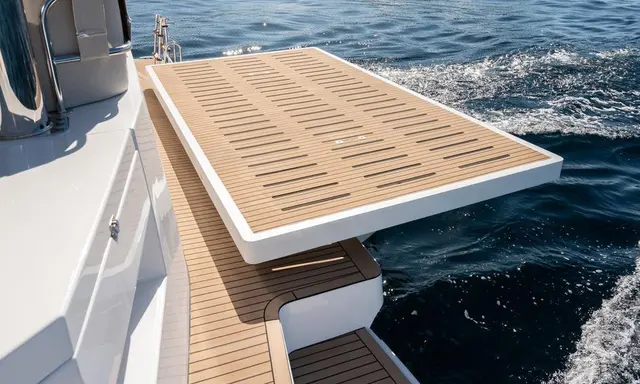
Lead photograph: Poliplast Dangelo Introduces NABILAH Fabric for Indoor and Outdoor Yacht Upholstery — manufacturer source photograph. © Poliplast Dangelo Original official image source.