An emergency product built around visibility
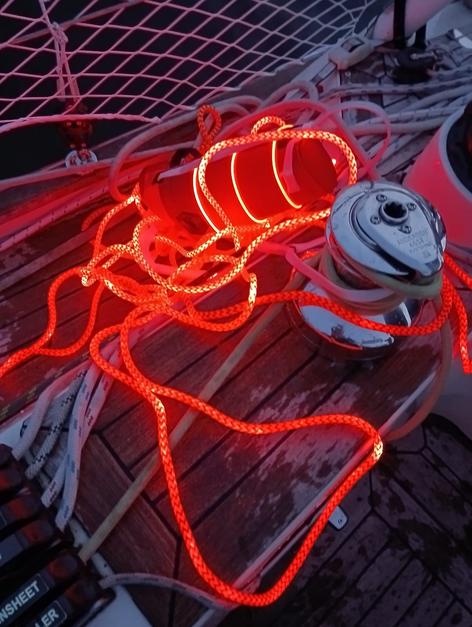
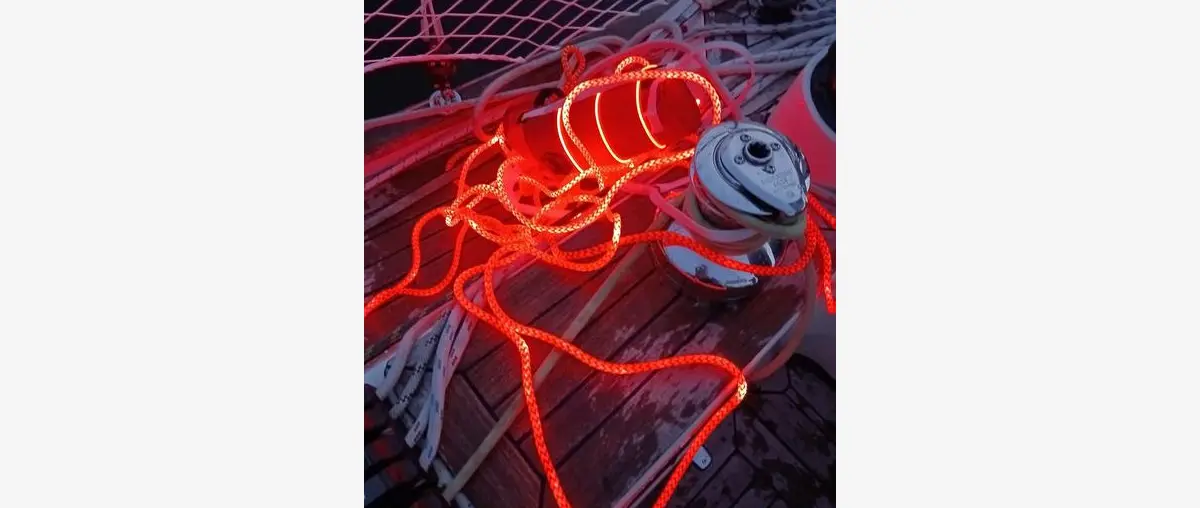
Lumisafe has presented the BTB Bright Throw Bag as an integrated rescue aid intended to improve the visibility and handling of a man-overboard recovery, particularly in darkness. Its manufacturer-authored METSTRADE listing, dated 17 November 2026, describes a throwable rescue bag combining a line and active red lighting. The company also identifies possible use in towing, securing and recovery operations, although any such application depends on the precise equipment rating and instructions. For owners and crew of 12-to-23.99-metre yachts, the subject is immediately relevant: a person in the water may be surprisingly difficult to locate, even when the yacht is nearby and several people saw the incident. The new product should be understood as an additional tool within an established emergency procedure, not a replacement for flotation equipment, trained crew, an adequate lookout or a vessel's man-overboard plan. The product announcement makes a clear promise about its intended function; independent evidence of performance in particular sea states must still be evaluated separately.
What the manufacturer actually says
The official catalogue calls the product BTB, or Bright Throw Bag, and says it incorporates an actively illuminated element intended to help crews maintain visual contact during a recovery. The concept also includes a throw line, allowing the crew to deploy the equipment quickly when a person is within an appropriate distance. The description does not publish a complete specification for line length, breaking load, battery life, waterproofing, brightness at different distances or any formal lifesaving-equipment certification. Those omissions do not imply the product lacks such characteristics; they mean a purchaser needs the full technical documentation before deciding how it fits into the yacht's safety equipment. An owner should not equate an attractive lighted rescue bag with an approved lifebuoy, immersion device or other item required by the vessel's particular flag or operating category. The responsible approach is to treat the maker's announcement as an invitation to examine a new option in the context of established safety requirements.
Why finding a person at night is difficult
On land, a small light or a brightly coloured object may appear easy to notice. At sea, the observer is looking over moving water with reflections, spray, darkness and changing distance. A person's head can be partly obscured by waves, and the yacht itself may still be moving while the crew organises a recovery. One of the essential goals of man-overboard response is to maintain continuous visual reference to the person, alongside other necessary emergency actions. The manufacturer's decision to integrate active light into a throwable device addresses that problem directly. However, an illuminated object in the water is not guaranteed to remain alongside a casualty, and it should never be assumed that the light alone is enough to establish location. The crew must still follow its training, communicate clearly and use all appropriate available means to recover the individual safely.
The value and limits of a throwing line
A throw bag gives an operator a line that can be deployed toward a person in the water without requiring the entire vessel to move immediately alongside. In suitable circumstances this can create a connection that helps guide or assist recovery. Real deployment is more challenging than throwing a line on a calm training field. Wind, waves, relative motion and the distance to the casualty affect accuracy and usefulness. A person in cold water or under stress may struggle to grip or retain a line. Operators should therefore practise the manufacturer's actual method and recognise when another recovery technique is needed. The BTB description suggests that its design brings several functions into one package, but this does not establish an approved working load for every towing or securing task. The line's characteristics and approved use should be checked against the maker's instructions before relying on it for anything beyond the described rescue purpose.
Immediate availability matters more than storage elegance
Emergency equipment can be carefully specified yet ineffective if it is stored where nobody can reach it in a hurry. Yacht crews should consider where the throw bag would be located, who would normally deploy it and how it can be retrieved while another person alerts the helm. In a yacht with an open aft cockpit and a raised bridge, a single storage position may not be ideal for every operating situation. A practical drill can reveal whether a crew member needs to cross an obstructed deck or open several lockers before the line is ready. The manufacturer has not specified a universal mounting arrangement in the short catalogue entry. Each vessel therefore needs its own equipment placement plan, incorporating safe access and protection from unnecessary damage. A well-chosen location should remain obvious to crew members and be part of the familiarisation briefing for everyone expected to participate in emergency response.
Batteries and the management of an active light
Any rescue aid using active illumination introduces an inspection question that purely passive equipment does not have. The crew should understand what powers the light, how it is activated and how to confirm that it is functioning correctly. The catalogue description does not establish the exact battery type, charging method or endurance of the BTB's lighting system, so those facts should be checked before the unit is placed in service. If a product is expected to operate after long periods in storage, a documented inspection routine is essential. The crew must also know what happens if the light fails: the rescue procedure should still be possible through existing approved equipment and seamanship. A yacht's safety management system can record inspection dates, manufacturer instructions and any replacement schedule. The objective is to avoid discovering an exhausted battery or damaged component at the worst possible moment.
Visibility should be evaluated realistically
Active red lighting may improve the contrast of a rescue aid against dark water under particular conditions, but no coloured light performs identically through rain, fog, spray or large waves. The manufacturer describes an intention to improve visibility; the available listing does not provide an independently measured detection range. Owners evaluating the product should therefore ask whether the maker has documented trials at different distances and in representative marine conditions. Light may also compete with other sources of illumination around the yacht, including deck lights, searchlights and harbour backgrounds. Training should emphasise that crew must continue to observe the casualty directly when possible, not focus exclusively on locating the equipment. Technology is most useful when it supports clear human observation rather than creating a false sense that a single visual signal will solve every search problem.
Integration with the yacht's wider MOB procedure
A complete man-overboard procedure involves the helm, lookout, recovery team and communications arrangements. It may require immediate positioning of the vessel, use of navigational markers, recovery equipment, radio communications and subsequent medical assessment, depending on the circumstances. The precise sequence should follow the yacht's established procedures and training. The BTB can potentially contribute a visible throwing aid during that sequence, but its inclusion should not change critical responsibilities without a proper review. Crew should know who gives commands, who maintains visual contact and who operates any boarding or hoisting equipment used to bring a casualty out of the water. The product is not a substitute for practising those coordinated actions. Its strongest possible contribution is to make one part of the response easier to perform under pressure, provided everyone understands its limitations.
Practical considerations for smaller luxury yachts
A 12-to-23.99-metre yacht may carry fewer crew than a large commercial vessel, sometimes operating with only an owner and a small group of guests. That can make simple equipment and rehearsed assignments particularly important. The person at the helm may need another crew member to keep sight of the casualty, manage the line and prepare the recovery route. A throwing system should be operable by the people who actually cruise on the boat, not only by trained professionals during a demonstration. Owners should consider whether the bag can be thrown safely from the deck heights aboard their yacht and whether the line can be managed without entangling propellers, running rigging or other equipment. These are practical questions for a trial and briefing. The BTB's catalogue entry does not imply one universal method for all vessel types, and an appropriate installation should respect the yacht's deck layout.
Maintenance and the problem of salt exposure
Rescue equipment may be exposed to salt, ultraviolet light and damp storage even when it is seldom used. The bag, line, seams and illuminated component should be checked using the manufacturer's approved inspection instructions. Any damage to the line or housing should be addressed promptly rather than accepted because the product looks usable from a distance. After a deployment, the crew will need to know the correct way to clean, dry, repack and reset the equipment. A poorly repacked throwing line can become tangled during the next emergency. Records of inspection and training are particularly important when a yacht has several seasonal operators. A new owner should not have to discover by trial and error how an unfamiliar rescue aid works. The best safety product is the one whose use and upkeep remain clear throughout the vessel's service life.
Certification and procurement need separate attention
The label 'rescue system' is useful in describing the intended application, but it does not establish regulatory approval for a particular yacht. Different operating categories and jurisdictions may impose specific rules for lifesaving equipment. A charter vessel may also have documented safety-management requirements and survey obligations that differ from those of a private yacht. A buyer should request the full product specification, declarations of conformity where applicable, and evidence of compatibility with the vessel's safety plan. Where the equipment will be considered part of a formal safety inventory, the relevant surveyor should be consulted. This careful approach protects the owner from the mistake of replacing a required approved item with a product that offers an interesting additional feature but is not authorised for that role. The BTB may still be useful as supplementary equipment even if it does not replace other mandatory items.
The broader lesson from an illuminated throw bag
The Lumisafe announcement illustrates how innovation in marine safety is often directed at one very specific operational difficulty. An active light, a throw line and a deployable bag can be brought together into equipment intended to improve the first moments of contact with a casualty. That is a credible goal, and one that deserves attention from yacht owners and equipment buyers. The proof of its long-term value will come from proper technical documentation, training experience, reliable operation and an honest account of conditions where it may be less effective. In the meantime the right response is neither to dismiss the concept nor to treat it as a complete solution. For the luxury-yacht sector, the most responsible route is to evaluate the BTB against an existing man-overboard procedure, retain all required safety equipment and ensure the crew can recover a person without depending on an unfamiliar electronic device.
Sources and image credits
Reporting based on Lumisafe first-party BTB Bright Throw Bag product entry, dated 17 November 2026, in the official METSTRADE marine catalogue.
Lead photograph: Lumisafe Bright Throw Bag Adds Active Light to Man-Overboard Recovery Equipment — manufacturer original source image. © Lumisafe / BTB Water Rescue System Original official image source.