A dual-unit watermaker raises the capacity question
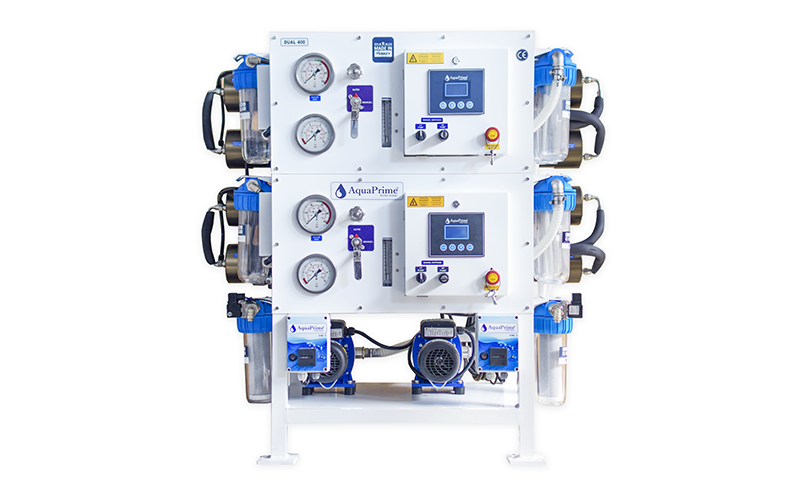
AquaPrime Yachting has presented its DUAL 750 watermaker through the official METSTRADE 2026 product catalogue, describing a system intended for larger boats with two nominal production sections rated at approximately 750 litres per hour each. The Turkish supplier's listing, dated 4 November, identifies a combined headline production figure of about 1,500 litres per hour and six membranes. That is a substantial capacity, and the distinction between a product's stated output and the actual water required by a yacht deserves scrutiny. For Luxury Yacht Guide readers operating vessels in the 12-to-23.99-metre sector, the product is most relevant at the larger, heavily used end of the market or as an engineering reference for systems on larger support and cruising craft. It should not be treated as equipment every yacht needs. The manufacturer has provided headline specifications; decisions about compatibility, energy consumption and water quality require a more complete technical document and a vessel-specific assessment.
What the published specifications establish
The supplier's official entry describes the product as DUAL 750 and refers to an average output of 750 litres multiplied by two, giving 1,500 litres per hour. It also lists six membranes. Those figures identify the scale and apparent modular approach, but they do not settle the conditions under which the rated production was measured. Desalination performance can depend on seawater salinity, temperature, pressure, feedwater quality, membrane condition and the system's operation. A buyer should ask for the precise test conditions, continuous duty capability and actual water-quality parameters rather than assume the nominal flow will be sustained in every cruising destination. The product listing does not independently establish its electrical draw, dimensions or maintenance intervals. These details matter just as much as the volume produced because a high-capacity watermaker can impose significant demands on machinery space, energy systems and seawater plumbing. Headline output is useful for shortlisting, not for signing off a final equipment design.
Why freshwater production affects cruising freedom
Water storage is one of the practical limitations on how long a yacht can remain comfortably away from marina services. Guests use freshwater for showers, galley work, laundry and other domestic activities, and crew may also need water for appropriate maintenance tasks. A reliable onboard treatment system can reduce dependence on taking water in unfamiliar ports, although it does not eliminate the need for proper storage, hygiene and planning. Owners who cruise with large guest parties or conduct extended voyages may place a high value on water production that can meet demand over relatively short operating windows. Yet the system must be matched to the yacht's actual consumption and available power. Installing far more capacity than necessary may increase cost, weight and complexity without improving the experience. The correct comparison is between real daily water demand, available tank volume, planned treatment hours and the reserve considered appropriate for the itinerary.
Production rate versus total daily consumption
A rated flow of 1,500 litres per hour is striking, but it does not reveal how much freshwater a vessel should make each day. A yacht with modest guest occupancy and sufficient storage may need only occasional operation of a smaller system, while a vessel with intensive domestic use might require more frequent production. The owner should estimate demand for normal cruising, high-occupancy periods and any operational peaks such as a change of guests or a large laundry cycle. An engineering model should include the variation in output that may occur as operating conditions change. It should also allow for maintenance interruptions and a sensible reserve. It would be misleading to assume that a yacht can simply multiply the catalogue output by the number of hours available and count on all that water. The full system, including pumps, filters and storage, has to be capable of supporting safe operation.
The importance of pretreatment and membrane care
Seawater reverse osmosis is sensitive to the quality of the water entering the membrane system. Sediment, biological material and other contaminants can increase maintenance demand or compromise performance. A sound installation needs the appropriate intake location, prefiltration and operating procedures, selected according to the maker's instructions and the conditions in which the yacht cruises. A vessel that spends time in silty estuaries or busy harbours may face a different challenge from one producing water in clean offshore conditions. The manufacturer has not supplied full filtration details in the short DUAL 750 listing, so these should be requested from the supplier. Owners also need guidance on flushing, preservation and safe recommissioning after periods of inactivity. Membranes can be expensive and operationally important, making care routines central to the economics of the installation. A high-capacity machine is useful only when the crew can keep its components in acceptable condition.
Two sections and questions about redundancy
The product's dual 750-litre description suggests that buyers should ask how the two production sections are arranged and whether they can operate independently. The catalogue identifies a dual capacity, but it does not supply enough detail to guarantee independent redundancy or separate electrical control for each section. These distinctions matter. Two modules sharing a single vulnerable feed pump or control assembly may not offer the same fault tolerance as systems with genuinely separate critical components. On a yacht operating far from service facilities, the owner should understand what happens if one section is unavailable and whether the other can continue to produce usable water. A complete piping and electrical diagram is essential. Redundancy is a valuable design objective, but it must be proven through the actual equipment architecture rather than inferred from a model name.
The electrical budget is a deciding factor
High-pressure seawater treatment generally requires energy, and a larger system may place a significant load on a yacht's electrical generation. The supplier's short listing does not specify a verified power requirement, so it would be irresponsible to publish a particular kilowatt figure without a manufacturer's full data sheet. A yachtbuilder should check the pump arrangement, starting characteristics, supply voltage and expected energy use under normal conditions. The watermaker must also be considered alongside air conditioning, galley equipment, refrigeration and other domestic services. An owner who wants to avoid running a generator during quiet periods at anchor should understand whether water production can be scheduled during engine operation or another suitable charging window. Designing around duty cycles can be more useful than simply maximising installed production rate. The system should support the vessel's actual cruising routine without creating avoidable conflicts between essential electrical loads.
Space, service access and the upper end of LYG's market
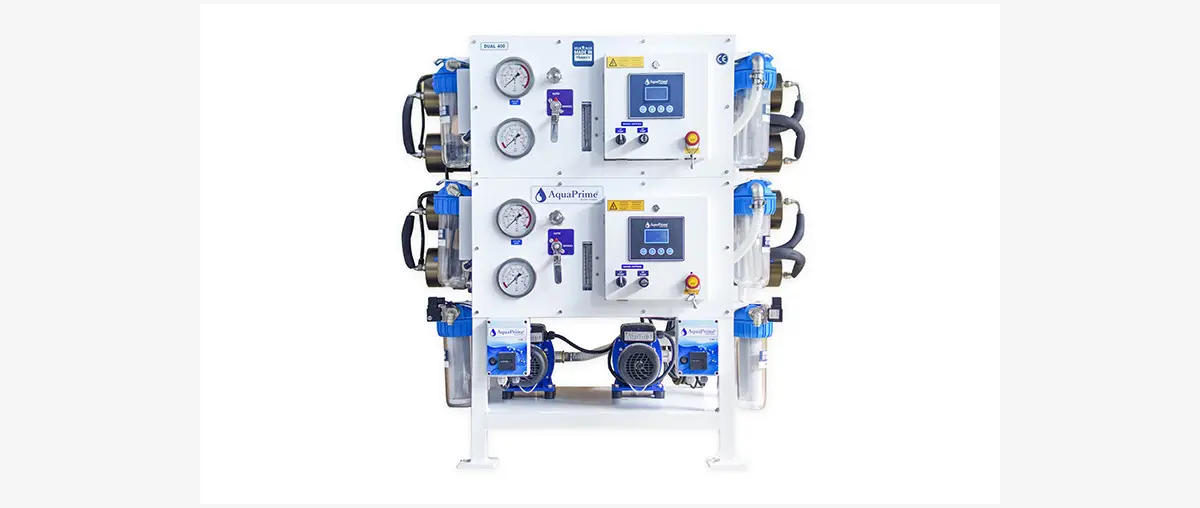
A product described as suitable for larger boats may present installation challenges on a 12-to-23.99-metre yacht, where machinery and storage volume are scarce. Six membranes, associated pumps, filters, controls and service clearances require careful packaging. The owner should ask for overall dimensions, component weights and the space required to replace membranes without dismantling other equipment. The location of seawater intake and brine discharge lines must also be assessed, along with drainage and the possibility of water leakage into sensitive spaces. A neatly presented product photograph provides no assurance that a complete system will fit a particular engine room. At the higher end of the LYG sector, some yachts may have the demand and machinery volume to justify a high-output option, but the answer must come from an accurate installation study, not an assumption based on vessel length alone.
Good water quality requires monitoring
A watermaker is intended to produce freshwater, but users need confidence that the product meets suitable quality standards for its intended use. The system's permeate should be checked with appropriate instrumentation and according to the manufacturer's recommendations. Production flow alone cannot establish quality. Salinity and other parameters may change when components deteriorate or operating conditions fall outside the specified range. Owners should also distinguish the quality of water leaving the treatment system from the condition of the yacht's storage tanks and distribution network. Tanks, hoses and outlets require their own cleaning and maintenance arrangements. A system can produce acceptable water and still deliver poor-quality water at a tap if the downstream installation is neglected. Proper monitoring, documented flushing routines and attention to storage hygiene should form part of the yacht's overall freshwater management plan.
High output can alter how a crew plans the day
The attraction of a large watermaker is not only total daily capacity but the possibility of producing water within defined operating periods. A yacht with abundant tank space could replenish supplies while machinery is already running, subject to the system's approved operating conditions. That may reduce the need to operate the unit continuously. However, a high production rate can also expose weaknesses in tank ventilation, level sensing or overflow protection if the installation is not carefully managed. The crew should know how the system stops when storage is full and what alarms indicate a problem. The manufacturer must confirm whether automatic controls and safety features are included in the proposed configuration. A disciplined operating procedure should specify when production is permitted, which areas are suitable for drawing seawater and how the system is checked before and after use.
Procurement and lifecycle cost
The purchase price of a watermaker is only one part of its ownership cost. Installation labour, plumbing, electrical modifications, consumables, membrane replacements and servicing all matter. A high-capacity system may save crew time in one operating programme but be unnecessarily expensive in another. The supplier's published DUAL 750 entry does not include a complete price or operating-cost schedule, so buyers should request a detailed quotation for the intended yacht. It should identify components supplied, commissioning work, warranty conditions, consumables and the availability of technical support in the yacht's normal cruising regions. A useful procurement comparison evaluates water output and energy demand under the same conditions across competing systems. Without that consistency, a catalogue figure from one manufacturer may be compared unfairly with another company's more conservative specification.
What the DUAL 750 announcement means
AquaPrime's DUAL 750 places a high-output, six-membrane marine watermaker into the 2026 product discussion, with a stated average combined production capacity of about 1,500 litres per hour. These are concrete manufacturer-reported details. The announcement does not independently establish real-world output in every sea condition, the complete electrical demand, exact redundancy or the suitability of a particular yacht installation. The value for owners lies in recognising the decisions that a large watermaker makes possible and the engineering work needed to support them. For luxury yachts near the upper end of LYG's size range, the equipment may prompt a review of freshwater demand, machinery access and energy scheduling. For smaller vessels, it provides a useful illustration of why capacity should be matched carefully rather than selected for its impressive headline figure. A successful installation is the one that consistently supplies the water the crew needs without introducing avoidable complexity or maintenance risk.
Sources and image credits
Reporting based on AquaPrime Yachting first-party DUAL 750 six-membrane product listing, released 4 November 2026, on METSTRADE.
Lead photograph: AquaPrime DUAL 750 Targets High-Output Freshwater Production for Larger Yachts — manufacturer original source image. © AquaPrime Yachting Original official image source.