The first official photo story takes a different route
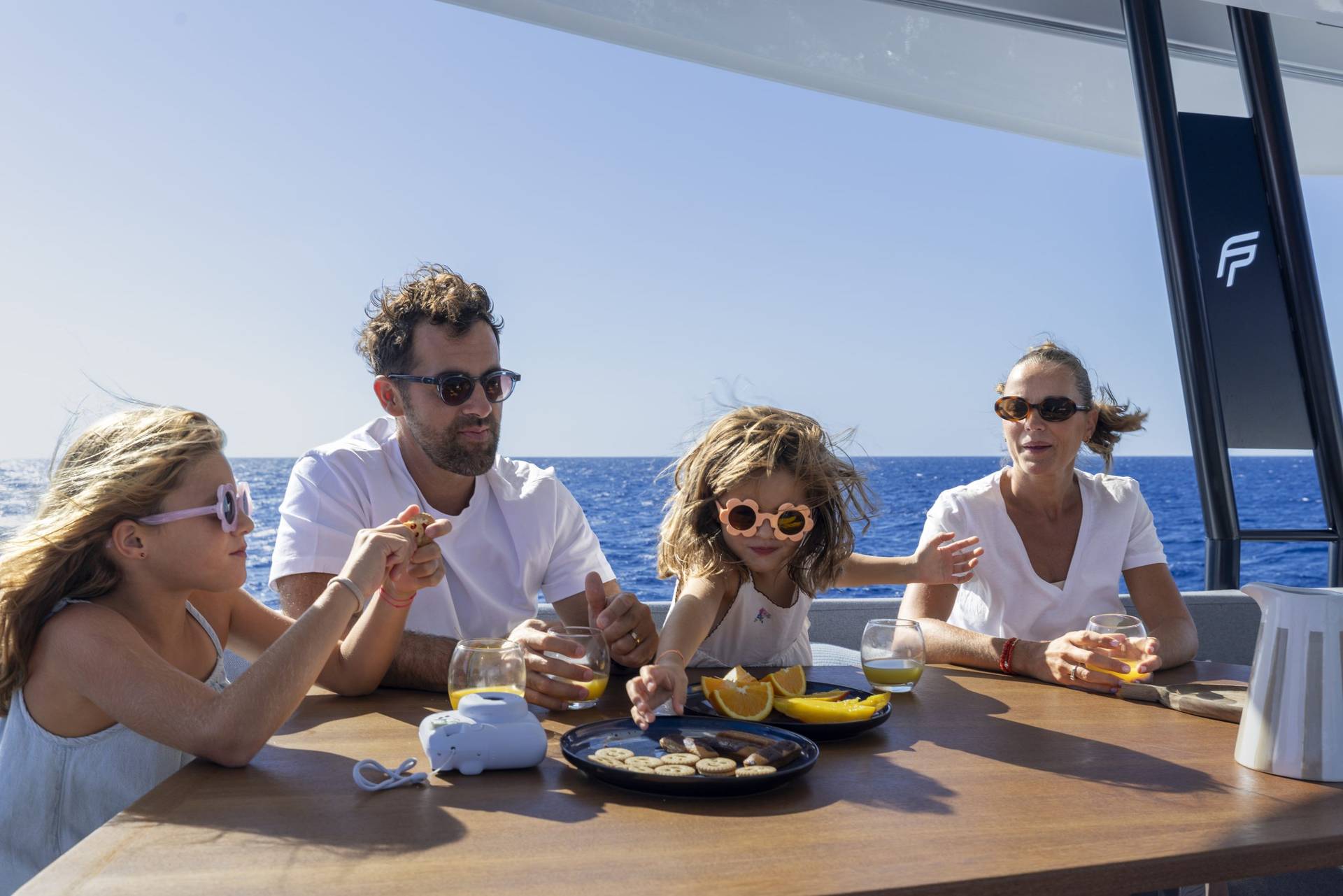
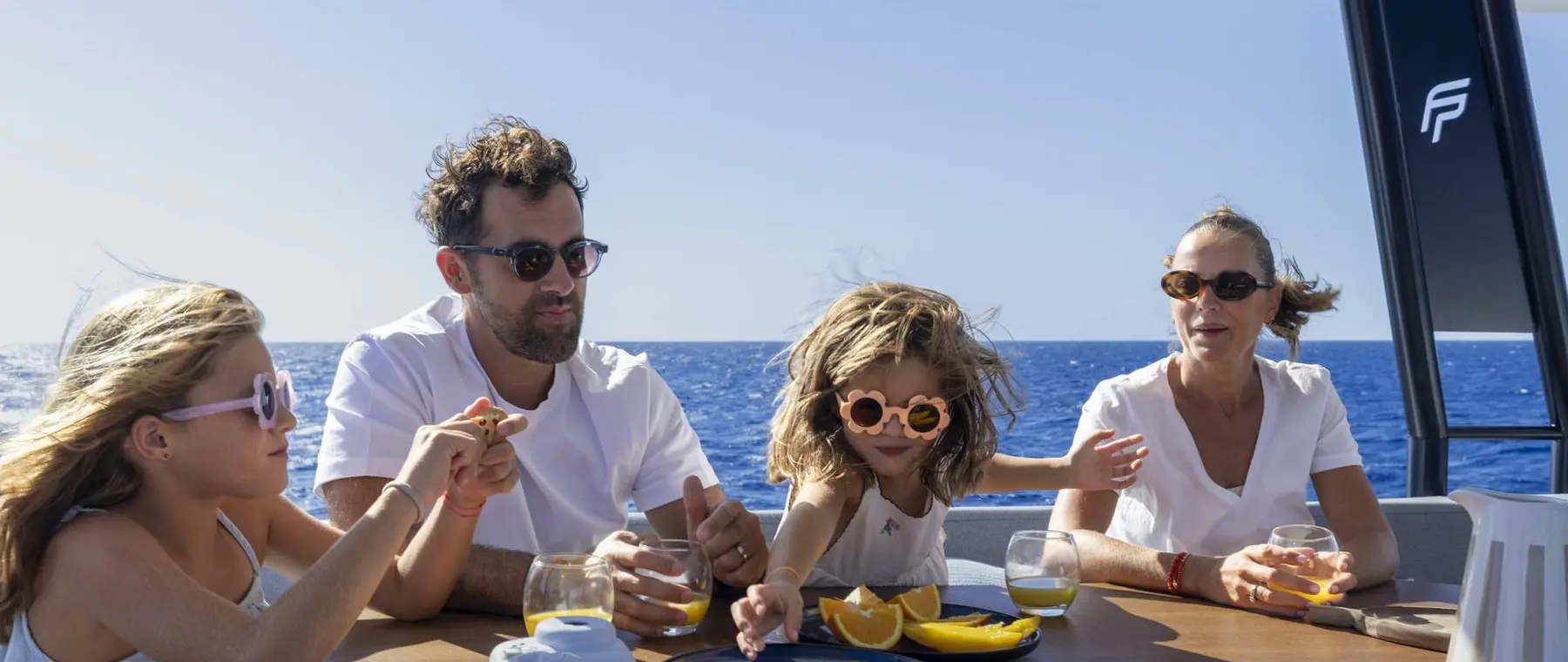
Fountaine Pajot has released its first official lifestyle photography of the FP55 sailing catamaran, choosing the Corsican coast and a family-centred narrative rather than an exhibition hall as the setting. Published on 18 November 2026, the manufacturer's announcement presents the vessel through the perspective of a young girl discovering the freedom, companionship and unfamiliar rhythms of time aboard a yacht. The approach is significant because the FP55 has already been introduced as a model. This announcement concerns new on-water photography and the way the builder wishes owners to understand its design, not a second launch or a newly verified sea-trial result. For people considering a luxury cruising catamaran in the 12-to-23.99-metre segment, the images offer an opportunity to imagine how the various living areas connect during an ordinary day. They also invite a useful distinction between an attractive lifestyle image and the practical decisions that determine whether a yacht will work for a particular family.
A 55-foot catamaran designed around more than one gathering space
The builder identifies the FP55 as a 55-foot sailing catamaran and the first model of its new generation to feature a full flybridge. In a cruising multihull, the relationship between the flybridge, the cockpit, the saloon and the forward outdoor area can fundamentally shape the day's activity. A helm position raised above the main deck offers a different outlook and a degree of separation from the guest seating below. A family may wish to gather there while cruising in benign conditions, then use the lower areas when conditions change. The official description points to a panoramic flybridge, forward cockpit, generous entertaining areas and different interior configurations. It does not establish that every customer will choose the same equipment or will have identical spaces. Prospective buyers should review the exact specification and safe access routes for the particular version they are considering.
Why Corsica makes an effective setting
Corsica supplies the kind of coast that encourages a vessel's designers to show the relationship between sailing and time at anchor. Sheltered turquoise bays, rocky shorelines and short passages can create varied experiences within one cruising itinerary. Fountaine Pajot says it photographed the new FP55 images along that coastline, with family breakfast, first moments at the helm, saloon conversation and evenings at anchor forming part of the visual story. These scenes are not navigation instructions and do not mean that every anchorage is suitable for every yacht or weather pattern. The point is to illustrate different modes of living aboard, from an active watch to quieter shared moments. For a real voyage, the captain must still plan for local regulations, marine protection zones, safe anchoring depths, forecast winds and the capabilities of the particular crew. The photographs show an aspiration; seamanship is what makes that aspiration workable.
Looking at a yacht through a child's experience
The builder's creative decision to use a young girl's viewpoint is more than a marketing detail. Children often experience a yacht differently from adults who concentrate on itinerary, specifications and guest accommodation. They may notice changes of light, movement of the boat, the proximity of the sea and opportunities to spend unstructured time with family. Fountaine Pajot says the same child will provide the perspective for an upcoming official FP55 film, developing the story introduced by the photographic campaign. That film is described as forthcoming, not as something already released. For potential family owners, this narrative raises practical questions. Is it easy to move safely between seating areas? Can younger guests remain in sight when adults are cooking or navigating? Are there secure storage spaces for equipment and suitable arrangements for being aboard in rougher conditions? Successful family cruising depends on the answers, not simply the mood of the campaign.
The flybridge as a practical design decision
A flybridge creates a distinct elevated living zone, which can be highly appealing in good weather. Its value changes with the way the yacht is used. Families who cruise long distances may prefer to bring people together in a sheltered cockpit during periods of wind and spray, while a flybridge can become the preferred setting for relaxed coastal travel. A raised area also introduces practical considerations such as stairs, handholds, shade, communication between helm and deck, and movement when the boat is pitching. The FP55's official story highlights the panoramic experience but does not provide a complete accessibility or safety specification. Buyers should inspect the real yacht and move between the main saloon, aft cockpit, forward cockpit and flybridge. What looks effortlessly connected in photography needs to feel equally intuitive when someone is carrying a drink, managing a mooring line or accompanying a child.
Two owner's suites and alternatives up to six cabins
One of the manufacturer's clearer accommodation details is the option of two owner's suites, alongside configurations featuring as many as six cabins. This breadth suggests that buyers are being invited to choose between different styles of ownership and hosting. A family planning long private cruises may value generous personal rooms and additional storage more than the highest possible berth count. Owners regularly hosting several couples or groups of friends might favour more separate cabins. Neither configuration is automatically more luxurious; the relevant measure is how the actual people aboard will live, rest and share communal areas. A buyer should ask for specific general-arrangement drawings, bathroom positions, access between cabins and the effect of different layouts on laundry, provisions and crew accommodation. The manufacturer's photographs of one version should never be mistaken for a promise that every listed cabin configuration is identical to that pictured.
Where communal life meets private space
The official imagery emphasises both shared experience and the freedom to withdraw into quieter spaces. That balance is especially important on a catamaran because its breadth can create multiple distinct areas at roughly the same overall length as a narrower monohull. It can make breakfast, reading, conversation and watching the horizon feel like separate activities without needing separate decks on a much larger yacht. Nevertheless, usable privacy is not defined by hull beam alone. Cabin doors, sightlines, acoustic separation and access to bathrooms affect the feeling of personal space. At the same time, the cockpit and saloon need sufficient seating to accommodate the whole party together. Prospective owners should check the actual seating arrangement, the way tables are used and whether circulation routes remain clear when the yacht is fully occupied. This reveals more than relying solely on wide-angle photographs.
A picture of family cruising and the demands behind it
The romantic appeal of an unhurried day afloat can obscure the work required to make it safe and comfortable. Meals must be prepared, anchoring arrangements checked, weather followed and the yacht maintained. Children need appropriate supervision on deck, and guests should understand handholds, safe movement and the rules for swimming from the vessel. These duties become easier when a boat has sensible storage, clear communications, accessible equipment and a layout that permits the crew to work without unnecessarily disturbing people who are relaxing. The FP55 campaign shows the emotional destination of good yacht design: time together. The practical test is whether the chosen specification and operating routines make that experience repeatable. Buyers should assess this through a realistic sea trial, a carefully reviewed equipment list and conversations with the people who will be responsible for operating and maintaining the boat.
What new photography can reveal that a rendering cannot
Early model announcements frequently depend on computer-generated imagery and general-arrangement drawings. Real photography can add useful evidence about proportions, natural light, access and the apparent relationship between indoor and outdoor spaces. The FP55's November pictures also introduce people into the scale of the design, allowing an observer to judge seating, movement and viewpoints with a different reference. That does not make photographs an engineering verification tool. Camera lenses, lighting conditions, the number of guests aboard and the way a space is staged can affect what seems spacious or intimate. A responsible comparison still requires measured dimensions, technical drawings and inspection of the physical yacht. However, real images help prospective owners formulate better questions for a broker or builder. A family can use them to discuss where different activities would actually occur and which parts of the design matter most.
Evaluating the yacht beyond a carefully chosen day
An image-led campaign naturally shows the vessel in attractive circumstances. Anyone contemplating a purchase should also consider less photogenic situations: a rainy afternoon with all guests inside, a warm night without shore power, provisioning before a longer passage, or the challenge of bringing the boat alongside in a crosswind. The FP55 may offer appealing communal areas, but the suitability of its systems and operating arrangements must be established separately. Storage capacity, fresh-water supply, tender handling, charging equipment and the actual sailing plan all influence long-term enjoyment. A carefully prepared visit should include the engine compartments and service access as well as the saloon and flybridge. Owners should ask for performance information appropriate to the actual sail plan and loading configuration, rather than treating one promotional passage as a guarantee of speed or handling.
The relevance of a real-life narrative to today's yacht buyers
The November release marks a change in how a builder is presenting a product that already exists within its range. Instead of relying primarily on technical equipment and exterior appearance, Fountaine Pajot has organised its official imagery around time, childhood and shared life at sea. That strategy is understandable in a market where buyers increasingly evaluate a yacht as a place for meaningful experiences rather than simply as a machine or status object. The value of the approach depends on whether the design's practical details support those experiences under real conditions. The full flybridge and alternative accommodation arrangements provide specific subjects for investigation. They should be examined through accurate plans, inspection and documented engineering data, not through marketing sentiment alone. The lifestyle message is compelling precisely because it can lead to a more disciplined discussion about how a family would really use a luxury yacht.
The next chapter is an official film
Fountaine Pajot says the initial photographs introduce a story that will continue in an official FP55 film narrated through the child's perspective. As of the 18 November announcement, that film was described as forthcoming. The new photographs themselves can be examined now, including the Corsican cruising scenes credited by the builder to its photographic production. For LYG readers, the immediate news is this distinct first release of on-water FP55 imagery and the practical insight it provides into the design. Future editorial coverage should differentiate the finished film, any subsequent owner delivery and independent cruising trials from the current promotional material. For a yacht conceived as a setting for both independence and togetherness, the central buying question remains simple: can the actual configuration, crew and operating plan provide the comfortable, safe and unhurried life that the photographs invite a family to imagine?
Sources and image credits
Reporting based on Fountaine Pajot original 18 November 2026 FP55 manufacturer photograph release.
Lead photograph: Fountaine Pajot's FP55 Photography Reveals Family Life Under Sail in Corsica — manufacturer source photograph. © QAPTUR for Fountaine Pajot Original official image source.