A production investment behind the finished yacht
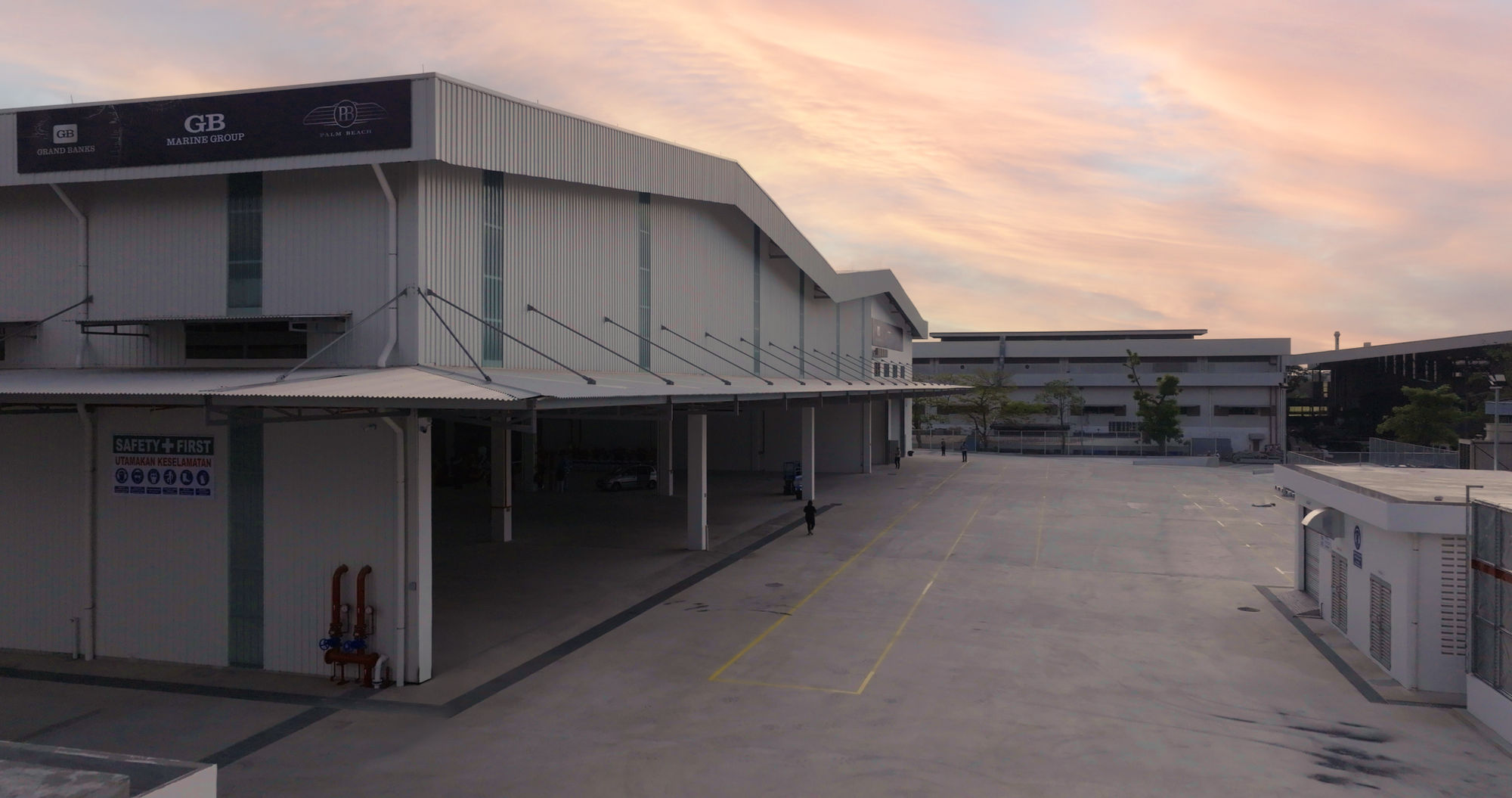
GB Marine Group, the builder of Grand Banks and Palm Beach Motor Yachts, has announced the opening of a dedicated composite manufacturing facility as part of its continuing investment in the way it produces luxury motor yachts. The company's official announcement places the project within a broader strategy of retaining important manufacturing capabilities, improving precision and pursuing more efficient construction. It also identifies chief executive Mark Richards as a central figure in the investment programme. For buyers of 12-to-23.99-metre yachts, the significance lies less in the ceremonial opening of another building than in what control of composite production may mean for the quality and repeatability of the boats that leave the yard. The story is about industrial capability, not a newly delivered model or a promise that every Grand Banks or Palm Beach yacht has changed specification. The manufacturer has published a description of its facility and its intended benefits; measurable outcomes for individual models will require evidence from the particular production programme.
What the company says has changed
The group describes a purpose-built composite operation that expands its manufacturing capability while integrating more work within its own facilities. It identifies eight-axis robotic equipment, engineering laboratories and testing pools among the resources supporting construction and evaluation. Such infrastructure can be especially valuable when a yard is working with carefully shaped moulds, resin-infused structures and parts that need to fit precisely into a hull. The formal announcement does not supply a complete, independently audited assessment of manufacturing tolerances or delivery-time reductions attributable to the investment. Those should not be inferred from the presence of advanced machinery alone. Nevertheless, greater control over the production environment can give engineers a more consistent platform for monitoring the construction process, troubleshooting issues and refining techniques across a range of models. Owners deciding among builders can reasonably regard facilities and process documentation as subjects for due diligence, alongside finish quality and sea-trial results.
Why composites matter to this part of the market
Composite structures are already familiar to builders of production and semi-custom motor yachts. Their appeal can include efficient shapes, corrosion resistance in appropriate applications and the possibility of controlling weight through engineered fibre, resin and core systems. However, the best material choice depends on the loads and functions of a particular component. A composite hull is not automatically lighter or stronger than every alternative, and a product description alone cannot establish the performance of a completed boat. Grand Banks has long emphasised the relationship between structural efficiency and its hull-development philosophy. Within the 12-to-23.99-metre sector, the most important question is how the structure contributes to the whole vessel: its loading, behaviour at sea, maintenance requirements and ability to support equipment without unnecessary weight or complexity. Buyers should look for independent design calculations and established quality-control processes rather than assuming that the word 'carbon' or 'advanced' guarantees a particular outcome.
The value of bringing more stages under one roof
A yacht moves through a chain of design, tool making, composite layup, assembly, installation, finishing and testing. If important stages are separated between distant suppliers, a small design revision can demand repeated transport, communication and new inspection. Vertical integration can help a yard keep these decisions closer to the people responsible for the finished vessel. The manufacturer says the new facility is intended to improve control and reduce unnecessary transport connected with manufacturing. Those are credible operational objectives, but the environmental and financial effect will vary with production volumes, logistics and the actual proportion of work performed locally. Owners may not see the difference immediately during a marina visit. They may notice it later in more consistent component alignment, clearer spare-part records, fewer late-stage changes and better access to the people who understand a particular construction detail. These possible benefits need to be assessed in service, not presented as completed proof of superiority.
Robotics still requires experienced builders
The announcement highlights eight-axis robotic capability, an example of how equipment more often associated with major industrial programmes is increasingly used in yacht production. Robotics can improve repeatability in tasks that require controlled paths and dimensions, but it does not replace competent design or the judgment of trained workers. A machine produces the intended outcome only when it is programmed correctly, maintained and supported by good metrology. Complex composite components may still require skilled layup, careful handling of materials and inspection of areas that automated processes cannot fully verify. For a customer, the relevant evidence is a documented method of production and acceptance rather than the number of axes on a particular machine. The company reports a workforce exceeding 1,000 skilled people across its yacht-building operations. That human expertise remains central to the value of the investment, particularly when detailed structures must be integrated with interior joinery, machinery systems and owner-specific options.
Testing before a yacht reaches the water
Testing pools and engineering laboratories are another element of the facility described by GB Marine Group. A dedicated test environment can help designers examine assemblies and processes earlier in the build cycle. It may also make it easier to review components without waiting for a finished vessel to reach the commissioning stage. The precise test programme for an individual model should still be requested from the builder. Tank or laboratory work, however sophisticated, cannot by itself verify every aspect of seakeeping, propulsion, noise or serviceability when the completed yacht is operating at sea. Independent surveys, builder sea trials and appropriate owner-acceptance procedures remain important. The best manufacturing investment is one that produces clear records of what has been tested, what limitations apply and how any shortcomings have been resolved. A buyer's representative can use those records to distinguish a genuinely disciplined production culture from an impressive presentation of facilities.
Solar power and the manufacturing footprint
The new facility incorporates extensive rooftop solar generation, according to the group, and the company says surplus electricity can be supplied to the local grid. This is a concrete feature of the project rather than a generic claim that production is environmentally neutral. Solar energy may reduce the amount of electricity drawn from the grid during suitable conditions, while the relationship between generation, consumption and excess supply depends on time of day and operating schedules. A complete environmental assessment would also consider embodied energy in construction materials, resin systems, waste, supplier transport and the lifespan of the finished yacht. None of those factors can be collapsed into a single roof-mounted solar figure. For environmentally conscious buyers, the sensible approach is to ask what the yard actually measures and publishes. A meaningful sustainability programme should be able to demonstrate progress across manufacturing and yacht operation without implying that one investment eliminates the wider footprint of boatbuilding.
The relevance of the group's different model ranges
GB Marine Group says its operations produce yachts ranging from approximately 42 to 107 feet across its brands. That breadth includes boats directly relevant to the 12-to-23.99-metre Luxury Yacht Guide audience and larger vessels beyond it. The factory announcement is an industry development affecting manufacturing capability across the group; it should not be misrepresented as the launch of a specific 42- or 65-foot model. Buyers looking at Grand Banks long-range cruisers or Palm Beach designs may wish to know which parts of the new operation apply to their particular yacht and what changes, if any, have been introduced since earlier hulls were built. A model name can stay familiar while tooling, fittings and production processes evolve. Accurate comparisons therefore require hull-specific drawings, equipment schedules and current factory information. The new facility provides a good reason to ask more precise questions, rather than a shortcut to assume every boat in the range has identical construction methods.
Construction quality versus published range figures
Grand Banks promotes efficient cruising through its hull design and structural philosophy, and its owner testimonials discuss the practical appeal of long-distance travel. Those statements should be considered separately from the news of the facility opening. A composite workshop does not independently demonstrate fuel efficiency, endurance or comfort at sea. Such claims depend on hull geometry, propulsion choice, displacement, loading, conditions and operational practice. Owners comparing modern motor yachts should seek trial data at the relevant speeds and loads and understand how any quoted range was calculated. That is particularly important when choosing a vessel for coastal exploration or voyages where fuel stops are not frequent. High-quality manufacturing can help achieve design intent, but it cannot remove the influence of sea conditions or changing equipment configurations. The most persuasive link between the factory and the finished yacht will be measurable consistency over multiple completed vessels.
Serviceability should be considered during production
One advantage of a closely integrated engineering environment is the opportunity to consider installation and later maintenance while structural components are still being designed. Tanks, cables, plumbing and propulsion systems should remain accessible to technicians after interiors have been installed. A precisely manufactured structure is of limited benefit to an owner if it makes essential servicing difficult or forces unnecessary dismantling. Buyers inspecting a yacht can ask for access to machinery spaces, inspection points and service drawings, and can compare these with the physical arrangements onboard. It is also reasonable to request information about the traceability of composite repairs and the documentation available to future yards. Composite structures may require specialist repair procedures, so the owner should know how technical support will be delivered away from the original factory. The quality of that support is part of the long-term value of an industrial investment.
What buyers and brokers can verify
Before attaching a premium to any factory-led claim, buyers can request evidence of the vessel's actual construction standard, warranty terms and completed acceptance tests. They can ask which components are manufactured in the new facility and whether the supplier relationships or production schedule have changed. A factory visit can be revealing, but it should focus on workflow, quality checks, safety practice and documentation rather than just memorable machinery. Brokers may find the investment useful background when discussing brand development, yet descriptions should make clear what is confirmed by the builder and what remains an expectation. Owners are entitled to careful differentiation between a company announcement and an independently verified engineering result. That distinction helps protect both buyers and the reputations of yachtbuilders whose claims should be examined on their merits.
The larger industry implication
The opening of GB Marine Group's composite facility illustrates continued investment in the industrial base behind luxury yacht construction. The group's stated objectives include better integration, production precision and reduced environmental impact, supported by robotics, test resources and rooftop solar generation. These features can create opportunities to improve quality, but no factory announcement substitutes for the evidence of completed yachts operating in service. The strongest future reporting will follow what the manufacturer is able to demonstrate through production consistency, delivery performance, warranty experience and measured manufacturing efficiency. For the 12-to-23.99-metre market, the central lesson is that the yacht itself is the final result of an extended industrial process. Understanding that process gives owners a more informed way to assess craftsmanship, operational value and the support they can expect after the handover ceremony has finished.
Sources and image credits
Reporting based on GB Marine Group official announcement of its dedicated composite manufacturing facility.
Lead photograph: GB Marine Group Opens Composite Production Facility for Luxury Yachts — original manufacturer photograph. © GB Marine Group / Grand Banks Original official image source.