A smaller component with a significant design question
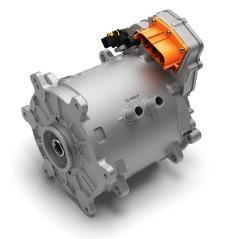
Bosch Engineering has placed a 400-volt, 60-kilowatt electric motor before marine builders and system integrators in its METSTRADE 2026 product catalogue. The company describes a compact motor derived from high-volume automotive component experience and adapted for smaller-volume marine applications. That distinction deserves attention. It is not the announcement of an entire ready-to-sail yacht, nor proof that every existing shaft-driven boat can be converted with a single component. It is a proposal to make a mature industrial building block available to designers of electric propulsion and related onboard systems. For buyers in the 12-to-23.99-metre luxury-yacht market, the real question is whether that component can be combined with the right battery, controls, cooling and transmission for a dependable complete installation. A rating alone is never the whole propulsion story. A professionally engineered yacht is a system, and the motor is one element within it.
The manufacturer specification and what it actually says
The official METSTRADE listing, released on 6 November 2026 by Bosch Engineering GmbH, identifies the product as a 400V electric motor with 60kW and emphasises compactness, efficiency, availability and the adaptation of proven automotive parts. Bosch says its background in high-volume production helps bring product maturity to a marine sector characterised by smaller numbers of installations. The description does not supply a complete battery specification, installed endurance, certified yacht range, guaranteed vessel speed or universal retail price. The distinction matters because technical buyers can confuse nominal voltage and motor output with the capability of an entire vessel. Before any installation contract, a yard should obtain the detailed operating envelope, duty cycle, approved mounting arrangements and environmental specifications for the exact unit offered. The manufacturer's marine brochure and applicable data sheet should take precedence over general exhibition marketing when dimensions, continuous ratings and cooling requirements are being finalised.
Why 60 kilowatts is a useful engineering scale
Sixty kilowatts equals roughly eighty metric horsepower in simple power-unit conversion, but that calculation is not a statement about equivalence of boat performance. A propeller operating behind a sailing hull behaves differently from the propeller of a fast planing boat, even when the engine's published rating looks similar. Designers may see this power level as relevant for auxiliary propulsion on some larger sailing yachts, hybrid arrangements or lower-speed displacement applications. No conclusion about suitability for a particular 12-to-23.99-metre vessel follows without examining hull resistance, propeller efficiency, loading and reserve power. A yacht expected to motor into a steep head sea has a different requirement from one whose propulsion is primarily intended for quiet harbour departures. The appropriate benchmark is a documented power-versus-speed curve for the actual hull rather than a flattering comparison between headline engine numbers.
The attraction of automotive-origin components
Marine engineering often operates at modest production volumes compared with vehicle manufacturing. That can raise component costs and create difficulties with spare-part consistency. Bosch Engineering's argument is that components with experience in higher-volume applications can be adapted rather than developed from the beginning for every new boat. Mature manufacturing processes may support more predictable quality and shorter procurement times, provided the conversion to saltwater, vibration and sustained-load operation is completed rigorously. A component that performs well in a road vehicle is not automatically ready for a damp machinery space where service technicians may need access with the yacht afloat. Exposure to spray, galvanic interaction, temperature and long periods between service visits can all change the practical design problem. The marine adaptation is therefore as important as the original industrial pedigree, and builders should expect documentation showing how the manufacturer addresses those differences.
Voltage is part of a whole electrical architecture
A 400-volt propulsion system changes how a yacht is designed, maintained and operated. It involves electrical segregation, suitable protective switching, insulation monitoring and safe procedures for technicians working near energized equipment. The batteries, inverter, motor cables, charging arrangements and control electronics have to be selected as an integrated set. It is especially important not to confuse a nominal 400-volt drive bus with the familiar 12- or 24-volt circuits serving domestic accessories. A well-designed installation can contain several voltage domains, but they need an intelligible distribution architecture and clear labeling. Boats being refitted must also accommodate equipment access, cable pathways and mounting structures that were not necessarily considered in the original build. This is where early collaboration between electrical engineer, naval architect, surveyor and shipyard produces more value than buying a promising electric motor before the detailed feasibility study.
Batteries, range and realistic cruising programmes
An electric motor does not determine how long a yacht can cruise under battery power. Endurance depends on usable stored energy, the actual power drawn by the propeller, hotel electrical loads, conversion losses, environmental conditions and the crew's reserve policy. A theoretical battery-energy divided by motor-power calculation is useful for orientation, but it is too simple to be a passage plan. A yacht drawing only part of the rated motor output may have a different endurance from a boat trying to maintain higher speed against strong conditions. The rating of a battery pack must also be distinguished from the amount of energy a prudent operator is willing to use between charging opportunities. For luxury yachts, owners should ask for transparent scenarios covering harbour manoeuvring, low-speed coastal passages, normal auxiliaries and emergency reserve. They should also understand the consequences of losing charging capability during a cruise away from reliable shore infrastructure.
Integration with gearboxes, shafts and control systems
The motor is only one component in the chain from electrical energy to thrust. A conventional shaft installation may require a reduction ratio, coupling, shaft seal assessment, propeller matching and careful management of torsional or structural loading. Saildrives, pods and alternative drive systems create different interface questions. Control design matters just as much: operators expect predictable low-speed response, clear feedback at the helm and safe behaviour if a sensor or communication link fails. A system integrator should clarify who holds responsibility for the inverter, software parameterisation, commissioning and warranty on the combined installation. An attractive component with unclear integration boundaries can create an expensive problem at handover. Where yachtbuilders are considering the Bosch motor for a repeatable series, disciplined documentation of one validated configuration is more valuable than improvised decisions being made separately on each hull.
Heat, cooling and a quiet machinery space
Electric propulsion removes some sources of combustion-engine vibration, but it does not eliminate machinery noise or waste heat. Motors, inverters and batteries all operate within temperature limits, and the cooling system must accommodate the yacht's expected operating environment. Designers should assess seawater intake arrangements, closed-loop cooling, pump redundancy and maintenance access rather than assuming a compact machine can simply be hidden beneath seating. Heat rejection is especially relevant in warm cruising grounds, where ambient temperatures and seawater temperatures can reduce cooling margins. Owners may value the reduced acoustic signature of a well-designed electric drive when leaving an anchorage or travelling at modest speed. That benefit should be demonstrated at commissioning, alongside the sound of auxiliary pumps, gearbox components and propeller flow. A claim of silent operation would be misleading unless an entire vessel's sound performance has actually been measured.
What a smaller yachtbuilder should request
A credible procurement discussion begins with a list of evidence rather than an enthusiasm for a new technology label. The yard needs performance maps showing continuous and short-duration operating regions, mechanical drawings, dimensions and service clearances, cooling specifications, compatible inverters and integration guidance. It should request information about protection standards, diagnostic access, spare parts, warranty exclusions and the approved way to isolate the electrical system for service. The classification and regulatory position also deserves early attention, particularly when a boat may operate commercially or across different jurisdictions. The design team needs to understand not merely whether the motor can produce thrust, but whether a complete and maintainable installation can be surveyed, insured and supported across the expected ownership period. A successful installation decision should be traceable to specific documents supplied by the relevant manufacturer and integrator.
Why refits deserve a separate calculation
Retrofitting electric propulsion is often harder than incorporating it into a new-build yacht. The original engine foundations may not align with the new motor assembly, and changing a drive train can affect propeller selection, balance and available service space. The installation may need additional battery weight in a part of the vessel where stability, ventilation and fire protection require redesign. The electrical load of air conditioning, cooking, pumps and entertainment systems can also compete with propulsion storage in a manner owners did not anticipate. A refit proposal should therefore start from an honest survey of the existing hull, engine space and operating schedule. It should include the likely shore-charging experience in the yacht's normal marinas and a clear estimate of downtime, not only a component purchase price. The Bosch product deserves consideration within that wider exercise, without presenting the motor alone as a universal refit kit.
The distinction between potential and proven performance
There are sensible reasons to take automotive-derived marine electric components seriously, including established industrial manufacturing and an expanding network of electrical expertise. There are equally sensible reasons to avoid treating catalogue availability as evidence of a measured saving at sea. The METSTRADE product entry makes a specific claim about an available 400-volt, 60-kilowatt motor and the company's development approach; it does not announce a verified sea trial of a named luxury yacht using this exact equipment. Future installations will need to demonstrate reliability, serviceability, efficiency and operational safety in real marine conditions. For the sector's designers and owners, evidence will ultimately be the deciding factor. The strongest practical contribution of the announcement is another component option that can be evaluated against an actual design brief, rather than another untested promise about effortless electrification.
What to watch after METSTRADE 2026
The meaningful follow-up questions are technical and commercial. Will Bosch Engineering publish more complete marine operating data for the 60-kilowatt configuration, and which integrators will offer validated combinations of controls, inverter and cooling equipment? Will builders disclose which hull types are suitable and provide meaningful test results rather than generic range claims? Can technicians service the equipment efficiently in normal cruising territories, and can owners obtain replacement components during the life of the yacht? These questions should shape the next phase of reporting. Electric propulsion is neither a single-product solution nor a passing exhibition trend. In the 12-to-23.99-metre yacht segment, where accommodation, weight, machinery access and voyage expectations are closely interconnected, the careful integration of a compact, mature motor may matter more than its headline rating.
Sources and image credits
Reporting based on Bosch Engineering original 400V 60kW marine motor catalogue announcement, METSTRADE 2026.
Lead photograph: Bosch Engineering's 400V 60kW Motor Opens a Smaller-Yacht Electrification Discussion — manufacturer source photograph. © Bosch Engineering GmbH Original official image source.