A broad continuous-power offering
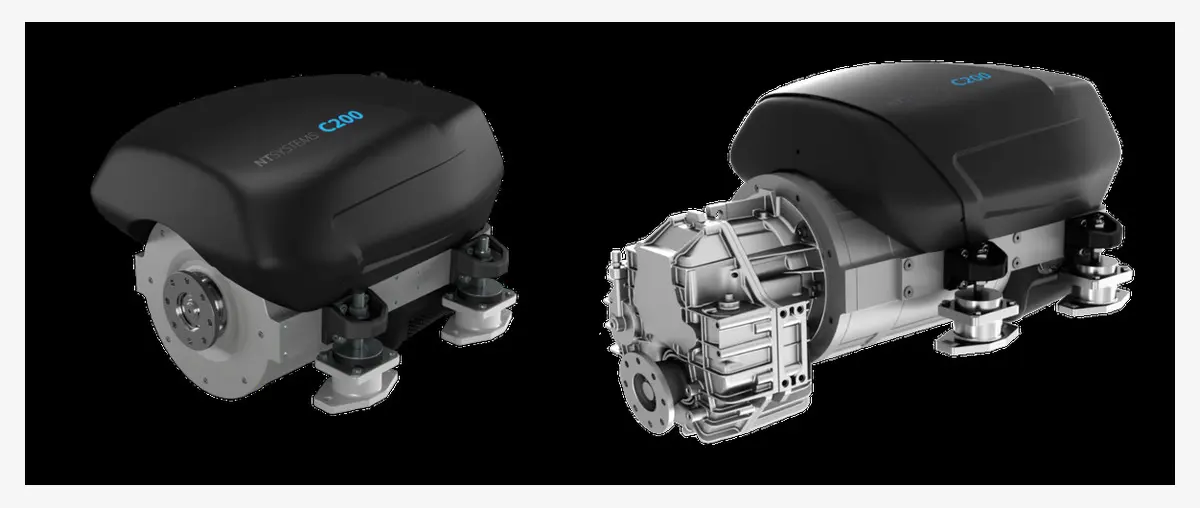
NT Systems is presenting a range of electric inboard propulsion systems with continuous power ratings from 40 to 450 kilowatts, aimed at leisure and commercial marine applications. The supplier's official METSTRADE 2026 catalogue entry describes a compact, pre-assembled package that combines optimised cooling, an electronic control unit and an integrated thrust bearing. It also identifies compatibility with marine gearboxes and the possibility of a direct-drive configuration. For luxury yacht builders seeking to specify electric propulsion as a coordinated system rather than as a collection of disconnected components, these details provide a practical starting point.
The term continuous power deserves emphasis. A motor's short-duration peak output can be markedly different from the level it can sustain under realistic thermal conditions. The manufacturer's listed range is not, by itself, evidence that any particular yacht can achieve a specified speed or cruising distance. A complete engineering design must account for hull resistance, loading, drivetrain efficiency and the available energy source.
Why a pre-assembled propulsion module matters
A marine electric drive can include the motor, controller, cooling circuits, mechanical couplings, structural mounts and monitoring hardware. If these elements come from different suppliers, the yard is responsible for designing interfaces and resolving technical disagreements. NT Systems describes a packaged arrangement intended to reduce integration work and keep components appropriately matched. That may help a builder define dimensions, weights and service requirements early enough to influence hull and machinery-space design.
Pre-assembly does not replace vessel commissioning. Even a correctly matched supplier package relies on the integrity of its installation, the electrical protection of the host yacht and adequate water or air flow through the specified cooling arrangements. The correct acceptance procedure should distinguish supplier factory testing from final boat tests. Owners should request a full system boundary drawing before assuming the product can be installed without additional engineering.
Understanding the 40–450kW range
The power range reaches into territory relevant to a variety of small and medium luxury yachts, but it does not imply that one physical motor spans the entire specification. Different hulls and operating profiles need different equipment sizes and possibly different supporting components. A displacement motor yacht whose owner prioritises quiet coastal passages faces a very different propulsion problem from a fast craft that needs high sustained shaft power.
A designer should calculate required shaft power across the anticipated operating envelope and check what reserves are necessary for adverse sea conditions and manoeuvring. The planned duty cycle matters too. The headline figure may describe continuous motor output, but the vessel also needs an energy supply and thermal management capable of sustaining the required operation. Power alone does not establish endurance.
A built-in thrust bearing and its engineering role
NT Systems says the units include a thrust bearing, allowing a direct-drive configuration out of the package. That is an important mechanical detail because propeller thrust must be transferred safely into the vessel's structure. The required arrangement depends on the shaftline, coupling type, propeller and hull foundation. A built-in bearing may simplify certain installations by addressing a component that would otherwise need to be specified separately.
Nevertheless, the existence of an integrated bearing does not mean a conventional shaft bearing or another system component can always be omitted. The boatbuilder must obtain the permitted load data, alignment tolerances and exact installation instructions. Misalignment or excessive loads can compromise reliability even if the electric motor itself is operating within its electrical limits.
Gearbox compatibility widens possible applications
The manufacturer states that its systems are compatible with various marine gearboxes. This could support projects that benefit from a reduction ratio or have propeller-selection constraints, while allowing other boats to pursue direct drive. A gearbox can help place a propeller in its preferred operating range, but also introduces its own lubrication, maintenance, noise and efficiency considerations. The correct configuration is an engineering choice rather than a simple preference for fewer components.
Retrofit work makes these decisions especially important. A yacht originally equipped with a diesel engine may already have a shaftline, engine beds and propeller that are expensive to replace. Matching a new electric propulsion unit to that installation could reduce disruption, provided the mechanical loads and operating speeds remain suitable. The yard should not assume compatibility solely from the presence of a familiar gearbox brand or size.
Cooling and sustained duty
Electric propulsion eliminates several characteristics of a diesel engine but does not eliminate waste heat. Motors, controllers and cables all have thermal limits, and an effective cooling system can determine how much power is available during prolonged operation. NT Systems specifically points to optimised cooling in its product description. A yacht operating in warm seawater and a confined engine compartment provides a demanding environment in which that claim should be assessed.
Owners should request thermal performance documentation and guidance for fouling, reduced coolant flow and elevated ambient temperatures. A drive that delivers its advertised power briefly but reduces output dramatically during a long passage may be unsuitable for the intended programme. Continuous rating should therefore be supported by duty-cycle and temperature information relevant to the vessel's normal conditions.
Energy storage remains a separate decision
A 40–450kW propulsion system requires a corresponding electrical supply. That may involve batteries, generators, shore charging or a hybrid architecture depending on the boat. The official NT Systems product entry focuses on the propulsion units; it does not state that a fixed battery bank provides a particular range in every installation. An owner should avoid extrapolating endurance from the motor nameplate alone.
The energy budget should include propulsion, hotel loads, safety reserves and charging losses. A luxury yacht's air-conditioning, galley, stabilisers and entertainment equipment can consume significant power even when the boat is at anchor. Battery capacity allocated to propulsion may not all be available to those services without appropriate control rules. An integrated energy-management plan is as important as selecting the motor.
Packaging advantages in a yacht machinery space
NT Systems presents compactness and low weight as benefits of its package, particularly where space is a critical factor. On a 12- to 24-metre luxury yacht, machinery-space volume competes with accommodation, tankage and storage. A smaller propulsion envelope can potentially improve service access or allow a designer to reallocate part of the available space. Those opportunities are real only after the complete electrical system, cooling installation and mounting requirements have been included.
Batteries, converters and cables still occupy volume, and their placement influences the centre of gravity and trim. An attractive motor drawing should therefore be incorporated into a whole-vessel arrangement plan. The owner gains little from a compact drive if the surrounding equipment leaves maintenance hatches inaccessible or forces undesirable weight distribution.
Noise and vibration are system properties
Many owners associate electric propulsion with a quieter onboard experience. A motor without diesel combustion can offer meaningful acoustic advantages, but total vessel noise also includes gearboxes, propeller cavitation, pumps, bearings and the hull's transmission of vibration. A new propulsion installation should therefore be assessed with actual noise and vibration criteria rather than an assumption that any electric motor creates silence.
A builder can work with the supplier to establish suitable mounts and alignment procedures. The propeller remains important because poor matching can create vibration and wasted energy regardless of how smoothly the motor turns. A useful commissioning test includes measurements at several speeds and realistic loads, with the results recorded for future maintenance.
Electrical safety and system boundaries
High-power electric propulsion requires rigorous protection against short circuits, overheating, isolation faults and unexpected motion. The relevant voltage, cable sizes and switching arrangements depend on the final configuration. Owners should request detailed design and certification information rather than rely on general descriptions of electric technology. Emergency-stop functionality, maintenance isolation and crew training all belong in the project specification.
Where propulsion and hotel electrical systems share components, faults must be managed without creating unnecessary dependence between critical services. The engineer should document how alarms are presented and what happens during loss of communications or cooling. These details are central to a safe installation, even though they rarely appear in a brief trade-show product description.
Evaluating an electric refit
An existing yacht may be technically suitable for electric conversion but commercially unsuitable once battery capacity, charging access and operating distance are examined. Refit cost includes the propulsion module, removal of old equipment, structural work, batteries, controls, cables, cooling, testing and possibly a changed propeller. The owner should compare this total with the expected programme, not simply a percentage change in fuel spending.
For a yacht used mainly on short coastal runs with regular shore charging, an electric drive may fit the desired experience. For extended passages without reliable charging, a different architecture may be more appropriate. NT Systems' wide power range allows a conversation across different craft, but it does not resolve their fundamentally different energy requirements.
What to request from the manufacturer
Before design approval, the yard should seek current specification sheets for the exact unit, continuous-power curves, torque data, cooling requirements, dimensions, weight, thrust-bearing limits, compatible gearbox options, control interfaces and service instructions. A clear warranty and spare-parts arrangement is particularly important for yachts travelling far from their original builder. Owners should also clarify responsibility for the components outside NT Systems' supplied package.
The 2026 METSTRADE catalogue establishes a concrete family of modular electric inboard systems, with the 40–450kW span and integrated thrust-bearing concept as its key differentiators. Its significance for luxury yacht owners lies in the possibility of simplifying mechanical integration while preserving flexibility in drivetrain design. A reliable yacht will depend on the less visible work that follows the product announcement: correct engineering, credible energy calculations, disciplined commissioning and a service plan that remains practical throughout the vessel's life.
Sources and image credits
Reporting based on NT Systems original Electric Propulsion Systems product data in the official METSTRADE 2026 exhibitor catalogue.
Lead photograph: NT Systems Details Modular Electric Inboard Drives Across 40–450kW Power Range original product image. NT Systems first-party electric propulsion package product visual, displayed unchanged on a neutral editorial background. Original official image source.