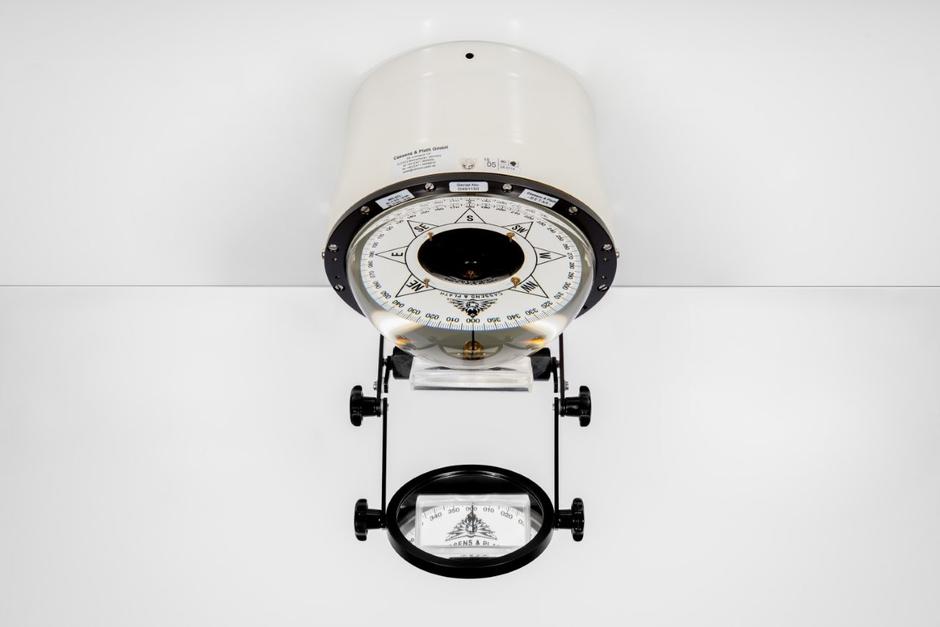
A traditional instrument with a modern specification
Cassens & Plath has highlighted its BETA/125 magnetic compass in the official METSTRADE 2026 product catalogue, describing a spherical instrument with Class A/A2 approval and several mounting configurations. The German instrument manufacturer recorded the product on 16 September 2026 and offers flush-mounted, bracket-mounted and overhead-mounted arrangements. At a time when luxury yacht helms are increasingly filled with electronic displays, the announcement is a reminder that the humble magnetic compass still has a distinct navigational role.
The company describes the BETA/125 as suitable for worldwide navigation and emphasises its approved construction. That does not mean every configuration automatically satisfies the exact requirements of a particular flag administration, vessel type or class notation. A captain or shipyard should verify the relevant certificates and the conditions of installation. The product's value is not nostalgia but a potentially dependable heading reference that operates on different principles from satellite navigation and electronic displays.
Why magnetic headings remain relevant
A modern yacht may display position, course over ground and digital heading information on a multifunction screen. Those are not identical measurements. Course over ground describes the direction of movement across the Earth's surface, while a magnetic compass responds to the local magnetic field and the direction in which the boat is pointing. Wind, current and sideways movement can create an appreciable difference, particularly during slow manoeuvres or when a yacht is under sail.
The magnetic compass is also independent of many components in an electronic navigation chain. It does not require a chart subscription or a functioning plotter to indicate heading. Its usefulness does not remove the need for correction, calibration or proper lighting, but it provides a different source of information that trained crew can consult when another system behaves unexpectedly.
The significance of Class A/A2 approval
Cassens & Plath identifies Class A/A2 approval as a distinguishing attribute of the BETA/125. Approval should be understood as a matter of documented performance and test standards, not as a blanket guarantee that any installation is correct. The manufacturer should provide the precise certificate, model designation and relevant test conditions. A yacht's naval architect or equipment surveyor must then determine whether the chosen compass and location meet the applicable requirements.
It is also important not to confuse product approval with a particular vessel's inspection status. The compass may be a compliant item while its installation suffers interference from nearby steel, wiring or magnetic equipment. Correct selection is the first stage of compliance. Mounting position, deviation assessment and usable visibility are separate responsibilities that remain with the boatbuilder and operator.
Three mounting options for different helms
A flush-mounted compass can suit a carefully designed console where the owner values an uncluttered profile. A bracket-mounted version may be easier to position for an operator who steers from different locations. An overhead-mounted arrangement could make sense where a bridge layout places instruments above the normal line of sight. Cassens & Plath includes these alternatives in its catalogue, allowing designers to consider the compass earlier in the helm design process rather than finding space for it at the end.
The best location is not necessarily the most visually symmetrical. The helmsman must be able to read the compass card at realistic viewing angles while maintaining a lookout. Reflections, glare, night lighting and the movement of the boat can affect readability. A cardboard mock-up or prototype bridge panel can identify problems long before final cabinetry and electronic equipment are installed.
Compensation and magnetic interference
A magnetic compass can be influenced by materials and equipment in its surroundings. Ferrous metals, powerful electrical circuits, motors and certain loudspeakers or magnetic catches may alter the local field. A stylish helm may bring many such items into a confined area. Consequently, fitting a certified compass does not necessarily produce a correct heading without professional assessment and adjustment.
A new yacht or a major electronics refit should include consideration of deviation and any required compass swinging. The final process depends on the applicable rules and the instrument's installation guidance. Crew should know the difference between magnetic and true headings and maintain the appropriate correction records. Without that basic discipline, a traditional backup instrument can offer more confidence than accuracy.
Comparing a compass with an electronic heading sensor
Gyro and solid-state electronic heading systems can feed radar overlays, chartplotters and autopilots with data that a traditional compass does not provide directly. In ordinary operation, the electronic network may be the principal source of a yacht's displayed heading information. A separate magnetic compass can still be valuable as an independent visual reference, especially when the crew needs to investigate disagreement between instruments.
That independence has limits. A magnetic compass is not immune to deviation, geographic variation or errors introduced by poor installation. An electronic sensor may also have its own calibration and alignment requirements. The prudent approach is to understand both systems and compare them when conditions permit, rather than declaring either technology intrinsically infallible.
Luxury yacht bridge design considerations
Luxury yachts often have distinctive dashboard shapes, broad glazing and carefully coordinated materials. A compass placed centrally may suit the traditional appearance of a yacht, while a more discreet installation may suit a minimalist interior. The BETA/125's mounting options could offer flexibility, but a designer must work around the need for visibility and the magnetic environment. A visually elegant position that is consistently obstructed or affected by nearby equipment is not a successful installation.
Exterior helm stations add another set of considerations. Direct sunlight, water exposure, vibration and repeated temperature changes should be included in the specification review. The manufacturer's documentation should determine appropriate protection and maintenance. Owners should avoid making assumptions about weather resistance based solely on a product's nautical appearance.
Lighting and the passage at night
The ability to read an instrument after dark is fundamental to navigation. A compass that looks clear under exhibition lighting may be less useful when an operator is preserving night vision and trying to distinguish a heading without looking away for long. The yard should consider how the compass is illuminated, whether the light is dimmable and how its brightness relates to other equipment on the bridge.
A bridge should be tested at night as well as during the day. Crew who operate a yacht in unfamiliar waters may appreciate a compass that provides an immediate heading check when the electronic screens are set to subdued night modes. However, any lighting system must be installed according to the supplier's requirements and without creating electrical or magnetic interference near the compass.
New-build and refit choices differ
In a new-build project, a designer can reserve a suitable magnetic environment and arrange associated equipment accordingly. That is considerably easier than trying to locate an interference-free position within a completed dashboard full of displays and wiring. A specification meeting should therefore include the compass among the primary navigation equipment, even if the vessel also has multiple sophisticated electronic sensors.
In a refit, replacing an older compass with a BETA/125 may involve different cut-out dimensions and a revised mounting arrangement. The surveyor should examine nearby metalwork and changes to electrical equipment since the previous compass was installed. A simple cosmetic replacement can become an instrumentation issue if the new location or surrounding environment alters the reading.
Care, inspections and the limits of longevity
Marine instruments are often expected to remain in service for many years. A compass should be checked for readability, secure mounting, signs of deterioration and any unusual behaviour compared with other heading references. Exactly how the BETA/125 is serviced should follow current Cassens & Plath instructions, not general assumptions about an older compass. Replacement components and support arrangements may also matter to an owner planning long-distance cruising.
Crews should record unexplained changes in heading agreement rather than simply adjusting other systems until the discrepancy disappears. An inspection may show that the compass is functioning correctly and another sensor needs attention, or it may reveal a new magnetic influence close to the installation. The investigation matters more than which device initially appears convincing.
Questions for builders and captains
Before specifying the product, request the applicable Class A/A2 documentation, mounting drawings, recommended viewing geometry, any installation-distance guidance and the correct lighting options. Confirm the actual available configurations and ensure the chosen version can be installed without conflict with adjacent electronics and structural features. Ask who will perform the final compass verification and how results will be recorded for the vessel.
The BETA/125 is not news because a magnetic compass has suddenly become a substitute for modern navigation. It is news because Cassens & Plath is presenting an approved, configurable instrument to a market where bridge integration and independent references still matter. For owners of luxury cruising yachts, the practical outcome is a reminder to treat the compass as part of the navigation architecture, not as a decorative fitting.
An enduring role in modern navigation
The September 2026 manufacturer's catalogue entry establishes the BETA/125's key attributes without claiming capabilities that the instrument does not possess: spherical magnetic construction, Class A/A2 approval and flush, bracket or overhead mounting. Those are useful specifications for a builder evaluating a dependable heading reference in a modern helm.
A successful installation will be documented, correctly positioned and understood by the crew. It will complement electronic navigation instead of competing with it. That combination of verified equipment, proper installation and competent seamanship is ultimately more important than the age of the technology inside the instrument housing.
Sources and image credits
Reporting based on Cassens & Plath first-party BETA/125 compass product entry, released 16 September 2026.
Lead photograph: Cassens & Plath BETA/125 Magnetic Compass Supports Certified Yacht Bridge Design original product image. Cassens & Plath official BETA/125 spherical magnetic compass product photograph, supplied through the METSTRADE product catalogue. Original official image source.