Safety equipment built around working conditions
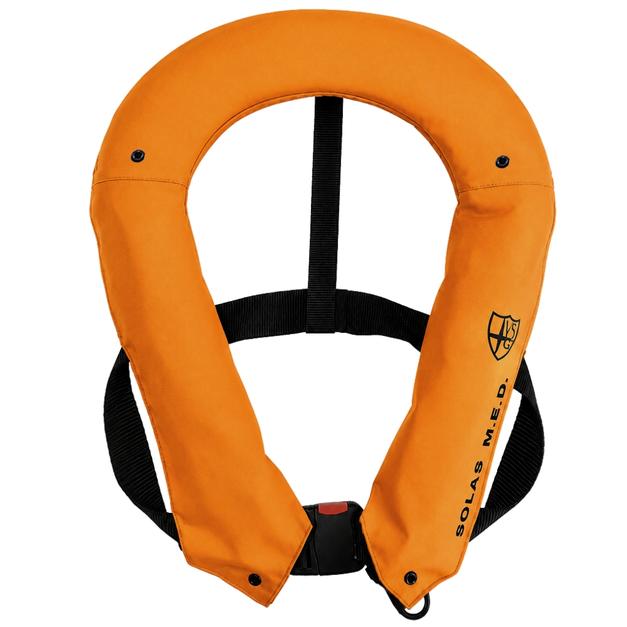
Italian safety-equipment manufacturer Veleria San Giorgio has presented the FIRST SOLAS 160 inflatable lifejacket in its official METSTRADE 2026 catalogue, with a product entry released on 31 August. The company describes a design intended for professional work at sea, offering real buoyancy greater than 160 newtons, a SOLAS/MED certification claim and an acetal-resin quick-release buckle with integrated adjustment. The product is designed to be worn over technical work clothing and to permit natural movement during onboard tasks. For luxury yacht crews, those details are directly relevant to the difference between equipment that is carried and equipment that is consistently worn.
Lifejackets are highly regulated safety devices, so the manufacturer's public description must be interpreted carefully. The stated buoyancy and certification are product claims that a purchaser should verify against the exact approval documentation, model, size range and supplied components. A compliant lifejacket does not make an unsafe operation acceptable, and the correct equipment for a particular yacht must be determined by its flag requirements, operating area and approved safety plan.
Why professional fit matters
A crew member may spend hours on deck managing lines, preparing a tender, inspecting fittings or working in wet weather. A bulky or uncomfortable lifejacket can interfere with those duties and may discourage routine use. Veleria San Giorgio emphasises an ergonomic construction intended to fit over protective clothing without unnecessarily restricting movement. That design aim is important because a lifejacket can only help a person who is actually wearing it and has fastened it correctly.
Fit must be checked on the individual wearer. Body shape, clothing thickness, jacket adjustment and movement patterns all matter. A product that is comfortable over a light shirt may behave differently when worn over insulated wet-weather gear. Yacht captains should consider a fitting and familiarisation exercise for the crew, including how to secure the jacket, adjust straps and move through ordinary work positions without creating loose parts that can snag.
More than 160 newtons of buoyancy
The manufacturer's entry refers to actual buoyancy exceeding 160 newtons. Buoyancy helps support a person in the water, but its practical effect depends on jacket design, deployment, the wearer's clothing and conditions. It is not appropriate to infer a rescue time, automatic self-righting performance under every circumstance or universal suitability from the numerical rating alone. Those characteristics should be taken from the applicable approval and user documentation.
Owners sometimes view a buoyancy figure as a simple ranking in which a higher number always means a better lifejacket. The correct choice is more nuanced. Bulk, body position, compatibility with other protective equipment, deployment design and task-specific hazards all affect suitability. For professional yacht crews, the aim is an approved combination that supports safe work and can be maintained reliably throughout the season.
SOLAS and MED require exact documentation
Veleria San Giorgio describes FIRST SOLAS 160 as a SOLAS/MED-certified inflatable lifejacket. SOLAS refers to international maritime safety requirements, while the Marine Equipment Directive relates to qualifying marine equipment in the European regulatory framework. An equipment purchaser should not assume that a short promotional sentence resolves every shipboard carriage obligation. The exact certification, mark, approval scope and date need to be checked.
The captain or designated safety officer should match the jacket to the vessel's flag, coding and operating programme. A private yacht, commercially operated yacht and charter vessel may face different equipment obligations. Approval of a product variant may also depend on accessories or configuration. The important step is to obtain the current manufacturer documents and place the relevant certificates and inspection instructions with the yacht's safety records.
The quick-release buckle and adjustment system
The launch description specifically identifies a quick-release buckle made from acetal resin, with integrated adjustment. A closure that is straightforward to operate can help crew members put on equipment promptly and achieve a repeatable fit. However, ease of opening should be balanced against secure retention during real work, and any adjustment must remain reliable when the jacket is subjected to movement or water exposure.
Hands-on training should address how the closure works with wet or gloved hands. Crew should know how to check that it is fully engaged, recognise signs of wear and adjust the garment without compromising intended function. A supplier-approved demonstration is preferable to assumptions based on another brand's fastening system. Equipment intended for emergencies should not require improvisation when conditions are deteriorating.
Wearing it over technical clothing
The manufacturer says the jacket can be worn over technical work clothing while supporting a natural range of movement. This may be useful to deck teams operating in colder conditions, where protective jackets and waterproof layers change the fit of conventional safety equipment. The interaction between clothing and personal flotation devices nevertheless requires care. Bulky garments can trap air, affect movement and alter how a person behaves in the water.
A yacht's safety procedures should specify the appropriate layering arrangement and any limitations stated by the manufacturer. Team members should practise fitting the jacket with the clothing they actually use for night watches or tender operations. A lifejacket stored in an accessible locker has limited value if its owner discovers during a real incident that it cannot be fastened correctly over the chosen outfit.
Deck work and the man-overboard risk
A luxury yacht's exterior deck presents hazards that are often less obvious when viewed from the guest lounge. Crew members may work close to open water, move around lines under tension or handle equipment during changing weather. A lifejacket is one part of the safety response; non-slip surfaces, handholds, safe working practices, communication and rescue equipment remain essential. No lifejacket can prevent the initial fall overboard or guarantee a successful recovery.
An effective man-overboard plan should incorporate how a person is located, approached and brought back aboard. Crew training must also consider the possible difficulty of recovering an unconscious or injured person. The jacket's design may support survival while awaiting rescue, but a credible operational plan is necessary to deliver timely assistance.
Maintenance is part of ownership
Inflatable lifejackets depend on components whose condition can change during storage and use. Inflation mechanisms, gas cylinders, bladder materials, seams and fastenings require care according to the exact product manual. Veleria San Giorgio's public catalogue entry does not specify a universal service interval for every applicable configuration. Purchasers must use current instructions and any requirements attached to certification or the vessel's operating rules.
Crews should maintain records of the equipment's identity, inspection date, service history and any replacement parts. Mixing incompatible cylinders or other components is not a safe shortcut. A jacket that appears sound externally could still fail an inspection, while a properly serviced item may remain a useful piece of safety equipment over multiple seasons. The key is to make maintenance a scheduled responsibility rather than an informal check before departure.
Choosing equipment for different crew tasks
Not every person on a yacht performs the same duties. A deckhand preparing fenders, an engineer attending machinery spaces and a crew member operating a fast tender face different conditions. The FIRST SOLAS 160 may be appropriate for some professional applications, but buyers should establish its actual approval and intended use before purchasing it for an entire crew. One product is not automatically the correct choice for every working role or guest activity.
Fleet managers may choose to standardise safety equipment where practicable because training and servicing become easier. Yet such standardisation should not take precedence over individual fit or regulatory suitability. A structured procurement review can identify which roles need additional equipment, where different jacket models are necessary and how consistent maintenance procedures will be applied.
A useful product demonstration
An exhibition stand offers an opportunity to examine the FIRST SOLAS 160's fit, materials and buckle mechanism. It does not replace an approved training course or an installation-specific safety assessment. Yacht owners and captains should ask Veleria San Giorgio to demonstrate the correct procedure for donning, adjusting and inspecting the jacket, then compare those instructions with the equipment already on the boat.
Other useful questions concern available sizes, servicing locations, spare parts, approved replacement components and the exact certificates supplied with each variant. A clear manufacturer support arrangement matters because yachts frequently travel between countries during their operating season. Replacement and reinspection should remain possible without leaving the vessel unexpectedly short of its required safety equipment.
What the 2026 catalogue announcement contributes
The August 2026 submission gives a clear picture of Veleria San Giorgio's positioning: a professional inflatable lifejacket with claimed SOLAS/MED approval, buoyancy exceeding 160N and features intended to improve adjustment and wearability. These are tangible attributes that deserve comparison with the actual needs of yacht crews.
The enduring safety value will depend on verified approval, correct fit, maintenance and training. Owners should not view the product as a substitute for discipline on deck or a complete rescue plan. Instead, it offers another specific choice in the professional equipment market at a time when high-end yachts increasingly expect safety systems to be both technically appropriate and practical for the people using them every day.
Sources and image credits
Reporting based on Veleria San Giorgio official FIRST SOLAS 160 inflatable lifejacket product listing released 31 August 2026.
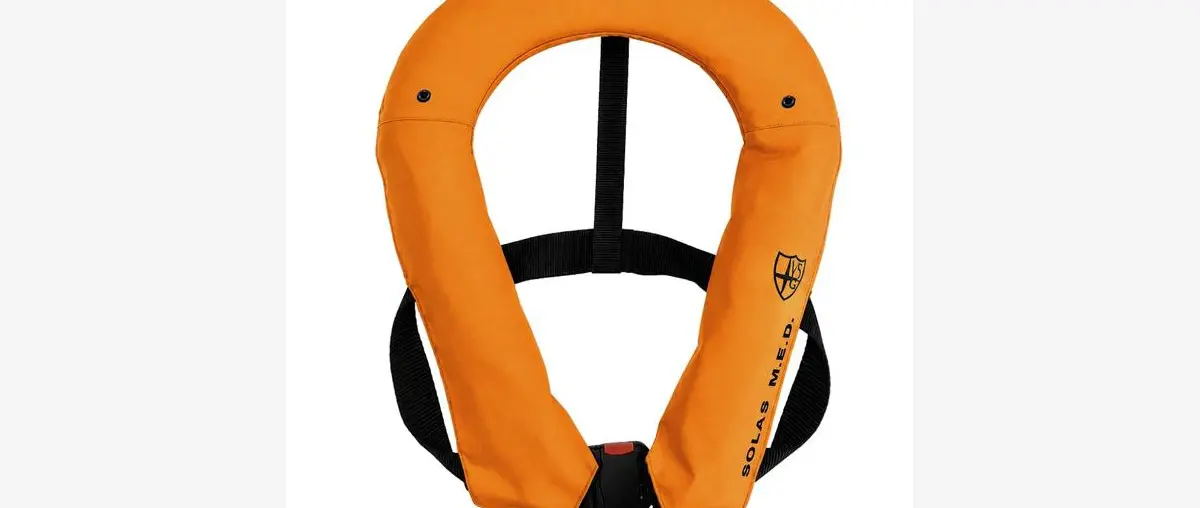
Lead photograph: Veleria San Giorgio FIRST SOLAS 160 Adds Professional Lifejacket Option official manufacturer photo. Veleria San Giorgio original manufacturer-submitted FIRST SOLAS 160 lifejacket photograph, METSTRADE 2026, unchanged on a neutral editorial matte. Original official image source.