A new underwater lighting proposition
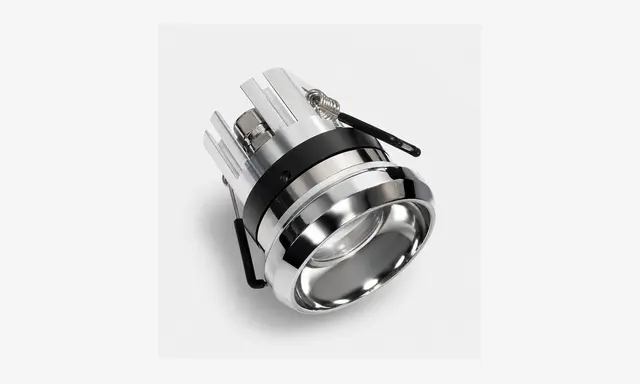
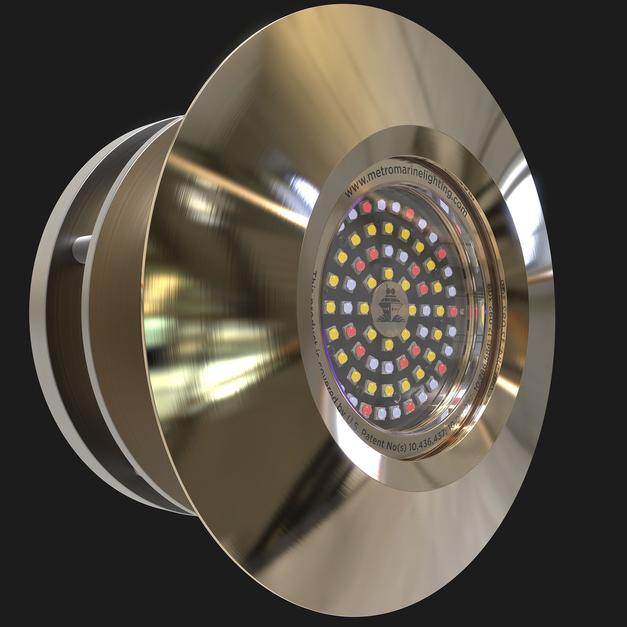
Metro Marine has introduced a Full-Spectrum Thru-Hull Light in its official METSTRADE 2026 product catalogue, released on 18 August. The American specialist describes an underwater fixture with white-light output exceeding 15,500 lumens, a total fixture-output figure exceeding 54,000 lumens, full-spectrum RGBW colour capability and patented approaches to ultraviolet anti-biofouling and condensation control. For luxury yacht owners, the product addresses a familiar challenge: producing attractive underwater illumination without treating the associated maintenance and thermal demands as an afterthought.
The numbers require careful handling. White-light lumens and total fixture lumens may reflect different measurement conditions and colour settings; they should not be treated as interchangeable or added together. The supplier's published figures are claims for the specified equipment, not an independently measured brightness result in every installation. Actual visual effect depends on water clarity, mounting position, vessel colour, angle and the operator's chosen lighting mode.
Why underwater illumination has become part of yacht design
Underwater lighting can transform the appearance of a yacht at anchor or alongside a marina. Colours and reflected light draw attention to the stern, swim platform and surrounding water, contributing to the atmosphere of an evening on board. The design appeal is obvious, but the technical challenge is more demanding than choosing a decorative colour. The fixture must operate in a submerged environment, resist corrosion and fouling and remain safe within the yacht's electrical system.
Owners of 12- to 24-metre yachts often have limited space for equipment close to the waterline. The selected light may therefore influence hull penetrations, access to fittings and maintenance arrangements. A premium installation is successful when the display is attractive without making ordinary servicing unnecessarily difficult or compromising the integrity of the hull.
Thru-hull mounting and structural responsibilities
The product is described as a thru-hull light, meaning its mounting interface deserves particular attention. Any opening through a yacht's hull requires engineering care, correct sealing, compatible materials and an approved installation procedure. The appearance of a small fixture should not distract from the potential consequences of a poorly executed penetration. A yacht builder or qualified refit yard should determine the correct location and method before drilling.
A new build can reserve the appropriate structure and access earlier in the design. Retrofitting a completed boat may involve working around machinery, tanks, insulation and interior finishes. The yard also needs to consider how the fitting is accessed if a seal or internal component needs attention. Where underwater equipment is involved, commissioning should include a documented inspection for leaks and installation faults.
Understanding full-spectrum RGBW output
RGBW refers to red, green, blue and white light channels, which can be combined to produce a range of visual effects. A dedicated white channel may allow a different quality of white illumination from a simple mixture of coloured light. Metro Marine describes both powerful white output and vibrant colour presentation, offering designers flexibility when planning the visual identity of a yacht's stern or side profile.
The aesthetic result will vary in the real environment. Clear tropical water, silty harbour water and a dark nighttime anchorage can make the same setting appear quite different. Designers should specify the intended effect and ask for relevant demonstrations rather than assume that a manufacturer's studio photograph will be reproduced exactly around every boat. Multiple fixtures also need coordinated control to avoid uneven patterns that diminish the overall appearance.
Antifouling is central to maintained performance
A submerged fixture is exposed to marine growth. Slime, algae and other organisms can obscure its lens and alter how light leaves the fixture, even when the electronics remain healthy. Metro Marine promotes a patented UVC anti-biofouling approach intended to reduce this problem. That is an important part of the product's claimed maintenance benefit, but the public catalogue entry does not establish the cleaning interval for every cruising region or supply independent comparative fouling data.
Ultraviolet technology also introduces safety considerations. Owners should not attempt to service, alter or look directly into any UVC-producing equipment without following approved manufacturer procedures. The operating conditions, containment and protective features must be understood from the current manual. Anti-biofouling technology should be treated as an engineered subsystem, not permission to neglect inspection of submerged hardware.
Condensation and internal reliability
The company also highlights anti-condensation technology. Condensation can interfere with optical clarity and may be a symptom of environmental conditions that stress electronic assemblies. A light operating beneath a hull experiences different temperatures from the warm air and equipment around its internal mounting. Managing the interface between those environments is part of creating a durable fixture.
The manufacturer makes a specific product claim, but the catalogue excerpt does not publish an exhaustive test regime for every possible temperature transition. Owners should ask for the environmental specification and warranty conditions, particularly if their yacht moves between cold-water passages and warm tropical destinations. A reliable underwater light is one that continues to operate after repeated exposure, not merely one that performs well at its first switching-on.
Thermal monitoring for a powerful fixture
High-output marine lighting converts electrical energy into light and heat. Managing that heat affects efficiency and the service life of electronic components. Metro Marine refers to intelligent thermal monitoring as part of the Full-Spectrum Thru-Hull Light design. That suggests the product is intended to respond to its internal operating condition, but the supplier's short announcement does not define all protective thresholds or the exact behaviour during overheating.
A yacht's electrician should obtain the electrical and thermal operating requirements before specifying cables and controls. The cooling environment may differ when a fixture is out of the water during maintenance, which makes the manufacturer's instructions particularly important. Crew should know whether the equipment can be operated ashore, for how long and under what conditions. Assumptions based on ordinary cabin lighting are inappropriate.
Control integration and the helm interface
The supplier describes modern electronics integration, which may be attractive to yachts already using centralised lighting control. Owners often want underwater lights to match deck and guest-area lighting during evening entertaining, or to switch into a practical preset when leaving a marina. A system that can be coordinated through existing interfaces may reduce separate control panels, but compatibility must be verified for the actual equipment specified.
The installation team should establish which control methods are supported, whether any additional interface is required and how the operator restores normal operation after a fault. A central interface should not obscure the ability to isolate the lighting circuit for maintenance. Designers must also avoid placing a non-essential entertainment feature on a control path whose failure could affect critical navigation systems.
Energy consumption and onboard electrical planning
A high-output fixture may draw more electrical power than a modest accent light. The actual requirement depends on the selected mode, dimming and the product's rated electrical input, which should be obtained from Metro Marine. The public output figures expressed in lumens do not supply a sufficient basis for calculating battery consumption. A yacht at anchor may already be operating refrigeration, entertainment equipment and extensive exterior lighting.
Owners who spend quiet nights on batteries rather than generators should incorporate lighting into the broader energy budget. A dramatic underwater effect may be enjoyable for a few hours, but the preferred operating pattern should leave suitable reserves for the yacht's essential systems. Dimming schedules and automated shutdown can be considered where supported and appropriately configured.
Installation choices across the yacht
Underwater lighting can be arranged at the transom, along the sides or in other suitable positions. Each layout creates different visual patterns and different exposure to propeller wash, docking contact and marine growth. The number of fixtures is not a simple measure of quality; location, angle and the coherence of the design matter. A carefully planned installation with fewer lights can sometimes create a better effect than a dense array of poorly matched units.
The builder should also examine underwater obstructions and the distance to sensitive fittings. A light mounted too close to certain appendages may create shadows or be difficult to reach. The selection process should include serviceability as well as the desired appearance when the yacht is stationary in clear water.
Safety, maintenance and environmental awareness
Owners should confirm applicable local rules regarding decorative lighting at anchor, particularly where its colour could be confused with required navigation lights or disturb other harbour users. Underwater illumination should not interfere with the crew's ability to distinguish the yacht's operational signals. It is also worth considering the potential impact of artificial light on sensitive wildlife and avoiding unnecessary use in environmentally delicate locations.
Maintenance should follow the manufacturer's approved cleaning methods. Abrasive tools or inappropriate chemicals may damage optical surfaces or protective treatments. Even with anti-fouling features, routine inspection of the mounting and lens condition remains sensible. The service plan should identify who is authorised to open the fixture and how to handle an electrical fault safely.
From exhibition claim to owner experience
Metro Marine's August 2026 listing establishes the key proposal: a high-output RGBW thru-hull light with substantial claimed white and total output, UVC anti-biofouling, condensation management and thermal monitoring. Those features address legitimate points of concern for owners specifying decorative underwater lighting.
The purchasing decision should now involve installation drawings, electrical specifications, permitted mounting locations, maintenance instructions and an appropriate demonstration. The best outcome is not simply an impressive photograph on the first evening. It is a durable, safely installed lighting system that retains its appearance over repeated seasons and can be serviced without unnecessary disruption to the yacht.
Sources and image credits
Reporting based on Metro Marine, LLC, first-party full-spectrum thru-hull lighting product submission dated 18 August 2026.
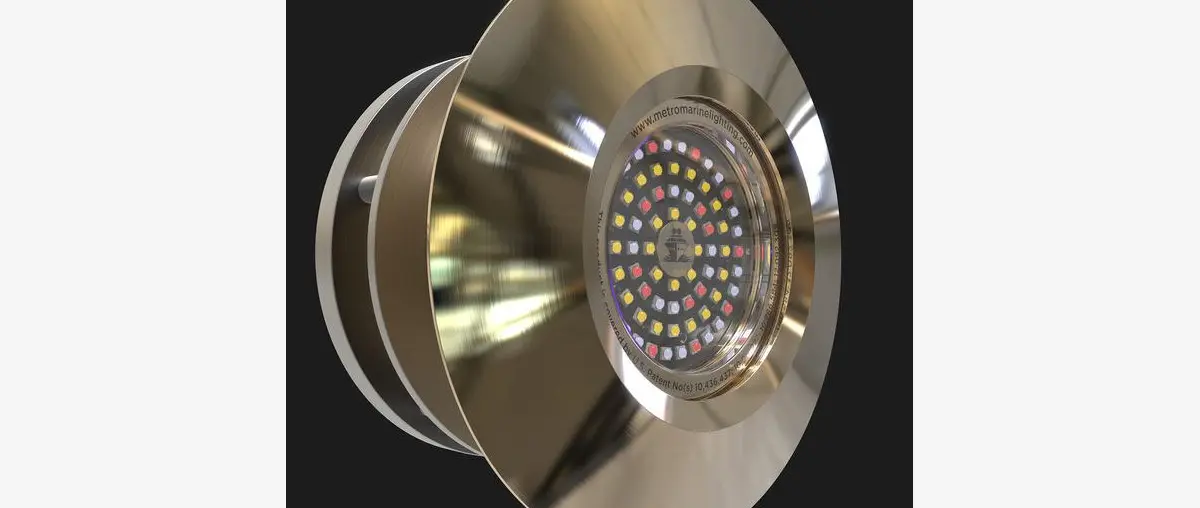
Lead photograph: Metro Marine Full-Spectrum Thru-Hull Light Combines RGBW and Anti-Fouling Technology official manufacturer photo. Metro Marine supplier-submitted Full-Spectrum Thru-Hull Light original product visual, presented on a plain editorial matte. Original official image source.