A complete unit rather than a collection of parts
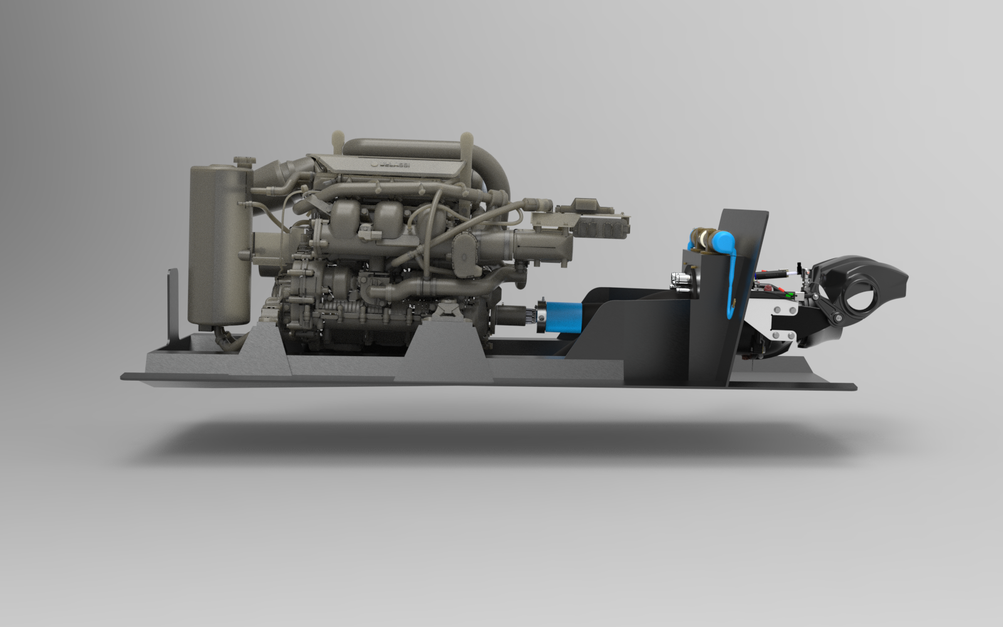
Belassi has introduced a Modular PowerPod intended to make high-performance waterjet propulsion easier for boatbuilders to incorporate into new craft. The Austrian engineering company's official METSTRADE 2026 product entry, dated 1 September, describes a pre-aligned and tested unit combining the engine, waterjet pump, intake, cooling, mounting structure, driveshaft, steering and controls. For builders of luxury yacht tenders and fast support boats, the appeal is straightforward: a supplier takes responsibility for coordinating several pieces of machinery that might otherwise have to be designed and assembled by separate specialists.
The idea is broader than simply selling an engine with a jet attached. A waterjet installation relies on the geometry of the hull, an appropriate water intake, power transmission, structural support and control arrangement. Errors at any interface can harm performance or reliability. Belassi is proposing to reduce that integration burden by delivering a coordinated module, but the company does not suggest that the builder can ignore vessel-specific design calculations.
The integration problem a yard recognises
Developing a new tender is an exercise in packaging. A designer may need to leave space for guest seating, a boarding step, a storage compartment and safety equipment while accommodating a propulsion system capable of moving the boat confidently in varied conditions. A conventional project can involve engine engineers, jet-pump suppliers, hull designers and control specialists whose products must work together. Revisions to one assembly can force expensive changes to another.
A packaged propulsion module can reduce the number of interfaces the yard is responsible for creating independently. Pre-aligned components may also reduce the risk of errors during initial installation. That is not the same as claiming the complete boat is already tested. Intake efficiency, cooling-water supply, hull strength and handling remain dependent on the final craft. The yard must still document how Belassi's unit interfaces with its own structure and electrical systems.
What is included in the PowerPod
The manufacturer specifically lists the engine, jet pump, intake, pump channel, driveshaft, steering controls and cooling among the elements integrated into the module. Each addresses a different engineering function. The pump and intake manage water flow; the engine and drive transmit power; cooling supports operation under load; and steering equipment translates helm commands into directional response. Aligning these elements before delivery could save time at the boatbuilding stage.
Purchasers should ask for a precise bill of materials and system boundary drawing. A packaged unit may still depend on external fuel storage, ventilation arrangements, power distribution, exhaust routing or other vessel-specific components. The official overview does not provide a universal installation kit for every hull design. A clear contractual definition of what is supplied helps prevent a dispute late in a project when a necessary interface is assumed to be another party's responsibility.
Why jet propulsion suits some tenders
Waterjet propulsion can be appealing for compact high-performance craft because it avoids the conventional exposed propeller arrangement and can allow different stern packaging. On tenders approaching a yacht or manoeuvring close to swimmers, owners may also consider the handling characteristics of a jet system alongside its other operating attributes. Nevertheless, no propulsion arrangement is inherently safe around people in the water, and exhaust, intake suction and moving equipment remain important hazards.
The selection must consider actual performance. Jet efficiency changes with speed and hull resistance, while the water intake can be affected by aeration and disturbed flow. Some craft operate mainly on short, fast transfers; others spend substantial time moving gently through crowded marinas. A suitable solution should be chosen from detailed duty-cycle and handling requirements, not solely from an attractive photograph of a compact module.
A potentially useful option for rotationally moulded hulls
Belassi specifically notes that its pre-engineered approach may help builders working with materials such as rotationally moulded polyethylene. Such hulls pose different structural and manufacturing challenges from composite boats. Mounting loads, stiffness, thermal behaviour and the way components are attached must be assessed carefully. A pre-aligned unit gives the designer a known assembly to work around, but it does not eliminate the need for appropriate reinforcement or support.
This could be relevant to rugged yacht support craft designed for frequent use and easy maintenance, where the hull material has been selected for practical reasons. The challenge is to turn a promising modular concept into an installation whose mountings remain stable over its service life. Belassi's drawings and loading guidance should therefore be reviewed alongside the boatbuilder's structural analysis.
Tender garage dimensions are unforgiving
A luxury yacht tender is often constrained by the opening and dimensions of its storage space as much as by the tender's own intended speed. A new propulsion package must fit below the deck or seat arrangement without preventing access to inspection points. The tender may have to sit within a garage or on a davit, bringing weight, centre of gravity and lifting arrangements into the specification. Moving machinery a small distance can change the balance of the entire craft.
A supplier module can help because its broad outline is understood early. Builders can reserve the necessary envelope and plan around predictable maintenance clearances. Yet a single dimensioned drawing is not enough; the technician needs space to reach filters, hoses and fasteners, and the installation must remain compatible with safe lifting and securing of the tender aboard its parent yacht.
A short supply chain is still a supply chain
A pre-assembled propulsion system can simplify a builder's purchasing process by reducing the number of component suppliers. However, the owner still needs clarity about service responsibility. If a fault appears in cooling, engine management or waterjet steering, who diagnoses the interaction and supplies the part? Does the whole unit need to be returned, or can local technicians work on individual assemblies? A modular design is most useful when the module's service philosophy is as clear as its installation philosophy.
Yacht managers should also investigate worldwide support. A tender may travel with its parent vessel to several countries in one season. A component that is straightforward to install at the factory may be difficult to repair in a remote anchorage if a proprietary control or drive part is unavailable. Documentation, spare-parts lead times and remote troubleshooting arrangements belong in the purchase agreement.
Controls and the skipper's experience
Belassi includes steering and controls within the PowerPod description. That allows the manufacturer to coordinate the way engine demand and jet thrust respond to helm inputs. Predictability matters because tender drivers often make repeated short trips, docking near valuable yacht finishes or narrow marina openings. Poorly calibrated control response can be awkward even when maximum power and speed appear impressive on paper.
Commissioning should include low-speed handling, acceleration and deceleration, reverse manoeuvres and emergency shutdown procedures. The system's electronic safeguards, if fitted, should be explained to operators without assuming they replace training. An owner or captain should not be left guessing how the tender behaves after an unexpected loss of power or an obstruction at the intake.
Testing before and after installation
The supplier says the package is pre-aligned and tested, which can be an advantage when reducing production risk. Factory testing may verify assembly operation under defined conditions and identify faults before delivery to the yard. However, the final vessel introduces its own intake flow, loading and cooling environment. Acceptance testing on the finished boat remains necessary, including temperature, vibration, steering response and the absence of leaks.
A good test report should separate supplier bench results from completed-craft sea trials. It should describe the conditions under which measurements were made and record any adjustments. That distinction matters when a builder is claiming a speed or range to a buyer. A performance figure from one installation is not automatically transferable to a different tender with a different hull form and payload.
Costs and the value of reduced complexity
A complete, engineered module may cost more upfront than an individual component bought without its supporting systems. The relevant economic comparison is broader: engineering time, alignment work, prototype iterations, rework, commissioning and possible warranty claims can all affect the final price of a new tender. Belassi's promise is partly about reducing uncertainty for boatbuilders, not only about raw power output.
The strongest value case may emerge on repeated production runs where a builder uses the same or related platform in several craft. A one-off custom tender could still benefit, but the savings depend on how much adapting and validating the package is required. Buyers should ask for a detailed proposal rather than assume that modular construction necessarily makes every vessel cheaper.
Implications for luxury yacht builders
The September 2026 PowerPod introduction reflects a practical trend toward packaged propulsion and equipment integration. Luxury yacht owners increasingly expect tenders that are easy to launch, comfortable to operate and dependable on a busy itinerary. A propulsion package that simplifies development could help a specialist yard spend more attention on guest ergonomics and the finish of the boat, provided that engineering standards are not relaxed.
The company has not supplied a universal sea-trial record or an installation price for all possible craft in its short public submission. Those facts require project-specific quotation and testing. What it has established is a coherent system concept that addresses a recognised problem at the yard. For builders considering a jet-powered tender or compact support craft, Belassi Modular PowerPod merits a technical review with the intended hull and operating programme in mind.
Sources and image credits
Reporting based on Belassi GmbH first-party Modular PowerPod product listing, released 1 September 2026.
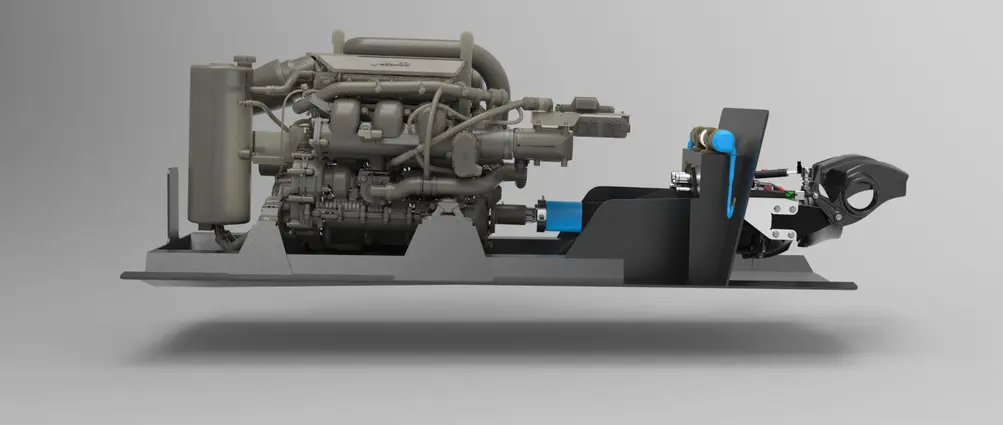
Lead photograph: Belassi Modular PowerPod Packages Jet Propulsion original product image. Belassi original Modular PowerPod product visual from its official METSTRADE 2026 manufacturer catalogue. Original official image source.