A dedicated display for the larger sailing yacht
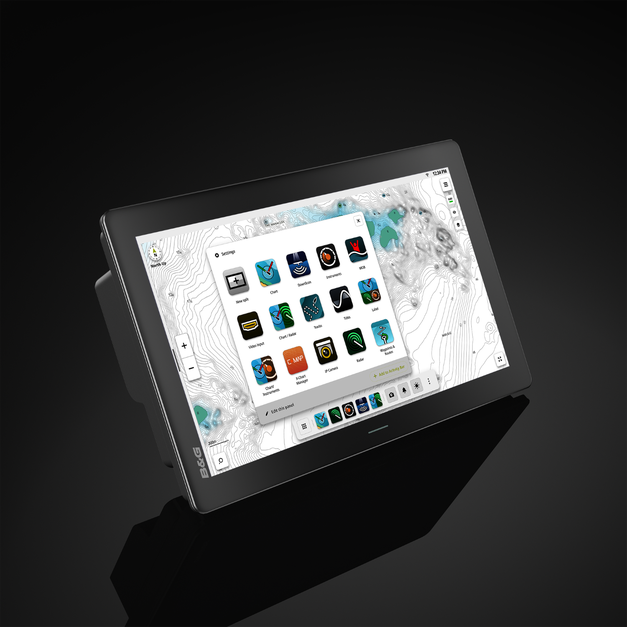
B&G's Zeus SRX chartplotter represents an attempt to bring modern display design and more tightly coordinated sailing information to high-end yacht helm stations. The manufacturer announced the new equipment on 11 February 2026, and Navico Group subsequently included it in the official METSTRADE 2026 exhibitor catalogue. It is offered with 16-inch and 22-inch screens and is intended for sailors who want navigation, instruments and compatible vessel controls presented within one coherent interface. For luxury yacht buyers this is a practical technology story as well as an aesthetic one.
The manufacturer calls attention to the glass-to-edge appearance, NEON operating system and deep integration with sailing equipment. None of those qualities removes the skipper's responsibility to maintain a lookout or independently verify charted information. A sophisticated multifunction display is a tool for understanding the yacht and its surroundings; it is not an autonomous navigator, and the ability to show a feature does not mean that every supporting sensor or external system comes included in the purchase price.
The two screen sizes and the helm design question
The Zeus SRX is available in 16-inch and 22-inch formats. That gives yacht designers two significant choices for the information-dense cockpits common on premium cruising and performance sailboats. Large displays can show more relevant details with less frequent switching, while also demanding thoughtful positioning to avoid obstructions and reflections. A flush-looking panel may suit a modern yacht interior, but its dimensions still have to be reconciled with helm height, viewing angles, nearby controls and physical support behind the fascia.
Owners planning a refit should avoid treating a screen-size upgrade as a straightforward exchange. Existing cut-outs, cable routes, clearance behind the display and the layout of other instruments may differ. A new screen can also expose shortcomings in an older electrical or data network. Ideally, a yacht electronics specialist should draw the complete station and test whether the display can be read comfortably from the usual steering and sail-trimming positions, including in direct sunlight.
NEON OS and a different interaction model
B&G says the unit runs its NEON operating system, using an activity bar and quick-access functions to organise commonly used tools. The company describes improved responsiveness through an eight-core processor, with performance comparisons made against its previous generation. On its product page it cites up to 35 per cent faster launch times and up to ten times faster automatic routing, a qualification that should be retained whenever the figures are reported. These are manufacturer comparisons, not measurements independently repeated on every boat.
The practical question is whether the interface helps a crew act promptly under pressure. During an approach, a skipper may need depth, radar, chart information and speed in quick succession. While racing, the emphasis can shift to wind data and tactical information. Having familiar information at predictable locations can matter more than raw processor speed. Training, customisation and a deliberate layout remain essential even with a fast new operating system.
Sailing modes are the differentiator
Zeus SRX is not simply a generic large navigation panel. B&G says it offers dedicated modes for cruising, racing and anchoring, and supports sailing-oriented views such as SailSteer. A crew that frequently changes between passage-making and close-quarters sailing can use the software to establish different information priorities. Racing sailors may value consolidated instrument readouts, while blue-water cruisers often care about waypoint progress, chart awareness and the state of the yacht's systems.
There are limits to what any mode can infer from the available sensors. Wind readings depend on calibration and correct installation, and calculated information inherits the limitations of those inputs. A race display can be visually polished yet still mislead if the log, heading or wind instruments are out of adjustment. Owners should regard the installation, calibration and ongoing maintenance of the complete network as part of the chartplotter purchase rather than optional extras.
Custom dashboards for different crews
B&G highlights a customisable instrument application that allows gauges and widgets to be arranged to the operator's preferences. That capability is particularly interesting on yachts operated by more than one skipper or sailed in different conditions. An owner may prefer a restrained navigation page with the essentials, while a professional captain could set up a detailed engineering or sailing-performance display. Clear profiles and sensible naming help reduce confusion when personnel change.
Too much customisation can itself be a safety problem. A carefully designed standard arrangement ensures that all trained operators know where to find depth, heading and alarms. The most useful deployment may be a limited set of pre-agreed layouts rather than an endlessly changing dashboard. A delivery programme should therefore include a handover record showing the installed pages, how to restore defaults and which controls are connected to actual onboard equipment.
C-MAP X-Gen charting and safety alerts
The new panel works with C-MAP X-Gen chart products, including DISCOVER X and REVEAL X. The manufacturer describes local chart detail, relief presentation and satellite-imagery options, alongside C-MAP Safety Alerts that identify hazards ahead. Its X-Chart Manager is intended to simplify chart updates and downloads. For owners who cruise between different regions, an accessible chart-management process may be as valuable as having a bright screen at the helm.
These features should be understood as electronic aids, not substitutes for official navigational checks, good passage planning or local knowledge. A chart subscription, a compatible data set and the right geographical coverage may all be necessary for particular functions. Owners should establish which charts are included, what requires an additional purchase and how corrections are applied before making a long passage. The interface can reduce friction, but it cannot correct every underlying limitation in source data.
Integration with the rest of the boat
B&G identifies compatibility with its own instruments, wind sensors, HALO radar, sailing processors, suitable autopilots and other networked equipment. The company also describes CZone digital switching integration, permitting compatible vessel systems to be brought into the display environment. That is attractive for a premium yacht seeking a cleaner helm, but integration only works when the actual devices and software versions support it.
A yacht may already have radar, autopilot, an independent engine-monitoring installation and a mixture of generations of network equipment. The proper question is not whether Zeus SRX supports connectivity in principle but whether the specified combination will work reliably. A written system diagram, network addressing plan and commissioning checklist should precede any refit. Critical controls must also be considered when a display is temporarily unavailable or requires a restart.
Cameras and situational awareness
The manufacturer lists support for up to four IP cameras. A suitably installed camera system can help a crew observe parts of a boat that are difficult to see directly from the steering position, such as an aft boarding area or machinery access point. On yachts with long deck lines, cameras may also assist with monitoring during docking. However, camera images do not replace visual lookout and can be affected by darkness, spray, glare, latency and temporary connection faults.
Video integration adds further requirements for data throughput, power and secure network configuration. Camera coverage should be planned so that a useful view remains available during the manoeuvres for which it is intended. Owners should also consider privacy and recording settings where crew or guests may be visible. It is better to commission a small number of purposeful camera views than to fill a helm with pictures that have limited operational value.
Display technology and outdoor readability
B&G describes a bright full-HD QLED touchscreen designed for clear viewing from different angles, including with polarised sunglasses. Yacht helm stations are difficult environments for displays: sun angle, moisture, vibration and movement can quickly reveal weaknesses. A visually attractive panel in a showroom must still remain legible at sea. Mounting angle, shading and protective covers matter just as much as the manufacturer's screen specification.
The glass-to-edge styling is part of the luxury appeal, particularly where designers want a large, clean control surface rather than rows of separate instruments. Yet appearance should not make the screen less accessible for maintenance or replacement. Service access, ventilation, seal condition and cable strain relief belong in the designer's review. The best luxury installation is both elegant and practical to keep in service.
Connectivity and future maintenance
Zeus SRX supports NMEA 2000, Gigabit Ethernet and Wi-Fi 5, giving installers several established paths for exchanging vessel data and updating supported features. Those connections should be designed with resilience in mind. Network devices need suitable power protection, correct termination where required and sensible management of gateways to older equipment. A failure that affects several displays at once can have a greater operational impact than the failure of one standalone instrument.
Owners should ask who maintains the software, how updates are delivered and what configuration records will be provided with the yacht. Remote features may depend on connectivity and associated services. Before a voyage, a crew should know how to retain essential navigation functions when shoreside internet access is unavailable. A complete electronics handover can be as important as the initial product selection.
Pricing and decisions for buyers
B&G announced prices starting at US$6,999. That is an entry point for the hardware range, not the installed cost of a complete new helm. Charts, interfaces, supporting instruments, cameras, switching equipment, fabrication and commissioning can materially alter a project budget. Equally, a new-build specification has different economics from a retrofit that involves modifying cabinetry and revising existing wiring.
The February announcement and METSTRADE catalogue establish Zeus SRX as a current product in B&G's premium sailing range. The compelling question for a buyer is how its 16-inch or 22-inch display, sailing-oriented software and integrations will improve day-to-day operation on a particular yacht. A well-planned installation can deliver a clearer helm and better information flow; an unplanned purchase of the largest screen may not.
Sources and image credits
Reporting based on Navico Group official supplier product entry for B&G Zeus SRX, released 11 February 2026.
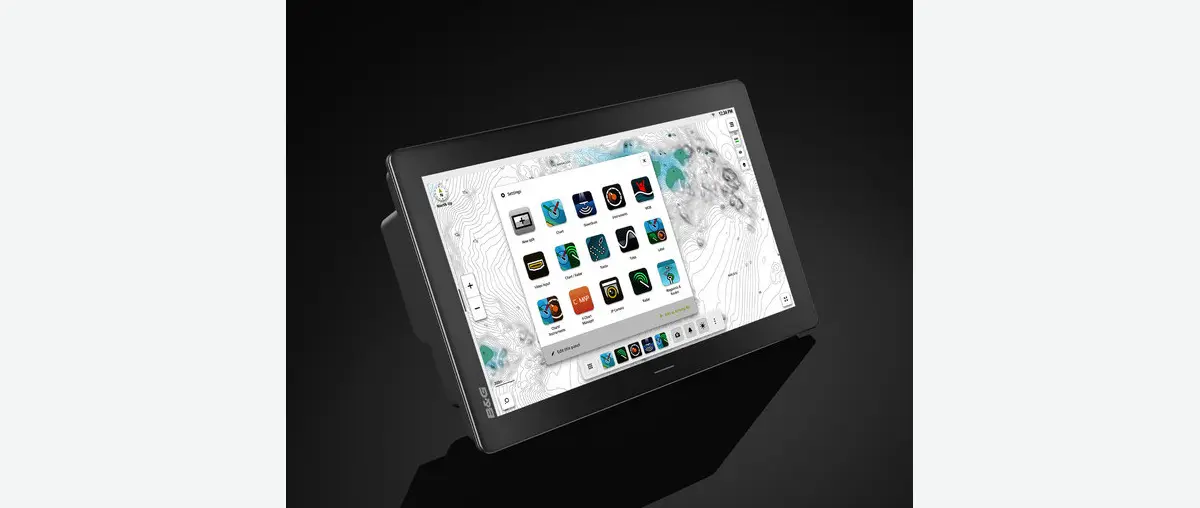
Lead rendering: B&G Zeus SRX chartplotter official Navico supplier product visual. B&G and Navico Group original product visual supplied to METSTRADE 2026; unchanged supplier graphic centered on a plain editorial matte. Original official image source.