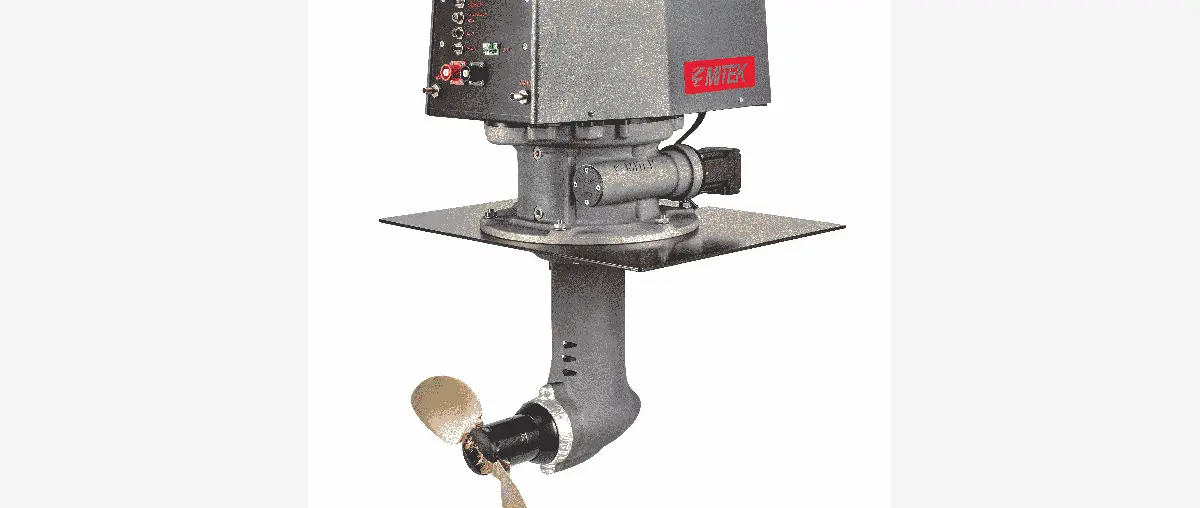
An electric saildrive that changes direction
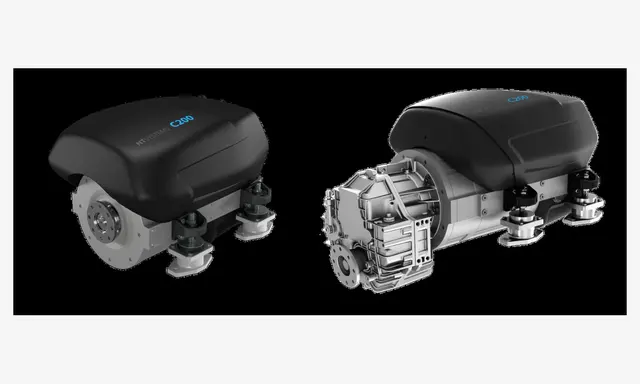
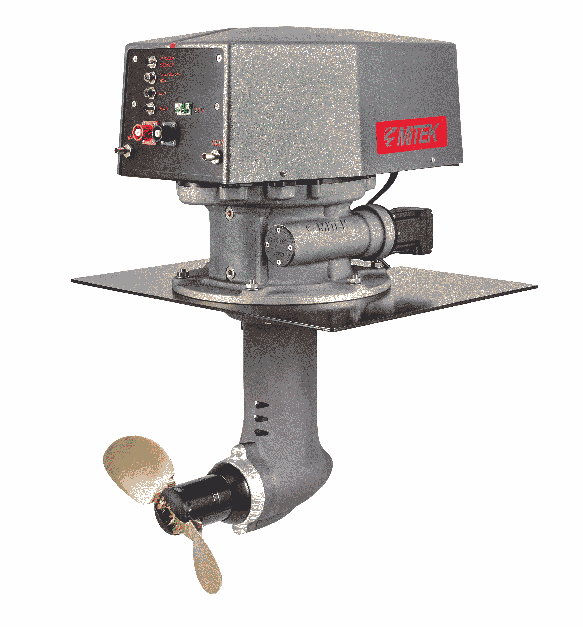
Mitek has presented an electric rotating saildrive designed to turn its underwater leg through 360 degrees, introducing a different approach to low-speed control on sailing boats. The Italian manufacturer lists the system in its METSTRADE 2026 product catalogue, with an announcement dated 1 January 2026. Mitek describes a product available from 10 to 40 horsepower, combining propulsion with steering control and offering four operating modes: sailing, regeneration, manoeuvring and thruster. The proposition is particularly interesting for yacht owners who want electric propulsion without treating harbour handling as a separate engineering problem.
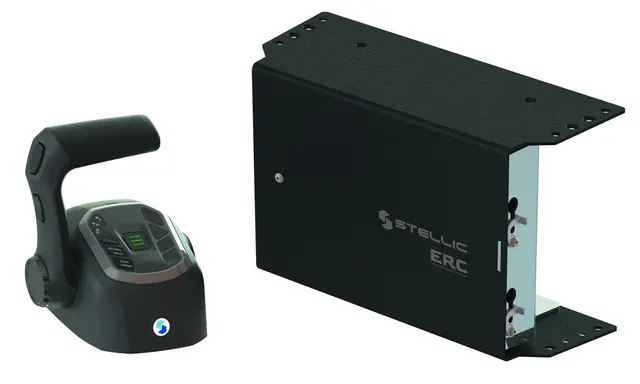
The supplier says the rotating leg can be controlled using the boat's normal mechanical steering wheel, without requiring an additional dual-steering installation. It also describes a 4.3-inch display that communicates operating information. These are significant claims for a compact propulsion package, but they do not make every existing boat a straightforward retrofit. The geometry of the hull, vessel's displacement, existing saildrive opening and steering arrangement still need a vessel-specific study.
Understanding the 360-degree idea
A conventional saildrive installation directs thrust along a fixed axis and steers the boat primarily by moving the rudder. That arrangement works well at passage speeds, but control can become less immediate when a yacht is moving slowly and there is limited flow past the rudder. An azimuthing leg that turns its thrust direction offers a different control variable. Instead of always pushing the hull forward or backward along the same line, the propulsion system can direct force to help rotate or translate the vessel during a manoeuvre.
It would be a mistake to assume that a full rotation automatically provides the performance of a dedicated bow thruster. The position of the drive relative to the hull's centre of lateral resistance, the number of propellers, nearby appendages and the control software all influence the result. A proper demonstration should show what happens in a crosswind, how quickly the system responds and how it behaves when the rudder and drive are asked to work together.
One product, four operating modes
Mitek identifies sailing, regeneration, manoeuvring and thruster as the system's operating modes. That separation suggests that the drive is intended to serve more than one moment in a yacht's routine. During powered travel, efficient propulsion and a predictable steering response are priorities. In a marina, precise thrust direction becomes more important. Under sail, the ability to manage regeneration opens a separate conversation about replenishing electrical energy from water flow, while respecting the drag and energy consequences.
The manufacturer's public description does not provide a universal regeneration rate, battery compatibility table or cruising range for every model. Those figures depend on the chosen motor, propeller, battery system and operating speed. Builders should therefore use the stated modes as a specification starting point and request detailed performance curves before turning a feature list into projected passage or charging figures.
Power range and the target boat
The 10- to 40-horsepower range indicates an emphasis on relatively compact sailing yachts and cruising catamarans rather than the main propulsion plant of large motor yachts. Horsepower alone is not enough to select a drive. The loaded displacement of the boat, expected sea state, propeller efficiency, acceptable motor temperature and desired duration at high output are all relevant. A lightly loaded sailing yacht might have very different requirements from a heavier vessel carrying additional batteries, water and cruising stores.
For the luxury yachting market, the product can be relevant even when the main boat is larger. A designer considering a performance sailing yacht or a compact support craft may find the integrated steering and thrust approach useful. The appropriate comparison should focus on duty cycle, manoeuvrability and installation requirements, not on a headline power figure divorced from a vessel's operating profile.
Steering-wheel integration raises design questions
Mitek says the system can be controlled through the standard mechanical steering wheel. For a skipper who already understands the boat's helm, that could reduce the number of separate manoeuvring controls. It also raises essential questions about feedback, steering travel, end stops and the relationship between rudder movement and leg orientation. The operator must be able to anticipate the vessel's response rather than discover an unexpected change in thrust direction in confined water.
A yard should request a diagram showing exactly how the rotating drive interfaces with the steering system and how its orientation is communicated at the helm. The system's response after a sensor fault or power interruption is particularly important. A straightforward user experience on the surface may rely on sophisticated engineering below deck, and that engineering needs a clear commissioning and maintenance record.
Regeneration is attractive but never free
The regeneration mode is likely to interest long-distance cruisers who value electrical independence. When the boat is moving through the water under sail, an appropriately designed electric drive may be used to recover some energy. That energy is not created without cost: a generating propeller introduces resistance, and the yacht's speed, sail trim and conditions determine whether the trade-off is worthwhile. The supplier's broad description should not be converted into an unverified promise of unlimited onboard electricity.
An owner can make an informed choice only with relevant output curves and a realistic energy budget. Autopilot consumption, refrigeration, navigation equipment, watermaking and hotel loads may all draw from the battery. The practical question is how much usable charge is obtained over a representative passage, what sailing performance is sacrificed and what alternative charging arrangements remain available when the weather or sea state does not support regeneration.
Retrofitting an existing saildrive yacht
The manufacturer says the foot is compatible with common saildrive configurations and with saildrive propellers, describing retrofit potential. Compatibility should be assessed carefully. Existing apertures, engine beds, hull laminates, waterproofing, gear ratios, cable runs and access space can vary considerably between boats. The electric propulsion equipment may also need a different supporting electrical architecture from the vessel's former diesel engine.
Replacing an existing drive could involve an upgraded battery bank, high-current cables, suitable isolation and fault protection, charger and shore-power arrangements, controls and monitoring. Those tasks can be more involved than bolting a new underwater leg into an existing opening. A refit survey should document what can be retained and what must be redesigned, with particular attention to emergency control and the effect of added battery weight on trim.
The 4.3-inch information display
Mitek highlights a 4.3-inch display for showing real-time operating feedback. A small dedicated display may be well suited to a sailing cockpit that already carries chartplotters, wind instruments and engine data. However, its usefulness depends on presenting the information the skipper needs immediately: selected mode, available power, system state and any warning that demands action. The location and legibility of the display may matter more than a long list of optional graphics.
A boatbuilder should establish what information is actually exposed, which alarms are audible and how the operator changes modes safely. Instructions must explain whether mode transitions are permitted under load and what indicators confirm successful engagement. These operational details should be decided before the yacht's final helm panel is built.
Quayside handling and crew confidence
Manoeuvring innovations are most valuable when they make repeated operations calmer and more predictable. In a tight berth a skipper may have limited room to recover from a delayed or exaggerated steering response. A rotating saildrive has the potential to improve control by directing thrust more purposefully, but performance should be demonstrated under a range of realistic conditions. A calm-water exhibition demonstration is useful, not conclusive proof for a windy marina approach.
Training is an essential part of adoption. Even experienced sailors can develop habits based on conventional rudder and propeller behaviour. A new system should be explained through a structured handover, with manoeuvres practised in clear water before the crew tries to use it in a narrow berth. The owner should understand any limitations imposed by water depth, propeller protection and system temperature.
Servicing the rotating underwater mechanism
A drive with a moving underwater leg has mechanical elements whose condition is vital to safe operation. Bearings, seals, corrosion protection and the components that rotate the drive need inspection according to the manufacturer's procedures. Propeller damage or rope entanglement could have different consequences from those experienced by a fixed installation. Access to replacement parts and technical support in the yacht's cruising area should be considered before ordering.
Mitek's public catalogue description does not establish a universal overhaul interval. Owners should request the full maintenance manual, warranty conditions and identification details for the supplied assembly. Recording the specification at commissioning will help a future yard distinguish the precise product variant from earlier or other electric saildrive systems.
Comparing integration with alternative propulsion plans
An owner considering this product may also be reviewing a conventional electric saildrive, a shaft-driven electric motor with separate thruster, or a diesel engine with familiar controls. These approaches are not directly interchangeable. They distribute weight differently, require different service access and offer distinct responses in confined water. The 360-degree Mitek concept could combine functions in a compact footprint, but the economic case depends on how often its directional control and regeneration modes will actually be used.
The battery installation is a major part of that comparison. Charging availability, hotel loads, electrical protection and the yacht's normal operating range may ultimately have greater influence on owner satisfaction than the steering arrangement alone. An integrated propulsion plan should identify the complete equipment chain and assign responsibility for every interface.
A considered addition to the 2026 electric yacht market
Mitek's METSTRADE 2026 listing documents a clear proposition: a 360-degree rotating electric saildrive, rated across a 10- to 40-horsepower family, managed through several operating modes and linked to a familiar steering control. The combination makes it a notable subject for designers of modern sailing yachts seeking both electric propulsion and controlled manoeuvring.
Its significance should be judged by independent installation experience, correct specification and reliable performance rather than an assumption that rotating thrust solves every handling challenge. The next step for owners and builders is to obtain the dimensional and electrical data, confirm compatibility with their hull and arrange a technically meaningful demonstration. That is how an interesting 2026 equipment announcement becomes a dependable component of a real luxury yacht.
Sources and image credits
Reporting based on Mitek S.r.l. official METSTRADE 2026 Rotating Saildrive product specification, published January 2026.
Lead photograph: Mitek Rotating Saildrive original manufacturer equipment image. Mitek first-party Rotating Saildrive product image from its METSTRADE 2026 catalogue, presented unchanged on a neutral LYG editorial matte. Original official image source.