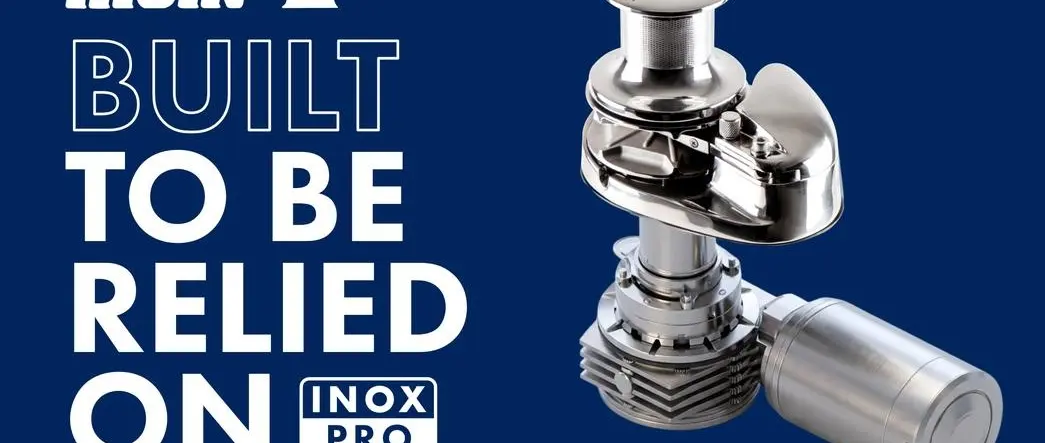
A change below the deck rather than a new windlass model
Muir Anchoring Systems has announced the INOX PRO option for its recreational range at Metstrade in Amsterdam. In its November 16 release, the Tasmanian manufacturer identifies corrosion affecting conventional drivetrain housings as the problem addressed by the new specification. The option introduces stainless steel motor and gearbox housings to complement the exposed stainless steel components already familiar to owners. The company says the upgrade can be ordered for its vertical and horizontal windlasses, drum winches and mooring capstans, with the overall recreational range intended for boats from approximately five to twenty-five metres. That span encompasses many motor and sailing yachts in Luxury Yacht Guide's sector. The announcement is not an assertion that any particular model fits every yacht within that range. Instead, it describes an additional material specification that can be considered after the appropriate basic windlass model has been selected. Muir is displaying a Storm VRC3500 equipped with the new drivetrain on stand 07.432 during the November exhibition.
The hidden environment matters as much as the polished deck
On a vertical windlass the drive components can occupy the space beneath the working deck, often in or beside the anchor locker. The visible top assembly may retain its appearance for many years even when the lower assembly has encountered a much less favourable environment. Saltwater carried aboard on the chain, damp equipment and restricted opportunities for drying can combine to expose the drive components to continuing moisture. Muir reports that its dealers and owners identified deterioration of conventional alloy housings as a recurring reason for replacing equipment. It particularly emphasises deterioration of protective coatings and the presence of dissimilar metals at connections involving stainless steel parts. The new option targets those interfaces by changing the material of the housing. It does not eliminate the need to examine the entire locker environment. Water drainage, ventilation, electrical protection and the condition of adjacent fittings still deserve attention. A failure originating somewhere outside the drivetrain would not necessarily be prevented by changing its housing material.
Retaining a familiar mechanical arrangement
Muir distinguishes the material change from a redesign of the windlass itself. The company states that the gear train, brake, clutch and sealing arrangements retain the existing specification, along with the installation footprint, wiring and control arrangements. For a yard supporting numerous familiar models, that continuity can be significant. Changing the dimensions or the relationship between the motor and gearbox could otherwise require an examination of the supporting structure or alterations to the available installation space. An upgrade offered against the existing model provides a more straightforward starting point for discussing the work. Nevertheless, the statement should not be interpreted as guaranteeing an uncomplicated conversion on an individual yacht. Previous modifications, cable condition, access to fastenings and differences between model generations can affect the practical work. A yard should obtain the manufacturer's applicable drawing and identify the model and serial number before determining whether the new assembly can be fitted without additional changes. The retained brake and clutch are also reasons to continue following the existing operating instructions where applicable.
Several equipment formats covered by the introduction
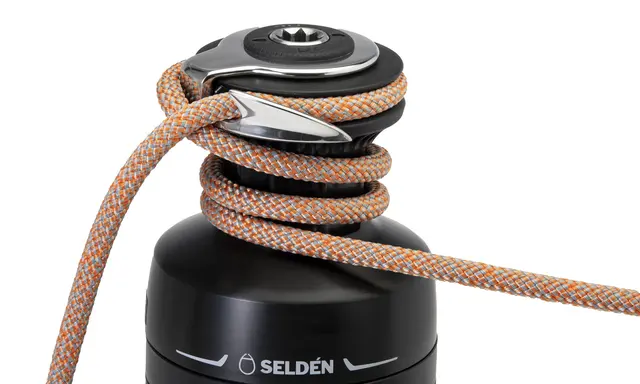
The manufacturer's announcement identifies the Storm VR and VRC vertical models, Compact HR horizontal windlasses, DW and DFF drum winches and VC Sailor capstans among the recreational formats for which the option is intended. These are not interchangeable equipment categories. A vertical windlass and a horizontal installation make different demands on deck and below-deck space. A drum winch stores its rode on the drum itself, whereas other windlasses can feed chain or rope to a separate storage space. A mooring capstan may be selected for a different handling task altogether. The announcement therefore concerns a common approach to housing construction rather than a single anchoring arrangement. An owner considering a refit should identify what the existing equipment actually does and the circumstances in which it is used. Determine the applicable load requirements and chain or rope specification with the manufacturer and the installer rather than select the new option purely according to the appearance of the metal.
A potential retrofit rather than compulsory replacement
The company describes the INOX PRO motor-and-gearbox assembly as an available exchange option for an existing suitable Muir unit. That is relevant where inspection reveals deterioration below deck but the exposed top assembly remains serviceable. A replacement of the entire unit might otherwise involve discarding components that have retained their function and finish. The proposed alternative potentially allows a yard to concentrate work on the affected subsystem. It also creates an important distinction between the presence of corrosion and the diagnosis of the cause of an actual malfunction. A qualified inspection may identify problems with the supply, cable connections, control components, mechanical transmission or other equipment. Installing a new housing does not establish that those other elements have been restored to the required condition. Owners should ask the yard to document what has failed and why before authorising the exchange. Inspection and commissioning after the work remain necessary whether the new drive is fitted during construction or as part of a refit.
A different warranty for different components
Muir identifies a five-year gearbox warranty and a three-year motor warranty for the INOX PRO configuration, alongside its existing five-year top works warranty. Those published time periods concern separate components and should not be combined into a blanket statement that every aspect of the complete installation carries identical protection. The actual conditions, exclusions and date from which the protection starts need to be established with the supplier. A yacht sold through a dealer in one country and subsequently maintained in another may also require clarity about the process through which a warranty claim is handled. The manufacturer reports that the option was developed and subjected to testing, including salt-spray exposure, at its Kingston manufacturing facility under its quality management system. This is evidence of the company's stated development programme, not an independently published lifetime prediction. The practical durability of a specific installation will continue to depend on the conditions it encounters and the quality of its maintenance.
Selecting the windlass against the vessel's actual requirements
Muir's own product information directs owners and installers to consider yacht size, displacement, ground tackle and the dimensions of the chain when specifying anchoring equipment. Two yachts of similar length may carry substantially different anchors and rode, have different deck arrangements or present different windage. The selection of a windlass requires more than comparing the electrical motor power of catalogue entries. The existing electrical supply and the ability to accommodate the equipment and safely undertake servicing should also be established. Where a yacht is being designed or a structural alteration undertaken, the relevant professionals need to assess the installation and the loads carried by the supporting components. An upgraded drivetrain is not authority to increase the loads applied to existing deck fittings. Nor is a windlass generally a substitute for the separate arrangements intended to secure the vessel while it lies at anchor. The new housing specification can be evaluated within those established design and operational requirements rather than treated as a replacement for them.
Ordering opens with staged delivery
The November announcement states that orders open at Metstrade. Muir expects shipping to begin this month for sizes up to and including the VRC1250, HR1600 and DW10, with larger models scheduled from February 2027. That distinction will matter to owners and yards planning a winter refit. A demonstration of the VRC3500 in Amsterdam does not establish that every configuration is immediately available to install. The actual lead time for an identified model should be obtained through the manufacturer or its authorised distribution network. The company has not published a universal installed price or a single conversion cost for existing yachts. Shipping dates relate to the equipment rather than the completion of yard work. A sensible assessment of a proposed refit therefore considers the availability of the correct assembly alongside access to the yacht, inspection requirements and other scheduled work. Technical drawings and compatibility data are identified in the release as available from Muir's technical support team.
An engineering choice with implications for lifetime ownership
The significance of the introduction is that Muir has chosen to offer a higher material specification for parts that are largely out of sight on many yacht installations. The company connects that development with the longer service life of recreational equipment and the possibility of retaining useful top works when a drive assembly needs replacement. The photograph attached to the manufacturer's announcement illustrates the upgraded windlass, rather than an independently inspected installation aboard a particular vessel. Owners comparing alternatives should obtain the applicable specification, clarify warranty coverage and establish the reason for any deterioration found in the existing equipment. The financial consequences of selecting the stainless option will depend on its purchase price, the actual operating environment and the work eventually required over the equipment's life. No independent comparison of those total costs has been supplied. The confirmed industry news is the new ordering option, the retained mechanical architecture and the published sequence of availability for the relevant sizes.
Sources and photograph
Source documentation: https://www.metstrade.com/exhibitors/muir-anchoring-systems/news/muir-raises-standards-for-recreational-boaters-with-global-launch-of-inox-pro-stainless-steel-drivetrain-option, https://muir.com.au/inox-pro/. Photograph: Muir windlass with INOX PRO stainless steel drivetrain — Muir Anchoring Systems, manufacturer-supplied photograph attached to its official Metstrade exhibitor press release of 16 November 2026; editorial coverage of that announcement.. Manufacturer-supplied image attached to the specific exhibitor press release made available through the official virtual press room for coverage of the announcement; copyright remains with the rights holder.