Recognition for marine thermal integration
French hydrogen technology company Hopium and specialist heat exchanger manufacturer MOTA Cooling Systems have received the Electronic and Electrical Systems category award at the 2026 DAME Design Awards in Amsterdam. The result was announced at the opening of METSTRADE on 17 November, and Hopium confirmed the recognition in a company statement distributed on the morning of 18 November. The two companies are exhibiting their H2 Marine One architecture together at stand 05.130.
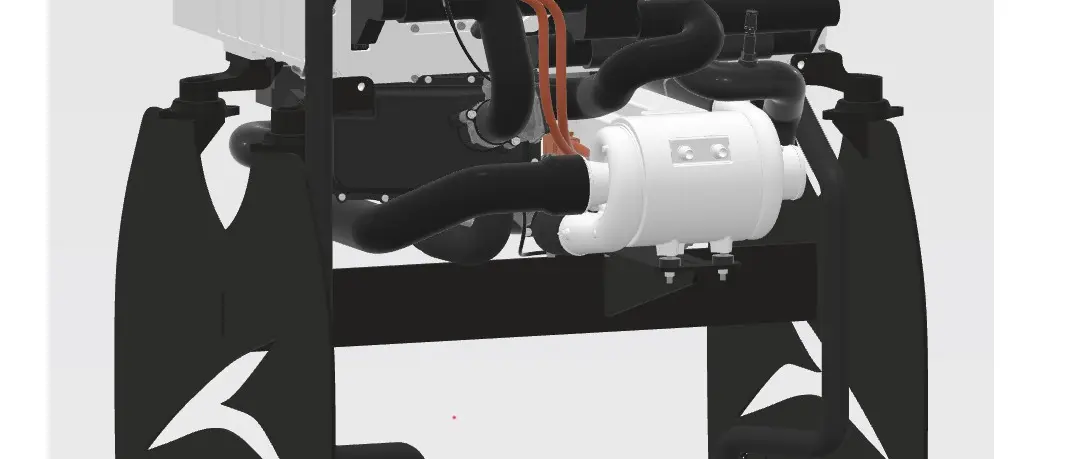
The subject of the award is an integrated marine fuel-cell architecture designed around a smaller number of thermal-management components and connections. MOTA's exhibitor catalogue describes a system incorporating seawater cooling, with a single heat exchanger forming part of the proposed arrangement. The companies identify both propulsion and auxiliary electrical supply as potential applications.
The significance for luxury yacht design is not that a new hydrogen-powered yacht has entered service. No such delivery is reported in the announcement. Rather, the recognition concerns an engineering approach that seeks to address some of the practical difficulties involved in accommodating fuel-cell equipment aboard a vessel.
The thermal side of onboard electricity
A fuel cell is an electrochemical device that converts the energy of a fuel into electrical energy. The use of hydrogen in a fuel cell can produce electricity without burning the fuel in a conventional engine. Nevertheless, a marine fuel-cell system produces heat as well as useful electrical output, and the appropriate removal of heat remains an important part of its overall design.
Thermal management is relevant to both conventional and alternative marine power systems. Equipment may have a range of operating conditions within which its performance and durability are expected to remain acceptable. A designer must take account of the conditions in which the vessel is intended to operate, including the temperature of the surrounding water and the available machinery space.
The H2 Marine One proposal places that aspect of engineering at the centre of the equipment architecture. In its product description, MOTA identifies a reduction in the number of heat exchangers as one of the objectives of its design. Hopium's award statement similarly describes an approach intended to reduce the number of system components and the space needed to accommodate them.
Those are objectives described by the suppliers. Their public statements do not provide comparative measurements of complete yacht installations or establish the amount of equipment space that can be recovered aboard a particular vessel.
Why fewer interfaces can be significant
A yacht machinery installation involves more than the individual devices visible in a product brochure. Connections between components need space, maintenance access and documentation, and they can increase the complexity of commissioning. The arrangement of an installation can also affect its suitability for inspection and the work needed when a component requires servicing.
A modular design that integrates several functions may offer the yacht builder different options for organising those elements. Reducing the number of interfaces could potentially simplify part of the installation, although the benefit would have to be measured against the requirements of the complete power system. Some interfaces that disappear from one part of an architecture may still be required elsewhere.
The H2 Marine One announcement is therefore best considered at the level of system architecture. A reduction in the complexity of a cooling arrangement does not in itself remove the need for the other equipment associated with a fuel-cell power system. The marine integration task remains considerably broader than the award-winning assembly.
For a builder evaluating a future yacht programme, the necessary information would include the dimensions and environmental limits of the proposed equipment, its maintenance requirements and the other systems that must be incorporated alongside it. The product catalogue is an introduction to those discussions, rather than a complete engineering specification.
Propulsion and hotel loads are different applications
The two companies describe potential uses in both vessel propulsion and auxiliary power generation. Within a yacht, auxiliary electricity can support domestic services, electronics and other equipment that must remain available when the vessel is at anchor or in harbour. Propulsion, by contrast, is associated with a vessel's movement and can involve very different power demands over the course of a voyage.
The distinction is important when alternative energy systems are being evaluated. A yacht that spends much of its time at anchor might present a different operating profile from a high-speed motor yacht on extended passages. The duration, variability and peak level of the required power influence the choice of equipment, storage and supporting systems.
Hopium describes its wider commercial offering as including modular fuel-cell systems in the 100 to 400 kilowatt range. That statement should not be interpreted as a confirmed output rating for the specific H2 Marine One demonstrator. The award announcement does not specify the performance of a particular installed version or the endurance of any yacht equipped with it.
For the 12 to 23.99 metre market, the space and weight available for machinery are especially important. The merits of a particular onboard power architecture would have to be assessed against the yacht's displacement, accommodation layout, expected cruising programme and other essential equipment.
Development and testing remain distinct from deployment
Hopium's 18 November statement refers to work undertaken with MOTA, including test-bench integration and a 300-hour test campaign. These details indicate the type of development activity undertaken by the partners. They should not be understood as a declaration that the system has completed an equivalent period of service at sea.
Marine equipment faces operating conditions that are not necessarily reproduced in every laboratory test. The complete installation may be affected by vessel motion, environmental conditions and the demands placed on it by the other onboard systems. Designers also have to consider the applicable regulatory and insurance requirements before committing to a particular arrangement.
The public statement does not identify a classification approval for the complete architecture, a contractual commitment to supply a named luxury yacht or the date on which a commercial installation will enter service. It would be premature to infer those outcomes from the award. DAME recognises design; it does not replace the approval and acceptance processes relevant to a vessel's construction and operation.
These distinctions are useful to owners following developments in alternative propulsion. A prototype, a tested component, a commercially supplied product and a commissioned marine installation represent different stages of development. They can all provide valuable information, but they are not interchangeable milestones.
The broader implications for a luxury yacht project
The potential use of hydrogen aboard a yacht must be evaluated as part of a complete energy strategy. The availability and provenance of the fuel, the space required for its storage, the operating profile and the service infrastructure are among the considerations which can determine whether a concept is practical. The reduction of emissions cannot be assessed solely from the absence of conventional fuel combustion at the fuel cell, because the production and transport of the hydrogen also have environmental implications.
Any proposal involving hydrogen storage and marine electrical machinery requires specialist engineering and appropriate safety assessment. The choice of a particular thermal-management architecture does not resolve those requirements. An owner or builder should obtain independent professional advice about safe integration and the applicable rules rather than using an exhibition description as an installation guide.
At METSTRADE, the companies are able to explain the division of expertise behind their collaborative development. The recognised design brings a cooling-system specialist together with a developer of hydrogen fuel-cell technologies. It illustrates the importance of partnerships between equipment disciplines when alternative power technologies are being considered for marine use.
For the luxury yacht sector, the most meaningful outcome of the H2 Marine One project will be evidence of how an integrated system performs and can be supported in a complete vessel. The DAME category award and the partners' reported development work provide grounds for following that progress. They do not yet establish the commercial feasibility, operating cost or suitability of the system for any particular yacht. The November recognition is a notable milestone in engineering development, with practical deployment questions still to be answered.
Sources and lead image
Source documentation: https://www.boursorama.com/bourse/actualites/hopium-hopium-et-mota-cooling-systems-remportent-le-dame-design-award-2026-pour-leur-architecture-hydrogene-marine-8319deabce4b35699a9b8ff9c7e659fe, https://www.metstrade.com/exhibitors/mota-cooling-system/products/h2-marine-one-by-mota-hopium. Lead image: Official H2 Marine One product catalogue image — MOTA Cooling System and Hopium, issuer-supplied METSTRADE product image illustrating the system architecture; not an installed yacht or an award ceremony photograph.. Issuer-supplied media asset published with the relevant official exhibitor release or product catalogue made available through the official virtual press room for coverage of the announcement; copyright remains with the rights holder.