Two commercial approaches to connected yacht services
At this week's METSTRADE exhibition in Amsterdam, Swiss software provider c.technology is bringing together two approaches to connected vessel management. The company's 9 November 2026 exhibitor announcement describes demonstrations of its manufacturer platform and CORIDE application suite at stand 05.575. The first is aimed principally at original equipment manufacturers seeking a branded connected-vehicle service. The second addresses businesses such as dealers, marinas, yards and fleet operators that want to manage vessels and their associated service work.
The company's proposition extends beyond showing a boat's location on a smartphone. Its documentation identifies functions for receiving vessel information, communicating with owners, managing service relationships and presenting equipment data to people with suitable access. For yacht builders in the 12 to 23.99 metre segment, these developments illustrate the growing role of software in the relationship between the sale of a vessel and its subsequent operation.
Neither product is described in the announcement as a universal marine diagnostic instrument. The functions available to a yacht will depend on how it is connected, what data its systems provide, and the arrangements made by the participating businesses. The exhibition is therefore an opportunity to assess the architecture rather than proof of a particular installation's capability.
The manufacturer's role after delivery
A luxury yacht can remain in service for decades, often with changes of ownership, equipment and cruising area. The business that originally built the yacht may have an ongoing interest in supporting its owners through documentation, dealer relationships, parts and technical advice. As more vessel equipment becomes capable of supplying operational information, there are additional ways in which the manufacturer might support that relationship.
The company's manufacturer platform is described as a service on which an original equipment manufacturer can operate an application under its own brand, together with an environment for its dealer and partner network and a view of the vehicles it has produced. These applications use a shared vessel record rather than necessarily requiring the same information to be entered into each system separately.
This approach does not require a yacht builder to develop every element of a connected-service environment itself. It can also introduce dependencies on a supplier's data architecture, its software releases and its commercial terms. A builder evaluating the proposal should establish which capabilities are supplied as standard, which need to be engineered for its own equipment and how responsibilities are divided when the yacht is in service.
The announcement refers to a target of bringing a branded platform into operation within three months. That is a supplier's commercial proposition, not a verified schedule for the completion of the hardware integration, commissioning and customer adoption associated with any particular yacht programme.
The dealer and yard perspective
CORIDE is described separately as an application suite for businesses that manage and service connected vehicles. The marine products address fleet management and marina or yard operations. The supplier's product material refers to vessel status, berth allocation, service work, owner requests and an owner application. This combination is intended to make information about the vessel available within the context of an operational workflow.
A yacht arriving for a scheduled refit may bring several technical issues to the yard. A crew member may have observed an intermittent indication on a display or received a warning that is difficult to reproduce when the vessel is stationary. If the relevant information has been recorded and can be made available to an authorised technician, it may provide an additional starting point for the investigation.
That benefit depends on the actual equipment and data involved. A connected system cannot necessarily detect a fault in a component that supplies no suitable information to it. Even where a diagnostic message is available, the cause of the underlying issue may require inspection and testing. The information displayed to a service business must therefore be understood in the context of the yacht's equipment and operating conditions.
The manufacturer describes the platform as supporting faults and maintenance planning based on recorded usage. A yard should consider whether the data available from its customers' yachts are sufficiently detailed and reliable for the service functions it intends to implement.
Data access and the owner's interest
A connected yacht may produce information that is commercially useful but also private. Location, movement patterns, operating times and service history can reveal aspects of the owner's activities. The interests of the builder, dealer, yard and end user may not be identical, even if all parties benefit from effective service support.
The supplier's platform materials refer to permissions governing access to data. A yacht owner should be able to understand which parties can view particular information and what happens to that access when a service relationship ends. A business proposing a connected service should define these arrangements before commissioning the equipment, rather than expecting users to work out the implications afterwards.
Changes of ownership deserve particular consideration in the luxury yacht market. A vessel's technical maintenance history may be relevant to a purchaser, but that does not mean that every item of personal information associated with the previous owner should be transferred at the same time. The design of the record, the process by which permissions are changed and the treatment of historical information are matters for the participating organisations to establish.
The supplier's wider company documentation identifies security and operating arrangements as part of its platform. This article does not independently audit those arrangements or determine compliance with the law in any particular jurisdiction. Owners and operators should evaluate the contractual and technical documentation applicable to their own installation.
Connectivity is not the same as operational control
Many yacht owners travel through areas where communications coverage changes over the course of a voyage. The behaviour of a connected application when shore connectivity is interrupted is therefore an important practical question. A software service that is valuable for maintenance scheduling may not be appropriate as the sole means of accessing information required for immediate operation of the vessel.
There is also a distinction between monitoring and controlling equipment. A vessel record can contain the status of an engine without necessarily providing the ability to change how that engine is operated. Any remote-control function would need to be assessed against the design and safety requirements of the specific equipment. The manufacturer should establish which actions are possible, where they can be initiated and how they are authorised.
The November announcement concerns the company's connected-service architecture and its demonstrations for marine-industry customers. It does not establish that all its capabilities operate on every yacht or that the system can replace existing navigation, control or safety arrangements. A prospective buyer should request a clear account of the functions that would be available with the proposed installation, including those that depend on a live external connection.
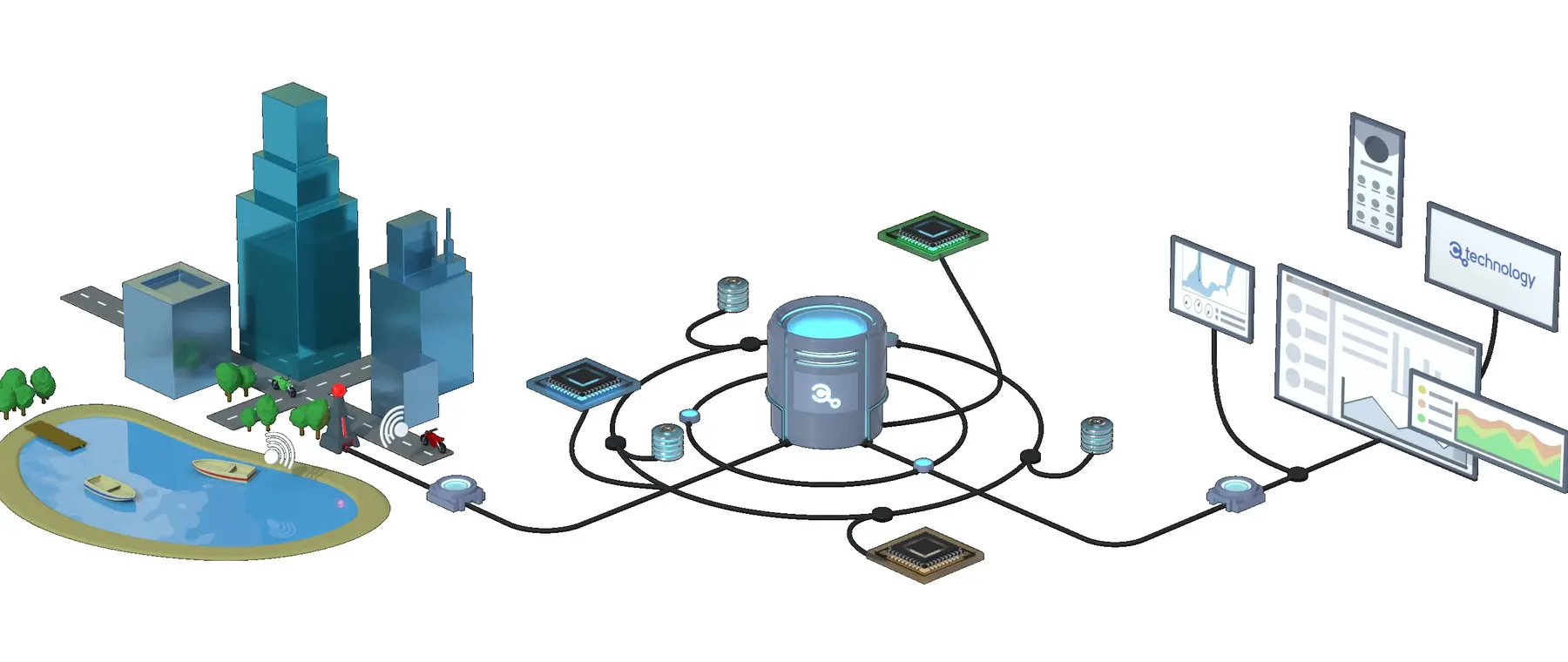
The official illustration accompanying this article depicts the supplier's general platform architecture. It is not an operating screenshot from a commissioned yacht and does not demonstrate the availability of any particular connected function aboard an individual vessel.
A commercial decision for luxury yacht businesses
For a manufacturer, the potential benefits of a connected platform may include closer relations with dealers and owners, better visibility of service issues and more opportunities to deliver continuing services. For a boatyard or fleet operator, the focus may instead be on coordinating maintenance tasks and dealing efficiently with incoming requests. Yacht owners may be interested primarily in convenient communication and a clearer view of their vessel's service history.
The appropriate commercial model will depend on those objectives. A business considering a subscription service needs to understand how costs are distributed and what happens if an owner elects not to continue using the application. It should also consider the availability of exports and the support arrangements that apply if the provider or equipment configuration changes. The continuing usefulness of records may be particularly important for a yacht expected to remain in service beyond the life of its original electronics.
The Amsterdam exhibition provides an opportunity for marine businesses to explore those considerations with c.technology. Its November announcement confirms the presentation of two related commercial solutions, but does not disclose a new yacht-building contract, installation numbers for the marine products or verified financial outcomes from their use. For the luxury yacht sector, the development is relevant because it addresses the relationship between the vessel, its owner and the businesses supporting its operation. Whether the platform adds value will depend on the quality of the integration and the service arrangements established around the actual yacht.
Sources and lead image
Source documentation: https://www.metstrade.com/exhibitors/c-technology/news/metstrade-2026, https://www.metstrade.com/exhibitors/c-technology/products/saas-platform, https://www.metstrade.com/exhibitors/c-technology/products/coride, https://coride.ctechnology.io, https://ctechnology.io. Lead image: Official c.technology illustration of its connected vehicle platform ecosystem — c.technology, official exhibitor product illustration of the platform architecture; not an image of an actual yacht installation.. Issuer-supplied media asset published with the relevant official exhibitor release or product catalogue made available through the official virtual press room for coverage of the announcement; copyright remains with the rights holder.