Helix and New Eagle take integrated drives to Amsterdam
UK electric-powertrain specialist Helix and its sister company New Eagle plan to present a combined approach to electric and hybrid marine propulsion at Metstrade, RAI Amsterdam, from 17 to 19 November 2026. Their announcement of 2 November positions them in the UK Pavilion, Hall 3, booth 03-417, where builders and system integrators can discuss how motors, inverters and controls work together. The company describes marine electrification as an increasingly practical engineering brief rather than a purely conceptual exercise. For owners of 12–23.99-metre yachts, the relevant question is whether a compact, properly integrated drive could improve a specific new-build or refit design. The preview does not identify a finished yacht installation in this size band or release an independently verified sea-trial result for it. This is an industrial systems announcement, and the strongest conclusions must remain at that level.
The case for engineering the complete system
An electric propulsion arrangement is not simply an electric motor replacing a diesel. It normally involves a source of energy, power electronics, a traction motor, propulsion-control software, cooling, safety interlocks and a mechanical connection to the shaft or other drive. A hybrid adds further interfaces with a combustion engine or generator. If these elements come from different suppliers, the boatbuilder must make them behave coherently while meeting certification and service requirements. Helix argues that its combined work with New Eagle can reduce those integration challenges by bringing critical elements under one engineering umbrella. That is a credible type of problem to address, but it is still a supplier proposition. A successful installation has to be demonstrated through documented testing of the complete propulsion architecture, not only through separate component specification sheets.
What each sister company contributes
Helix designs and manufactures electric motors and inverters in Milton Keynes, England. Its Scalable Core Technology platform is described as drawing on engineering experience in motorsport, aerospace and defence, where power density and packaging receive particular attention. New Eagle contributes embedded software, propulsion management and controls. The two companies sit within Middleground Group, which provides the corporate connection behind the joint offer. In practical terms, a motor's capability is only part of the design. The inverter must deliver appropriate electrical power, and the control system must translate helm demands into safe, predictable response while handling limits and faults. A yacht owner may never see much of the hardware, but will experience any hesitation, alarm behaviour or awkward transition between operating modes. Integration quality becomes a matter of seamanship as well as engineering.
Why smaller luxury yachts have demanding constraints
On a vessel around 15 or 20 metres, machinery-space volume and available weight can be surprisingly restrictive. Owners expect accommodation, storage, tenders and domestic facilities to remain useful, even as builders add new electrical systems. A compact drive could create design flexibility, but its apparent size advantage must be evaluated together with batteries, cooling loops, cabling, chargers, protection devices and maintenance access. The balance of masses may also affect trim and performance. A lighter motor is not evidence that the entire system is lighter than an established diesel installation. Power density should therefore be considered as one input into a total-vessel calculation. Helix's announcement focuses on this industrial problem, but it does not include the particular package weights or hull-by-hull comparisons needed to quantify an advantage for a named yacht.
From performance-car experience to a marine duty cycle
Helix highlights high-performance engineering experience outside boating. Such experience can be useful because power electronics, thermal management and motor control are common technical disciplines. Yet a yacht's operating conditions are not the same as those of a racing vehicle. Salt atmosphere, sustained loads, long idle periods, vibration, water exposure and the realities of marina maintenance alter the requirement. A propulsion system that delivers impressive short bursts of power must also prove it can sustain the output needed for the intended cruise. Owners should ask for continuous versus peak ratings, heat rejection at representative ambient temperatures, ingress protection, corrosion measures and expected service intervals. The appropriate evidence is marine-specific testing, not an assumption that successful motorsport components automatically provide a complete marine solution.
Control software is safety-critical
New Eagle's proposed role is significant because propulsion software translates what a skipper requests into how the machinery responds. A safe design should define what happens when communication is lost, a sensor reports an impossible value, a battery is depleted, cooling fails or one component overheats. The skipper needs clear information and predictable control, ideally with an understandable route to a safe state. The supplier preview talks about integrated management, but it does not publish a failure-mode analysis for a yacht-size installation. That document, alongside the control philosophy and relevant certification, should be requested during a serious design review. A glossy helm interface cannot substitute for robust control logic. Good software should make normal operation simple while explaining abnormal conditions clearly enough for a trained crew to act.
Hybrid and full-electric projects need different answers
The announcement covers both electric and hybrid propulsion. Full-electric arrangements depend on energy stored or generated electrically, making battery capacity, charging access and electrical consumption central planning variables. Hybrid systems can combine combustion and electric power, but their performance depends on the chosen architecture and how the vessel is operated. Owners should not treat the two labels as interchangeable or assume that an engine will always be available for backup. A parallel hybrid, a serial hybrid and a pure electric drivetrain can have very different mechanical and energy-flow arrangements. Helix has not released a specific yacht configuration in the announcement, so it would be wrong to claim a particular mode sequence or range. The first meaningful conversation with an integrator should establish the duty cycle and the objective: lower local noise, reduced generator hours, propulsion redundancy or something else.
What a sea trial should establish
A credible evaluation needs more than an attractive launch or rapid acceleration. Tests should record actual boat displacement, weather, sea state, current, shaft load, speed, battery state of charge and hotel demand. They should include continuous cruising, low-speed manoeuvres, departures, docking and extended operation at the temperatures expected in service. Thermal stability is especially important for power electronics operating in compact machinery spaces. Noise readings can be useful when made in consistent locations and conditions. If the system supports energy recovery or multiple charging routes, the useful net energy should be measured rather than inferred from motor efficiency alone. Helix has not announced such test numbers for a named 12–24-metre vessel; until they are available, no specific endurance or annual saving should be presented as established.
Refits present a separate engineering challenge
A builder designing a new yacht can place the motor, batteries, electrical distribution and cooling architecture within a fresh plan. A refit must work around existing structure, shaft geometry, access hatches and installed hotel systems. Hybrid conversions may also require changes to engine mounts, clutches, couplings or control stations. It is not enough that a supplier can provide a compact motor. A surveyor and experienced marine engineer should assess the whole boat, including regulatory implications and the practical availability of service technicians. Owners should also consider the downtime required for commissioning and the consequences of modifying a vessel with an existing manufacturer warranty. The joint Helix and New Eagle platform is being discussed with OEMs and designers; the public notice does not claim that a turnkey conversion kit is available for arbitrary older yachts.
Servicing and ownership support matter
A propulsion system may be technically impressive but unattractive to a cruising owner if service relies on a single specialist several countries away. Before specifying new technology, builders and owners should ask who supports the equipment in the places where the yacht actually operates. That includes diagnostics, software updates, spare parts, warranty handling and the ability to restore propulsion after a component failure. Access to meaningful error logs and installation documentation should be part of the handover. A conventional engine's established support network provides a useful benchmark, even when the new system offers other advantages. The November exhibition gives Helix and New Eagle a chance to explain their integration and support approach to prospective clients, but the press release does not provide a global marina-service map or firm response-time guarantees.
A show preview is not a type approval
Metstrade is a leading marine trade event, not a substitute for vessel-level classification or regulatory review. The fact that a technology is presented there does not verify compliance for every market, flag or intended operating area. Buyers should request the certification applicable to the system and the vessel, including electrical protection, electromagnetic compatibility and any relevant high-voltage requirements. The level of documentation may vary according to power, yacht size and use. It is also important to know which party accepts responsibility for overall system integration: the boatyard, propulsion supplier, electrical integrator or another contractor. A joined-up sales presentation should be accompanied by joined-up responsibilities in the project contract. Without that clarity, integration problems can become expensive disputes rather than engineering decisions.
The practical significance of the November meeting
Helix and New Eagle will present their combined capabilities at Hall 3, stand 03-417, when Metstrade opens on 17 November. Their main message is that power-dense motors, appropriate inverters and propulsion controls should be designed as a system. That is a sound principle for yachts in the luxury mid-size segment, where space, maintenance and predictable operation are all important. However, the announcement does not permit an honest calculation of price, cruising range, carbon savings or suitability for a particular hull. Those details belong to a documented specification and vessel-specific engineering study. Luxury Yacht Guide's conclusion is therefore measured: the joint platform is a relevant supplier development to examine, especially for new-build projects, but the evidence for an owner's purchasing decision will emerge through marine trials, certification and installation support.
Primary source: Helix and New Eagle, 2 November 2026. No unannounced yacht-specific range, price or installed output has been assumed; any photograph of a different electric propulsion motor is illustrative, not Helix hardware.
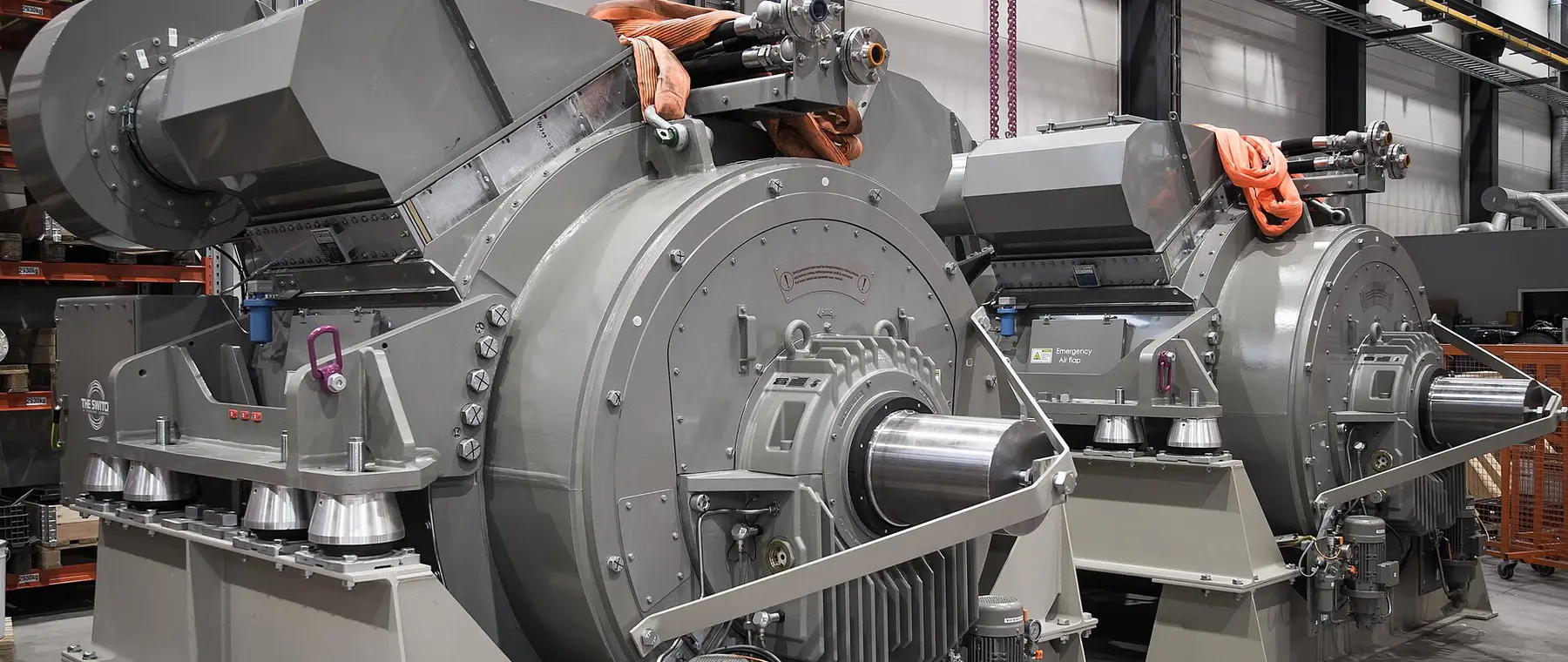
Photograph and licence: Illustrative permanent-magnet propulsion motor, photograph by Jussi p78 on Wikimedia Commons, CC BY-SA 4.0; resized for web. This is not an image of a Helix or New Eagle product, installation or Metstrade exhibit.