Hallberg-Rassy's report of 22 November 2026 records the completion of the Swedish yacht builder's annual support programme for owners taking part in the Atlantic Rally for Cruisers. The event marks the twenty-seventh consecutive year in which the company has offered assistance to participating Hallberg-Rassy yachts before their Atlantic crossing. Its earlier announcement placed the service team in Gran Canaria from 18 to 20 November, providing onboard inspections of key functions and advice to crews preparing to depart.
The report is particularly relevant to owners of offshore cruising yachts in the 12-to-24-metre range. An Atlantic rally brings together the commercial and practical aspects of yacht ownership: the design of the vessel, the preparation of its systems, the availability of technical assistance and the experience of the people who will operate it. The builder's programme illustrates how support for an existing fleet can extend beyond the initial sale and delivery of new yachts.
The twenty-seventh annual programme
Hallberg-Rassy announced its proposed support arrangements on 3 November. The specified three-day period preceded the departure of the main ARC fleet from Las Palmas de Gran Canaria. The subsequent photographic report confirms that support took place and that participating crews were invited to a social gathering.
The builder describes the inspections in general terms as checks of important onboard functions. It has not published an individual inspection sheet for each yacht, the number of faults identified or the work subsequently undertaken. The report should therefore not be interpreted as evidence that every yacht received a comprehensive condition survey or that any particular vessel was certified for the crossing by the builder.
The distinction matters for prospective owners comparing different yacht manufacturers. The availability of factory expertise at a departure port can be a useful element of long-term support, but the scope of the service must be understood. A limited inspection and technical conversation are different from a full refit, a survey for insurance or a guarantee of future equipment performance.
The departure of the main Atlantic rally
World Cruising Club's 24 November report describes the departure of the forty-first edition of the ARC. The organiser says the fleet comprised 118 yachts and more than 700 sailors representing 33 nations. Its route is approximately 2,700 nautical miles between Gran Canaria and Saint Lucia.
The fleet is divided into cruising, racing and multihull divisions. This distinction illustrates the diversity of the vessels and operating arrangements within a single event. The organiser identifies ten boats in the racing division, where the relevant rules prohibit the use of engines for propulsion during competition. The cruising and multihull groups have their own arrangements.
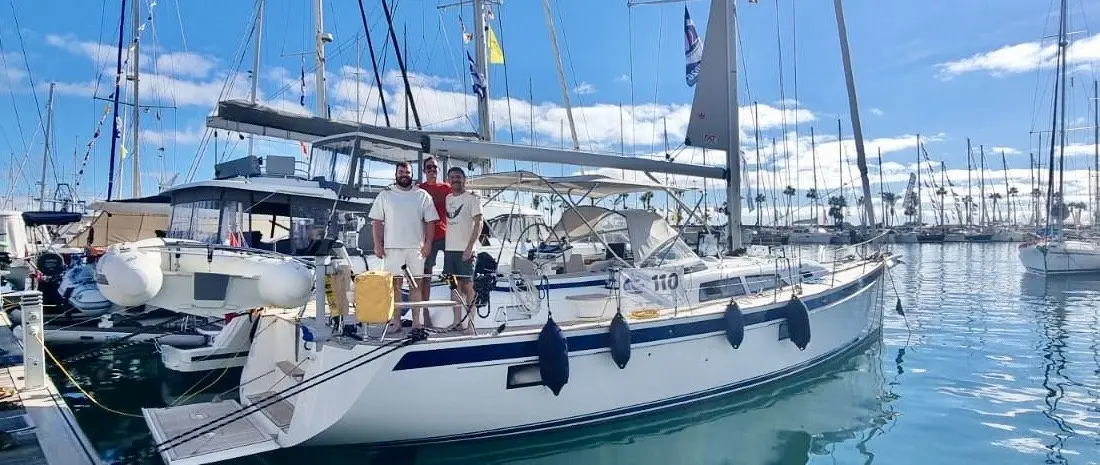
The Hallberg-Rassy service programme took place before the main fleet departure. The company's photographs show yachts and participants in the marina. They do not identify the subsequent positions or results of all the supported vessels. The announcement concerns preparation rather than the outcome of the crossing.
Why a rally departure creates a service opportunity
An organised transatlantic departure brings a number of yachts to the same location in the weeks before they begin an extended passage. For a builder or technical supplier, this concentration can provide an opportunity to make specialist personnel available to owners who might otherwise be dispersed between several countries.
Owners of production sailing yachts can benefit from speaking with people familiar with the underlying design. Machinery and equipment may have been supplied by several different manufacturers, but their installation within the yacht determines how they can be accessed and maintained.
The support programme can also help owners identify the appropriate point of contact for further work. It does not necessarily mean that the yacht builder will undertake repairs to every third-party component. The responsibility for obtaining any required servicing, parts and specialist assistance remains with the owner and the relevant contractors.
Preparing the auxiliary machinery
A sailing yacht's ability to make a long passage under sail does not make its auxiliary diesel engine irrelevant. Engines are used for harbour manoeuvres and may be important for generating electricity or providing propulsion when the vessel cannot sail effectively.
Hallberg-Rassy's current 57 model illustrates the relationship between machinery access and long-term cruising. The builder describes a walk-in engine room housing the Volvo Penta D4-175 main engine, a generator, filters, pumps and other domestic systems. The model is offered with a 175-horsepower auxiliary installation and a separate generating unit.
These details describe the current model, not the specification of every Hallberg-Rassy taking part in the 2026 rally. They demonstrate why the service history and accessibility of machinery can be material factors when owners select a yacht for ocean cruising. The November support report does not identify specific mechanical defects or give a list of repairs undertaken by the team.
Different approaches to sail handling
The current Hallberg-Rassy range includes both manually and electrically or hydraulically assisted systems. The manufacturer describes the 57 as offering a powered headsail furler, powered winches and a hydraulic backstay tensioner, with further powered sail-handling options available.
On the 44 Mk II, the manufacturer identifies optional carbon in-mast furling and an optional under-deck electric furler for a light-wind sail. These examples illustrate the range of systems that can be present aboard a modern cruising yacht.
For owners preparing an extended voyage, the important consideration is the actual equipment installed and the availability of appropriate maintenance information. Powered equipment can reduce physical effort, but each installation brings its own servicing requirements and operating limitations. The builder's inspection programme offers access to advice rather than establishing that all participating yachts have identical equipment.
Electrical independence and domestic requirements
The duration of an Atlantic crossing creates a different pattern of electrical consumption from that of regular coastal cruising. Navigation equipment, communications, refrigeration and other domestic systems must continue operating over an extended period without shore power.
A yacht's electrical arrangement may combine batteries, alternators, solar equipment, a generator and other energy sources. The capacity and reliability of the complete installation determine how these systems can support the occupants and their equipment.
The current Hallberg-Rassy 57 model is described as having a separate generator and technical equipment within its engine room. Its published arrangement includes a freshwater pressure system and provision associated with water production. These are model-specific examples of the integration of domestic and technical systems rather than evidence that each rally entrant has the same installation.
Storage and accommodation for an extended passage
The builder's current 57 presentation identifies approximately 10,000 litres of deck-locker volume, distributed across several spaces. This is relevant to the wider question of how a sailing yacht accommodates equipment and provisions while maintaining the usability of its decks.
A rally participant's requirements include personal equipment, food, spares and safety items as well as the ordinary recreational inventory of the yacht. Storage must be considered alongside loading and the accessibility of equipment when it is needed.
The smaller 44 Mk II offers a different scale of accommodation and tankage. Its published specifications identify 420 litres of diesel and 745 litres of freshwater, with a standard empty displacement of 13.3 tonnes. A direct comparison between individual yachts should distinguish their actual loading and equipment from the manufacturer's standard figures.
The role of the rally organiser
World Cruising Club's departure report describes a shoreside programme that took place in Las Palmas before the fleet sailed. The organiser's activities and Hallberg-Rassy's manufacturer-specific support are separate but complementary aspects of the preparation period.
The rally provides an organisational structure for the crossing, while the builder's programme focuses on owners of its own yachts. Participants still need to satisfy the requirements applicable to their particular yacht, division and voyage. The presence of the support team does not transfer the skipper's responsibility for the vessel or its crew.
The organiser reports that the departure was broadcast using onboard cameras and other coverage. That public account provides an additional dated source confirming the scale and timing of the rally, without establishing the outcome for individual Hallberg-Rassy entrants.
Long-term support as an ownership consideration
For a purchaser considering an established cruising yacht, the availability of design-specific knowledge can be important long after delivery. A model may remain in service for decades, during which machinery and domestic systems can be renewed or altered by successive owners.
The useful question is not simply whether a builder has a service organisation, but how that organisation can assist with particular installations and where the necessary support can be obtained. An owner should retain vessel documentation, equipment manuals and records of changes so that technical assistance can be directed to the actual configuration.
The twenty-seven-year history of Hallberg-Rassy's rally support demonstrates a recurring commitment to an established owner community. It does not establish that the same scope of assistance will be available in every cruising region or at every future edition.
A dated report from Las Palmas
The manufacturer's 3 November announcement describes the planned dates and scope of assistance. Its 22 November photographic report documents the subsequent support programme, while the World Cruising Club departure report confirms the main fleet's departure and participation figures.
Together, these sources establish a specific November development in the service and ownership of ocean-cruising yachts. The accompanying photograph comes from Hallberg-Rassy's report of the event. It is not presented as a record of a particular technical inspection or of the rally's eventual results.
Related Luxury Yacht Guide reporting
- Oyster Details Atlantic Rally Support for Owner-Cruised Yachts
- Discovery JUNO Undergoes Winter Work Ahead of 2027
- Hallberg-Rassy Releases 50-Minute Film of the 44 Mk II
- Hallberg-Rassy 57: Twin Rudders and Push-Button Ocean Cruising
Primary reporting and image credit
Primary source(s): https://www.hallberg-rassy.com/news/news/photos-from-the-arc-support-and-party-2026-2026-11-22t000700z. © Respective copyright holder / Hallberg-Rassy; photograph from the official reporting source. Image is used only for correctly attributed factual editorial coverage and never represented as open-licence stock photography. Original source image.