A revised coating targets yacht glazing
Gtechniq has introduced an updated Marine Glass and Plexiglass Coat V2, describing a revised water-based treatment for glazing, clear screens and similar exposed surfaces. The company published the product announcement on 25 November 2026, with wider trade coverage following on 26 November. It is a specific formulation update, not a claim that every yacht's existing windows now need to be replaced.
The development is relevant to owners because visibility and ease of cleaning are everyday maintenance concerns. Wheelhouse windows, windscreens and clear acrylic panels can collect water marks, salt deposits and other contamination while a boat is underway or laid up. The manufacturer aims to make those surfaces easier to maintain within the product's stated application limits.
A water-based application is the principal change
Gtechniq describes V2 as a water-based formulation rather than the previous solvent-based approach. The company says the revision allows application to either dry or damp surfaces, which may be useful when preparing windows in a marine environment where completely dry conditions can be difficult to maintain.
That flexibility should not be interpreted as permission to ignore all surface preparation or environmental conditions. A coating will depend on correct cleaning and application, and the technical instructions should establish suitable temperatures, contamination limits and curing arrangements. Owners should follow the supplied directions rather than generalise from the phrase water-based.
Water behaviour is the advertised benefit
The manufacturer's product description emphasises water repellency and improved run-off from treated glass and Plexiglass. Water droplets are intended to be less inclined to remain as a continuous film, potentially improving the way a surface sheds rain or spray under suitable conditions.
The practical outcome depends on the shape and angle of the pane, conditions of use and how the coating was applied. The public announcement is not an independent comparative trial of visibility at sea. It should not be translated into a guarantee that the skipper will never need a wiper or that every water mark disappears.
Glass and Plexiglass need different attention
A yacht may contain conventional glass, acrylic or other transparent panels with different surface sensitivities. The V2 product is marketed for both glass and Plexiglass, but the owner should still establish what material the actual screen is made from and whether any existing treatment is present.
Some clear plastics can be damaged by unsuitable cleaning or polishing materials. The fact that one product is marketed as broadly compatible does not establish that it is safe over every previous coating, laminate or tint. A controlled compatibility check and the product's written instructions are important.
Six-month durability is an attributed claim
Gtechniq describes a protective effect lasting up to six months under appropriate use. That is a manufacturer claim, not a result independently confirmed for every vessel, climate or cleaning routine. The words up to matter because salt exposure, abrasion and the choice of cleaning products can affect the service life of a surface treatment.
Owners should avoid treating a stated maximum as a guaranteed replacement interval. The more useful practice is to monitor how the surface behaves and reapply only according to the product's instructions. A conservative maintenance plan is preferable to assuming the most favourable published performance.
The product enters an existing marine maintenance market
Marine owners already use a range of cleaners, sealants and protective treatments for windows and exposed clear panels. Gtechniq's revision sits within this established category rather than creating a completely new maintenance task. Its proposition is a reformulated product with an easier method of application.
Comparing products responsibly would require a common test on the same materials under the same conditions. The November announcement is not such a test, so this report does not rank V2 against competing coatings or claim it is universally superior.
Cleaning remains essential before treatment
The purpose of a protective layer is undermined if it is applied over dirt, salts or residues. Surface preparation is therefore an important step even when a product is designed to tolerate some moisture. Gtechniq's application guidance should be followed for cleaning, wiping and the removal of excess material.
A practical owner might include window care in a routine deck-maintenance programme, but professional advice may be appropriate where glazing carries specialised treatments or is difficult to access. The coating's advertised convenience does not make an unsafe working position acceptable.
Visibility should not depend on one product
A clearer windscreen is a comfort and practical advantage, especially where rain or spray can obscure the helmsman's view. However, safe navigation relies on suitable wipers, clear sightlines, instrument use and an appropriate speed for the conditions. No surface treatment is a substitute for these basic controls.
The public announcement does not demonstrate a reduction in collisions or a quantifiable improvement in navigation safety. Any such claim would require a different kind of evidence. V2 should be understood as a maintenance product rather than a primary safety system.
The challenge of enclosed helms
Motor yachts with an enclosed wheelhouse can have substantial areas of sloping glass, while smaller sport cruisers may use clear acrylic panels or other materials. The same product category may therefore interest quite different vessel owners within the 12-to-23.99-metre range.
Application method and access may vary with the boat. Treating a tall windscreen from a narrow side deck can create a fall hazard; owners should assess safe access and use suitable professional assistance where appropriate. The coating does not change the physical constraints of the yacht.
Salt water and hard water leave different traces
Water marks can arise from salt spray, rinse water, airborne dirt or minerals left when droplets dry. A hydrophobic coating may change how liquid behaves on the surface, but it cannot remove all contaminants or replace thoughtful cleaning practices.
Owners should use suitable detergents and fresh water as recommended by the manufacturer. Aggressive polishing, abrasive pads or incompatible solvents may harm both the original panel and the applied coating. A service schedule should reflect actual conditions rather than a single advertising claim.
The V2 announcement also discusses packaging
The product is promoted in a 500-millilitre format with manufacturer guidance for application. The amount needed for a given boat will depend on the total area and the application method; the bottle size alone does not establish how many windows can be coated.
A buyer should check the label for coverage, storage requirements, shelf life and safe handling. Marine chemicals deserve careful use even when the base is water rather than solvent. Written technical and safety information should be consulted before use on a yacht.
An owner should confirm the exact revision
Product names may remain similar across generations, so the V2 designation is important when comparing current instructions with earlier discussions of the first formulation. An older demonstration may show a solvent-based method that no longer matches the revised product.
Owners and service yards should make sure they are working from the correct version of the technical sheet. Using an outdated method can lead to inconsistent results or inaccurate expectations about drying and maintenance. The manufacturer's dated release provides the context for the change.
Environmental claims need precise boundaries
A water-based formulation can change the solvents associated with application, but that does not independently prove a product has no environmental impact. Packaging, manufacture, use and disposal all contribute to a fuller picture. The press release does not provide a complete lifecycle assessment.
The appropriate claim is that the company has moved the formulation to a water-based approach. Any broader comparative sustainability judgment would require verified evidence and a defined scope. Owners should dispose of materials according to local requirements and the supplier's instructions.
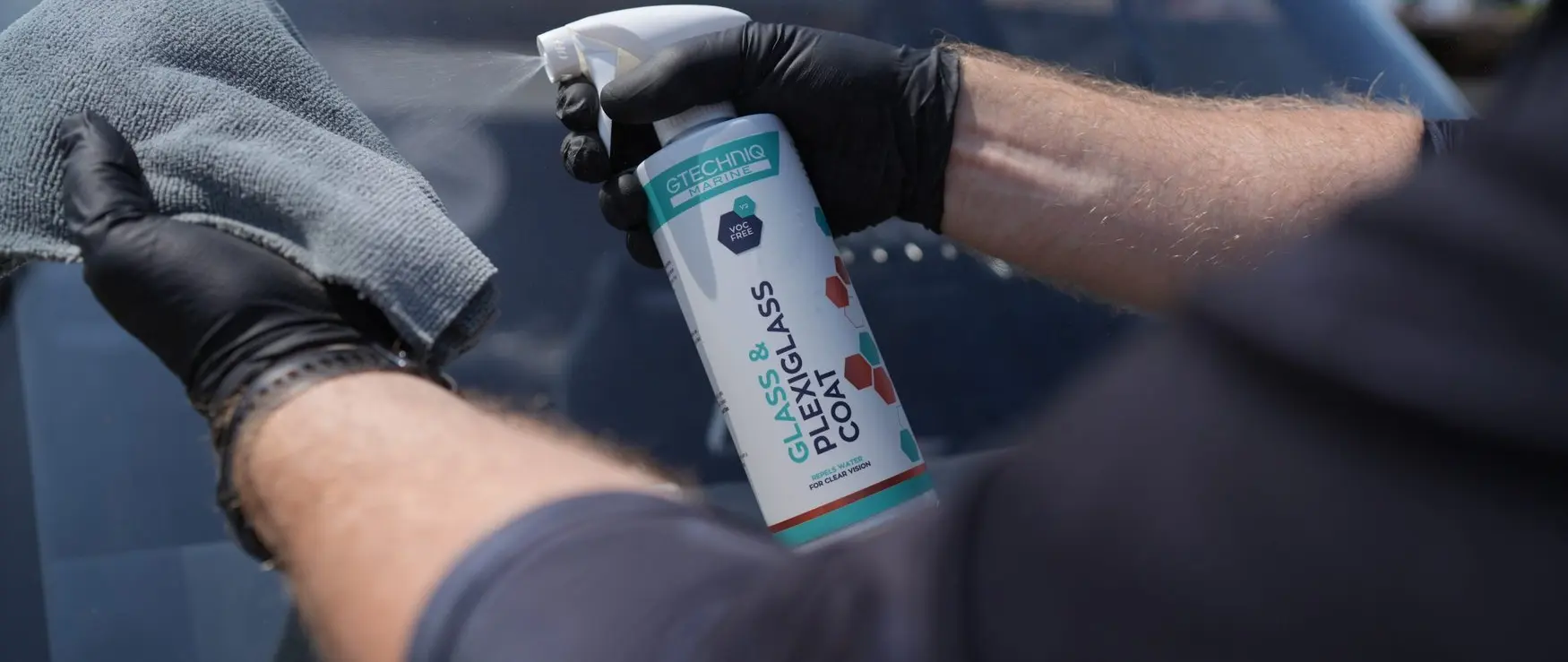
First-party photography establishes the actual product
The accompanying image comes directly from Gtechniq's November 2026 product announcement, hosted on the company's own website. It is a genuine supplier photograph relevant to the V2 release, not a fabricated before-and-after comparison or an AI image of an imaginary yacht window.
The source and original photographer retain their rights. A photograph can show the product or its use but cannot, without measurement, prove a six-month lifespan or a given level of repellency. Captions should avoid adding test conclusions that the image itself does not establish.
What remains unverified independently
The November release contains the manufacturer's performance and application claims but no independent longevity study covering all marine environments. It also does not disclose how many boats have already been treated with V2 or publish a comparative audit of maintenance costs.
Those limitations need not prevent reporting the product update. They simply mean readers should distinguish a manufacturer's technical presentation from a third-party evaluation. The next useful evidence would come from clearly documented practical tests and responsible service experience.
A practical maintenance update
The fresh development is Gtechniq's revised Marine Glass and Plexiglass Coat V2, with water-based application and claimed water-repellent benefits for relevant yacht glazing. It may interest owners looking to make routine window care more manageable without changing the panels themselves.
For Luxury Yacht Guide readers, the sensible approach is to verify glazing compatibility, follow the current V2 instructions and maintain all normal visibility equipment. The product announcement is useful as new maintenance information when its claims remain properly attributed and its limitations clearly understood.
Primary sources and image provenance
News based on the current verified manufacturer or event news announcement and original builder, event or authorised distributor specifications and imagery. © Gtechniq official November 2026 release image; manufacturer and photographer retain rights, no AI image or unverified before/after measurements. Images are genuine original subject-specific manufacturer, authorised distributor or original event photographs or official product design visual; they are not AI newsroom artwork. Prior events, future shows and construction are identified distinctly.