Seawater equipment becomes a boatbuilding discussion
ElectroSea says its products have been adopted by around 75 boatbuilders over seven years, as the Florida-based marine systems company pursues further expansion and develops its pump portfolio. Bryan Billic, vice president of sales, discussed the figure during METSTRADE 2026 in Amsterdam in an interview published on 27 November. The count is the company's own description of adoption, not an independently audited register of vessels fitted with its equipment.
The announcement is relevant to owners because seawater circuits play a central role in air-conditioning and cooling systems. A comfortable motor or sailing yacht can depend on reliable water flow through equipment that remains largely hidden below decks. The company's reported relationships with builders bring attention to a part of yacht construction that matters long after the showroom visit.
What the ElectroStrainer system is intended to do
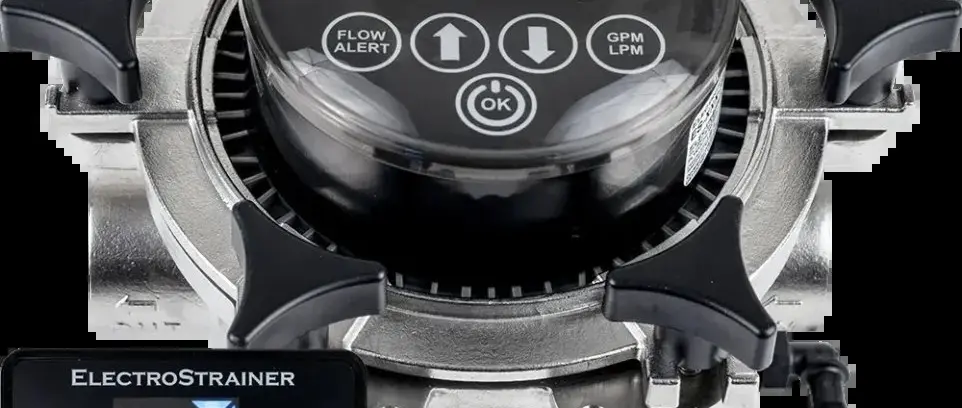
ElectroSea's ElectroStrainer combines a marine sea strainer with electrochlorination technology intended to limit biofouling within seawater plumbing. According to its own product information, the system generates a controlled low level of chlorine from the seawater passing through the strainer, without an additional container of chemical dosing material.
This description does not mean that all seawater systems become maintenance-free or immune to blockages. The device must be selected and installed according to appropriate flow characteristics and system design. Saltwater chemistry, electrical supply, downstream equipment and operating patterns can all influence what an individual yacht requires.
Why biofouling matters below the waterline
Marine growth can accumulate in intakes, strainers and the pipework feeding chillers or other machinery. Reduced flow can affect heat exchange and may increase the need for inspection and cleaning. Owners may notice the consequences through poor cooling performance rather than immediately recognising a problem inside an intake circuit.
The preventive goal is understandable, but not every change in cooling performance results from fouling. Pumps, valves, filters and other components can also be responsible. A technical assessment should establish the actual cause before an owner replaces hardware or assumes that a treatment system alone will resolve it.
Seventy-five boatbuilders is an attributed number
Billic said around 75 boatbuilders had started using ElectroSea equipment during the previous seven years. That is a meaningful indicator of manufacturer-reported industry adoption, but it does not disclose the number of individual boats delivered, the value of each order or whether every builder installs every product as standard.
Reporting the distinction protects readers from overstating commercial scale. One manufacturer can fit a product to a few models or across a much broader range. A detailed vessel count would require records beyond the quoted interview. The current news establishes the company's stated customer network and its ambition to expand further.
A focus on original-equipment installations
A component chosen during a yacht's design can be integrated with suitable intakes, pipework, electrical controls and maintenance access. Original-equipment manufacturers can address these interfaces before the engine room is crowded with other systems. This is one reason suppliers value direct relationships with shipyards.
A builder choosing ElectroSea equipment does not necessarily guarantee that every boat in its range has the same arrangement. Owners should confirm the exact system installed on a particular model and its position in the seawater circuit. A manufacturer's general relationship is not a substitute for a boat-specific equipment list.
Refit owners have separate considerations
ElectroSea also markets its strainer products for refit applications. An existing yacht may already have a conventional strainer and pump arrangement, making physical space, inlet size and accessibility important factors in any upgrade. Different boat sizes require different flow rates and components.
Retrofitting a seawater system involves potential flooding hazards, isolation of through-hull fittings and proper electrical practices. It should be reviewed by competent marine professionals familiar with the vessel. The presence of a replacement-sized product in a catalogue does not by itself establish that the conversion is straightforward or safe on every hull.
Pump development forms a second product line
The company's sales executive described a strategy of introducing regular product improvements, including new variants of ElectroStrainer and the SeaStrong seawater pump range. These pumps address water movement rather than merely filtering it, making them relevant to the reliability of onboard cooling systems.
A pump's suitability depends on flow, pressure requirements, voltage, duty cycle and the layout of connected pipework. The products should be treated as separate components in an engineered circuit, even where a builder integrates them. A new model does not automatically replace every earlier pump without a compatibility assessment.
Variable-speed technology may improve matching
ElectroSea's product material describes its SeaStrong SolidDrive as a variable-speed pump, with selectable settings intended to help installers match the system to differing flow requirements. This can be useful where cooling equipment demands vary or where several traditional pump choices might otherwise be considered.
Variable speed is not a promise of universal energy savings or an automatic solution to poor plumbing design. Any claimed efficiency advantage should be measured under defined operating conditions. The practical purchasing question is whether the required flow can be achieved safely and reliably in the actual installation.
Run-dry protection is a specific feature
The company's SeaStrong Silver Bullet RDP line is marketed around improved tolerance of conditions that can damage marine pumps when water supply is interrupted. Its name refers to run-dry protection, an issue that owners may encounter when an intake draws air or the system is operated incorrectly.
No pump should be assumed capable of operating indefinitely without water unless its detailed instructions expressly establish that use. Owners still need correct seacock and strainer procedures, appropriate alarm handling and proper commissioning. Product branding is not a substitute for the rated limits published by the manufacturer.
The Mediterranean expansion opportunity
The 27 November interview describes an interest in increasing ElectroSea's reach among European boatbuilders, particularly in Italy. The company sees opportunities in a marine manufacturing region with substantial boat-production activity. This is a stated business direction rather than an announcement of new contracts with named Italian yards.
An international market strategy can eventually affect local technical support, but actual availability depends on distributors, trained installers and spare parts. Owners considering a product should ask what assistance is available along their cruising route. Plans to expand are not equivalent to established coverage at every Mediterranean marina.
METSTRADE supplied a technical setting
The statements came from METSTRADE, the marine equipment exhibition held in Amsterdam during November 2026. Such events provide a useful venue for suppliers to meet builders and discuss integration, particularly for equipment that is more readily evaluated through specifications than dramatic exterior photographs.
A trade-show interview is not a completed independent test of every product shown. The current report conveys the company's adoption figure and technical direction, while measured performance would require separate evidence. Readers should distinguish a supplier's presentation from a surveyor's evaluation of an installed yacht.
Existing installation examples are useful but limited
ElectroSea's public installation materials include boats of different sizes and types, from smaller sportfishing craft to cruising yachts. These examples indicate how the company presents its practical applications. They do not establish that every featured installation delivers the same operating results or maintenance requirements.
A 12-to-23.99-metre yacht might use quite different intake sizes and pump specifications from a much larger vessel. Comparing photographs is less useful than comparing actual flow requirements and service access. Each system should be matched to its equipment rather than selected solely because another boat carries the same brand.
Installation and maintenance remain necessary
A modern treatment system can potentially reduce some kinds of biofouling-related work, but it still depends on correct operation and monitoring. Electrical connections, sensors, housings and nearby pipework may require periodic attention. Manuals should identify how faults are detected and how the unit behaves when flow is interrupted.
Owners should retain circuit diagrams, maintenance instructions and details of suitable replacement parts. Crew need to know where the through-hull valves are located and which alarms require action. Good documentation becomes especially important if the yacht is sold or begins cruising in a new region.
What an owner should ask a builder
An informed buyer can ask whether the system is fitted as standard or is an option, which specific ElectroStrainer model is selected, and how the boat's seawater flow is calculated. It is also useful to clarify how the equipment appears on onboard monitoring displays and who is authorised to service it.
A builder's decision to offer the product is not a guarantee of the performance of the complete cooling system. The actual benefit depends on design and installation. Prospective owners should seek a demonstrated operating procedure and realistic maintenance schedule rather than accept a general claim of trouble-free seawater systems.
First-party equipment imagery and its limits
The accompanying photograph is an official ElectroSea product image from the company's own media host, showing an ElectroStrainer Pro system. It illustrates the type of equipment discussed in the current business story and is not represented as a photograph of all 75 boatbuilder installations or an image taken at the METSTRADE interview.
The manufacturer and original product photographer retain their rights. The official image is used for specific factual reporting rather than substituted with stock machinery pictures. The company's HTML pages intermittently block automated access from the VPS, while its first-party image file remains directly accessible; that distinction is recorded in the newsroom evidence log.
What the November announcement establishes
The fresh news is ElectroSea's statement that roughly 75 boatbuilders have adopted its seawater systems over seven years, accompanied by discussion of more pump development and expansion toward European builders. These are manufacturer-attributed business and technology claims, not independent evidence of a particular fuel saving or universal reliability result.
For Luxury Yacht Guide readers, the report highlights an often overlooked engineering decision that affects comfort and maintenance on a mid-sized yacht. Owners should evaluate the real cooling circuit, obtain model-specific documentation and confirm service availability before deciding whether such technology belongs aboard their vessel.
Primary sources and image provenance
News based on the current verified manufacturer or event news announcement and original builder, event or authorised distributor specifications and imagery. © ElectroSea official ES-100-PRO original product photograph hosted in company 2024/10 wp-content; not an image of the 75 builder relationships. Selected original is unique against 18,221 images. Images are genuine original subject-specific manufacturer, authorised distributor or original event photographs or official product design visual; they are not AI newsroom artwork. Prior events, future shows and construction are identified distinctly.