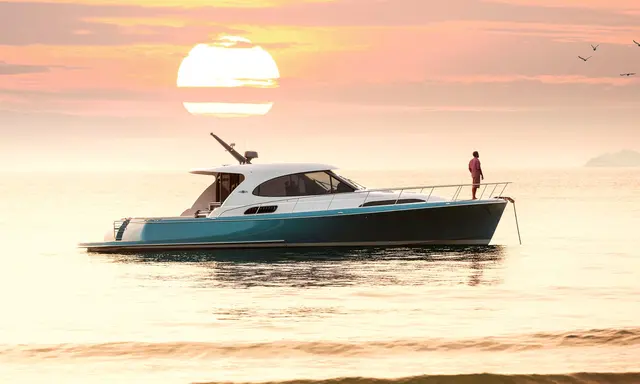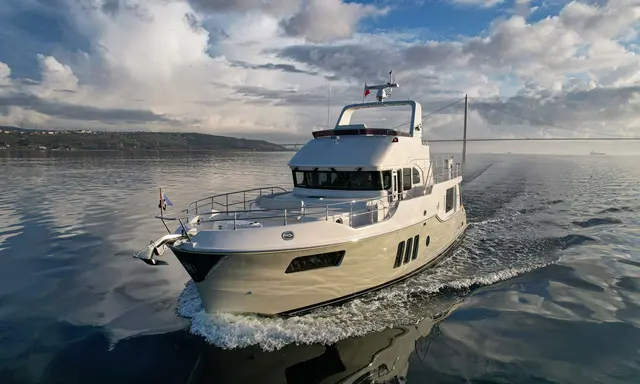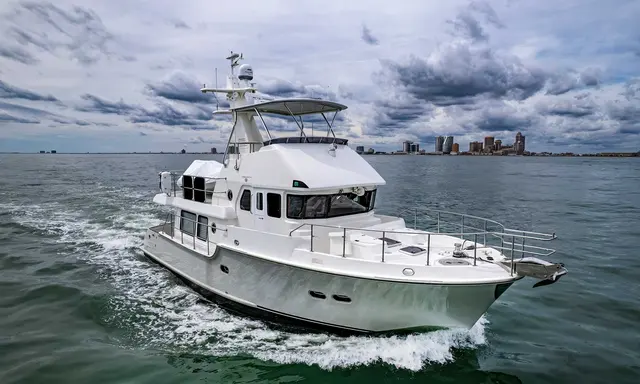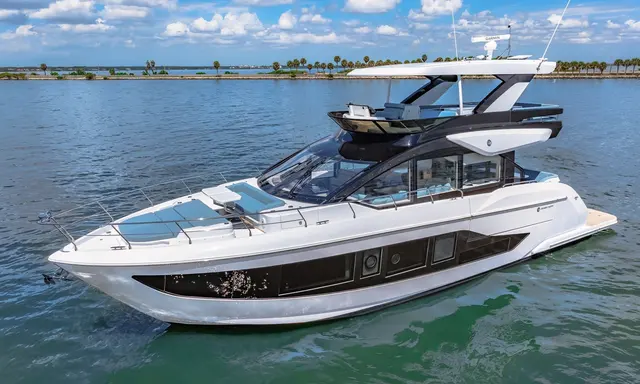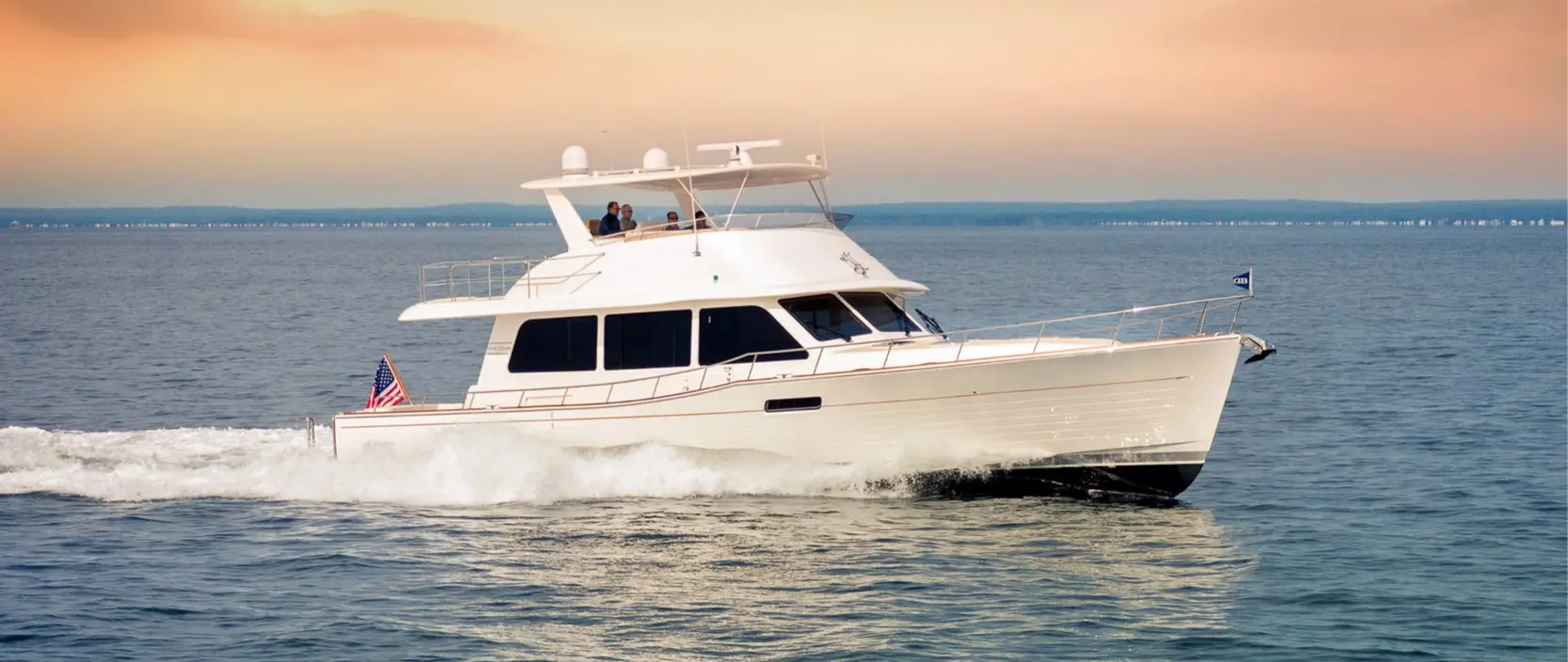
A long-range design with a familiar profile
Grand Banks has given the 60 a recognisable classical silhouette while developing it around modern cruising expectations. At 20.37 metres overall, the yacht sits beyond the usual weekend-express category. Its intended use is longer journeys in which ease of operation and efficient use of space matter every day.
The builder lists a beam of 5.84 metres and a design that can accommodate different interior plans. That width provides room for comfortable movement and the separation of social and private spaces. Prospective owners should assess the actual layout rather than assuming every delivered boat has the same arrangement.
Published builder figures include a maximum speed around 31 knots in a standard configuration and an indicative cruising range of 761 nautical miles at 21 knots. Those values depend on load, installation and test conditions. They should be treated as reference data for planning discussions, not guaranteed passage performance.
The classic look may be the first thing visitors notice at a marina, but the practical proposition is a cruising boat intended to be used frequently. A good owner fit depends on whether the range, handling and daily accommodation support the routes actually planned. Long passages reward practical details more than brochure styling alone.
Flybridge or sheltered skylounge
Grand Banks offers the 60 in open flybridge and enclosed skylounge versions, an unusually consequential choice in the ownership experience. The flybridge connects the helm and guests directly with the outdoor air. It can become a favourite place to navigate or relax in favourable climates.
The skylounge instead encloses the upper level, creating an additional room with climate protection and panoramic views. That may have advantages for owners who cruise during cooler months or expect regular changes in weather. Its appeal is not merely the ability to avoid rain but the availability of a separate social space.
Both versions require an owner to think carefully about how guests move around the decks and how a boat is used at anchor. Some crews prize immediate access to an open upper helm, while others value another comfortable interior room. A sea trial in representative conditions can reveal which arrangement feels natural.
Looking at photographs is helpful, but an in-person walk-through should include the stairs, handholds, visibility and ventilation. The chosen upper-deck format also changes how companions interact with the helmsman. Those everyday details deserve as much attention as the visual impression of the exterior.
Cabins, galley and living aboard
The manufacturer presents three- and four-stateroom choices as part of a flexible layout programme. A couple undertaking extended voyages may favour fewer cabins and more storage or working space. A family expecting frequent overnight visitors could value the additional berth capacity more highly.
Grand Banks also identifies options for galley placement, allowing owners to choose a social arrangement that suits the way they prepare meals and entertain. A galley near the principal gathering space helps the cook remain part of the conversation. Other layouts may offer a different division between food preparation and lounging.
Liveaboard comfort depends on stowage for provisions, laundry, tools and clothing, not just the size of the main saloon. An owner considering extended passages should examine access to service areas and how gear is secured. The most attractive cabin plan will still disappoint if essential equipment has nowhere sensible to go.
Guest privacy is another consideration on a journey lasting several weeks. An apparently generous boat may feel crowded if every person must use the same passageway to reach a bathroom. Walking through the cabin layout as a group can reveal whether the selected configuration fits real life.
Interpreting the performance claims
The builder's standard specification includes twin Volvo D13 shaft-drive engines, reflecting the yacht's mix of conventional engineering and modern hull optimisation. Engine choices and test figures should be checked against the exact vessel being considered. Owners will experience different consumption figures in different seas and loading conditions.
Grand Banks publishes its performance results with qualifications about load and configuration. That distinction matters because extra tender weight, full tanks, cruising equipment and weather can all affect efficiency. Responsible passage planning uses a reserve appropriate to the route instead of working from an optimistic headline range.
A genuinely enjoyable cruiser allows owners to arrive rested and gives them confidence about maintenance, visibility and operation. Prospective buyers should discuss fuel management, service access and training alongside upholstery and interior finishes. The Grand Banks 60 makes a thoughtful starting point for those conversations.
Ultimately the 60 is a yacht built around choosing how to travel. Its flybridge and skylounge forms each point toward a distinct version of life aboard, while the hull and accommodation support serious cruising ambitions. The best configuration is the one that matches the owners' actual sea miles.