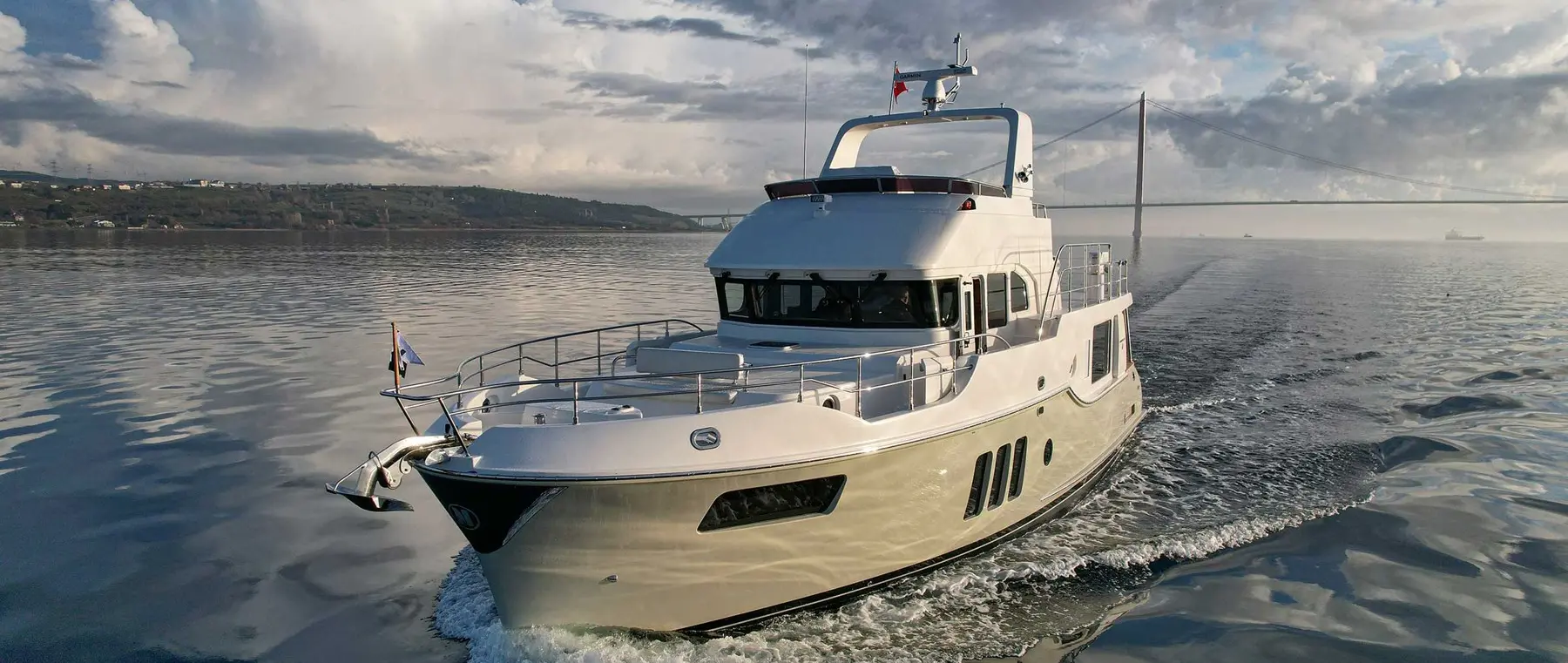
Range defines the design brief
The central number in Nordhavn's official specification is an estimated 3,000-mile range, rather than a sprint-speed headline. The builder positions the N51 as an ocean-capable expedition motor cruiser, intended to make longer passages practical for owners who prefer a deliberate pace and careful fuel planning. That is a fundamentally different proposition from a flybridge yacht optimised around rapid hops between fashionable ports.
Overall length is 15.47 metres, with a waterline length of 14.73 metres, a beam of 4.78 metres and a specified draught of 1.45 metres. These dimensions make the yacht modest by large-marina standards, but they also explain the appeal of a displacement-oriented craft that keeps its resources concentrated on comfort, machinery and stores. A long offshore itinerary demands dependable working space as much as volume for entertaining.
Nordhavn says the N51 is certified to CE Category A, an important indication of the design conditions considered for the vessel. Certification should not be confused with an invitation to ignore weather routing, maintenance or skipper experience, however. Any genuine ocean passage still requires a review of load, fuel reserve, navigation systems and crew capability for the route.
Machinery with a practical mission
Twin John Deere 4045AFM85 M1 engines rated at 160 bhp each provide propulsion, with the builder reporting comfortable running around nine knots and a speed above ten knots on trials. The interesting feature is not the maximum speed but the relationship between modest installed power and passage duration. A relaxed operating regime can change the character of life aboard by giving watchkeepers time to manage conditions rather than chase a timetable.
Standard equipment published by Nordhavn includes stabilising fins, a bow thruster and a tender-handling davit. Those items serve quite different stages of a voyage: motion control offshore, close-quarters control inside a harbour and practical access to shore once the anchor is down. They are useful reminders that long-range cruising is an integrated systems challenge, not simply a matter of selecting larger fuel tanks.
The stated fuel capacity is 5,489 litres across two tanks, with freshwater capacity reported as 1,325 litres in the detailed specifications. Owners comparing passage claims should ask which speed, sea state, load and reserve assumptions support a particular range estimate. They should also allow for generator demand, refrigeration, water production, tenders and the working routines of those aboard.
Accommodation intended to stay comfortable
Inside, the saloon uses walnut joinery, teak flooring, light upholstery and a deliberately restrained palette. Nordhavn identifies Corian worktops and a domestic-style galley specification, details that make more sense when considered against lengthy periods between ports. The aim appears to be durable everyday accommodation rather than an interior that looks impressive only during an hour-long yacht-show visit.
The enclosed pilothouse gives the watch a defined working environment, while the flybridge adds an open-air steering position with 360-degree outlooks in suitable weather. Garmin navigation electronics are described in the builder's specification, together with an extensive list of equipment serving monitoring, communication and domestic requirements. Owners should still investigate redundancy and service access, because the quality of the installation matters as much as the equipment label.
Outdoor spaces include a shaded cockpit, an upper helm and a forward seating zone. This spread is significant on a compact passagemaker because a crew may spend days aboard without going ashore. The ability to move between sheltered, open and social spaces helps prevent the yacht from feeling like a single-purpose navigation platform.
Where the N51 fits in the market
The Nordhavn 51 follows the smaller N41 and shares its philosophy of a more standardised build programme with fewer individual configuration choices than a fully bespoke build. That approach can simplify the ordering and construction process, although it also makes the standard layout and equipment list especially important to inspect before committing. The right buyer will appreciate the clarity; another may want extensive customisation.
For two people envisaging seasonal passages, the N51's attraction is the pairing of manageable size with unusually ambitious cruising capability. It could support a Mediterranean season followed by the sort of longer repositioning voyage that would be impractical in many fast planing yachts of comparable length. Such use should always be assessed against the owners' training, insurance and realistic passage plan.
The official specification is a starting point, not a substitute for a survey, independent sea trial and detailed commissioning discussion. Buyers should examine access to machinery, emergency systems, tender operations and fuel-management procedures as carefully as soft furnishings. The N51's strongest argument is that those operational questions appear to have shaped the boat from the outset.