Performance begins below the waterline
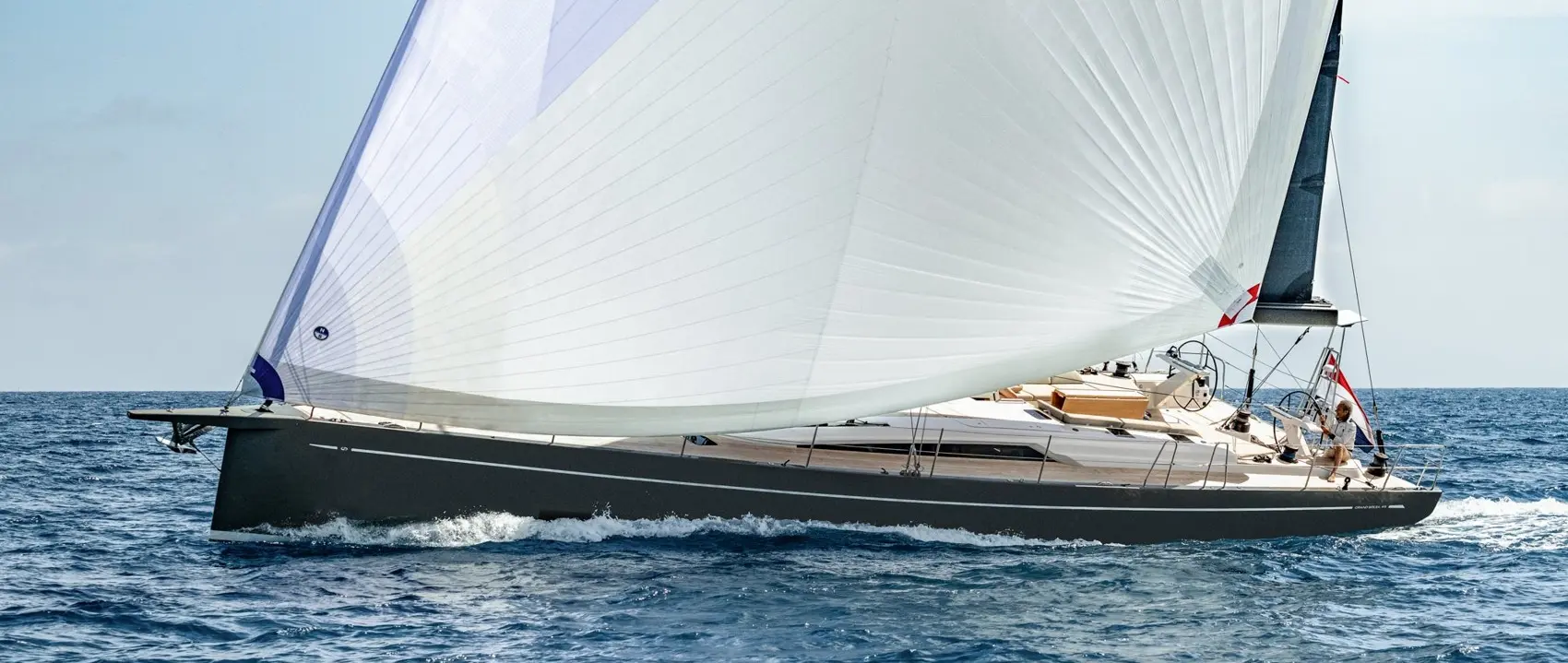
The official specification lists an 18.20-metre waterline length and a maximum beam of 5.95 metres. Those dimensions give the Plus 65 a long, substantial platform on which to balance living space and sailing efficiency. Grand Soleil emphasises a pronounced V-shaped forward entry and reduced wetted area in its design explanation. The aim is a responsive hull that handles waves cleanly and does not require excessive wind strength to come alive.
Performance claims should still be treated as design intentions until they are supported by relevant trials. Speed under sail depends on the chosen sails, crew, load, sea state and many other variables. For an owner considering this class, the important evaluation is not a single best-case number but whether the yacht remains enjoyable and manageable across the ordinary wind range and passage conditions it will actually encounter.
The builder quotes a light displacement of approximately 27 tonnes and a standard draft of 3.50 metres. The draft is a significant planning consideration because it rules out many shallow anchorages and may constrain marinas that easily accommodate shorter, shoal-draft vessels. An owner attracted to Mediterranean coves and smaller harbours should map the preferred itinerary against those measurements before focusing entirely on the sail plan.
Carbon and vinyl ester in the hull structure
Grand Soleil says the hull is produced through vacuum infusion using vinyl ester resin, biaxial fibreglass and unidirectional carbon fabrics. This approach is intended to create stiffness and control mass while retaining robustness. The manufacturer's description indicates that the construction is handled in-house, an arrangement that can help a yard coordinate structural engineering and finish details. Prospective buyers should request build-specific documentation rather than assume every performance advantage from materials alone.
A sleek, low-profile coachroof is another visible expression of the Performance version's design. Grand Soleil links its shape to weight placement and reduced aerodynamic obstruction, but the effect most owners notice first may be the visual relationship between the deck and the sail plan. A lowered profile can look purposeful and elegant, though it also requires thoughtful headroom and circulation below. The best yacht of this type finds a workable balance rather than making the deck's appearance its only priority.
Construction technology should be examined alongside serviceability. Owners will live with the yacht's electrical, mechanical and rig systems for many seasons, so access to ordinary maintenance points matters as much as the strength of the hull. Carbon-reinforced structure does not eliminate the need for skilled inspections or correct handling. A sensible commissioning process should include detailed systems walkthroughs and instructions tailored to the specified equipment.
Sail plan and helm philosophy
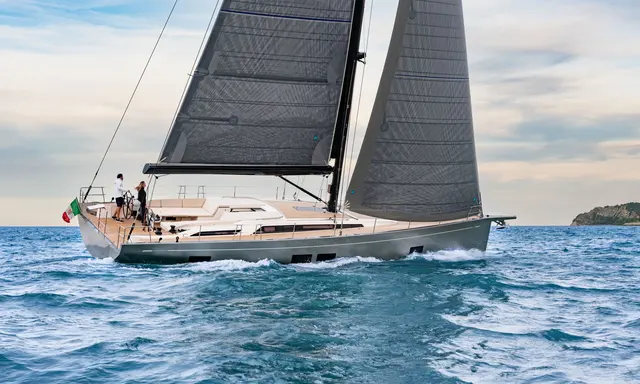
The builder lists 278 square metres of sail area for the Plus 65 P and describes a mast stepped farther aft to increase the foretriangle. A self-tacking jib is identified as standard equipment. Together, those choices suggest a sailing layout intended to offer strong performance without demanding a large number of hands for every routine manoeuvre. As ever, the actual crew requirement will depend on conditions, sail choices and the owner's experience.
Grand Soleil's official presentation also describes a reduced-wetted-surface hull and an emphasis on responsiveness in lighter conditions. That suits an owner who enjoys steering and adjusting the boat rather than simply accepting a passive passage. Yet a large performance cruiser needs disciplined safety procedures, especially when sail loads increase. A sea trial should include reefing and manoeuvring demonstrations, not only a broad-reaching photograph at a comfortable wind angle.
Auxiliary power is listed as a 150-horsepower Yanmar diesel, with a 170-horsepower alternative. The presence of a serious auxiliary installation is important for port approaches, calm-weather schedules and other routine operating situations. Owners should compare propulsion arrangements, fuel use and maintenance access as carefully as the sail wardrobe. A yacht optimised to sail beautifully still spends meaningful time moving under engine in the real world.
Interior choices and the private-ownership brief
The builder characterises the Performance interior through a lowered salon and an aft-positioned lateral galley. The objective is to preserve usable space and circulation while acknowledging the movements of a vessel that will sail actively. A three-cabin and three-bathroom arrangement appears in the current technical table, although customisation is central to the Grand Soleil Plus proposition. Owners should distinguish stated base layouts from changes that can be commissioned for a particular hull.
With approximately 900 litres of water and 830 litres of fuel capacity, the yacht is equipped for meaningful cruising, but those numbers do not establish autonomy without a complete consumption plan. Refrigeration, refrigeration backup, domestic power, water use and crew size can change how long the vessel operates comfortably away from shore services. The safest assessment comes from a detailed equipment schedule rather than assumptions attached to the word bluewater.
Grand Soleil positions the Plus 65 as a tailored bridge between technical sailing and refined living. The Performance version gives extra prominence to hull form, materials and sail handling while leaving room for personal choices below deck. It will appeal most to owners willing to be engaged in the sailing process and realistic about the draft, maintenance and crew requirements of a yacht of this scale. The final verdict belongs to a completed boat at sea.