A new choice within the FP51 family
The announcement gives Fountaine Pajot two distinct deck approaches for the same cruising family. The existing FP51 Lounge Deck prioritises its original open-air configuration, while the FP51 FLY places navigation and social activity on an elevated bridge. Rather than treating the new version as a completely different hull, the builder frames it as another way for owners to organise the space they use most often under sail and at anchor.
Owner and dealer feedback contributed to the new upper-deck arrangement, according to the 22 October statement. That is an important detail because experienced catamaran buyers often have strong preferences about helming positions, shade, visibility and the separation of crew activity from relaxation space. A flybridge can address several preferences simultaneously, although height, wind exposure and access remain practical questions to assess on board rather than assume from renderings.
The company is explicit about timing. The FP51 FLY is scheduled to make its world premiere during Fountaine Pajot Open Days 2027 in La Rochelle before later international show appearances. For prospective buyers, this is therefore an early assessment of an announced configuration. Exact prices, final equipment schedules, sea-trial impressions and delivery timing should be checked with the builder or its authorised representatives.
Central helm and two-sided access
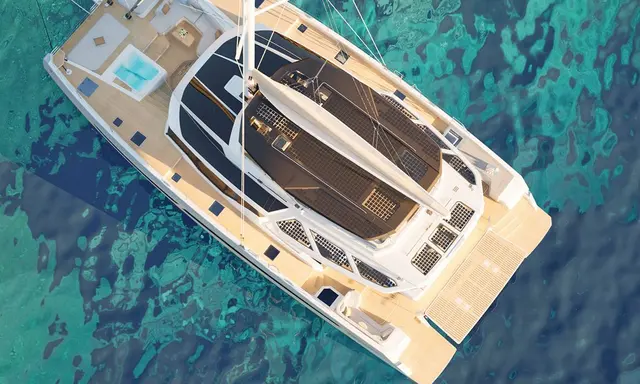
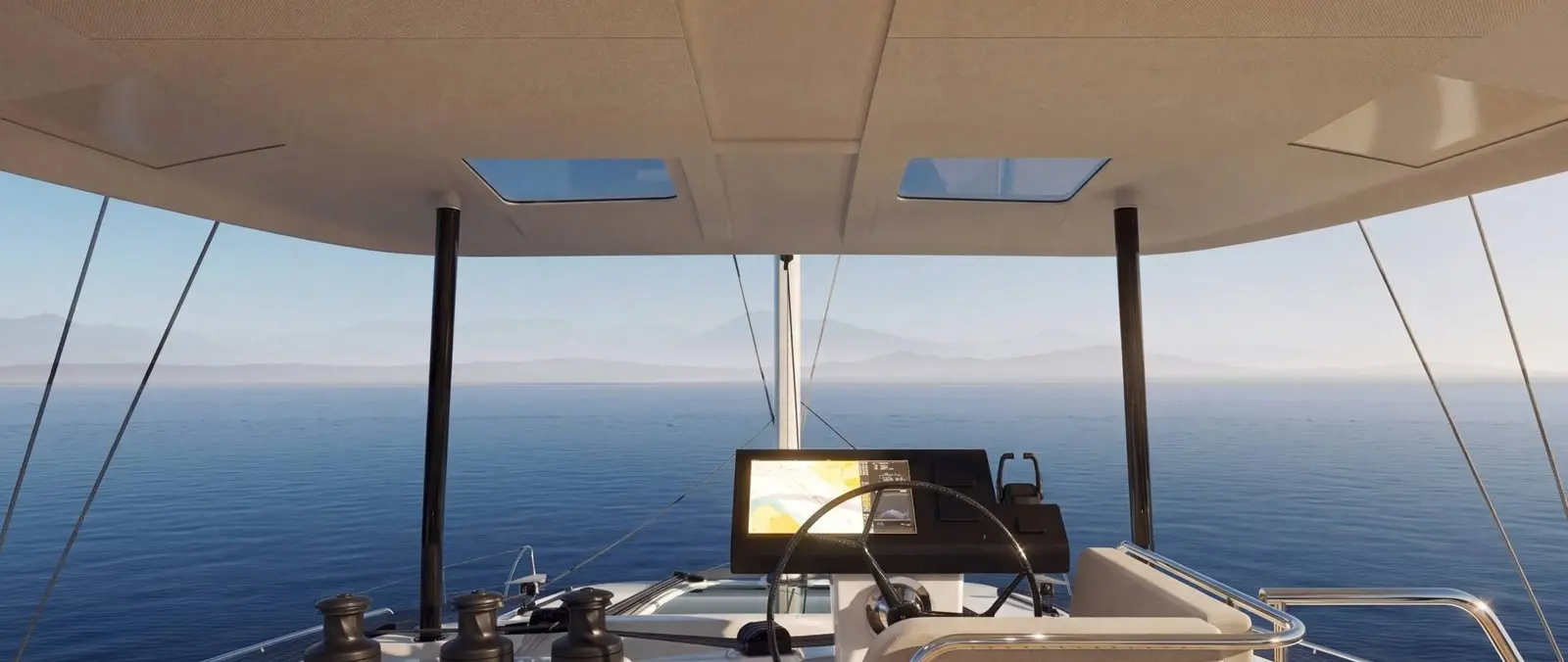
At the front of the flybridge sits a centralised helm influenced by the larger FP55 concept. Fountaine Pajot says the sail-control arrangements have been brought together in a dedicated navigation position, with an electric genoa furler standard. The arrangement aims to make sail handling more organised while leaving the aft part of the bridge available for guests, but the practical ergonomics will ultimately be judged by how easily a crew can work in different conditions.
Behind the helm, seating is grouped around a table with an additional relaxation space opposite. That creates a social setting high above the cockpit where a small group can gather without taking over the immediate sailing position. The arrangement could be especially appealing to owners who spend long periods at anchor, where the ability to change perspective and enjoy an elevated breeze often matters as much as the passage-making layout.
Stair access from both port and starboard sides is intended to make movement between levels more flexible. Fountaine Pajot also lists an optional hardtop, which may change how the flybridge feels in strong sunshine or unsettled weather. Buyers should review handholds, steps and weather protection in person once a production boat is available; a pleasing open-space rendering cannot settle every question about accessibility while underway.
Accommodation remains configurable
The builder says the new FP51 FLY retains the interior planning developed from the Aura 51, rather than requiring owners to sacrifice cabin arrangements for the elevated deck. Four-, five- and six-cabin alternatives are available in the published description. These choices can serve significantly different ownership styles, ranging from family cruising with generous personal space to larger-party arrangements associated with charter or shared use.
Shared FP51 refinements include a built-in 253-litre refrigerator, a revised instrument-display mount and changes within the saloon. Those are modest-sounding details, yet everyday liveability is frequently determined by refrigeration capacity, visibility of instruments and circulation between inside and outside. A vessel intended for extended cruising has to function during ordinary mornings as convincingly as it does during a show presentation.
An ODSea+ energy-system option is also listed for the FLY version. Prospective owners should examine what that package includes for the selected configuration, because a general technology name is not a substitute for an equipment specification or an independently verified performance claim. Energy storage, charging sources, electric propulsion capabilities and the needs of air conditioning should be reviewed as one coherent operating plan.
What buyers should examine next
The most useful near-term comparison is between the FP51 Lounge Deck and the newly announced FLY, with attention to how frequently the crew sails short-handed and where guests naturally gather. A couple making long passages may rank helm communication and protection highly, while a holiday-focused owner may place more emphasis on shaded seating and easy circulation. Neither approach is inherently superior; the suitability depends on how the yacht will be used.
As the 2027 premiere approaches, photographs of the actual vessel, sea trials and confirmed commercial specifications will provide evidence that concept imagery cannot. Ask for details of standard versus optional fit-out, sailing controls at the helm, visibility through turns and the implications of any upper-deck equipment on access. The announced model is promising, but sound purchasing decisions depend on a particular completed yacht.
Fountaine Pajot's latest variation illustrates a broader design question in modern cruising catamarans: how to combine a working sailing station with increasingly sophisticated social spaces. The FP51 FLY answers that question with a new high-level arrangement while preserving several familiar interior choices. Its first public appearance in La Rochelle next year should reveal whether that balance is as convincing underfoot as it appears on the drawing board.