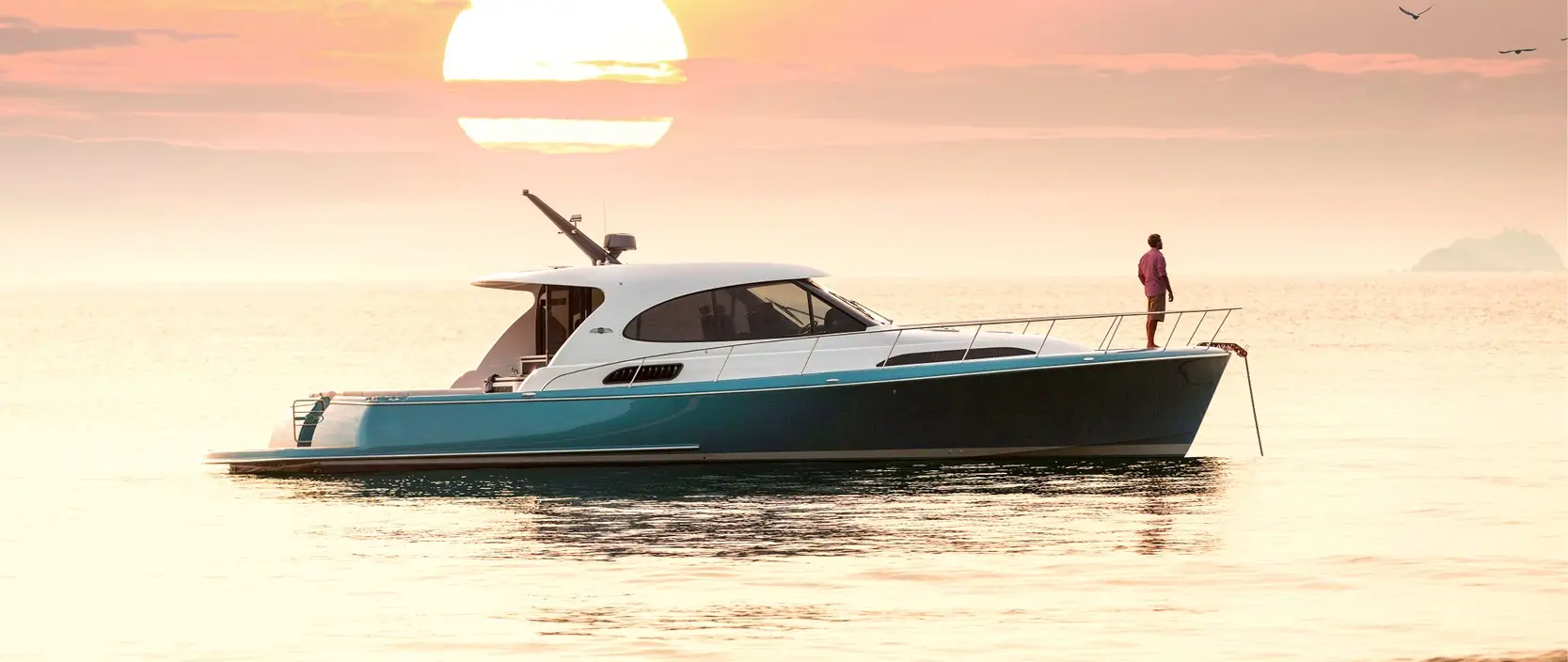
Performance without abandoning proportion
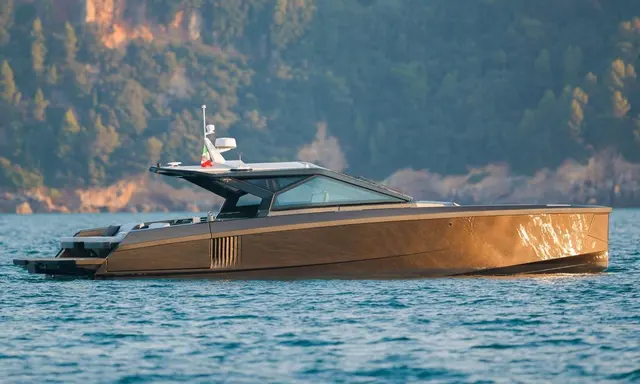
Palm Beach quotes 17.1 metres overall and 4.48 metres in beam for the GT50, dimensions that create the strong horizontal stance seen in its official photography. The yacht is related in spirit to the traditional American lobster boat, but its form is sharpened into a modern sports profile. That blend is deliberate: the styling has to communicate speed without leaving behind the craft details for which the builder is known.
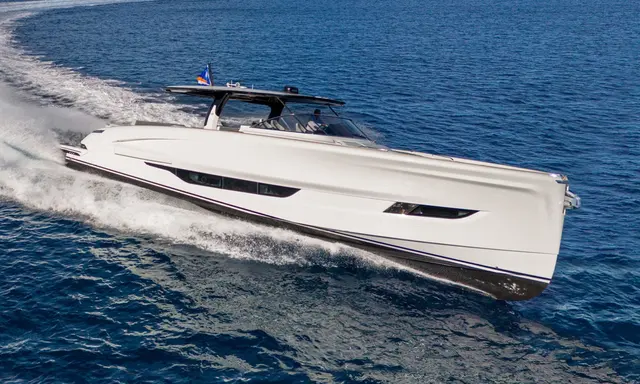
With standard twin Volvo IPS 800 installations rated at 600hp each, the builder publishes 37 knots as top speed and 32 knots as cruising speed under stated test conditions. A quoted range of 332 nautical miles at 21 knots is more meaningful for owners planning realistic passages than a maximum-speed figure on its own. Performance claims must still be read alongside fuel load, equipment and sea state.
The builder's V-WARP hull technology forms part of its wider argument for efficient high-speed running. The important ownership question is how the boat behaves at intermediate cruising speeds and in the short, confused seas often found along popular coastlines. A properly conducted demonstration should examine steering response, visibility, ride comfort, vibration and fuel use rather than simply achieving the advertised top number.
Two cabins and flexible social space
Palm Beach presents the GT50 with a comfortable owner's stateroom and a separate guest cabin with a double bed, allowing a couple to take friends on multi-day excursions. A galley supports overnight stays, while the salon aims to retain an open and light atmosphere. For a 17-metre boat, that balance between sleeping accommodation and daytime leisure is central to the product's character.
The single-piece windscreen and sunroof are especially significant design choices. They widen the perceived horizon from the main deck and help the enclosed living space feel connected to the weather and water. In a smaller luxury yacht, careful glazing and circulation can be as transformative as adding another metre of overall length.
The builder offers different galley positions within its sedan layouts, giving owners an opportunity to prioritise conversation on the main deck or dedicated food-preparation space below. Buyers should test these arrangements against the sort of days they actually enjoy. The better layout for informal lunches at anchor may not be the one preferred for regular entertaining by a professional chef.
Cruising range as an ownership question
Official capacity figures include 1,500 litres of fuel and 510 litres of freshwater, with a relatively shallow quoted draught of approximately one metre in the standard configuration. Those numbers suggest a craft geared toward coastal exploration and the convenience of entering varied harbours. They do not imply the endurance or seakeeping philosophy of a slow-displacement ocean passagemaker.
A fast cruise between Mediterranean ports can make time aboard feel plentiful, but speed also places more weight on weather windows and fuel planning. The claimed 332-nautical-mile range at 21 knots should be treated as a benchmark from specified conditions, not a guaranteed passage allowance. A prudent owner will retain meaningful reserves and compare the actual boat's consumption with the published test figure.
Owners choosing the GT50 for weekend use should also study storage for fenders, lines, luggage and any tender or water sports equipment. A clean cockpit photograph can conceal the practical question of where everyday gear goes after departure. The most convincing luxury boats integrate these mundane requirements without compromising the experience of moving around on deck.
The appeal of restrained luxury
Palm Beach makes a case for craftsmanship, careful structural design and a degree of layout personalisation instead of chasing accommodation totals. Its construction approach integrates major interior components with the hull to contribute to rigidity and planning of usable space. That engineering philosophy deserves attention during an owner visit, particularly where sound insulation and access for future servicing are concerned.
The GT50 is most persuasive when viewed as a yacht for people who enjoy the journey as much as the destination. Its speed opens up an ambitious choice of coastal itineraries within a weekend, while the understated interior avoids the feeling of an oversized floating showroom. It is a different aspiration from a high-volume flybridge vessel designed principally for entertaining large groups.
Prospective buyers should distinguish the standard GT50 sedan from other variants in the broader GT50 family, because propulsion, layout and performance can differ materially. The builder's quoted specifications refer to standard configurations at test load, and custom options can alter the result. Comparing the exact hull, propulsion package and maintenance arrangements is the soundest way to decide whether the combination delivers the intended cruising lifestyle.