Why slower cruising can be the greater luxury
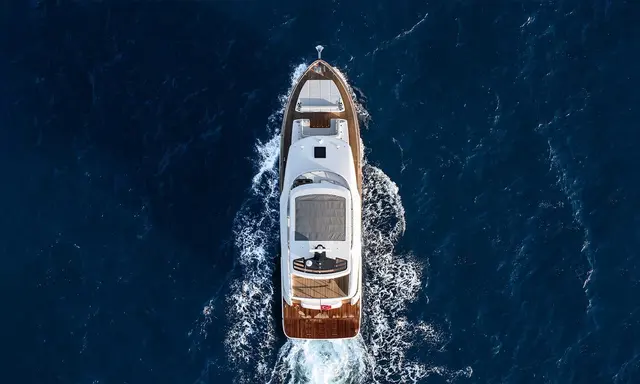
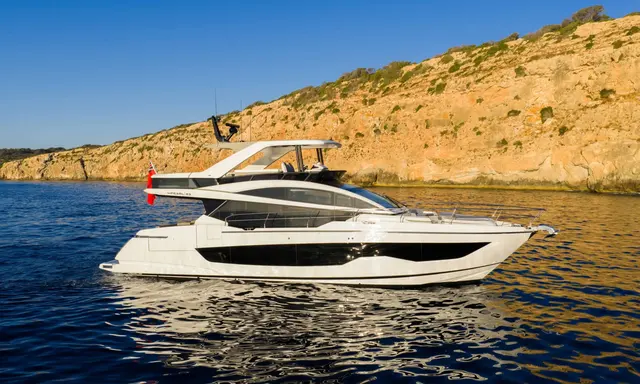
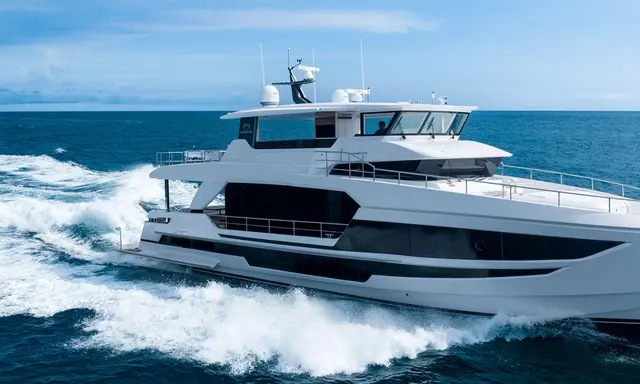
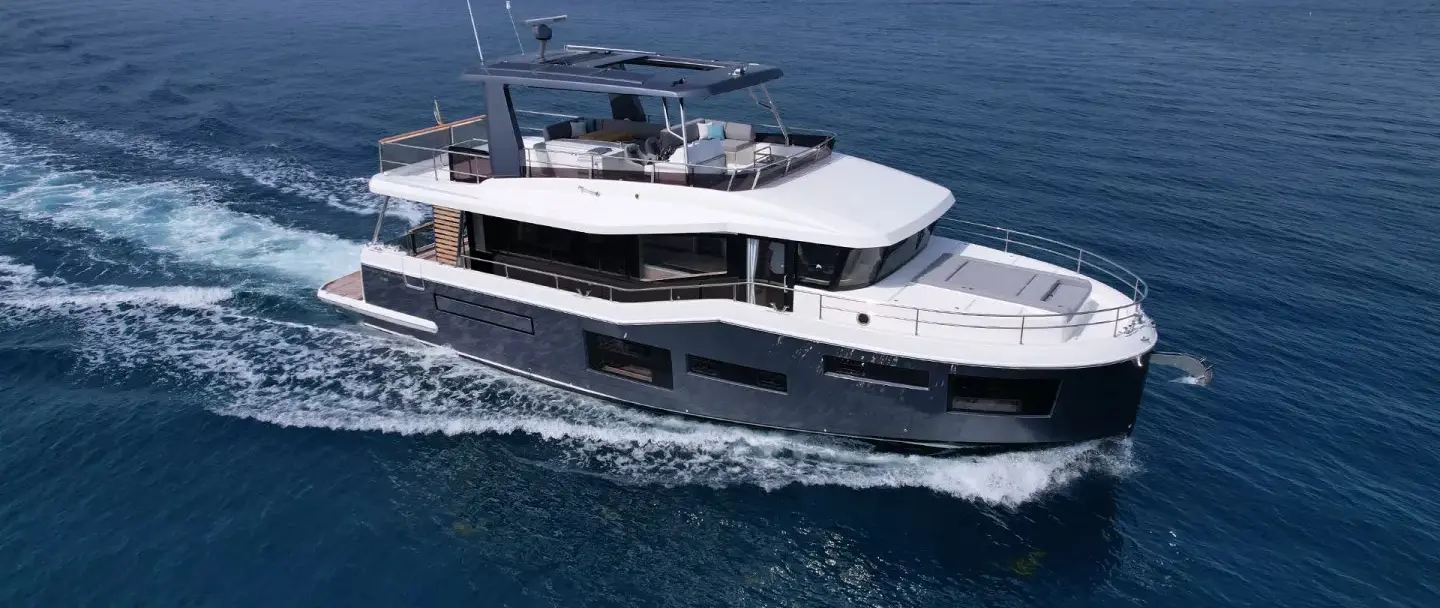
The Grand Trawler 63 approaches long-distance boating from a different direction to the fast flybridge yacht. Beneteau uses a full-displacement hull developed with MICAD Naval Architects, prioritising efficiency and comfort over headline maximum speed. The design is intended for owners who value time underway as part of the holiday.
At 18.95 metres overall with a beam of 5.45 metres, the yacht has enough volume to accommodate extended stays without becoming a very large vessel. Its arrangement recognises that a voyage can involve many consecutive days aboard. The quality of circulation and daily living spaces therefore matters as much as visual styling.
Beneteau describes a potential range of 900 nautical miles at a steady nine knots, calculated with a fuel reserve under specified assumptions. That is a useful expression of the yacht's design intent, not a guarantee for every passage. Weather, loading, hull condition and actual engine use can change the result substantially.
Prospective owners who usually cruise at higher speeds may need to rethink how they plan their days. Slower travel calls for attention to departure windows, fuel management and the pleasure of a more measured routine. The payoff can be a less hurried style of passage making.
Quiet systems and stabilisation
Beneteau places unusual emphasis on acoustic comfort in its current Grand Trawler 63 description. The boat includes extensive sound treatment and Sleipner fin stabilisers in the published standard package. Those systems are intended to improve the experience both underway and at anchor, where unwanted movement can affect ordinary activities.
Fin stabilisers do not eliminate sea motion, and owners should learn how they behave under different conditions. Proper commissioning and ongoing maintenance are essential to their usefulness. Before selecting a boat, ask for demonstrations and discuss the expected operational limits with the dealer.
An optional Silent Boat package is also promoted for owners who want to reduce reliance on generator operation during suitable periods. The actual performance of any electrical package depends on the installed batteries, equipment and power demand. It should not be confused with all-electric propulsion across an entire voyage.
Comfort is also influenced by vibration, ventilation and the position of machinery relative to cabins. Beneteau's focus on sound treatment is meaningful only when evaluated on a running vessel. A sea trial with attention to noise at several speeds can clarify how the boat will feel during longer trips.
Two accommodation plans for different families
The Grand Trawler 63 offers three- or four-cabin layouts, giving owners choices about how much space they devote to guests. A couple expecting occasional visitors may prefer one arrangement, while a larger family will have different needs. These options should be compared by walking through both plans.
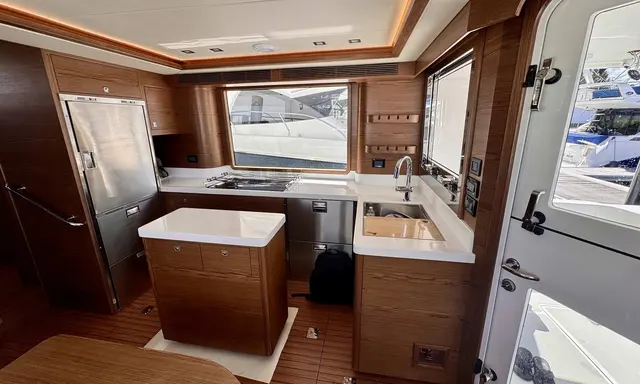
The main-deck galley, saloon and dining spaces are intended to support ordinary life at sea, not just entertaining alongside a quay. Beneteau's configuration includes several ways for passengers to relax with views outside. Storage, galley security and access to bathrooms become especially important during extended voyages.
The flybridge offers a substantial dining and lounging area, with a second helm position and an opportunity to enjoy fair-weather passages outdoors. The foredeck adds another place to rest when conditions permit. Multiple spaces allow guests to choose their own pace without leaving the yacht.
An extended family cruise will generate more equipment and laundry than a weekend holiday. Owners should inspect tank capacities, utility stowage and the practical routes used to carry provisions aboard. The most appealing cabin arrangement is the one that still works well after a week of real use.
Helm design and the details of ownership
The builder describes a redesigned wheelhouse with modern displays and electric steering support intended to simplify control. A broad view from the steering position can improve confidence during passages and close manoeuvring. Electronic assistance should complement, not replace, navigation skills and appropriate training.
Beneteau lists substantial fuel capacity and twin inboard engines, but prospective owners should request performance tables tied to the configuration being purchased. Calculating fuel reserve and stopping opportunities is necessary even on a model intended for range. Theoretical endurance cannot substitute for a detailed passage plan.
Practical maintenance access is another central part of the long-range proposition. A yacht that travels farther between marinas needs reliable systems and owners who understand how to monitor them. Planning for spares, service and contingency communication is an investment in the comfort promised by the design.
The Grand Trawler 63 is a persuasive example of luxury measured in autonomy, quietness and space to enjoy the voyage. Its full-displacement hull, stabilisation and optional electrical features make sense as parts of one cruising philosophy. A careful specification review and representative sea trial will reveal whether it suits a particular owner.