A completed investment in protection from Lake Erie
The Buffalo District of the United States Army Corps of Engineers reported on 9 November 2026 that the rehabilitation of Dunkirk Harbour's outer breakwater had been completed on 19 October. Approximately 2,300 feet of the 2,800-foot structure were repaired through a two-phase programme with contracts worth a combined US$13 million. For yacht owners and captains cruising Lake Erie, the announcement concerns infrastructure that affects the environment in which a harbour operates, rather than a new luxury marina or expanded visitor accommodation. The works were intended to improve the structural stability of the barrier separating the harbour from the exposed lake and extend its useful service life. The project is relevant to owners of larger recreational vessels who need to understand not only the facilities available at a destination but also the structures that protect the surrounding water. It does not establish that individual berths are available or that the harbour is safe in every weather condition.
The role of a breakwater built in 1931
The Corps dates the original outer breakwater to 1931. A structure of this kind forms part of the permanent physical setting in which commercial boats and recreational vessels manoeuvre. Its importance is easy to overlook on a calm day, when the sheltered water behind it may seem to be an inherent characteristic of the location. The barrier can affect the transmission of wave energy into the harbour and thus the conditions encountered by vessels using it. Its actual effectiveness depends on the direction and characteristics of incoming waves, the layout of the harbour and the condition and geometry of the structure itself. A century-old structure may have been exposed to numerous episodes of significant weather, repeated wetting and drying and, in the Great Lakes, seasonal ice. The November announcement identifies accumulated damage associated with wave activity and ice as the reason for undertaking substantial work. It does not publish a numerical forecast of wave heights inside the harbour following the rehabilitation.
Two phases and the scope of the contracts
The engineering district identifies Great Lakes Dock and Materials, a Michigan-based contractor, as the company responsible for both phases. The first covered approximately 1,850 linear feet under an US$8.5 million contract, partly supported by congressionally directed funding. The second covered a further 450 feet, with US$4.5 million allocated through the 2025 fiscal-year workplan. The distinction matters because the completion of the project represents the conclusion of related packages of work rather than the construction of an entirely new structure. The reported lengths together account for about 82 percent of the existing breakwater. The announcement does not provide a technical condition assessment of the remaining section or specify separate maintenance proposals for it. Owners and harbour operators should therefore understand the published figures as the declared scope of an investment in the existing asset, not a comprehensive assessment of every structure associated with Dunkirk's waterfront.
A stone overlay changes the exposed face
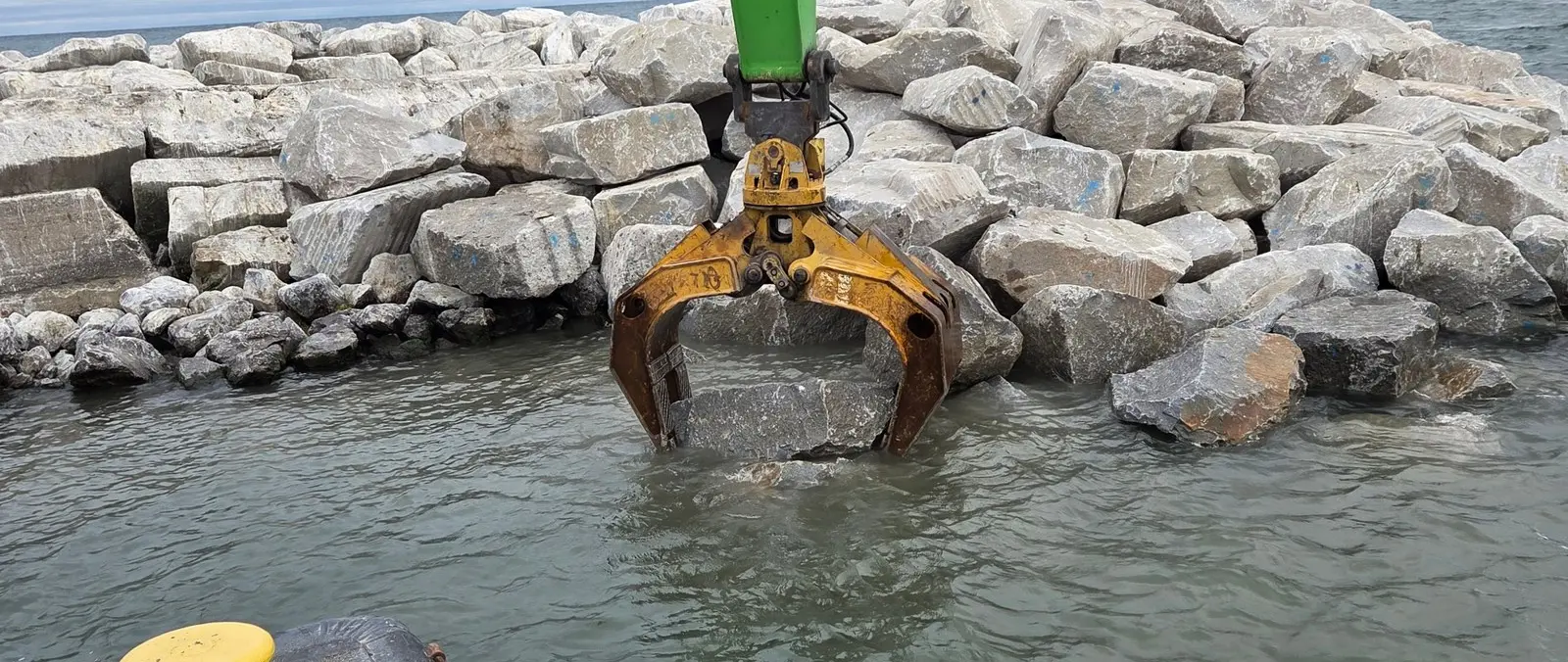
The Corps describes the introduction of a stone overlay on the lakeside of the breakwater, raising its crest above the original intended elevation by two feet and reinforcing its eastern end. A rubble-mound overlay can provide an irregular protective surface over which incoming wave energy is dispersed, depending on its detailed design. A higher crest may affect the extent to which waves overtop a structure under particular conditions, but it would be inappropriate to infer a specific change without the relevant engineering analysis. The design must also take into account the capacity of the underlying structure and the loads imposed by the protective materials. The November account says that the rehabilitation was undertaken without excavating the lakebed. This is a specific aspect of the reported construction approach, not confirmation that all impacts associated with the construction were eliminated. For a yacht captain, the important practical point is that the physical environment has been altered and published navigation information and local guidance remain essential.
Why ice influences the maintenance cycle
Lake Erie differs from destinations in temperate coastal waters where ice is rarely a significant factor in marina operation. Seasonal ice can create additional demands on structures that already need to resist waves and changing water levels. Ice movement, freezing and thawing and the interaction between ice and exposed materials can all influence how waterfront infrastructure behaves over time. The consequences depend on local conditions and structural configuration. A new stone overlay and elevated crest are designed to improve resilience in the particular application described by the Corps, but there are limits to what can be established from a public completion notice. The captain of a visiting yacht should not assume that the completion of a structural programme establishes that winter navigation, opening arrangements or shore facilities are suitable for the vessel. A boat's own design, winterisation, navigation equipment, insurance and the advice of responsible operators determine whether a proposed voyage is appropriate.
Separate the protection of the basin from the suitability of berths
A yacht of eighteen metres may be much smaller than some vessels using the Great Lakes navigation system, yet still be significantly larger or heavier than the visiting boats routinely accommodated in a recreational marina. Its dimensions may limit choices in a particular basin even if that basin benefits from a major breakwater. The owner's team should establish the maximum vessel dimensions accepted at a proposed facility, the water depth at the appointed berth, any limitations on approach and the mooring arrangement. Electrical supply and the availability of appropriately rated connections can be important for a yacht that relies on shore services during a longer stay. Secure access to land may also matter for guests who are less comfortable boarding across a narrow or moving gangway. These are matters to confirm with the marina or harbour operator. A public investment intended to protect the wider harbour should not be mistaken for an upgrade to each of those individual arrangements.
Coordination with marinas and yacht clubs
The project announcement describes cooperation with the Coast Guard, City of Dunkirk, local marinas and yacht clubs during construction. That aspect of the programme illustrates the interdependence of the different users of a waterfront. Alterations to a protective structure can require temporary works, equipment movements, changes to access arrangements or the management of traffic during a project. Early communication is therefore useful to clubs and operators organising the movement of their own boats and to owners planning visits. The statement reports that coordination was intended to limit interruptions; it does not retrospectively certify that no individual user was affected. When considering a future visit, consult the actual local contacts responsible for navigation information and the proposed berth. A captain should establish whether any restrictions remain in force and whether the changes are reflected in relevant current nautical products. The completion announcement is a reason to investigate the updated environment rather than to dispense with ordinary arrival checks.
The larger Great Lakes maintenance programme
The Corps places Dunkirk's work within a network of 60 commercial and 80 recreational navigation projects throughout the Great Lakes. The official figures also identify 610 miles of federal navigation channels and 104 miles of federal navigation structures, including protective structures, piers and jetties. These totals illustrate the scale of the infrastructure on which a regional cruising programme may depend. They are not a statement that every location offers equivalent services to recreational yachts. An owner planning a season on the lakes may move between municipal marinas, yacht clubs and commercially maintained waterfronts. Responsibility for the waterway and facilities can differ at each stop. Knowing which organisations provide authoritative information about the different elements of an approach is useful, particularly when a passage is arranged some time after the previous visit. Owners purchasing a boat for extended freshwater operation should consider access to suitable facilities alongside the vessel's own capabilities.
What the completion means for yacht operators
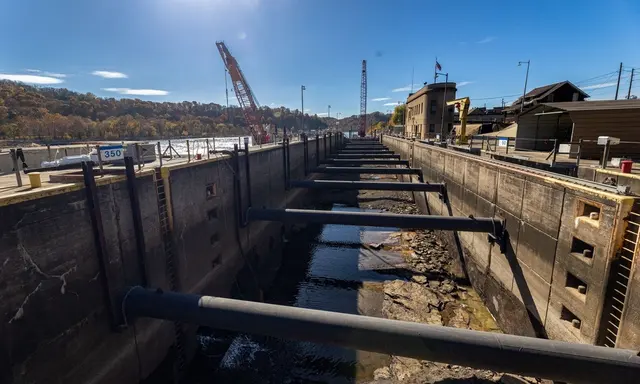
The confirmed development is the rehabilitation of approximately 2,300 feet of the outer barrier at Dunkirk, completed on 19 October and reported on 9 November. The strengthened lakeside surface and raised crest are intended to preserve the protective role of the structure over a longer service period. The accompanying official photograph records the project and is credited to the US Army Corps of Engineers through Kaylee Wendt. It is not evidence of live weather or availability of a berth. For yacht owners, the significance of the investment is that the quality of a cruising destination depends partly on infrastructure normally taken for granted. A planned visit should still be based on current weather and lake conditions, suitable nautical information and confirmed arrangements appropriate to the vessel. The announcement offers a documented engineering milestone and a useful starting point for that preparation.
Sources and photograph
Source documentation: https://www.dvidshub.net/news/578968/usace-buffalo-district-completes-13m-dunkirk-harbor-breakwater-rehabilitation. Photograph: Dunkirk Harbour outer breakwater rehabilitation — Kaylee Wendt / U.S. Army via DVIDS. Official public-domain U.S. Army photograph, credited to the named photographer; The appearance of U.S. Department of War (DoW) visual information does not imply or constitute DoW endorsement. See DVIDS copyright information.